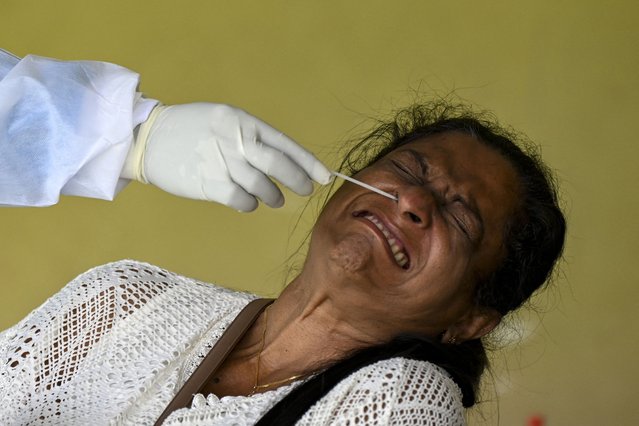
A resident reacts as a health worker collects a swab sample to test for the Covid-19 coronavirus in Colombo on July 27, 2021. (Photo by Ishara S. Kodikara/AFP Photo)
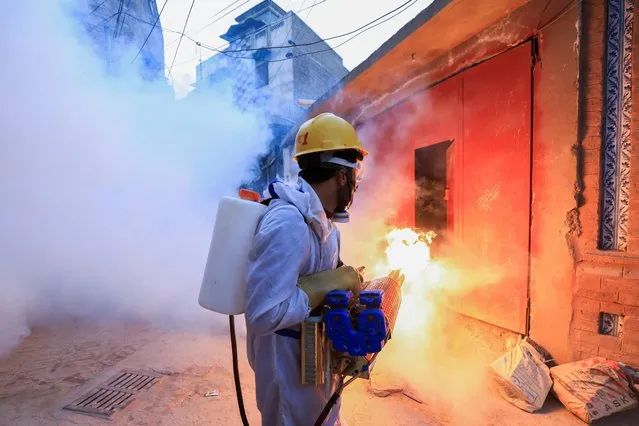
Fire blows from a fogging machine as a worker sprays fumigation vapour to stem the spread of dengue virus along a street in Peshawar, Pakistan, October 18, 2021. (Photo by Fayaz Aziz/Reuters)
Cemetery workers repaint tombs inside the municipal cemetery in Navotas city, north of Manila October 29, 2015. Filipinos are preparing to celebrate All Saints Day on November 1 by visiting the graves of their departed loved ones. (Photo by Ezra Acayan/Reuters)
A rescue worker holds an injured boy after what activists said were airstrikes carried out by the Russian air force in Idlib city, Syria December 20, 2015. (Photo by Ammar Abdullah/Reuters)
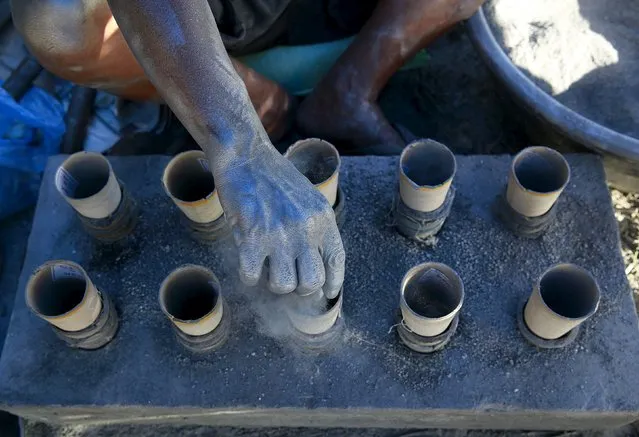
A worker adds gunpowder into paper cylinders to make fireworks at a factory in Bocaue town, Bulacan province, Philippines, December 26, 2015. (Photo by Romeo Ranoco/Reuters)
Workers attach a hat to a pinata depicting the drug lord Joaquin “El Chapo” Guzman at a workshop in Reynosa, July 21, 2015. Guzman broke out of Mexico's top maximum security prison through a tunnel built into his cell earlier this month. (Photo by Daniel Becerril/Reuters)
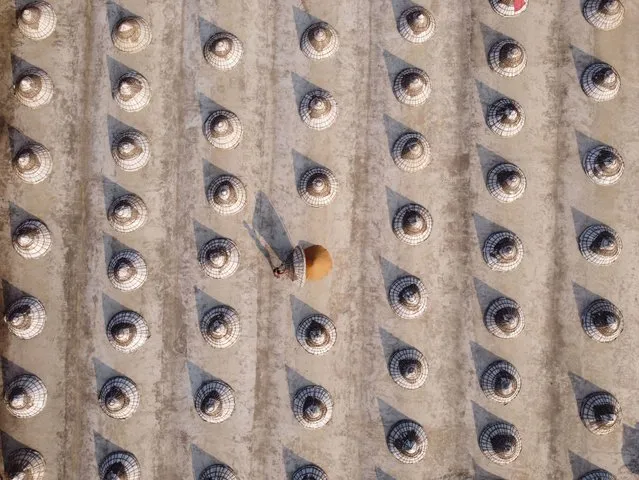
A worker covers mounds of rice with a giant hat-shaped bamboo cone in a field in Brahmanbaria, Bangladesh on September 21, 2023 after they have been dried in the scoring sun. (Photo by Joy Saha/Rex Features/Shutterstock)
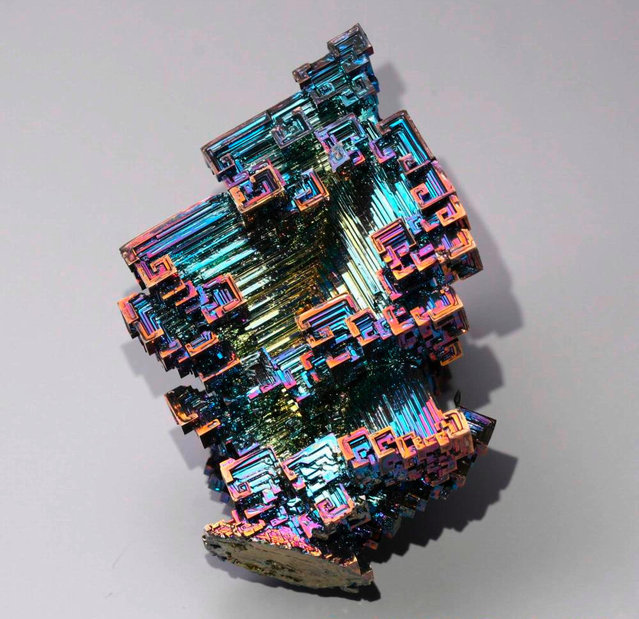
Bismuth is a chemical element with symbol Bi and atomic number 83. Bismuth, a pentavalent poor metal, chemically resembles arsenic and antimony. Elemental bismuth may occur naturally, although its sulfide and oxide form important commercial ores. The free element is 86% as dense as lead. It is a brittle metal with a silvery white color when freshly produced, but is often seen in air with a pink tinge owing to surface oxidation. Bismuth is the most naturally diamagnetic and has one of the lowest values of thermal conductivity among metals.