Loading...
Done
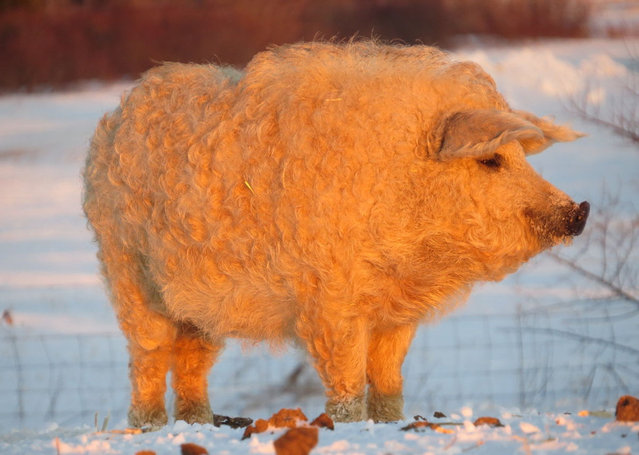
Mangalitsa The Hairy Pig

When you look at the picture of a furry pig that resembles a sheep from a distance, you may think that this may be the result of the work of some crazy scientist that tinkered with the pig’s genome. However, in this case, this is not true. Mangalica is a natural breed of pigs, which were bred in Europe for their lard. This breed of pigs is very unique, since the only other breed of pigs which had a long coat was Loncolnshire Curly Coat, which is now extinct. In the past, these pigs were quite popular, since they were able to produce a lot of lard. However, when the demand for pig lard dwindled, the population of these pigs rapidly decreased, making it a “rare breed”.
Details
01 Dec 2014 13:42:00
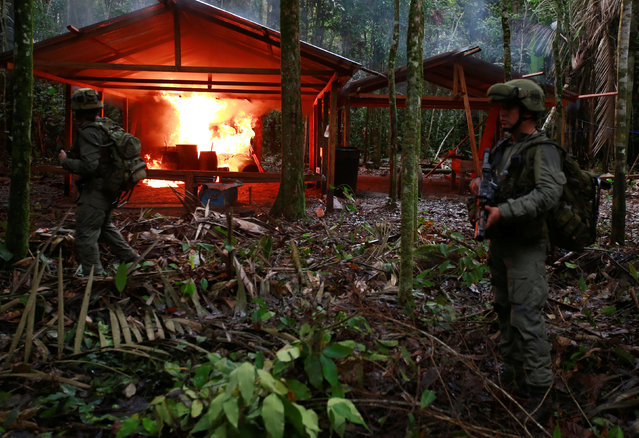
A Colombian anti-narcotics policeman stands guard after burning a cocaine lab, which police said belongs to criminal gangs, in a rural area of Calamar in Guaviare state, Colombia, August 2, 2016. (Photo by John Vizcaino/Reuters)

A Colombian anti-narcotics policeman stands guard after burning a cocaine lab, which police said belongs to criminal gangs, in a rural area of Calamar in Guaviare state, Colombia, August 2, 2016. Colombian law enforcement has destroyed 104 cocaine laboratories capable of producing some 100 tonnes of the drug annually, the head of the anti-narcotics police said on Tuesday. (Photo by John Vizcaino/Reuters)
Details
03 Aug 2016 11:28:00
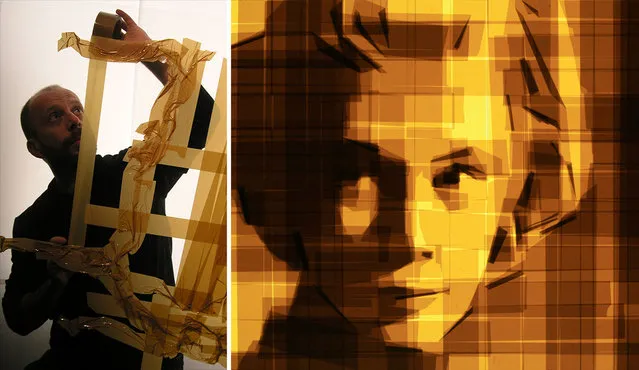
Portraits Out Of Packing Tape By Mark Khaisman

Born in 1958 in Kiev, Ukraine, artist Mark Khaisman studied Art and Architecture at the Moscow Architectural Institute in Russia. Now living in Philadelphia, USA, Khaisman uses rolls of brown packaging tape to create incredible works of art. Mark characterizes his work as ‘pictorial illusions formed by light and shadow’. The three key elements are: translucent packing tape, clear acrylic or film panels, and light. By superimposing layers of packaging tape Mark can ‘play on degrees of opacity that produces transparencies highlighted by the color, shading, and embossment’.
Details
31 Jul 2014 11:41:00
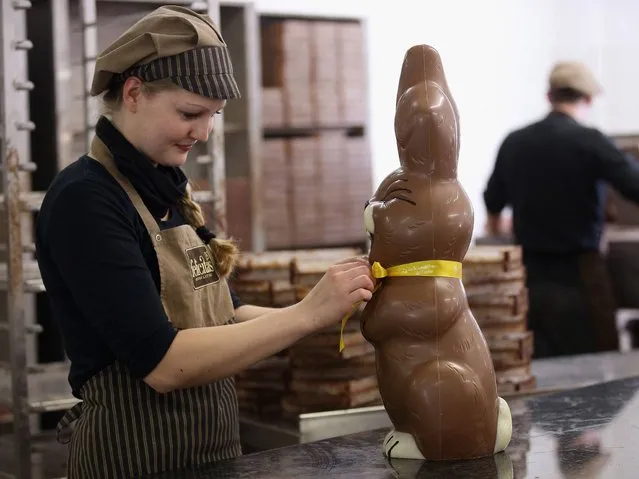
Employee Sandra Jaeckel adjusts a ribbon around the neck of a giant chocolate Easter bunny at the production facility at Confiserie Felicitas chocolates maker in Hornow. (Photo by Sean Gallup/Getty Images)

Employee Sandra Jaeckel, at the photographer's request, adjusts a ribbon around the neck of a giant chocolate Easter bunny at the production facility at Confiserie Felicitas chocolates maker on April 9, 2014 in Hornow, Germany. Easter is among the busiest times of year for the chocolatier, which produces Easter bunnies and eggs in a wide variety of sizes and styles. Founded by Belgian expats Goedele Matthyssen and Peter Bientsman the company will soon celebrate its 21st year. (Photo by Sean Gallup/Getty Images)
Details
14 Apr 2014 08:32:00
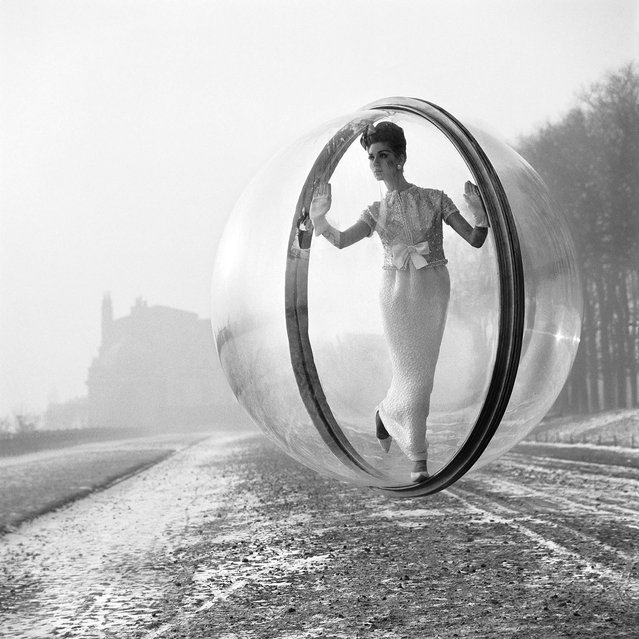
“Paris 1963” – Harper's Bazaar “Bubble” Spring Collection. (Photo by Melvin Sokolsky)

Born 1938 in New York, Melvin Sokolsky was a major figure in the revival of fashion photography from the 1960s. He was only 21 when he started working at Harper's Bazaar for which he produced the “Bubble” series of photographs depicting fashion models floating in giant clear plastic bubbles suspended in midair above the Seine river in Paris. Alongside his steady collaboration with Bazaar, he also worked for publications such as Vogue and the New York Times. Photo: “After Delvaux” – “Paris 1963” – Harper's Bazaar “Bubble” Spring Collection. (Photo by Melvin Sokolsky)
Details
30 Sep 2013 08:19:00
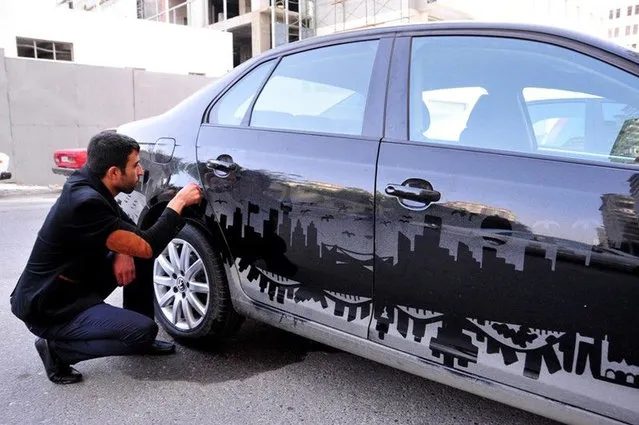
Dirty Art Car By Rafael Veyisov

During work hours on one of the busiest streets of Baku, Azerbaijan’s capital, parking attendant Rafael Veyisov wipes off the dust on cars with his fingers, slowly contouring the shapes of tall buildings and flying birds. In his artwork, he generally illustrates real towns to educate people about other countries, but sometimes he also lets his imagination run wild and produces impressive original works. Surprised by his talent, the car owners who regularly leave their vehicles in Rafael’s care, often leave them dirty just to give him an excuse to play around, and take photos of his beautiful artworks.
Details
13 Oct 2013 17:31:00
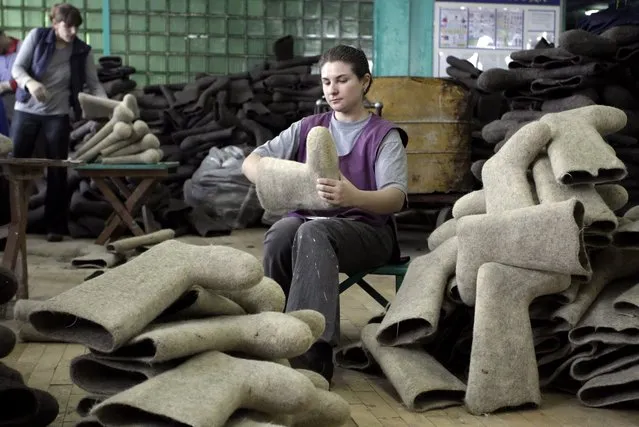
Belarusian workers works at a felt boot factory in Smilovichi, some 35km from Minsk, Belarus, 16 January 2012. (Photo by Tatyana Zenkovich/EPA)

The Smilovichi Felting Factory in Belarus was founded in 1928, when Smilovichi was a small Jewish settlement of craftsmen. Five of those craftsmen organized a small artel (a cooperative association of craftsmen who all live and work together), which produced warm boots called “valenki” for cold weather. Photo: Belarusian workers works at a felt boot factory in Smilovichi, some 35km from Minsk, Belarus, 16 January 2012. (Photo by Tatyana Zenkovich/EPA)
Details
18 Oct 2013 10:02:00
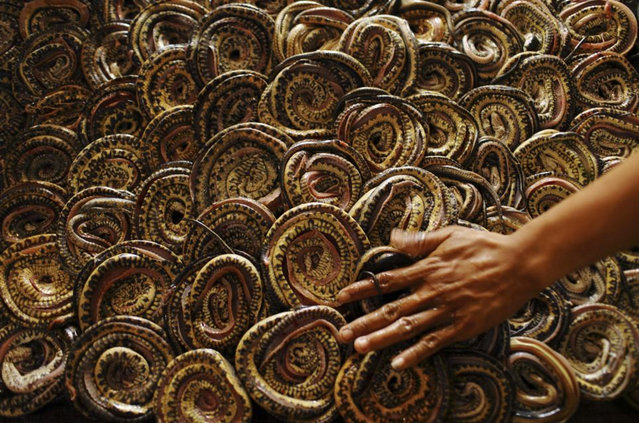
How Snakeskin Handbags Are Made

Images from a snake slaughterhouse at Kapetakan village in Indonesia’s West Java province. Wakira, who is known as “Boss Cobra”, owns the slaughterhouse that produces snake meat and skin. Snake meat is believed by some to be a remedy for skin diseases and asthma, as well as an aid to increase virility. The snake skins, measuring in the hundreds of metres, are sold to bag factories in the West and Central Java provinces on a monthly basis. The price of a bag made from snake skin costs between 150,000 rupiah ($ 15.60) and 300,000 rupiah ($31.20), depending on its size. That snakeskin handbag you’ll buy is costing a hell of a lot more.
Details
20 Feb 2013 12:00:00