Loading...
Done
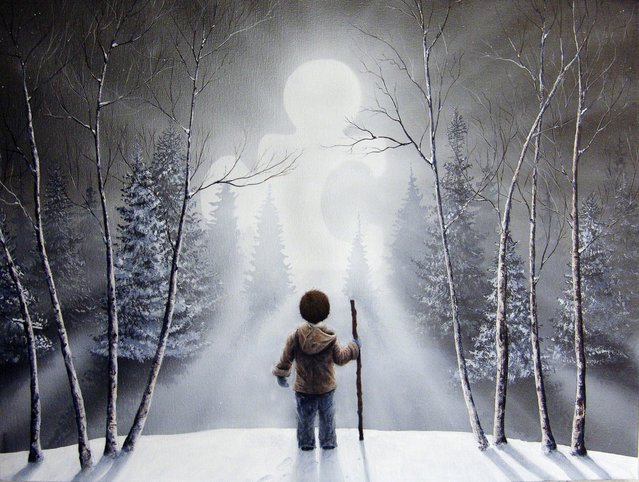
 Surreal Paintings by Robert Dowling Jr

Maine-based Robert Dowling Jr. creates wonderfully whimsical stories with a slightly surreal touch. The self-taught artist, who works primarily in acrylics and oils, often paints characters with their faces covered or turned away. Love art like this that both children and adults can enjoy in their own unique way.
Details
10 Jul 2013 13:37:00
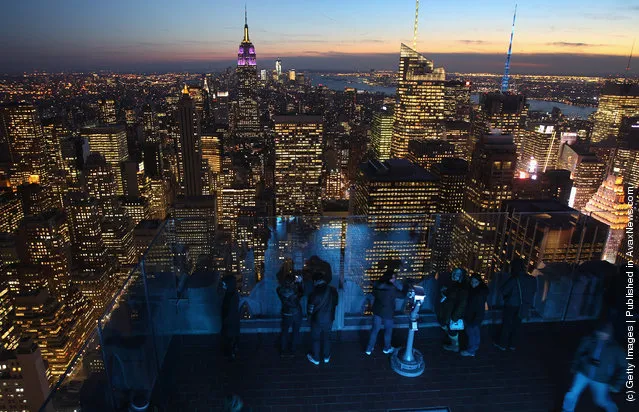
The Empire State Building towers over the Manhattan skyline as tourists gather on the observation deck of Rockefeller Center

The Empire State Building towers over the Manhattan skyline as tourists gather on the observation deck of Rockefeller Center on February 13, 2012 in New York City. The owner of the Empire State Building, Malkin Holdings, plans to raise up to $1 billion in an initial public offering on the 102 story Manhattan landmark. (Photo by John Moore/Getty Images)
Details
14 Feb 2012 10:30:00
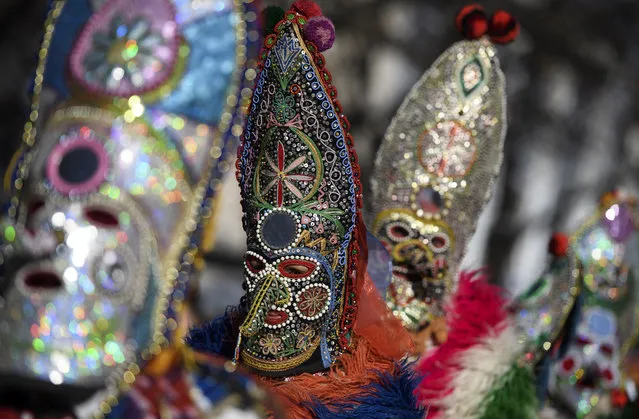
Mask dancers take part in a parade during the the International Festival of Masquerade Games “Surva” in the town of Pernik, some 30 km from Sofia, Bulgaria, 27 January 2019. In ancient times the old Thracians held the Kukeri Ritual Games in honor of god Dionysus – known as a god of wine and ecstasy. Even today these games are also known as the Dionysus' games. Among the Kukeri dancers' are many characters, including Dionysus and his satyrs as well as others from deep history such as the tsar, harachari, plyuvkachi, startzi, and pesyatzi. (Photo by Vassil Donev/EPA/EFE)

Mask dancers take part in a parade during the the International Festival of Masquerade Games “Surva” in the town of Pernik, some 30 km from Sofia, Bulgaria, 27 January 2019. In ancient times the old Thracians held the Kukeri Ritual Games in honor of god Dionysus – known as a god of wine and ecstasy. Even today these games are also known as the Dionysus' games. Among the Kukeri dancers' are many characters, including Dionysus and his satyrs as well as others from deep history such as the tsar, harachari, plyuvkachi, startzi, and pesyatzi. (Photo by Vassil Donev/EPA/EFE)
Details
31 Jan 2019 00:01:00
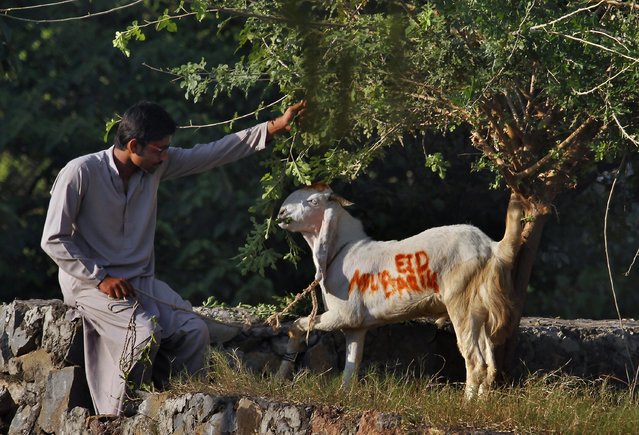
A Pakistani feeds his goat wearing the words “Eid Mubarak” or “Eid Greeting”, to be slaughtered on the Muslim holiday of Eid al-Adha, or “Feast of Sacrifice”, in Islamabad, Pakistan on Tuesday, October 15, 2013. Muslims all over the world are celebrating Eid al-Adha by sacrificing sheep, goats, cows and camels, to commemorate the Prophet Abraham's readiness to sacrifice his son, Ismail, on God's command. (Photo by Anjum Naveed/AP Photo)

A Pakistani feeds his goat wearing the words “Eid Mubarak” or “Eid Greeting”, to be slaughtered on the Muslim holiday of Eid al-Adha, or “Feast of Sacrifice”, in Islamabad, Pakistan on Tuesday, October 15, 2013. Muslims all over the world are celebrating Eid al-Adha by sacrificing sheep, goats, cows and camels, to commemorate the Prophet Abraham's readiness to sacrifice his son, Ismail, on God's command. (Photo by Anjum Naveed/AP Photo)
Details
17 Oct 2013 07:56:00
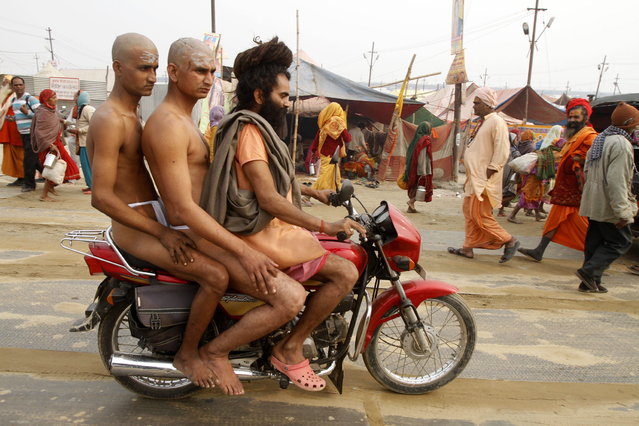
Two Hindu holy men of the Juna Akhara sect  are being take on a motorcycle by their teacher as they got delayed for a rituals that are believed to rid them of all ties in this life and dedicate themselves to serving God as a “Naga” or naked holy men, at Sangam, the confluence of the Ganges and Yamuna River during the Maha Kumbh festival in Allahabad, India, Wednesday, February 6, 2013. (Photo by Rajesh Kumar Singh/AP Photo)

Two Hindu holy men of the Juna Akhara sect are being take on a motorcycle by their teacher as they got delayed for a rituals that are believed to rid them of all ties in this life and dedicate themselves to serving God as a “Naga” or naked holy men, at Sangam, the confluence of the Ganges and Yamuna River during the Maha Kumbh festival in Allahabad, India, Wednesday, February 6, 2013. The significance of nakedness is that they will not have any worldly ties to material belongings, even something as simple as clothes. This ritual that transforms selected holy men to Naga can only be done at the Kumbh festival. (Photo by Rajesh Kumar Singh/AP Photo)
Details
07 Feb 2013 10:11:00
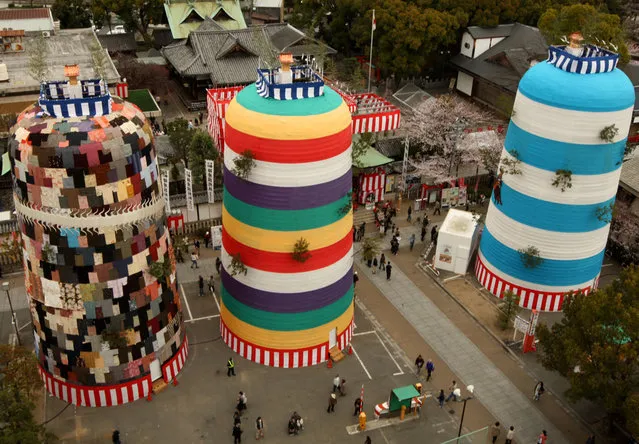
The main feature of the Mitsuyama Taisai Festival, three 18 meters tall 'mountains.' are displayed at the Itate Hyozu Shrine on March 31, 2013 in Himeji, Japan. The festival is held once in 20 years since 1593, Priests of Itate Hyozu Shrine welcome to all the gods across the country for top of the three mountains and treat with food seven days from today as to pray for peace and prosperity.  (Photo by Buddhika Weerasinghe)

The main feature of the Mitsuyama Taisai Festival, three 18 meters tall “mountains”. are displayed at the Itate Hyozu Shrine on March 31, 2013 in Himeji, Japan. The festival is held once in 20 years since 1593, Priests of Itate Hyozu Shrine welcome to all the gods across the country for top of the three mountains and treat with food seven days from today as to pray for peace and prosperity. (Photo by Buddhika Weerasinghe)
Details
02 Apr 2013 12:14:00


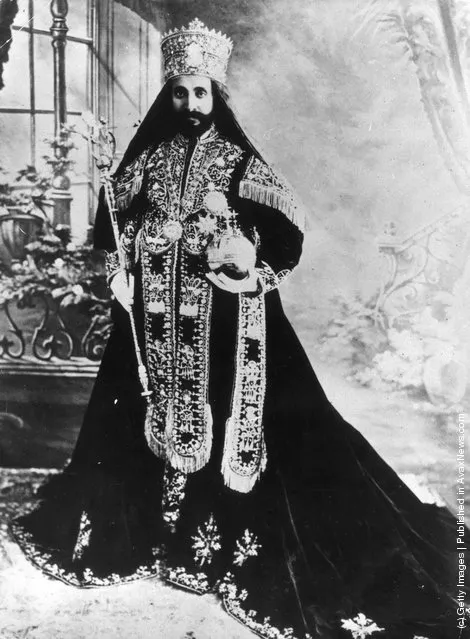
“Haile Selassie I (23 July 1892 – 27 August 1975), born Tafari Makonnen, was Ethiopia's regent from 1916 to 1930 and Emperor of Ethiopia from 1930 to 1974. The heir to a dynasty that traced its origins to the 13th century, and from there by tradition back to King Solomon and Queen Makeda, Empress of Axum, known in the Abrahamic tradition as the Queen of Sheba. Haile Selassie is a defining figure in both Ethiopian and African history.

Haile Selassie is revered as the returned Messiah of the Bible, God incarnate, among the Rastafari movement, the number of followers of which is estimated between 200,000 and 800,000. Begun in Jamaica in the 1930s, the Rastafari movement perceives Haile Selassie as a messianic figure who will lead a future golden age of eternal peace, righteousness, and prosperity. He himself remained an Ethiopian Orthodox Christian throughout his life”. – Wikipedia

Photo: Negusa Negasti, Emperor of Ethiopia Haile Selassie I, known as “Lord of Lords”, “The Conquering Lion of the tribe of Judah”, “Light of the world”, “Elect of God”, in full ceremonial regalia following his coronation. (Photo by Hulton Archive/Getty Images)

Details
21 Jun 2011 11:04:00
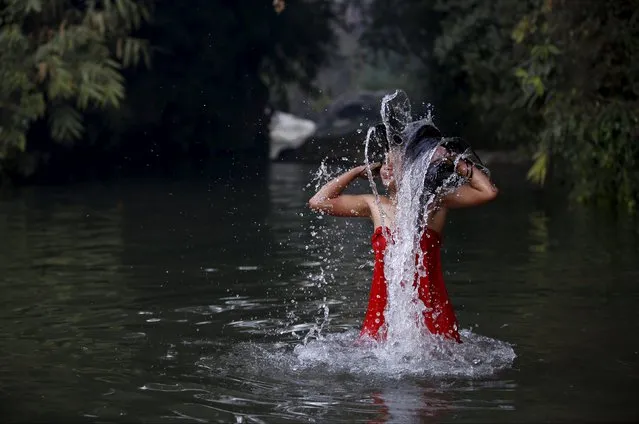
A devotee takes a holy bath in River Saali in Sankhu during the Swasthani Brata Katha festival in Kathmandu, Nepal, January 24, 2016. (Photo by Navesh Chitrakar/Reuters)

A devotee takes a holy bath in River Saali in Sankhu during the Swasthani Brata Katha festival in Kathmandu, Nepal, January 24, 2016. During the month long festival, devotees recite one chapter of a Hindu tale daily from the 31-chapter sacred Swasthani Brata Katha book that is dedicated to God Madhavnarayan and Goddess Swasthani, alongside various other gods and goddess and the miraculous feats performed by them. The devotees also go on pilgrimages to various temples, perform religious rituals, take a holy bath in the rivers and fast for a month, especially among women who believe fasting helps in their family's well-being or in getting them a good husband. (Photo by Navesh Chitrakar/Reuters)
Details
25 Jan 2016 12:05:00