Loading...
Done
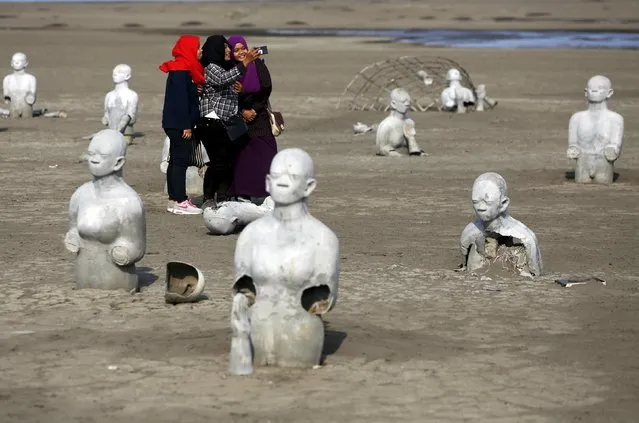
Women take pictures between stone sculptures of half-buried people at the Lapindo mud field in Sidoarjo, October 11, 2015. Disaster tourism has become more common in Indonesia, where visitors are drawn to sites of earthquakes, floods and volcanic eruptions to witness the aftermath of catastrophes or simply do some soul-searching. (Photo by Reuters/Beawiharta)

Women take pictures between stone sculptures of half-buried people at the Lapindo mud field in Sidoarjo, October 11, 2015. Disaster tourism has become more common in Indonesia, where visitors are drawn to sites of earthquakes, floods and volcanic eruptions to witness the aftermath of catastrophes or simply do some soul-searching. (Photo by Reuters/Beawiharta)
Details
30 Oct 2015 08:01:00
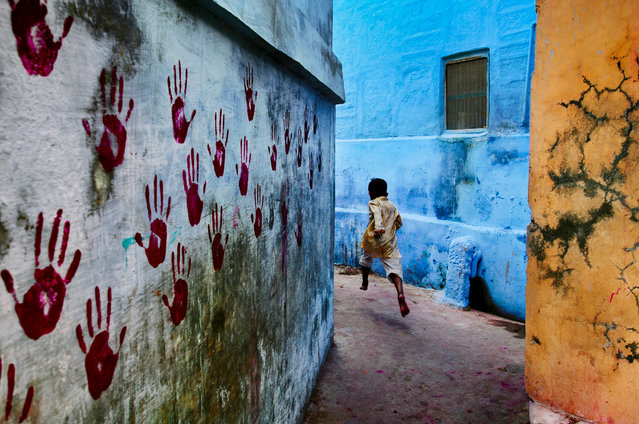
"Steve McCurry: India", co-organized by the Rubin Museum and the International Center of Photography, brings together photographs of India-its people, monuments, landscapes, seasons, and cities. The exhibition at the Rubin Museum in New York runs from November 18, 2015- April 4, 2016. Here: A boy in mid-flight in Jodhpur, Rajasthan, India, in 2007. (Photo by Steve McCurry)

"Steve McCurry: India", co-organized by the Rubin Museum and the International Center of Photography, brings together photographs of India-its people, monuments, landscapes, seasons, and cities. The exhibition at the Rubin Museum in New York runs from November 18, 2015 – April 4, 2016. Here: A boy in mid-flight in Jodhpur, Rajasthan, India, in 2007. (Photo by Steve McCurry)
Details
30 Nov 2015 08:06:00
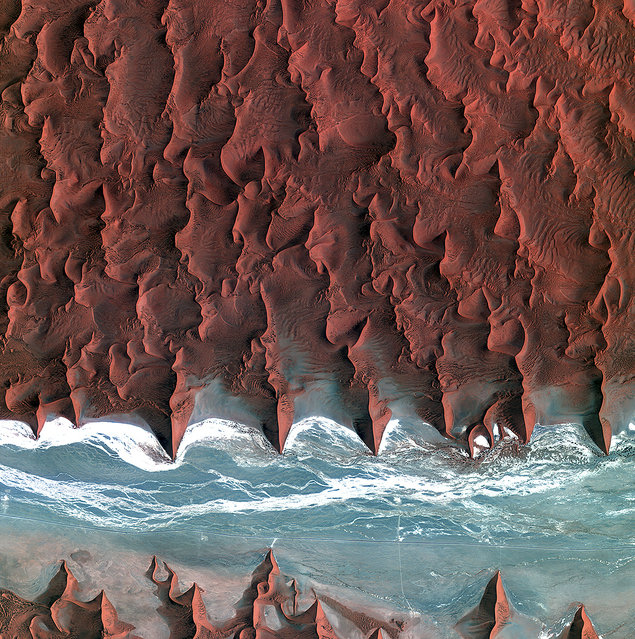
These are the dunes of the Namib Desert, taken by Korea's Kompstat-2 satellite. The blue and white area is the dried riverbed of the Tsauchab river. (Photo by The European Space Agency)

These are the dunes of the Namib Desert, taken by Korea's Kompstat-2 satellite. The blue and white area is the dried riverbed of the Tsauchab river. (Photo by The European Space Agency)
Details
17 Aug 2014 09:13:00
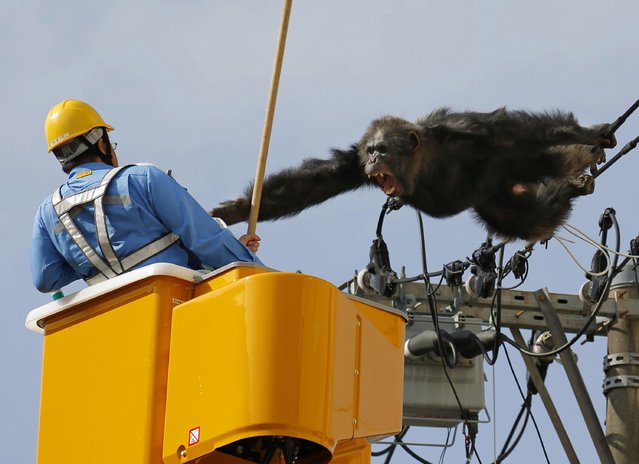
Chacha, the male chimp, screams at a worker in Sendai, northern Japan, Thursday, April 14, 2016 after fleeing from a zoo. The chimpangzee tried desperately to avoid being captured by climbing an electric pole. Chacha was on the loose nearly two hours Thursday after it disappeared from the Yagiyama Zoological Park in Sendai, the city that's hosting finance ministers from the Group of Seven industrialized nations in May. (Photo by Kyodo News via AP Photo)

Chacha, the male chimp, screams at a worker in Sendai, northern Japan, Thursday, April 14, 2016 after fleeing from a zoo. The chimpangzee tried desperately to avoid being captured by climbing an electric pole. Chacha was on the loose nearly two hours Thursday after it disappeared from the Yagiyama Zoological Park in Sendai, the city that's hosting finance ministers from the Group of Seven industrialized nations in May. (Photo by Kyodo News via AP Photo)
Details
15 Apr 2016 11:34:00
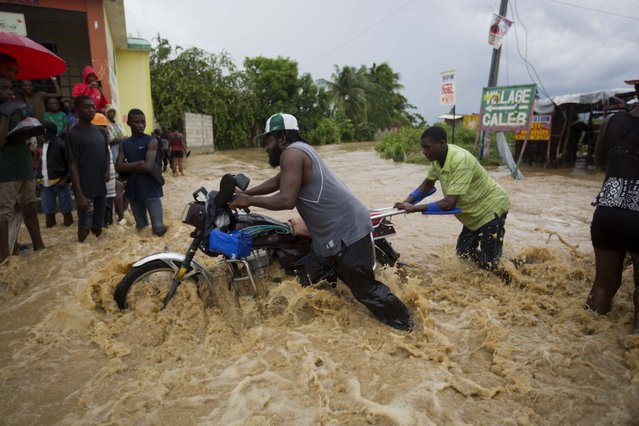
Men push a motorbike through a street flooded by a river that overflowed from heavy rains caused by Hurricane Matthew in Leogane, Haiti, Wednesday, October 5, 2016. Rescue workers in Haiti struggled to reach cutoff towns and learn the full extent of the death and destruction caused by Hurricane Matthew as the storm began battering the Bahamas on Wednesday and triggered large-scale evacuations along the U.S. East Coast. (Photo by Dieu Nalio Chery/AP Photo)

Men push a motorbike through a street flooded by a river that overflowed from heavy rains caused by Hurricane Matthew in Leogane, Haiti, Wednesday, October 5, 2016. Rescue workers in Haiti struggled to reach cutoff towns and learn the full extent of the death and destruction caused by Hurricane Matthew as the storm began battering the Bahamas on Wednesday and triggered large-scale evacuations along the U.S. East Coast. (Photo by Dieu Nalio Chery/AP Photo)
Details
06 Oct 2016 09:46:00
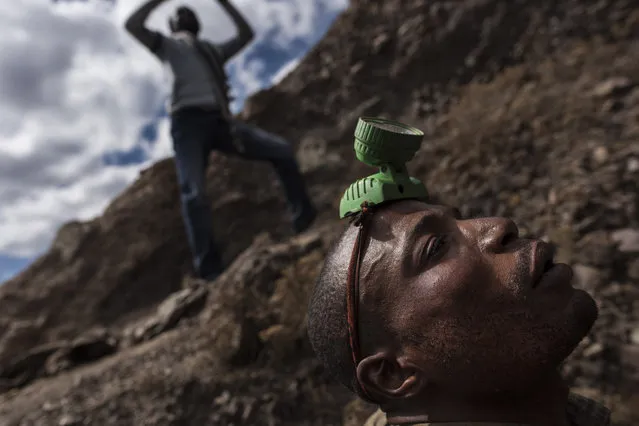
A “creuseur”, or digger, a plastic lantern on his head, readies to enter a copper and cobalt mine in Kawama, Democratic Republic of Congo on June 8, 2016. Cobalt is used in the batteries for electric cars and mobile phones. Working conditions are dangerous, often with no safety equipment or structural support for the tunnels. The diggers say they are paid on average US$2-3/day. (Photo by Michael Robinson Chavez/The Washington Post)

A “creuseur”, or digger, a plastic lantern on his head, readies to enter a copper and cobalt mine in Kawama, Democratic Republic of Congo on June 8, 2016. Cobalt is used in the batteries for electric cars and mobile phones. Working conditions are dangerous, often with no safety equipment or structural support for the tunnels. The diggers say they are paid on average US$2-3/day. (Photo by Michael Robinson Chavez/The Washington Post)
Details
30 Dec 2016 10:29:00
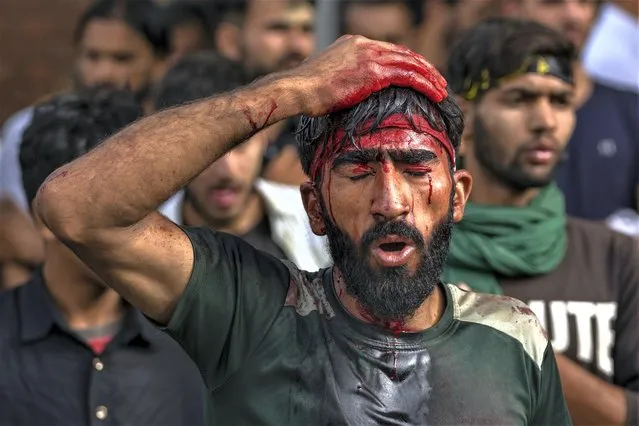
A Kashmiri Shiite Muslim mourns as he flagellates himself during a Muharram procession in Srinagar, Indian controlled Kashmir, Thursday, July 27, 2023. Muharram is a month of mourning for Shiite Muslims in remembrance of the martyrdom of Imam Hussein, the grandson of the Prophet Muhammad. (Photo by Dar Yasin/AP Photo)

A Kashmiri Shiite Muslim mourns as he flagellates himself during a Muharram procession in Srinagar, Indian controlled Kashmir, Thursday, July 27, 2023. Muharram is a month of mourning for Shiite Muslims in remembrance of the martyrdom of Imam Hussein, the grandson of the Prophet Muhammad. (Photo by Dar Yasin/AP Photo)
Details
05 Aug 2023 00:10:00
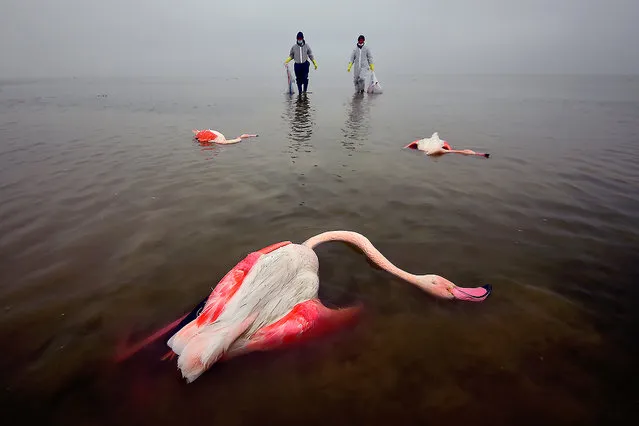
Grand title winner: Environmental photographer of the year. The Bitter Death Of Birds by Mehdi Mohebi Pour. This photo shows the efforts of the environmental forces to collect the bodies and prevent the spread of this disease. The Miankaleh wetland is being destroyed by changes in the climate and it is my duty as a photographer to highlight these problems and create a record for history. I want to prevent the complete destruction of the wetland and the potential environmental disaster by showing the issues and threats to these beautiful natural places. (Photo by Mehdi Mohebi Pour/Environmental Photographer of the Year)

Grand title winner: Environmental photographer of the year. The Bitter Death Of Birds by Mehdi Mohebi Pour. This photo shows the efforts of the environmental forces to collect the bodies and prevent the spread of this disease. The Miankaleh wetland is being destroyed by changes in the climate and it is my duty as a photographer to highlight these problems and create a record for history. I want to prevent the complete destruction of the wetland and the potential environmental disaster by showing the issues and threats to these beautiful natural places. (Photo by Mehdi Mohebi Pour/Environmental Photographer of the Year)
Details
05 Dec 2022 04:27:00