Loading...
Done
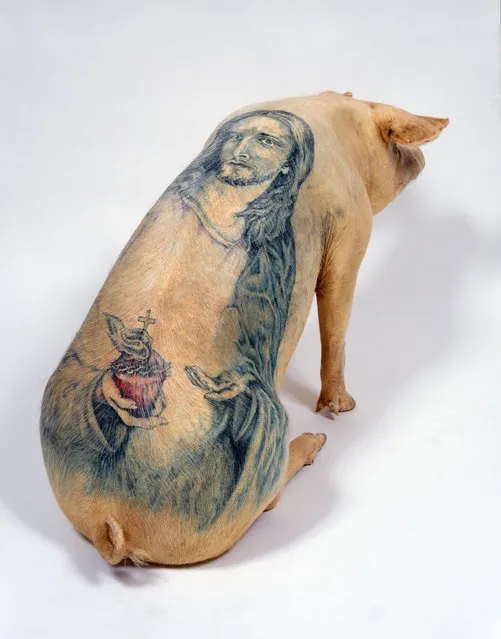
Tattooing Pigs By Wim Delvoye

Wim Delvoye is a notorious tattoo artist, who became famous when he started tattooing live pigs. He first began in 1997 and after animal rights activists found out about what he was doing, he had to move to China to continue his business. There is nothing special about the tattoos that Wim Delvoye creates, they look mediocre at best, and the only reason why he’s famous is his acts of animal cruelty. Nevertheless, Wim states that the pigs feel just fine and are well fed and taken care off. Full anesthesia is used to ensure that the pig doesn’t feel pain during the course of the whole procedure. During this time three tattoo artists work on the tattoo simultaneously to complete it as quickly as possible. Skins of those pigs are then sold for as much as £50k a piece.
Details
02 Apr 2015 09:06:00
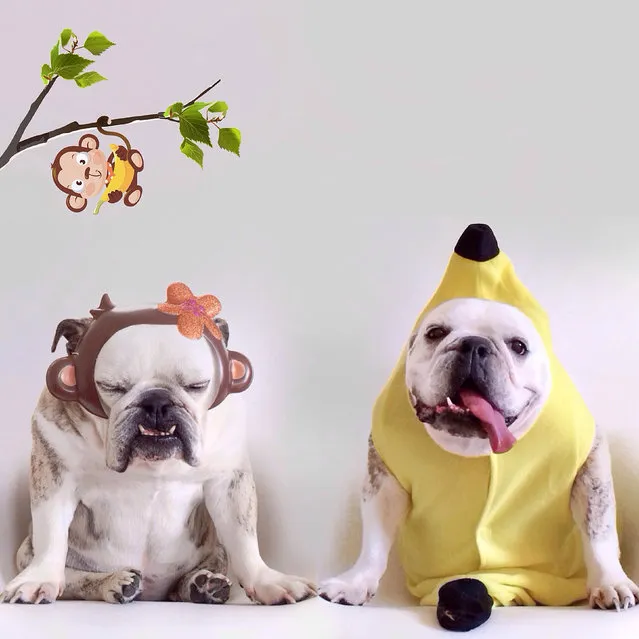
A well-dressed bulldog has amassed thousands of fans online, after her owner took to dressing her up in wildly elaborate outfits and posting the pictures to the photo-sharing site Instagram. Tania Ahsan, 31, of New York, has posted online over 500 pictures of her patient pooch, Maya, and nearly 70,000 people have followed her exploits. Here: Maya as a monkey and a banana. (Photo by Tania Ahsan/Caters News)

A well-dressed bulldog has amassed thousands of fans online, after her owner took to dressing her up in wildly elaborate outfits and posting the pictures to the photo-sharing site Instagram. Tania Ahsan, 31, of New York, has posted online over 500 pictures of her patient pooch, Maya, and nearly 70,000 people have followed her exploits. Maya has been pictured as Queen Victoria, King Kong, Elvis Presley and Sherlock Bones, and far from wriggling out of the getups as soon as possible, Ahsan says Maya loves it. Here: Maya as a monkey and a banana. (Photo by Tania Ahsan/Caters News)
Details
13 Apr 2015 12:20:00
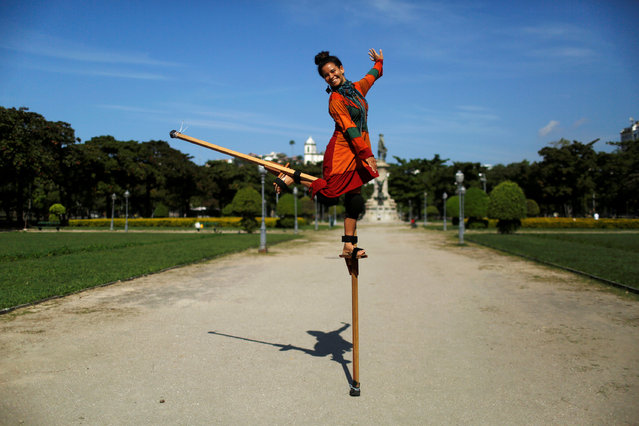
Raquel Poti, a 32-year-old street artist, poses at a park in Rio de Janeiro, Brazil, June 25, 2016. Raquel thinks the Olympics promotes a lifestyle that combines sports, culture and education. She is concerned about the large investment for the event while the population needs improvements in basic services. (Photo by Pilar Olivares/Reuters)

Just a week before Rio de Janeiro hosts South America's first Olympics, city residents expressed mixed feelings about the cost and security of the Games, while holding out hope they will bring joy to a nation facing economic and political crises. The conflicted thoughts mirror a recent survey by the Datafolha polling group showing that half of Brazilians were opposed to holding the Games, while 63 percent think the costs of hosting the event will outweigh benefits. (Photo by Pilar Olivares/Reuters)
Details
03 Aug 2016 11:51:00
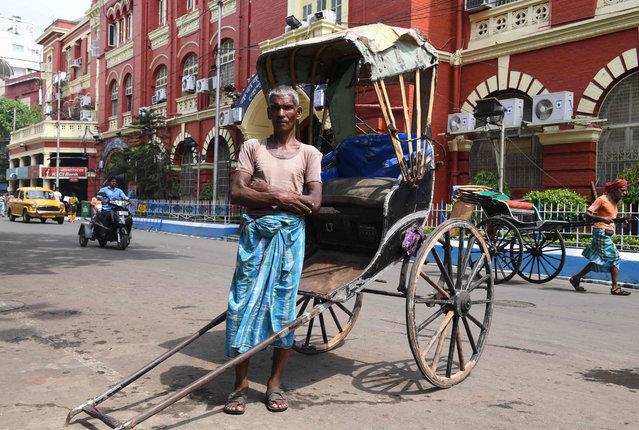
Mohammad Ashgar, 65, an Indian rickshaw puller, poses for a photograph next to his rickshaw in Kolkata on April 21, 2018. A mainstay of 19 th century transportation options, the hand- pulled rickshaw survives in India only in Kolkata after being outlawed elsewhere. The local puller's union puts the number of pullers in the city at 3,000. The union has resisted all previous attempts to ban their livelihood, previously organising mass protests of their members against moves to stamp out the practice. (Photo by Dibyangshu Sarkar/AFP Photo)

Ahead of May Day, AFP' s video and photo teams spoke to men and women around the globe whose jobs are becoming increasingly rare, particularly as technology transforms societies. Here: Mohammad Ashgar, 65, an Indian rickshaw puller, poses for a photograph next to his rickshaw in Kolkata on April 21, 2018. (Photo by Dibyangshu Sarkar/AFP Photo)
Details
02 May 2018 00:01:00
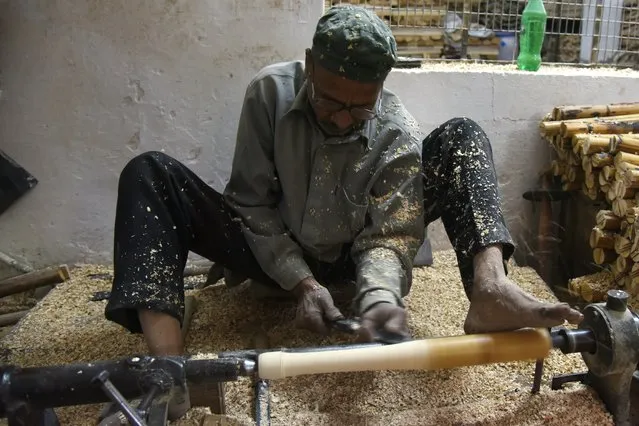
In this photograph taken on December 14, 2016, an Indian craftsman works on unfinished cricket bats in a factory in Meerut, some 70 kms north- east of New Delhi. As Indian factory worker Jitender Singh carves out another big- hitting slab of thick willow he insists MCC proposals to limit the size of cricket bats won' t tame Twenty20 marauders. “I don' t think the thickness matters. It' s more about the balance of the bat and the talent of the batsman”, says Singh, who has made bats for many stars, including South Africa's AB de Villiers. The World Cricket committee of the MCC, the guardians of the game, recommended in December 2016 that limitations be placed on the width and depth of bats because it had become too easy to smash fours and sixes. (Photo by Dominique Faget/AFP Photo)

In this photograph taken on December 14, 2016, an Indian craftsman works on unfinished cricket bats in a factory in Meerut, some 70 kms north- east of New Delhi. (Photo by Dominique Faget/AFP Photo)
Details
11 Jan 2017 14:32:00
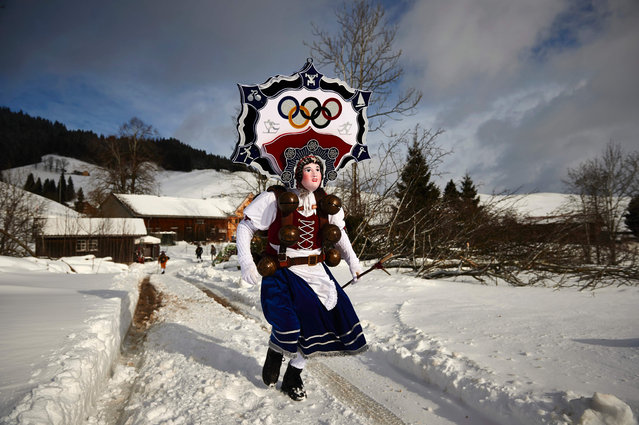
A leader “Rolli” of a yodel group “Schuppel” runs in the snow in front of a farmstead during the “Silvesterchlausen” in the early morning in Urnaesch in the Swiss canton Appenzell Ausserroden on January 13, 2017. The “Silvesterchlausen” is a tradition of the Swiss canton Appenzell, where colorfull characters organized in groups called “Schuppel”, chase out the old year and welcome the new one. They run all day long from farmstead to farmstead, gather together to sing a jodel and great the farmers. A “Schuppel” consists of some “Schelli” and two “Rolli”, sometimes with female dresses and nice scenes over the head, despite the dress all participants are males. The Silversterchlausen run twice a year, first for the new Silvester on December 31, and then again on January 13, for the old Silvester following the Julian calendar. (Photo by Michael Buholzer/AFP Photo)

A leader “Rolli” of a yodel group “Schuppel” runs in the snow in front of a farmstead during the “Silvesterchlausen” in the early morning in Urnaesch in the Swiss canton Appenzell Ausserroden on January 13, 2017. (Photo by Michael Buholzer/AFP Photo)
Details
14 Jan 2017 12:41:00
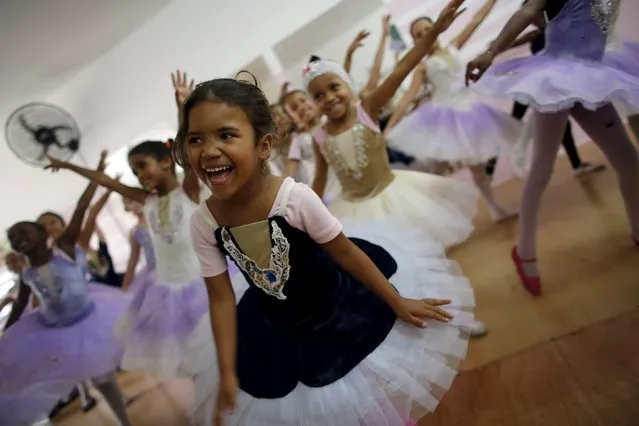
Young girls take ballet lessons at the New Dreams dance studio in the Luz neighborhood known to locals as Cracolandia (Crackland) in Sao Paulo, Brazil, August 14, 2015. (Photo by Nacho Doce/Reuters)

Young girls take ballet lessons at the New Dreams dance studio in the Luz neighborhood known to locals as Cracolandia (Crackland) in Sao Paulo, Brazil, August 14, 2015. For the young girls learning to jump and plie, the dance studio provides a way forward and out of the difficult environment they have grown up in. Brazil is one of the world's highest consuming countries of crack cocaine, and Cracolandia, or “Crack Land”, located in the outskirts of Sao Paulo, is one of the most intense and brutal hubs. (Photo by Nacho Doce/Reuters)
Details
18 Aug 2015 13:59:00
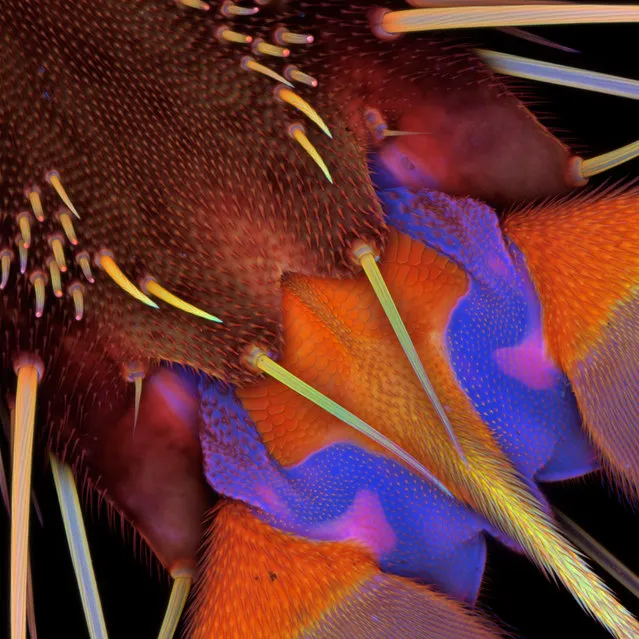
Pretarsus of the third leg of a female drone fly (Eristalis tenax), ventral view, by Dr. Jan Michels, Institute of Zoology, Christian-Albrechts-University of Kiel, Germany. (Photo by Olympus BioScapes)

“Microscope images forge an extraordinary bond between science and art, said Hidenao Tsuchiya, Olympus America's Vice President and General Manager for the Scientific Equipment Group. We founded this competition to focus on the fascinating stories coming out of today's life science research laboratories. The thousands of images that people have shared with the competition over the years reflect some of the most exciting work going on in research today – work that can help shed light on the living universe and ultimately save lives. We look at BioScapes and these beautiful images as sources of education and inspiration to us and the world”. – OlympusBioScapes

Photo: Pretarsus of the third leg of a female drone fly (Eristalis tenax), ventral view, by Dr. Jan Michels, Institute of Zoology, Christian-Albrechts-University of Kiel, Germany. (Photo by Olympus BioScapes)
Details
29 Jul 2012 09:20:00