Loading...
Done
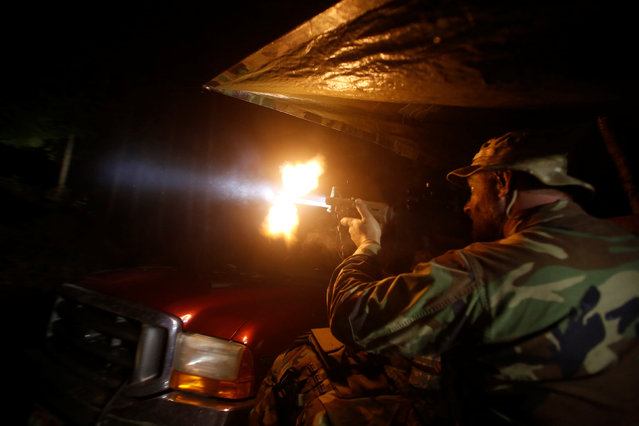
Members of the Oath Keepers and general public return fire during a simulated attack as they take part in a tactical training session in northern Idaho, U.S. October 1, 2016. (Photo by Jim Urquhart/Reuters)

Members of the Oath Keepers and general public return fire during a simulated attack as they take part in a tactical training session in northern Idaho, U.S. October 1, 2016. In April 2015 Reuters photographer Jim Urquhart was assigned to cover the Oath Keepers during a tour of the Sugar Pine gold mine in Oregon after the group of former cops, military, firefighters and other first responders had risen to prominence during a standoff in Nevada over land rights. (Photo by Jim Urquhart/Reuters)
Details
05 Nov 2016 12:05:00
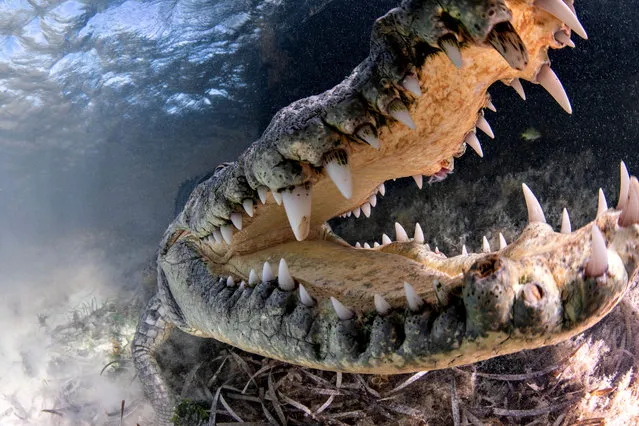
The trip to get to the reef takes eight hours by car and boat, and there is no luxury hotel at the other end. (Photo by Alex Suh/Caters News Agency)

A photographer with a passion for wild animals was able to get up close and personal with one of nature’s deadliest creatures. Alex Suh has traveled to Mexico’s Banco Chinchorro reef twice in the past three years to get into the waters and capture the crocodiles in their natural habitat after an invitation from Yucatan Dive Trek. (Photo by Alex Suh/Caters News Agency)
Details
24 Aug 2018 00:01:00
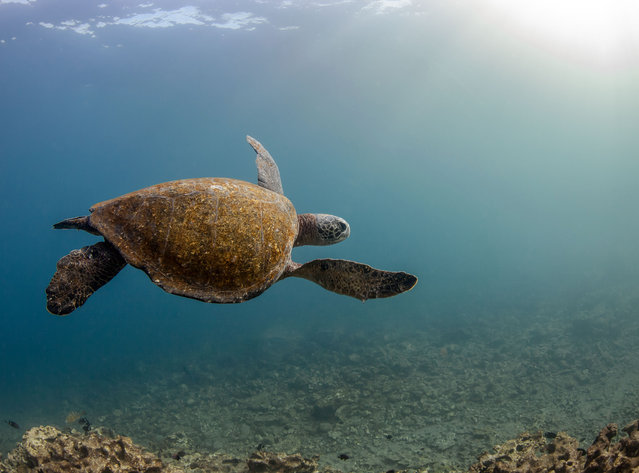
Green turtles take special care of their carapace, scraping algae off on rocks or letting cleaner fish remove parasites. Thanks to long-term protection of nesting sites, and measures to reduce the numbers caught in fishing gear, some green turtle populations are starting to recover. (Photo by Philip Hamilton/The Guardian)

Teeming with images of spectacular underwater scenes from around the world, Call of the Blue is the culmination of a five-year project by the photographer and ocean conservationist Philip Hamilton. This groundbreaking book includes contributions from acclaimed scientists and ocean “guardians”, who reveal what drove them to answer the call of the blue. (Photo by Philip Hamilton/The Guardian)
Details
23 Nov 2018 00:03:00
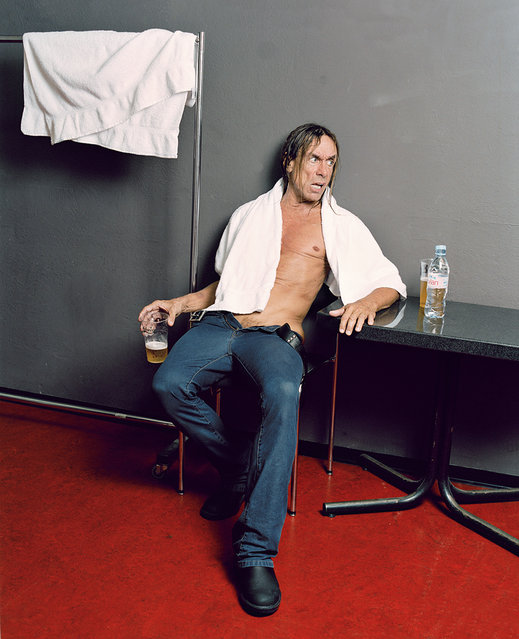
“The Moment After the Show”: Iggy Pop. (Photo by Matthias Willi/Olivier Joliat/The Moment After The Show)

“That’s the only way to show how we really are” – sweaty, exhausted, but happy, actress and singer Juliette Lewis said about the idea of a photo collection capturing musicians moments after a concert. Photographer Matthias Willi and journalist Olivier Joliat have persuaded about 100 bands to take part in their “The Moment After the Show” project since 2005. Photo: Iggy Pop. (Photo by Matthias Willi/Olivier Joliat/The Moment After The Show)
Details
25 Aug 2014 10:36:00
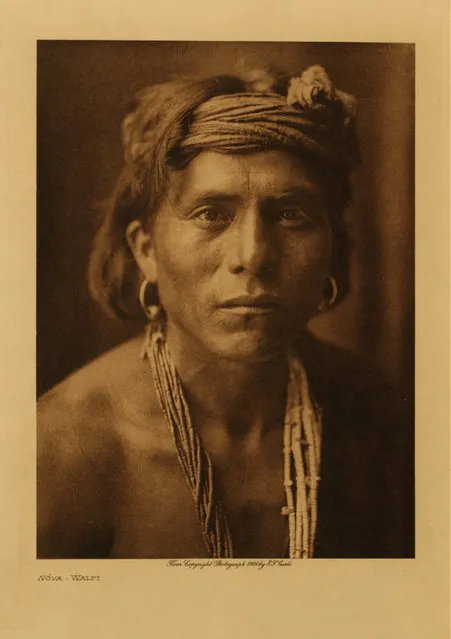
Nova, a Walpi, in 1906. (Photo by Edward S. Curtis)

At the beginning of the 20th century, Edward S. Curtis set out to document what he saw as a disappearing race: the Native American. From 1907 to 1930, Curtis took more than 2,000 photos of 80 tribes stretching from the Great Plains to the Pacific Northwest and Alaska. He then published and sold these photos, along with narrative text, in 20 volumes of work known as “The North American Indian”. It is one of the most significant collections of its kind, “probably the most important photographic document of its age and its topic,” said Jeffrey Garrett, associate university librarian for Special Libraries at Northwestern University. (Photo by Edward S. Curtis)
Details
07 Sep 2014 12:57:00
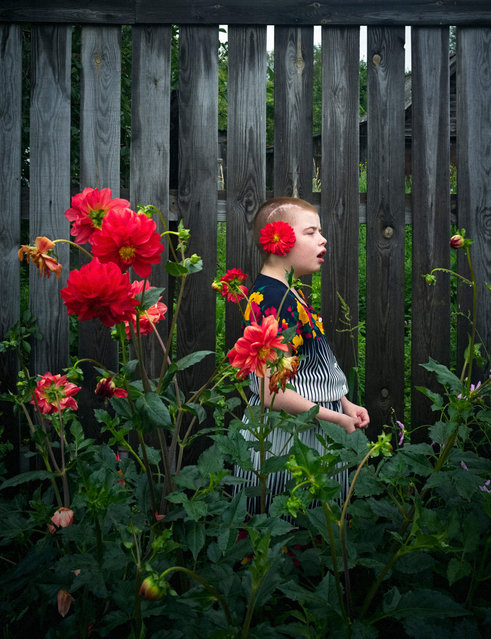
Portrait of a girl from the neuropsychiatric boarding facility for girls. (Photo by Anastasia Rudenko)

“Elat’ma, the Ryazan Oblast region of Russia. This small town is only 300 kilometers (186 miles) from modern Moscow but remains 60 years in the past, dominated by the spirit of socialism. The air of the communist ‘50s can be seen in the town’s architecture, celebrations and other occurrences. But neither its beauty nor its ties to a socialist past brought photographer Anastasia Rudenko to this village. Elat’ma is unique in that it functions as a town for mentally disabled people”. – Michelle Cohan via CNN. (Photo by Anastasia Rudenko)
Details
09 Sep 2014 08:20:00
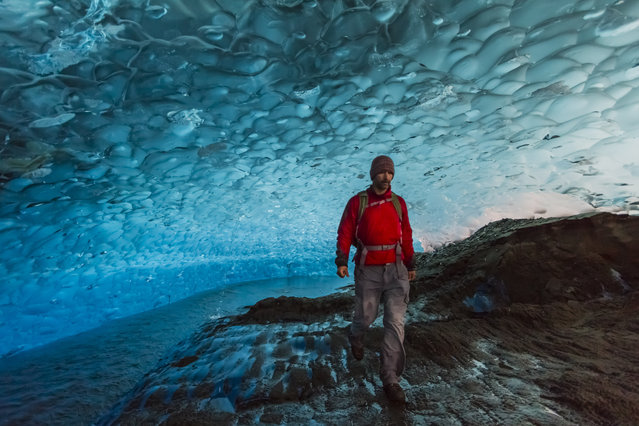
Daniel Fox inside the Mendenhall Glacier, in September 2014, in Juneau, Alaska. Driving in an open-roofed jeep is no longer the fashionable way to see wildlife – as this adventurer shows. (Photo by Daniel Fox/Barcroft Media)

Daniel Fox inside the Mendenhall Glacier, in September 2014, in Juneau, Alaska. Driving in an open-roofed jeep is no longer the fashionable way to see wildlife – as this adventurer shows. A keen wildlife photographer has circled islands in the south of Alaska, the United States, in a kayak to see spectacular scenery and animals. Daniel Fox, 40, from San Francisco spent three months travelling around the islands by kayak, meeting sea lions and brown bears along the way. (Photo by Daniel Fox/Barcroft Media)
Details
14 Sep 2014 10:46:00
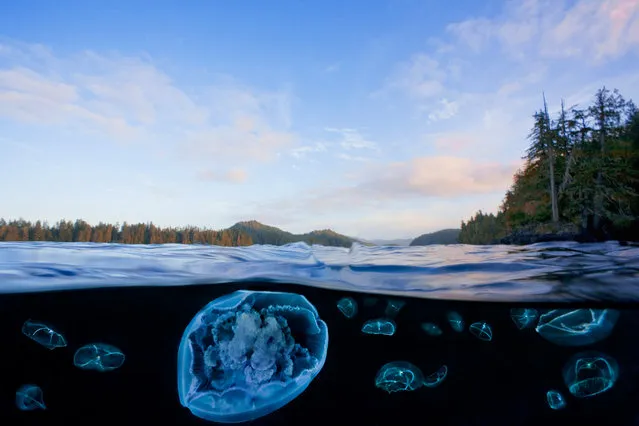
Moon jellyfish and cross jellies. (Photo by David Hall)

David Hall’s photographs of scenery and creatures off the coast of Canada in the Pacific Northwest portray serenity under the water, which belie the extreme challenges he faces to get his images. For each shoot, Hall wears a dry suit, a neoprene body suit that covers all of his body but his head and traps air inside to keep him warm. Water temperature in Canada’s British Columbia typically ranges between 45 and 50 degrees Fahrenheit. Photo: Moon jellyfish and cross jellies. (Photo by David Hall)
Details
16 Sep 2014 12:57:00