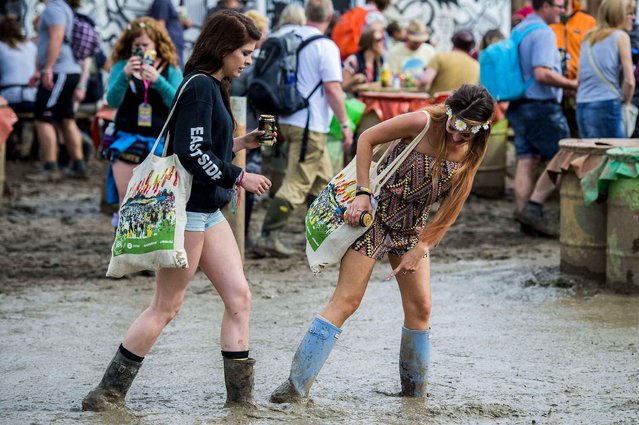
Festival goers arrive for the Glastonbury festival at Worthy Farm, in Somerset, England, Thursday, June 23, 2016. (Photo by Guy Bell/Rex Features/Shutterstock)
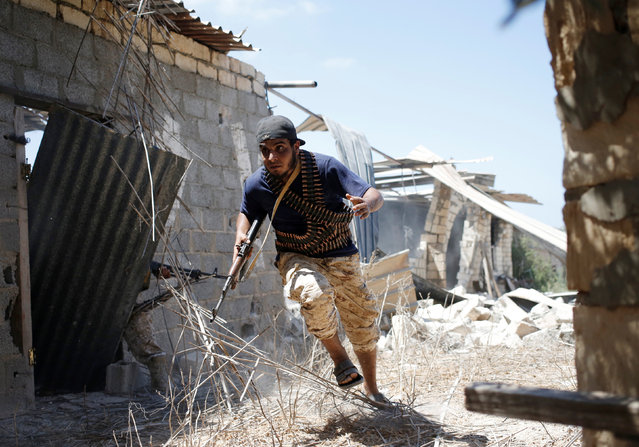
A fighter of Libyan forces allied with the U.N.-backed government runs for cover during a battle with Islamic State fighters in Sirte, Libya, July 31, 2016. (Photo by Goran Tomasevic/Reuters)
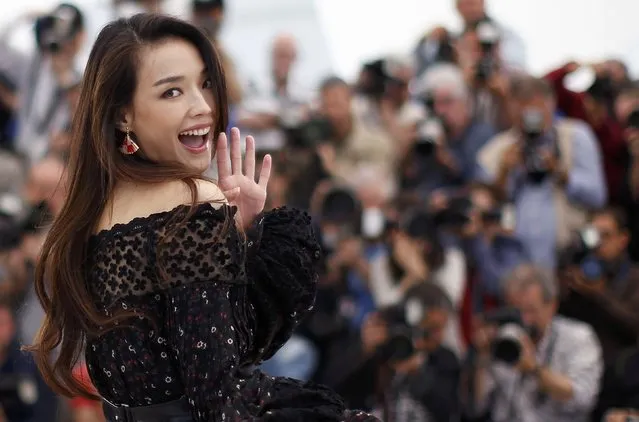
Cast member Shu Qi poses during a photocall for the film “The Assassin” (Nie yin niang) in competition at the 68th Cannes Film Festival in Cannes, southern France, May 21, 2015. (Photo by Eric Gaillard/Reuters)
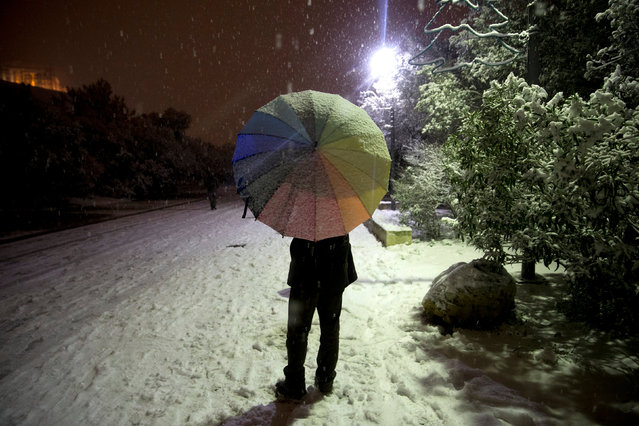
A man holds his umbrella during snowfall on the Areopagitou pedestrian street beneath the Acropolis hill during snowfall in Athens, Greece, January 10, 2017. (Photo by Alkis Konstantinidis/Reuters)
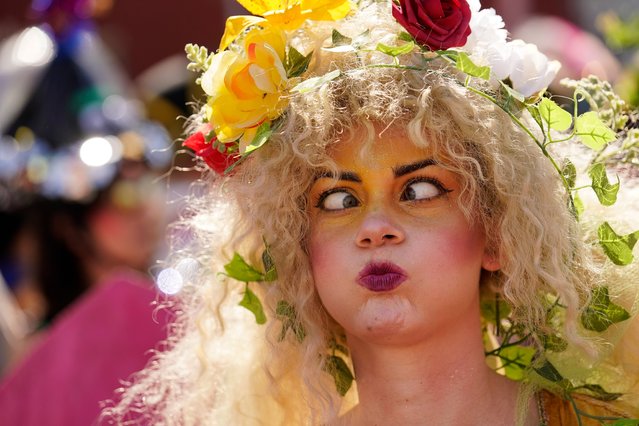
A person makes faces as they march in the Societe de Sainte Anne parade during Mardi Gras on Tuesday, March 1, 2022, in New Orleans. (Photo by Gerald Herbert/AP Photo)
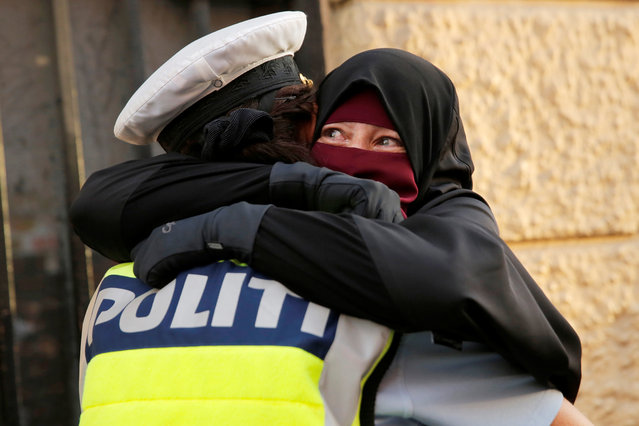
Ayah, 37, weeps as she is embraced by a police officer during a demonstration against the Danish face veil ban in Copenhagen, Denmark, August 1, 2018. (Photo by Andrew Kelly/Reuters)
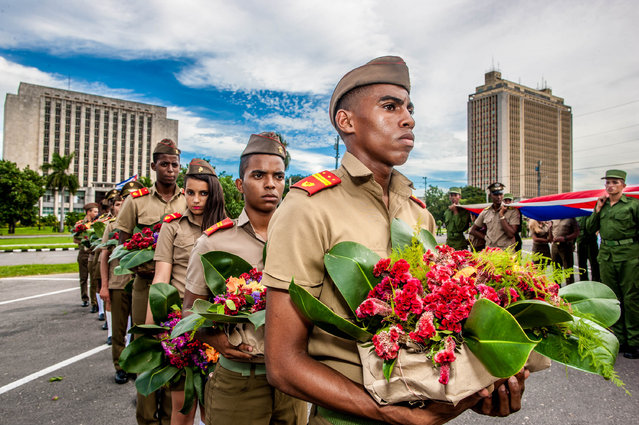
Military school cadets take part in a ceremony commemorating the 56th anniversary of the death of Camilo Cienfuegos who, along with Fidel Castro and Che Guevara, was a chief commander of the Cuban revolution in Havana, Cuba on October 28, 2015. (Photo by Xinhua/REX Shutterstock)
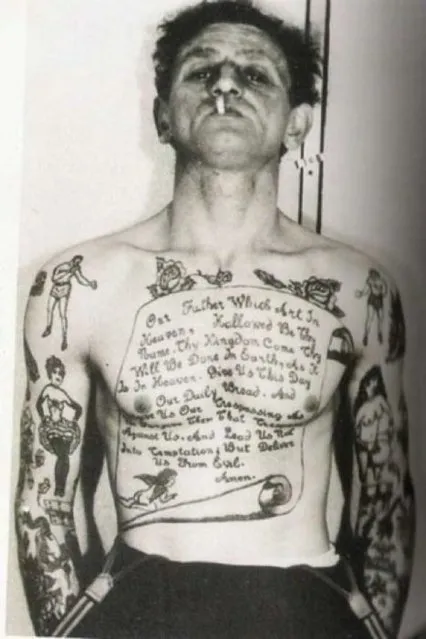
Tattoos are commonly used among criminals to show gang membership and record the wearer's personal history—such as his or her skills, specialties, accomplishments and convictions. They are also used as a means of personal expression. Certain designs have developed recognized coded meanings. The code systems can be quite complex and because of the nature of what they encode, the tattoo designs are not widely recognized.