Loading...
Done
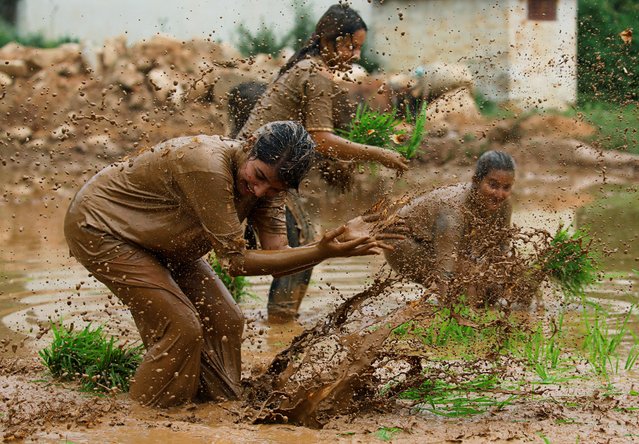
Participants play in the mud as they plant rice samplings during National Paddy Day, also called Asar Pandra, that marks the commencement of rice crop planting in paddy fields as monsoon season arrives, in Dhading, Nepal, June 30, 2019. (Photo by Navesh Chitrakar/Reuters)

Participants play in the mud as they plant rice samplings during National Paddy Day, also called Asar Pandra, that marks the commencement of rice crop planting in paddy fields as monsoon season arrives, in Dhading, Nepal, June 30, 2019. (Photo by Navesh Chitrakar/Reuters)
Details
22 Aug 2019 00:01:00
A crow attacks a passerby, in a series of crow attacks on residents at a neighbourhood in Singapore on February 14, 2023. (Photo by Leonard Phuah/Shin Min Daily/Singapore Press Holding Media Trust via Reuters)

A crow attacks a passerby, in a series of crow attacks on residents at a neighbourhood in Singapore on February 14, 2023. (Photo by Leonard Phuah/Shin Min Daily/Singapore Press Holding Media Trust via Reuters)
Details
26 Feb 2023 03:58:00
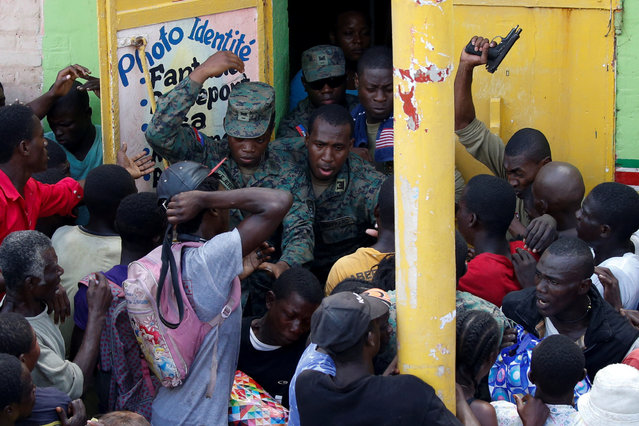
Haitian soldiers shoot in the air to try to control the crowd as they wait for food to be handed out after Hurricane Matthew hit Jeremie, Haiti, October 18, 2016. (Photo by Carlos Garcia Rawlins/Reuters)

Haitian soldiers shoot in the air to try to control the crowd as they wait for food to be handed out after Hurricane Matthew hit Jeremie, Haiti, October 18, 2016. (Photo by Carlos Garcia Rawlins/Reuters)
Details
20 Oct 2016 11:02:00
Fisherman Jose Miguel Perez, whose nickname is “Taliban”, navigates the oil infested waters of Lake Maracaibo, near Cabimas, Venezuela, May 21, 2019. Nobody lives as closely with the environmental fallout of Venezuela's collapsing oil industry as the fishermen who scratch out an existence on the blackened, sticky shores of Lake Maracaibo. (Photo by Rodrigo Abd/AP Photo)

Fisherman Jose Miguel Perez, whose nickname is “Taliban”, navigates the oil infested waters of Lake Maracaibo, near Cabimas, Venezuela, May 21, 2019. Nobody lives as closely with the environmental fallout of Venezuela's collapsing oil industry as the fishermen who scratch out an existence on the blackened, sticky shores of Lake Maracaibo. (Photo by Rodrigo Abd/AP Photo)
Details
26 Nov 2019 00:03:00
Veteran cholita wrestler Jennifer dos Caras, 45, holds a cement block over teen wrestler Lucero la Bonita in the ring in El Alto, Bolivia, Monday, January 21, 2019. Trainees of cholita wrestling are still a year away from their full professional debuts while competing in matches against established athletes. (Photo by Juan Karita/AP Photo)

Veteran cholita wrestler Jennifer dos Caras, 45, holds a cement block over teen wrestler Lucero la Bonita in the ring in El Alto, Bolivia, Monday, January 21, 2019. Trainees of cholita wrestling are still a year away from their full professional debuts while competing in matches against established athletes. (Photo by Juan Karita/AP Photo)
Details
28 Feb 2019 00:05:00
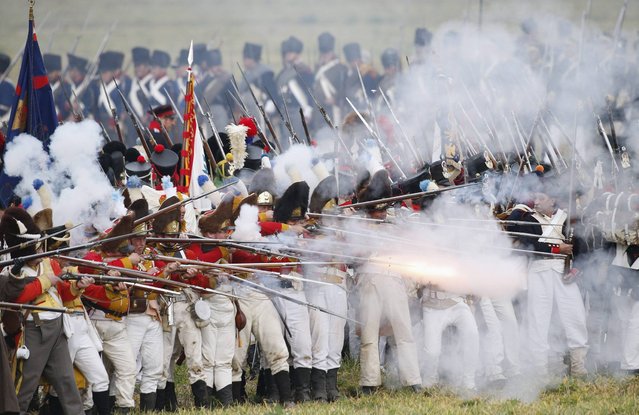
Performers wearing 19th century French military uniforms fire their weapons as they attack Allied forces during a reenactment of the Battle of the Nations, in a field in the village of Markkleeberg near Leipzig October 20, 2013. (Photo by Fabrizio Bensch/Reuters)

Performers wearing 19th century French military uniforms fire their weapons as they attack Allied forces during a reenactment of the Battle of the Nations, in a field in the village of Markkleeberg near Leipzig October 20, 2013. The east German city of Leipzig commemorated the 200th anniversary of the largest battle of the Napoleonic Wars on Sunday by reenacting the Battle of the Nations, with 6,000 military-historic association enthusiasts from all over Europe. The decisive encounter in which tens of thousands of soldiers were killed, took place from October 17-19, 1813, just outside of Leipzig. At the height of the hostilities Napoleon fielded more than 200,000 men against an Allied force of some 360,000 soldiers which included troops from Russia, Austria, Prussia and Sweden. (Photo by Fabrizio Bensch/Reuters)

Details
21 Oct 2013 11:19:00
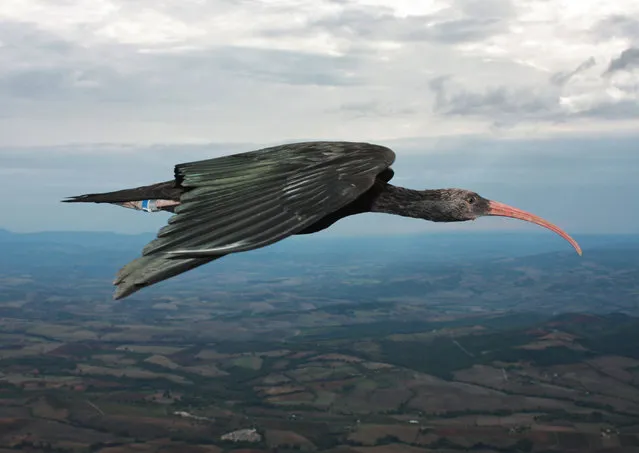
In this undated photo made available by journal Nature on January 15, 2014, a northern bald ibis (Geronticus eremita) flies in Tuscany, Italy. A new study released Wednesday, January 15, 2014 says the birds choreograph the flapping of their wings, getting a boost from an updraft of air in the wake of the flapping wings by flying behind the first bird and off to the side. When a flock of birds take advantage of these aerodynamics, they form a V. (Photo by Markus Unsöld/AP Photo)

In this undated photo made available by journal Nature on January 15, 2014, a northern bald ibis (Geronticus eremita) flies in Tuscany, Italy. A new study released Wednesday, January 15, 2014 says the birds choreograph the flapping of their wings, getting a boost from an updraft of air in the wake of the flapping wings by flying behind the first bird and off to the side. When a flock of birds take advantage of these aerodynamics, they form a V. (Photo by Markus Unsöld/AP Photo)
Details
18 Jan 2014 13:54:00
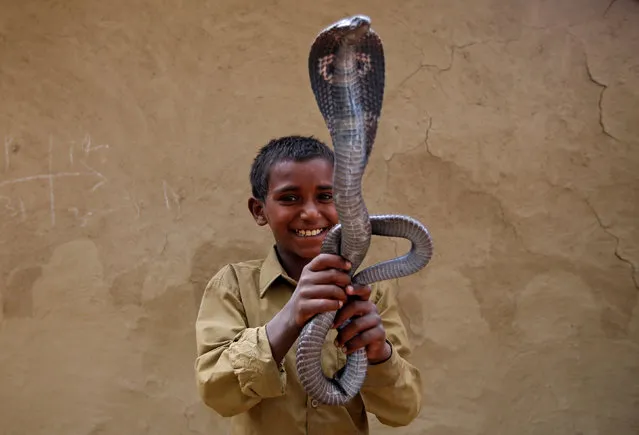
Ravi Nath poses for a photograph with a cobra snake in Jogi Dera (Snake charmers settlement), in the village of Baghpur, in the central state of Uttar Pradesh, India November 10, 2016. (Photo by Adnan Abidi/Reuters)

Ravi Nath poses for a photograph with a cobra snake in Jogi Dera (Snake charmers settlement), in the village of Baghpur, in the central state of Uttar Pradesh, India November 10, 2016. An ancient tribe of snake charmers, known as Saperas, have thrived over the generations by catching venomous snakes and making them dance to their music. Snakes are revered by Hindus in India and snake charmers are considered the followers of Lord Shiva, the blue-skinned Hindu god who is usually portrayed wearing a king cobra around his neck. (Photo by Adnan Abidi/Reuters)
Details
26 Jan 2017 13:06:00