Loading...
Done
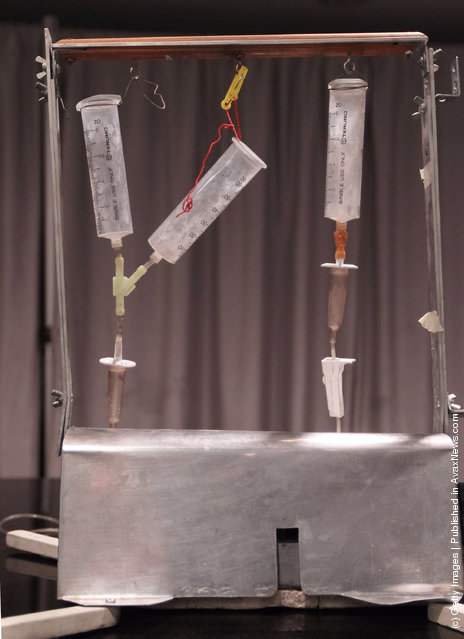
The Thanatron, often referred to as the Death Machine of Dr. Jack Kevorkian

“Jacob «Jack» Kevorkian (May 26, 1928 – June 3, 2011), commonly known as “Dr. Death”, was an American pathologist, euthanasia activist, painter, composer and instrumentalist. He is best known for publicly championing a terminal patient's right to die via physician-assisted suicide; he said he assisted at least 130 patients to that end. He famously said, «dying is not a crime»”. – Wikipedia

Photo: The “Thanatron”, often referred to as the “Death Machine”, is displayed during a press preview of an auction of the personal effects of Dr. Jack Kevorkian at the New York Institute of Technology on October 27, 2011 in New York City. The device was reportedly used by over 100 of Dr. Kevorkian's patients to terminate their lives. (Photo by Mario Tama/Getty Images)
Details
28 Oct 2011 12:26:00
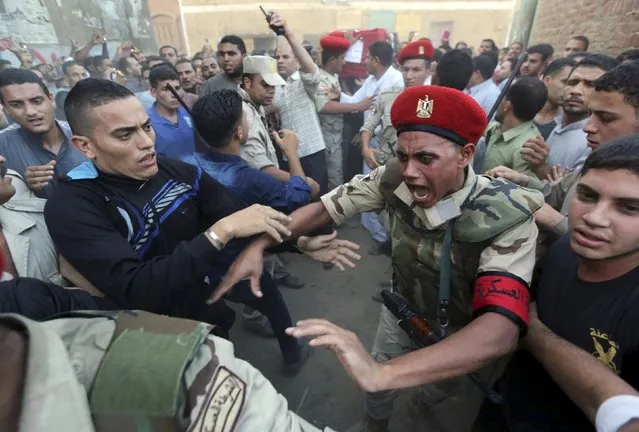
Military policemen try to open a path ahead for the funeral of 21-year-old Mohamed Adel, one of the army officers who died in yesterday's Sinai attacks, in Al-Kaliobeya, near Cairo, Egypt, July 2, 2015. (Photo by Mohamed Abd El Ghany/Reuters)

Military policemen try to open a path ahead for the funeral of 21-year-old Mohamed Adel, one of the army officers who died in yesterday's Sinai attacks, in Al-Kaliobeya, near Cairo, Egypt, July 2, 2015. Egypt launched air strikes on Islamist militant targets in the Sinai peninsula on Thursday, killing 23 fighters a day after the deadliest clashes in the region in years, security sources said. The sources said those killed had taken part in Wednesday's fighting in which 100 militants and 17 soldiers, including four officers, were killed, according to the army spokesman. (Photo by Mohamed Abd El Ghany/Reuters)
Details
03 Jul 2015 13:19:00
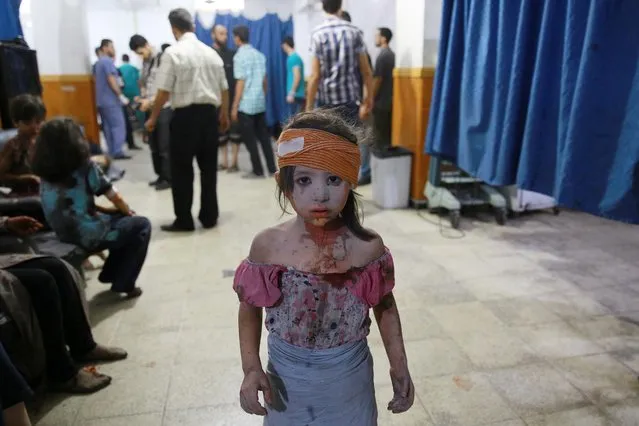
A wounded Syrian girl looks on at a make shift hospital in the rebel-held area of Douma, east of the capital Damascus, following shelling and air raids by Syrian government forces on August 22, 2015. (Photo by Abd Doumany/AFP Photo)

A wounded Syrian girl looks on at a make shift hospital in the rebel-held area of Douma, east of the capital Damascus, following shelling and air raids by Syrian government forces on August 22, 2015. At least 20 civilians and wounded or trapped 200 in Douma, a monitoring group said, just six days after regime air strikes killed more than 100 people and sparked international condemnation of one of the bloodiest government attacks in Syria's war. (Photo by Abd Doumany/AFP Photo)
Details
25 Aug 2015 10:52:00
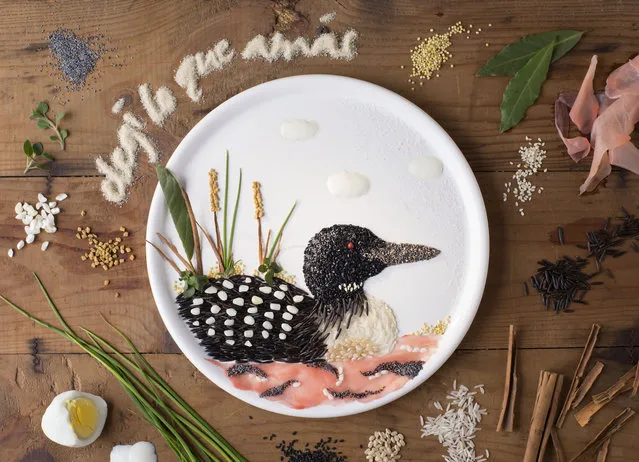
Meet the woman who has made playing with food her job and creates incredible pieces of edible art. From city landmarks to colorful animals, Anna Keville Joyce lets her imagination run wild as she creates a series of intricate art works made entirely from food. Using anything from vegetables to sausages, Annas pieces are so detailed that at first glance it is difficult to tell what they are made from. (Photo by Anna Keville Joyce/Caters News)

Meet the woman who has made playing with food her job and creates incredible pieces of edible art. From city landmarks to colorful animals, Anna Keville Joyce lets her imagination run wild as she creates a series of intricate art works made entirely from food. Using anything from vegetables to sausages, Annas pieces are so detailed that at first glance it is difficult to tell what they are made from. Here: a nesting bird. (Photo by Anna Keville Joyce/Caters News)
Details
20 Oct 2015 08:06:00
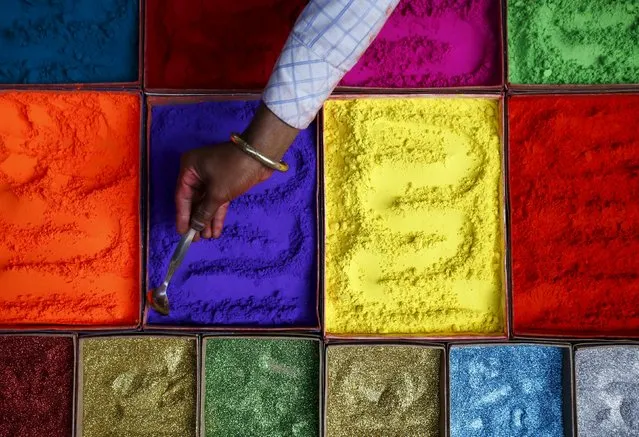
A street vendor spreads vermilion powder used for worship during the Tihar festival, also called Diwali in Kathmandu, Nepal, November 9, 2015. Hindus all over Nepal are celebrating the Tihar festival during which they worship cows, which are considered a maternal figure, and other animals. (Photo by Navesh Chitrakar/Reuters)

A street vendor spreads vermilion powder used for worship during the Tihar festival, also called Diwali in Kathmandu, Nepal, November 9, 2015. Hindus all over Nepal are celebrating the Tihar festival during which they worship cows, which are considered a maternal figure, and other animals. Also known as the festival of lights, devotees also worship the goddess of wealth Laxmi by illuminating and decorating their homes using garlands, oil lamps, candles and colourful light bulbs. (Photo by Navesh Chitrakar/Reuters)
Details
18 Nov 2015 08:05:00
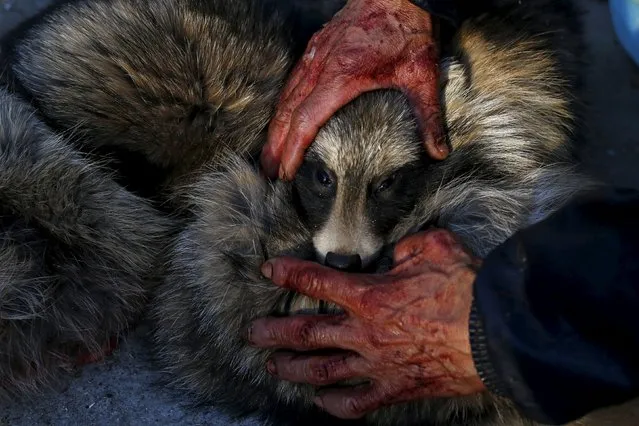
A worker holds the head of a fox while killing it with electricity for its fur at a fox farm in Nanzhuang village, Shandong province, China, December 11, 2015. There are over 60 households in the village still raising foxes, raccoon dogs and other animals for the fur trade. China is the world's largest fur producer and exporter, according to state media. (Photo by William Hong/Reuters)

A worker holds the head of a fox while killing it with electricity for its fur at a fox farm in Nanzhuang village, Shandong province, China, December 11, 2015. There are over 60 households in the village still raising foxes, raccoon dogs and other animals for the fur trade. China is the world's largest fur producer and exporter, according to state media. (Photo by William Hong/Reuters)
Details
16 Dec 2015 08:03:00
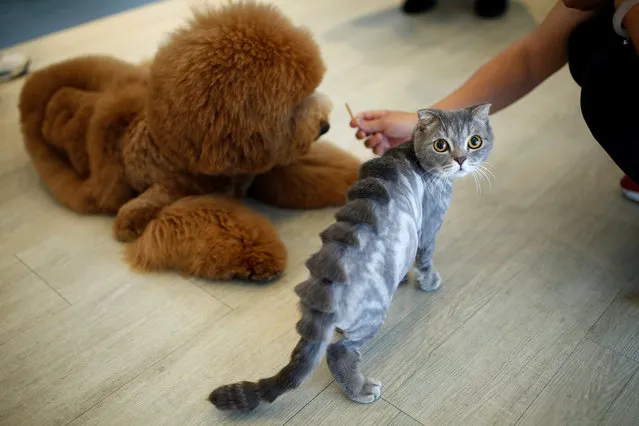
A cat with a “stegosaurus spine” design cut into its fur is seen next to a dog at a pet shop, in Tainan, Taiwan June 19, 2016. Lee Mei-chen, Taiwanese hairdresser turned pet groomer, shaves paw prints, lion faces and characters from Japanese brand Hello Kitty on to animal backs. The teddy bear design is one of the most complex in the furry repertoire. Ou Shih-jou, owner of the salon where Lee works in southern Taiwan, said the quirky pet patterns came from owners wanting something different to the normal summer shave, with designs determined by the natural assets of the pets. (Photo by Tyrone Siu/Reuters)

A cat with a “stegosaurus spine” design cut into its fur is seen next to a dog at a pet shop, in Tainan, Taiwan June 19, 2016. Lee Mei-chen, Taiwanese hairdresser turned pet groomer, shaves paw prints, lion faces and characters from Japanese brand Hello Kitty on to animal backs. The teddy bear design is one of the most complex in the furry repertoire. Photo by Tyrone Siu/Reuters)
Details
23 Jun 2016 12:30:00
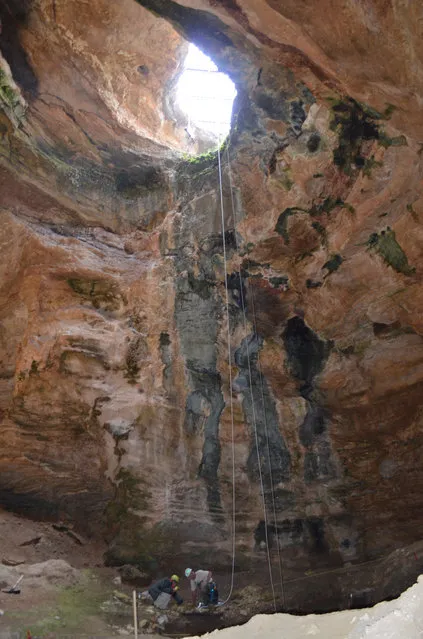
This July 2014 image provided by the Bureau of Land Management shows the interior of the Natural Trap Cave in north-central Wyoming. The cave holds the remains of tens of thousands of animals, including many now-extinct species, from the late Pleistocene period tens of thousands of years ago. Scientists have resumed digging for the first time in more than 30 years. (Photo by AP Photo/Bureau of Land Management)

This July 2014 image provided by the Bureau of Land Management shows the interior of the Natural Trap Cave in north-central Wyoming. The cave holds the remains of tens of thousands of animals, including many now-extinct species, from the late Pleistocene period tens of thousands of years ago. Scientists have resumed digging for the first time in more than 30 years. (Photo by AP Photo/Bureau of Land Management)
Details
10 Aug 2014 10:35:00