Loading...
Done
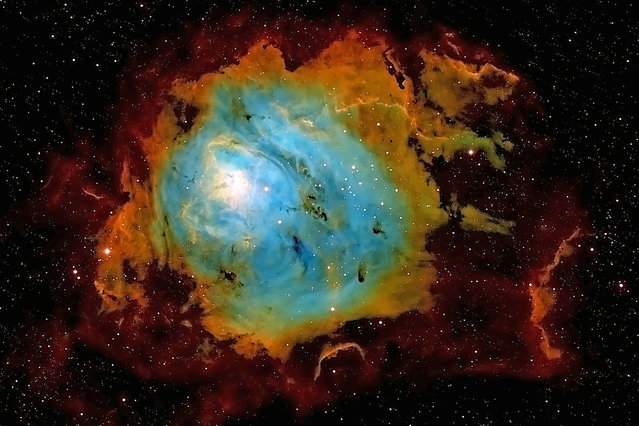
Lagoon Master. These amazing pictures of nebula thousands of light years from Earth have been captured by an amateur astronomer Dr. Dennis Roscoe snapped the beautiful celestial formations from his own personal observatory. His telescope looks into deep space at the nebula, which show both the birth and death of stars, like our very own Sun. (Photo by Dennis Roscoe/Caters News)

Lagoon Master. These amazing pictures of nebula thousands of light years from Earth have been captured by an amateur astronomer Dr. Dennis Roscoe snapped the beautiful celestial formations from his own personal observatory. His telescope looks into deep space at the nebula, which show both the birth and death of stars, like our very own Sun. (Photo by Dennis Roscoe/Caters News)
Details
23 Sep 2014 13:12:00
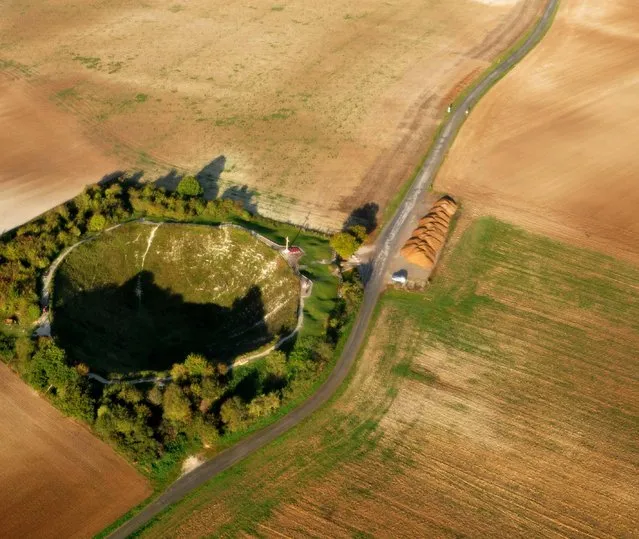
Lochnagar Crater Somme In France

It is amazing how much the humanity can change the face of the earth. Not only can it create huge craters, which look a lot like craters from meteors, they leave a big enough impact that it can be seen from space. Though this crater, caused by a massive explosion on 1 July 1916, looks large, being 90 feet deep and 300 feet across; it is nowhere big enough to be viewed for space. A common misconception is that the Great Wall of China can be seen from space. In reality, however, it is impossible. Not only is it of the same color as the earth near it, it is also not that wide. Deforestation, on the other hand, can be clearly seen from space. Also, at night, all the lights that the large cities produce are also very visible.
Details
17 Nov 2014 12:48:00
Max Gold, 20, of NYC, cruises on his skateboard as thousands gather on the National Mall for the March for Science on Saturday, April 22, 2017, in Washington, DC.  Activists and scientists descend on the nation's capital to rally for environmental causes and government policies rooted in scientific research as part of the Earth Day and March for Science rallies. (Photo by Jahi Chikwendiu/The Washington Post)

Max Gold, 20, of NYC, cruises on his skateboard as thousands gather on the National Mall for the March for Science on Saturday, April 22, 2017, in Washington, DC. Activists and scientists descend on the nation's capital to rally for environmental causes and government policies rooted in scientific research as part of the Earth Day and March for Science rallies. (Photo by Jahi Chikwendiu/The Washington Post)
Details
22 May 2017 07:38:00
A young girl from the Makonde ethnic group wearing earth makeup on her facen, a beauty symbol, carries a baby on her back as she poses for pictures in the community of Marupa, a relocation center for internally displaced families in the Chiure district, on February 23, 2021. Thousands of families from different districts of the Cabo Delgado province who have been displaced have been located by the government in different areas of the province. (Photo by Alfredo Zuniga/AFP Photo)

A young girl from the Makonde ethnic group wearing earth makeup on her facen, a beauty symbol, carries a baby on her back as she poses for pictures in the community of Marupa, a relocation center for internally displaced families in the Chiure district, on February 23, 2021. Thousands of families from different districts of the Cabo Delgado province who have been displaced have been located by the government in different areas of the province. (Photo by Alfredo Zuniga/AFP Photo)
Details
04 Mar 2021 08:40:00
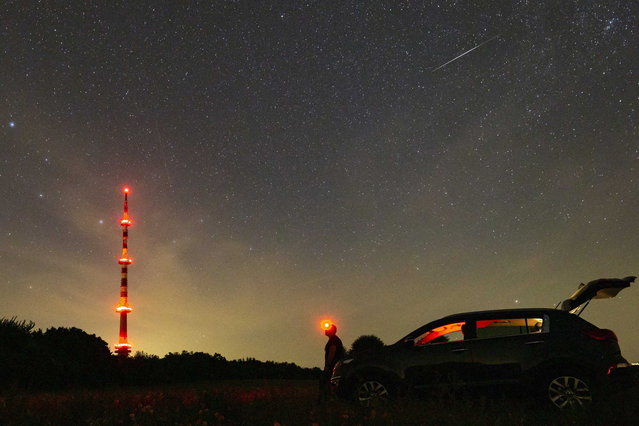
A meteorite of the swarm of meteorites Perseida flies above the Ujudvar TV Tower as seen from Ujudvar, Hungary, late Friday, August 13, 2021. Perseidas, one of the brightest meteorite swarms, consist of a multitude of stellar particles which due to their high speed glow up and burn by entering Earth's atmosphere. (Photo by Gyorgy Varga/MTI via AP Photo)

A meteorite of the swarm of meteorites Perseida flies above the Ujudvar TV Tower as seen from Ujudvar, Hungary, late Friday, August 13, 2021. Perseidas, one of the brightest meteorite swarms, consist of a multitude of stellar particles which due to their high speed glow up and burn by entering Earth's atmosphere. (Photo by Gyorgy Varga/MTI via AP Photo)
Details
21 Oct 2021 08:48:00
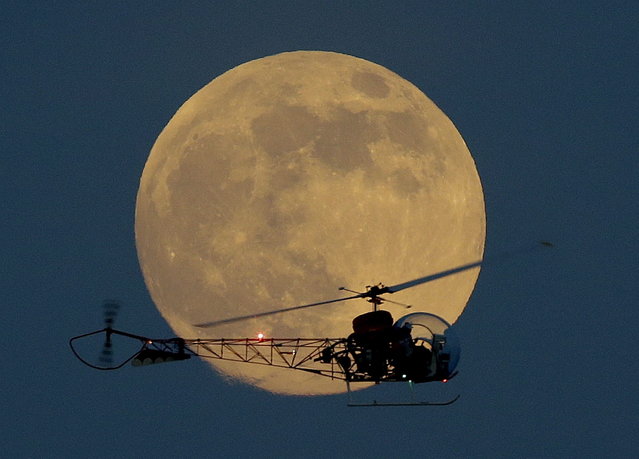
The moon is seen in its waxing gibbous stage as it rises behind the helicopter from the original Batman television show, which people can ride at the New Jersey State Fair, Saturday, June 22, 2013, in East Rutherford, N.J. The moon, which will reach its full stage on Sunday, is expected to be 13.5 percent closer to earth during a phenomenon known as supermoon. (Photo by Julio Cortez/AP Photo)

The moon is seen in its waxing gibbous stage as it rises behind the helicopter from the original Batman television show, which people can ride at the New Jersey State Fair, Saturday, June 22, 2013, in East Rutherford, N.J. The moon, which will reach its full stage on Sunday, is expected to be 13.5 percent closer to earth during a phenomenon known as supermoon. (Photo by Julio Cortez/AP Photo)
Details
24 Jun 2013 12:17:00
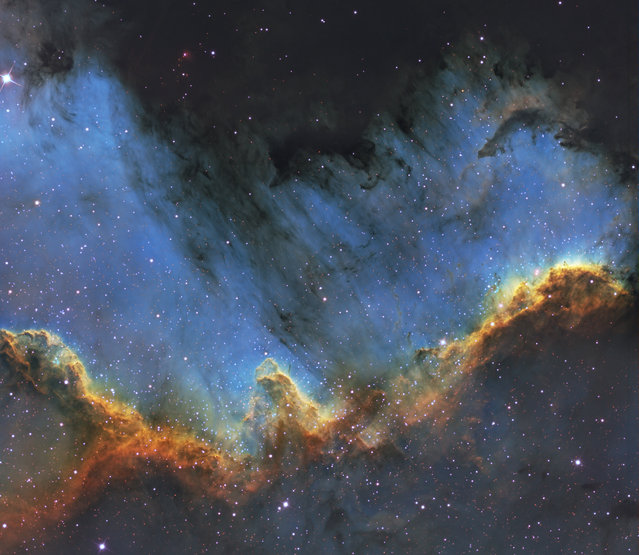
The Cygnus Wall is in the southern  area of NGC7000 also known as the North America Nebula. It is approximately 1800 light years from Earth, and is in the constellation Cygnus. The Wall is an energized shock front and contains the most concentrated star formations in the nebula. The size of the North America Nebula is about 4 full moons. (Bill Snyder)

Amateur astronomer Bill Snyder has been involved with astrophotography since 2007. Photo: The Cygnus Wall is in the southern area of NGC7000 also known as the North America Nebula. It is approximately 1800 light years from Earth, and is in the constellation Cygnus. The Wall is an energized shock front and contains the most concentrated star formations in the nebula. The size of the North America Nebula is about 4 full moons. (Photo and caption by Bill Snyder)
Details
30 Oct 2013 09:15:00
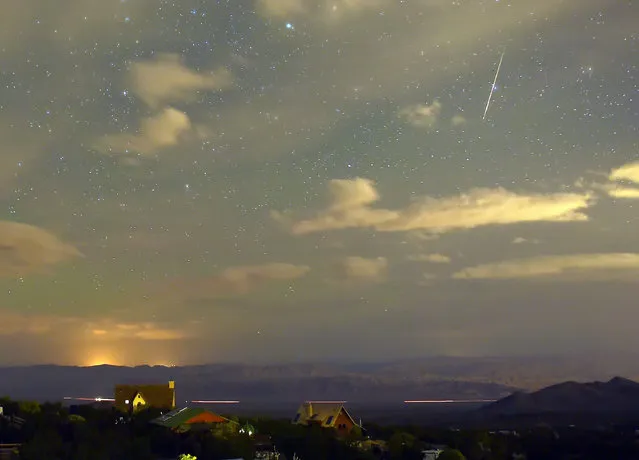
A Perseid meteor streaks across the sky over the community of Cold Creek on August 12, 2015 in the Spring Mountains National Recreation Area, Nevada. The annual display, known as the Perseid shower because the meteors appear to radiate from the constellation Perseus in the northeastern sky, is a result of Earth's orbit passing through debris from the comet Swift-Tuttle. (Photo by Ethan Miller/Getty Images)

A Perseid meteor streaks across the sky over the community of Cold Creek on August 12, 2015 in the Spring Mountains National Recreation Area, Nevada. The annual display, known as the Perseid shower because the meteors appear to radiate from the constellation Perseus in the northeastern sky, is a result of Earth's orbit passing through debris from the comet Swift-Tuttle. (Photo by Ethan Miller/Getty Images)
Details
13 Aug 2015 11:33:00