Loading...
Done
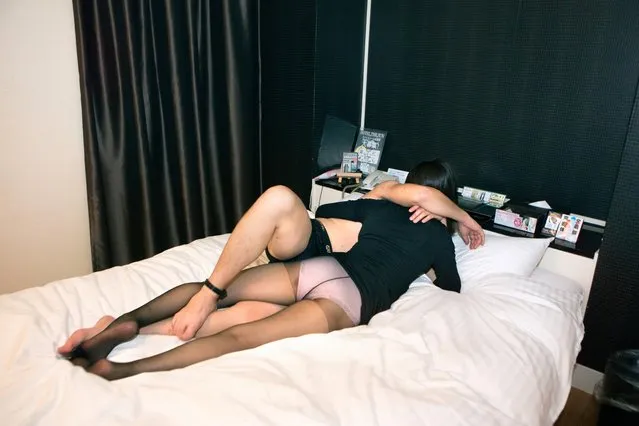
For her series “Japanese Whispers”, Belgian photographer Zaza Bertrand headed inside the intimate world of rabuhos – Japanese love hotels. Love hotels became popular in Japan from the 1960s onwards, due to a lack of privacy in many family homes. There are now around 37,000 of these hotels in Japan, allowing short daytime “rests” or overnight stays. (Photo by Zaza Bertrand/The Guardian)

For her series “Japanese Whispers”, Belgian photographer Zaza Bertrand headed inside the intimate world of rabuhos – Japanese love hotels. Love hotels became popular in Japan from the 1960s onwards, due to a lack of privacy in many family homes. There are now around 37,000 of these hotels in Japan, allowing short daytime “rests” or overnight stays. (Photo by Zaza Bertrand/The Guardian)
Details
02 Dec 2016 11:30:00
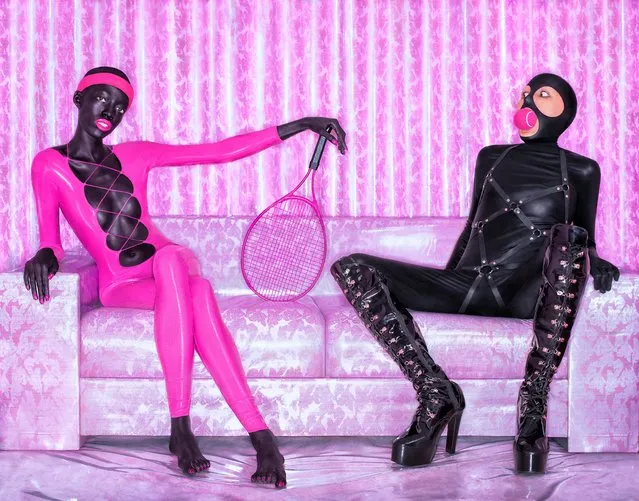
Black women in Brazil sit at the intersection of racism and misogyny, and have in recent years been at the forefront of a movement that challenges issues ranging from sexual and domestic violence to police brutality and stereotyping. Kolor Collective considers itself to be a part of this movement and questions expectations imposed on black women with satirical and subversive images, as seen here. (Photo by Kolor Art Collective/The Guardian)

Photographer Pol Kurucz’s vivid collection of photos explores issues faced by black Brazilian women, from political misrepresentation to unrealistic beauty standards. Kolor Collective is a Rio de Janeiro-based creative group that challenges the struggle faced by black women in Brazil through theatrical and provocative art. It was founded in 2015 by Franco-Hungarian photographer Pol Kurucz, who often touches on his own experiences of discrimination to call out sensitive social problems. (Photo by Kolor Art Collective/The Guardian)
Details
28 Dec 2016 07:24:00
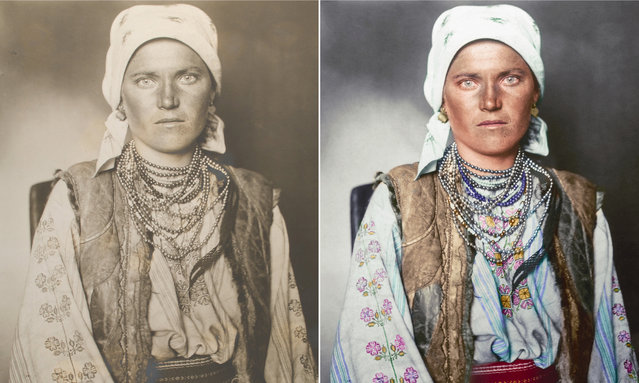
A Ruthenian woman circa 1906 from the region historically inhabiting the kingdom of the Rus, incorporating parts of modern-day Slavic speaking countries. Her outfit consists of a shirt and underskirt made from linen embroidered with traditional floral-based patterns. (Photo by Augustus Francis Sherman/New York Public Library/The Guardian)

Many of the 12 million people who entered the US through New York’s Ellis Island wore traditional dress from their homelands. Here: A Ruthenian woman circa 1906 from the region historically inhabiting the kingdom of the Rus, incorporating parts of modern-day Slavic speaking countries. Her outfit consists of a shirt and underskirt made from linen embroidered with traditional floral-based patterns. (Photo by Augustus Francis Sherman/New York Public Library/The Guardian)
Details
03 Oct 2016 09:15:00
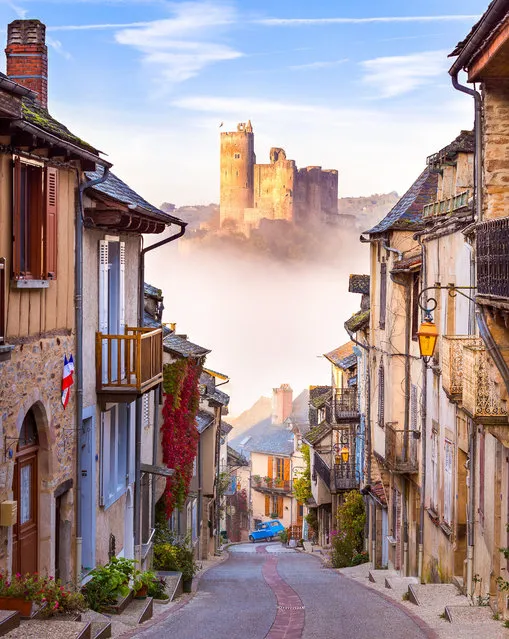
Najac, France. Travel shortlist. (Photo by Aaron Jenkin/@aaronjenkin)

Shortlisted images in the running to be crowned Photobox Instagram photograph of the year range from furry friends to the Holi festival to the meaning of love. Judges, including the Guardian’s former picture editor Eamonn McCabe, have whittled down 180,000 submissions to unearth a shortlist that celebrates the best of social media. Winners will be announced October 3, 2018. Here: Najac, France. Travel shortlist. (Photo by Aaron Jenkin/@aaronjenkin)
Details
27 Sep 2018 00:05:00
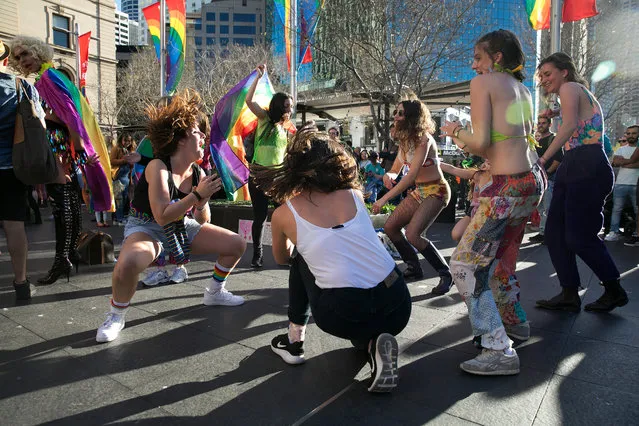
Thousands gather to rally for marriage equality ahead of a national postal survey on September 10, 2017 in Sydney, Australia. The High Court handed down its decision on Thursday to allow the government's proposed postal ballot survey to go ahead. Ballots with the question 'Should the law be changed to allow same-s*x couples to marry?' will be sent to households across Australia on September 12. (Photo by Jonny Weeks/The Guardian)

Thousands gather to rally for marriage equality ahead of a national postal survey on September 10, 2017 in Sydney, Australia. The High Court handed down its decision on Thursday to allow the government's proposed postal ballot survey to go ahead. Ballots with the question “Should the law be changed to allow same-sеx couples to marry?” will be sent to households across Australia on September 12. (Photo by Jonny Weeks/The Guardian)
Details
11 Sep 2017 07:57:00
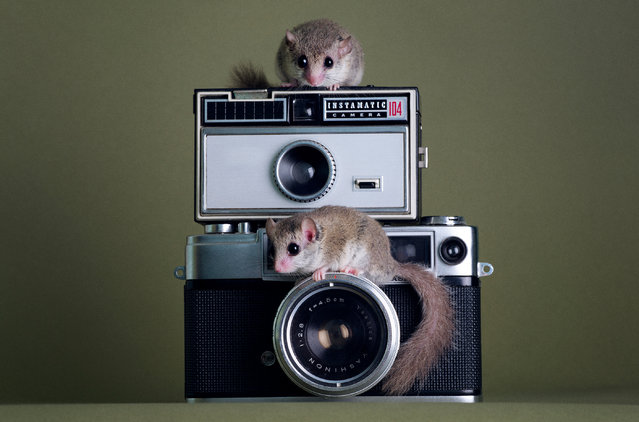
“The most difficult aspect of this shoot was to get each African pygmy dormouse – also known as micro squirrels – on to a separate camera. Once in place, they needed to remain still long enough to get them both in the frame and looking at me. Often solitary, they naturally wanted to move away”. (Photo by David Yeo/Leica Studio Mayfair/The Guardian)

David Yeo’s photography places naturally small species alongside animals that have been selectively bred to be tiny and cute. Here: “The most difficult aspect of this shoot was to get each African pygmy dormouse – also known as micro squirrels – on to a separate camera. Once in place, they needed to remain still long enough to get them both in the frame and looking at me. Often solitary, they naturally wanted to move away”. (Photo by David Yeo/Leica Studio Mayfair/The Guardian)
Details
24 Oct 2017 08:20:00
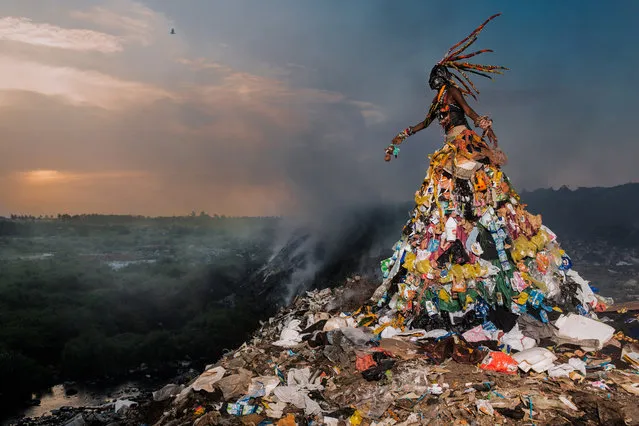
Fabrice Monteiro travelled to the most polluted places in Africa and created terrifying characters who roamed their midst dressed in eerie debris. They are spirits, he says, on a mission to make humans change their ways. Informed by Africa’s environmental problems, Fabrice Monteiro’s photographs aim to highlight urgent ecological issues all over the world. His series “The Prophecy” is on show at Photo Basel 2017 until 18 June. (Photo by Fabrice Monteiro/Photo Basel 2017/Mariane Ibrahim Gallery/The Guardian)

Fabrice Monteiro travelled to the most polluted places in Africa and created terrifying characters who roamed their midst dressed in eerie debris. They are spirits, he says, on a mission to make humans change their ways. Informed by Africa’s environmental problems, Fabrice Monteiro’s photographs aim to highlight urgent ecological issues all over the world. His series “The Prophecy” is on show at Photo Basel 2017 until 18 June. (Photo by Fabrice Monteiro/Photo Basel 2017/Mariane Ibrahim Gallery/The Guardian)
Details
17 Jun 2017 08:38:00
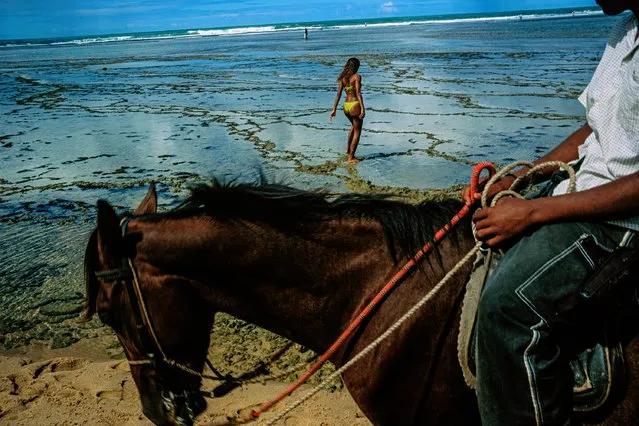
Praia du Forte, Bahia. “This was the lead picture for a National Geographic story on Bahia, because it was both mysterious as well as a “geography” picture showing where the slaves arrived from Nigeria. Beach pictures seem like they should be easy to take, but for me they are actually quite difficult. Too easy to fall into cliche. When I saw the kid coming on the horse, I quickly ran to see if I could make something with a woman in a bikini that was not a bikini shot”. (Photo by David Alan Harvey/The Guardian)

Praia du Forte, Bahia. “This was the lead picture for a National Geographic story on Bahia, because it was both mysterious as well as a “geography” picture showing where the slaves arrived from Nigeria. Beach pictures seem like they should be easy to take, but for me they are actually quite difficult. Too easy to fall into cliche. When I saw the kid coming on the horse, I quickly ran to see if I could make something with a woman in a bikini that was not a bikini shot”. (Photo by David Alan Harvey/The Guardian)
Details
20 Aug 2016 11:35:00