Loading...
Done
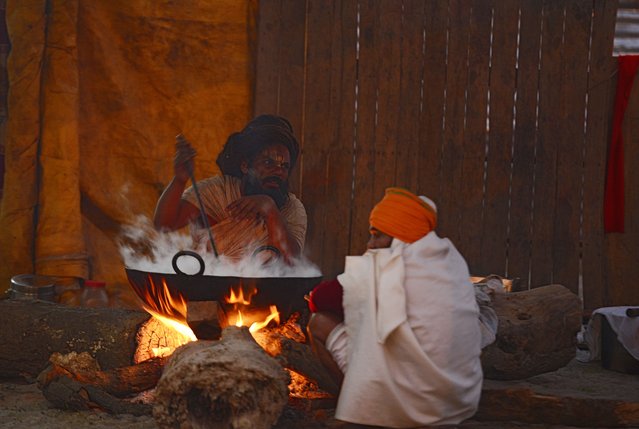
This picture taken on December 31, 2017 shows an Indian sadhu preparing food at a camp at Sangam, ahead of the Magh Mela festival, in Allahabad. The Magh Mela, which is known as a mini-Kumbh Mela, is scheduled to start January 2 and continue until February 13 with auspicious bathing dates throughout the 45 day period. (Photo by Sanjay Kanojia/AFP Photo)

This picture taken on December 31, 2017 shows an Indian sadhu preparing food at a camp at Sangam, ahead of the Magh Mela festival, in Allahabad. The Magh Mela, which is known as a mini-Kumbh Mela, is scheduled to start January 2 and continue until February 13 with auspicious bathing dates throughout the 45 day period. (Photo by Sanjay Kanojia/AFP Photo)
Details
02 Jan 2018 08:38:00
Japanese Yuuka Hasumi, 17, and Ibuki Ito, 17, also from Japan, who want to become K-pop stars, perform at an Acopia School party in Seoul, South Korea, March 16, 2019. Acopia is a prep school offering young Japanese a shot at K-pop stardom, teaching them the dance moves, the songs and also the language. (Photo by Kim Hong-Ji/Reuters)

Japanese Yuuka Hasumi, 17, and Ibuki Ito, 17, also from Japan, who want to become K-pop stars, perform at an Acopia School party in Seoul, South Korea, March 16, 2019. Acopia is a prep school offering young Japanese a shot at K-pop stardom, teaching them the dance moves, the songs and also the language. (Photo by Kim Hong-Ji/Reuters)
Details
06 Jun 2019 00:01:00
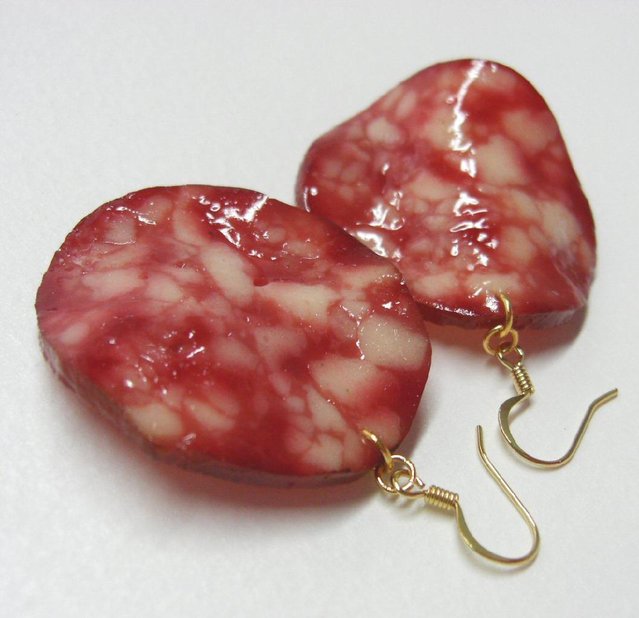
Fake Food Hatanaka

Japanese manufacturer Fake Food Hatanaka had the idea to combine the two to create a line of fashion accessories, strange and twisted! From the Fries/Ketchup hairclip to the Pizza bread necklace through the Cheeseburger pendant, the bacon & eggs headbands or even spaghetti bolognaise earrings and necklace sausages, here is some ultra-realistic and WTF Japanese gadgets to turn Fake Food / Fast Food into fashion accessory!
Details
15 Aug 2013 11:01:00
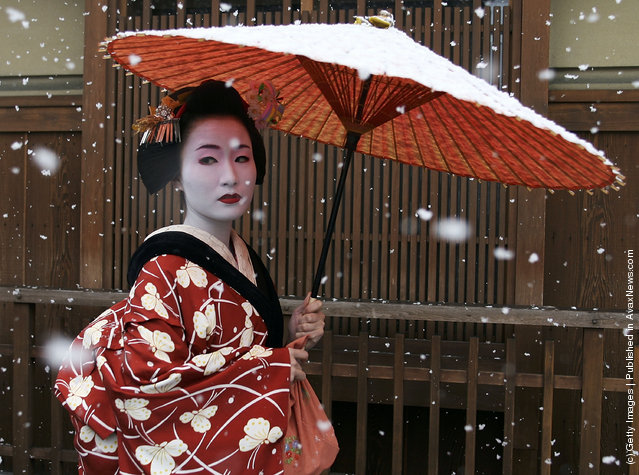
A Maiko, a traditional Japanese dancer, walks in the snow in Gion, Kyoto's famous geisha district

A Maiko, a traditional Japanese dancer, walks in the snow in Gion, Kyoto's famous geisha district, January 7, 2006 in Kyoto, Japan. The ancient city Kyoto attracts the largest number of visitors in Japan and has been increasing every year. (Photo by Koichi Kamoshida/Getty Images)
Details
03 Aug 2011 11:38:00
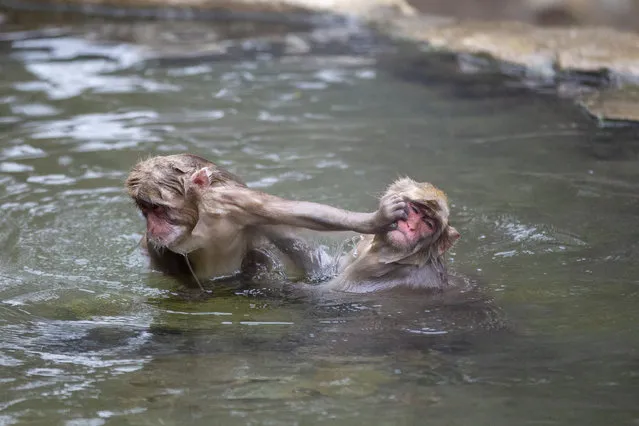
Japanese macaques, also known as snow monkeys, play as they soak in a hot spring in Jigokudani valley in Nagano Prefecture, northwest of Tokyo Saturday, March 6, 2021. (Photo by Kiichiro Sato/AP Photo)

Japanese macaques, also known as snow monkeys, play as they soak in a hot spring in Jigokudani valley in Nagano Prefecture, northwest of Tokyo Saturday, March 6, 2021. (Photo by Kiichiro Sato/AP Photo)
Details
14 Mar 2021 09:11:00
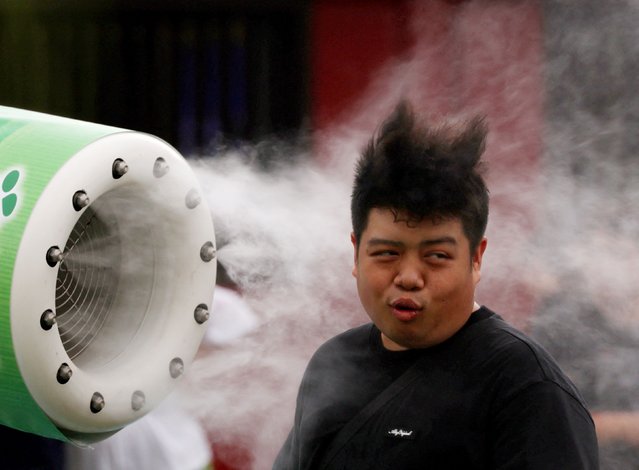
A tourist cools off in front of a misting fan near a venue of the Hozuki-Ichi (Japanese lantern plant fair), at Sensoji temple, in Tokyo, Japan, on July 10, 2025. (Photo by Kim Kyung-Hoon/Reuters)

A tourist cools off in front of a misting fan near a venue of the Hozuki-Ichi (Japanese lantern plant fair), at Sensoji temple, in Tokyo, Japan, on July 10, 2025. (Photo by Kim Kyung-Hoon/Reuters)
Details
05 Aug 2025 04:01:00
Nepalese women performs ritual as they take a holy bath in the Bagmati River, during the Rishi Panchami festival, in Kathmandu, Nepal September 18, 2015. Rishi Panchami is observed on the last day of Teej when women worship Sapta Rishi (Seven Saints) to ask for forgiveness for sins committed during their menstrual periods throughout the year. (Photo by Navesh Chitrakar/Reuters)

Nepalese women performs ritual as they take a holy bath in the Bagmati River, during the Rishi Panchami festival, in Kathmandu, Nepal September 18, 2015. Rishi Panchami is observed on the last day of Teej when women worship Sapta Rishi (Seven Saints) to ask for forgiveness for sins committed during their menstrual periods throughout the year. The Hindu religion considers menstruation as a representation of impurity and women are prohibited from taking part in religious practices during their monthly menstruations. (Photo by Navesh Chitrakar/Reuters)
Details
21 Sep 2015 12:23:00
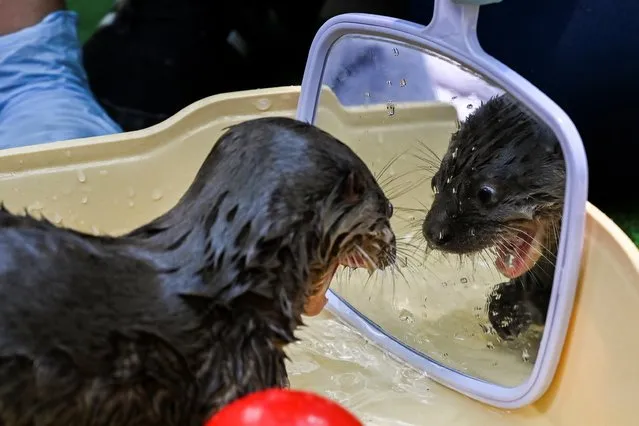
A river otter (lontra longicaudis) of 6-weeks-old looks in the mirror during a bath in the Animal Welfare Unit of the Zoo in Cali, Colombia, on October 22, 2019. The baby otter was found abandoned brought to the Cali Zoo for breeding, for its extensive experience in raising these species. According to the International Union for Conservation of Nature the river otter (lontra longicaudis) are in danger of extinction, because of mining, agriculture, pollution of rivers and housing construction in their habitat. (Photo by Luis Robayo/AFP Photo)

A river otter (lontra longicaudis) of 6-weeks-old looks in the mirror during a bath in the Animal Welfare Unit of the Zoo in Cali, Colombia, on October 22, 2019. The baby otter was found abandoned brought to the Cali Zoo for breeding, for its extensive experience in raising these species. According to the International Union for Conservation of Nature the river otter (lontra longicaudis) are in danger of extinction, because of mining, agriculture, pollution of rivers and housing construction in their habitat. (Photo by Luis Robayo/AFP Photo)
Details
27 Oct 2019 00:03:00