Loading...
Done
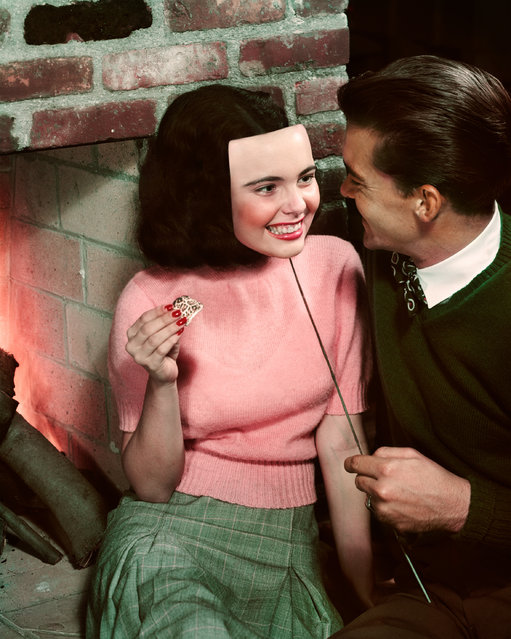
“Untitled #5”. “Family scenes, vacation souvenirs, everyday life, suspended anywhere between truth and fiction. It is hard to figure out whether they are spontaneous or entirely staged”. (Photo by Weronika Gęsicka/The Guardian)

In Weronika Gęsicka’s unsettling images, American archive photography gets distorted into scenes that are both nightmarish yet somehow entirely plausible. Gęsicka is a guest artist at the Circulations festival for young European photographers, Paris, until 5 March. Here: “Untitled #5”. (Photo by Weronika Gęsicka/The Guardian)
Details
23 Jan 2017 10:15:00
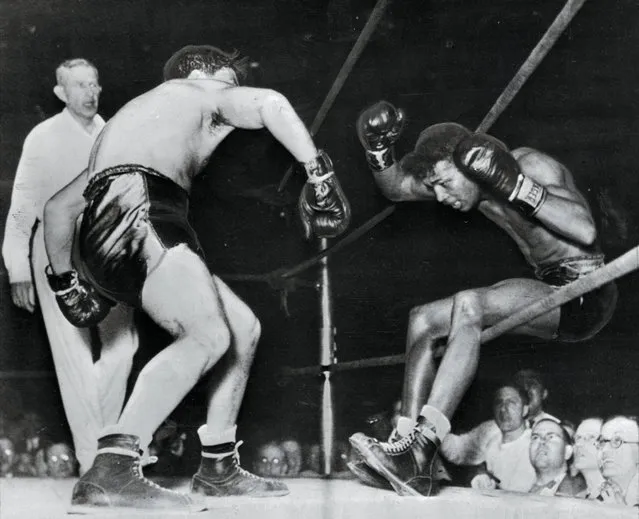
Victorious in 129 successive fights, including 40 as a pro, Ray Robinson falls through the ropes of a ring, under the impact of Jake LaMotta's fists on Olympia Stadium, Detroit, Michigan on February 5, 1943. Robinson got back in the ring, but lost the decision in ten rounds. LaMotta pummelled him for the rest of the fight, winning via a unanimous decision, giving Robinson the first defeat of his career.They fought again just 21 days later when Robinson regained his mantle winning in another 10-round fight, Robinson won the close fight by a unanimous decision. LaMotta stated the bout was gifted to Robinson because he would be inducted into the army the next day. (Photo by Bettmann Archive/Getty Images)

Victorious in 129 successive fights, including 40 as a pro, Ray Robinson falls through the ropes of a ring, under the impact of Jake LaMotta's fists on Olympia Stadium, Detroit, Michigan on February 5, 1943. Robinson got back in the ring, but lost the decision in ten rounds. LaMotta pummelled him for the rest of the fight, winning via a unanimous decision, giving Robinson the first defeat of his career.They fought again just 21 days later when Robinson regained his mantle winning in another 10-round fight, Robinson won the close fight by a unanimous decision. LaMotta stated the bout was gifted to Robinson because he would be inducted into the army the next day. (Photo by Bettmann Archive/Getty Images)
Details
21 Sep 2017 09:11:00
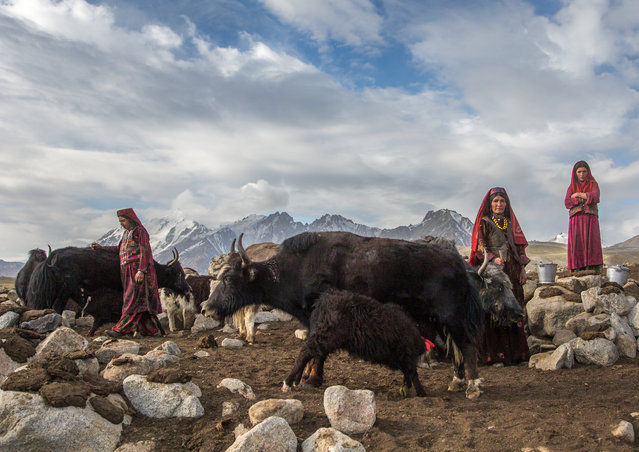
Wakhi nomad women milk yaks in Wakhan, Afghanistan. About 12,000 villagers live at an altitude of 4,500 metres in the harsh, desolate terrain. The Wakhi people live a simple, relaxed life with their livestock. (Photo by Eric Lafforgue/Barcroft Images)

Wakhi nomad women milk yaks in Wakhan, Afghanistan. About 12,000 villagers live at an altitude of 4,500 metres in the harsh, desolate terrain. The Wakhi people live a simple, relaxed life with their livestock. (Photo by Eric Lafforgue/Barcroft Images)
Details
12 Oct 2016 10:13:00
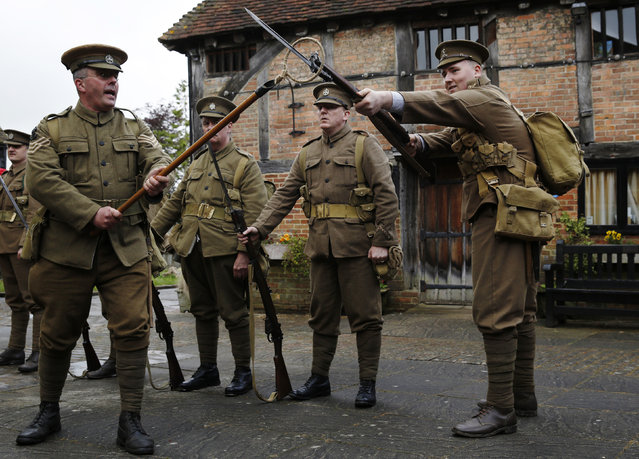
Factory landlord Lawrence Taylor (L), portraying a Colour Sergeant from the King's Royal Rifle Corps, part of the Rifles Living History Society, performs a drill with Connor Young (R) of the Queen's Own Royal West Kent Regiment Living History Group as they recreate the life of a First World War soldier at the Eden Valley Museum in Edenbridge in southeast England May 10, 2014. (Photo by Luke MacGregor/Reuters)

Factory landlord Lawrence Taylor (L), portraying a Colour Sergeant from the King's Royal Rifle Corps, part of the Rifles Living History Society, performs a drill with Connor Young (R) of the Queen's Own Royal West Kent Regiment Living History Group as they recreate the life of a First World War soldier at the Eden Valley Museum in Edenbridge in southeast England May 10, 2014. Lawrence has always had an interest in military history and specifically “The Rifles” – his veteran father's WWII regiment. When he became a re-enactor he chose not to re-enact WWII as many of the veterans are still alive, and he felt uncomfortable as he remembers his father would have flashbacks and nightmares about the war. United by a fascination with military history and a fondness for dressing up, groups such as the Rifles Living History Society and the Queen's Own Royal West Kent Regiment Living History Group get together to recreate aspects of life during the First World War. Reuters photographer Luke MacGregor photographed members of the groups, both as they took part in living history events and at their day jobs. (Photo by Luke MacGregor/Reuters)
Details
26 Aug 2014 10:12:00


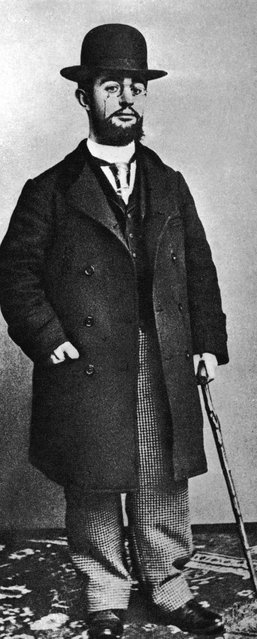
“Henri Marie Raymond de Toulouse-Lautrec-Monfa or simply Henri de Toulouse-Lautrec (24 November 1864 – 9 September 1901) was a French painter, printmaker, draughtsman, and illustrator, whose immersion in the colourful and theatrical life of fin de siècle Paris yielded an œuvre of exciting, elegant and provocative images of the modern and sometimes decadent life of those times. Toulouse-Lautrec is known along with Cézanne, Van Gogh, and Gauguin as one of the greatest painters of the Post-Impressionist period. In a 2005 auction at Christie's auction house a new record was set when “La blanchisseuse”, an early painting of a young laundress, sold for $22.4 million U.S” – Wikipedia.

Photo: Full-length portrait of French artist Henri Toulouse-Lautrec wearing an overcoat, a bowler hat, and pince-nez eyeglasses while holding a cane. (Photo by Hulton Archive/Getty Images). Circa 1895

Details
20 Mar 2011 09:28:00


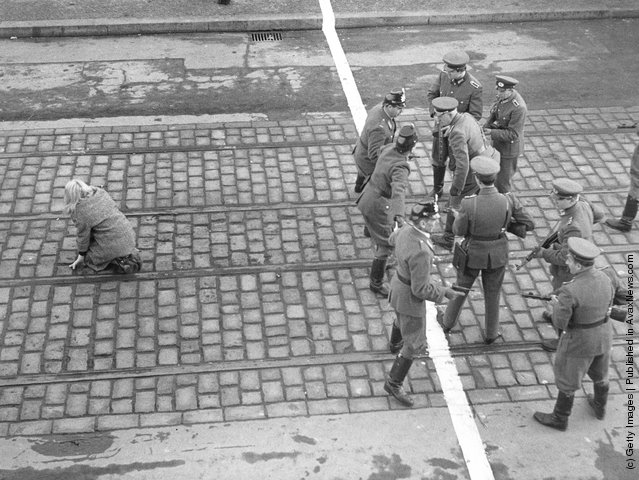
“The Berlin Wall (German: Berliner Mauer) was a barrier constructed by the German Democratic Republic (GDR, East Germany) starting on 13 August 1961, that completely cut off West Berlin from surrounding East Germany and from East Berlin. The barrier included guard towers placed along large concrete walls, which circumscribed a wide area (later known as the “death strip”) that contained anti-vehicle trenches, “fakir beds” and other defenses. The Soviet-dominated Eastern Bloc officially claimed that the wall was erected to protect its population from fascist elements conspiring to prevent the “will of the people” in building a socialist state in East Germany. However, in practice, the Wall served to prevent the massive emigration and defection that marked Germany and the communist Eastern Bloc during the post-World War II period”. – Wikipedia

Photo: West Berlin policemen and East German Volkspolizei face each other across the border in Berlin, circa 1955. (Photo by Three Lions/Hulton Archive/Getty Images)
Details
22 May 2011 10:49:00
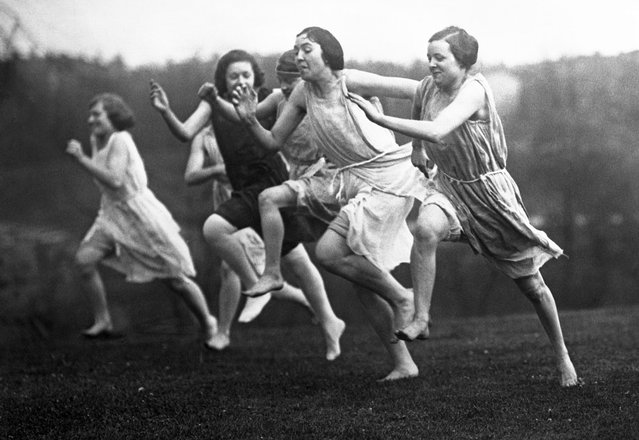
Girls of University of Cincinnati Stage Grecian Games on April 29, 1921. Garbed in costumes of ancient Greece, fair students of the University of Cincinnati, Ohio arranged a set of Grecian Games for the benefit of the University athletic fund. All of the girl students of the University, who take a great interest in outdoor games and athletics, took part in the games. The fund was greatly increased through the staging of the unique attraction and the girls purpose to give a return engagement. The accompanying photographs show the girl contestants in their Grecian costumes. Photo shows the start of the 100 yard dash. (Photo by Bettmann Archive/Getty Images)

Girls of University of Cincinnati Stage Grecian Games on April 29, 1921. Garbed in costumes of ancient Greece, fair students of the University of Cincinnati, Ohio arranged a set of Grecian Games for the benefit of the University athletic fund. All of the girl students of the University, who take a great interest in outdoor games and athletics, took part in the games. The fund was greatly increased through the staging of the unique attraction and the girls purpose to give a return engagement. The accompanying photographs show the girl contestants in their Grecian costumes. Photo shows the start of the 100 yard dash. (Photo by Bettmann Archive/Getty Images)
Details
09 May 2021 08:10:00
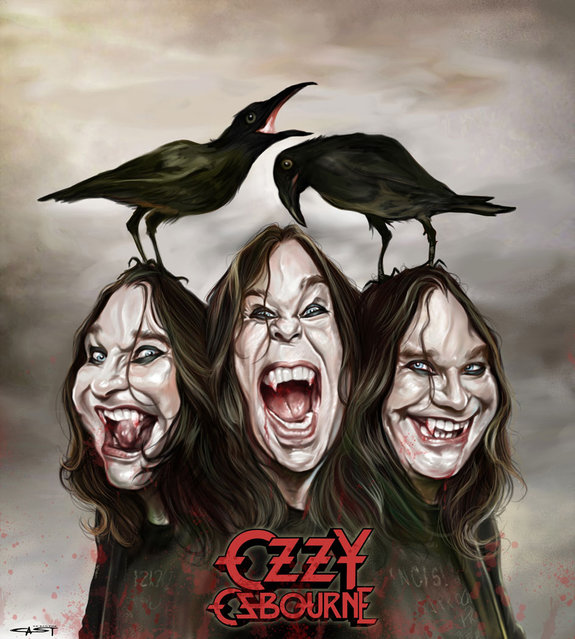
 Rock Caricature By Sebastian Cast

Sebastian Cast, Argentine cartoonist, living in Buenos Aires.
Details
30 Apr 2013 12:17:00