Loading...
Done


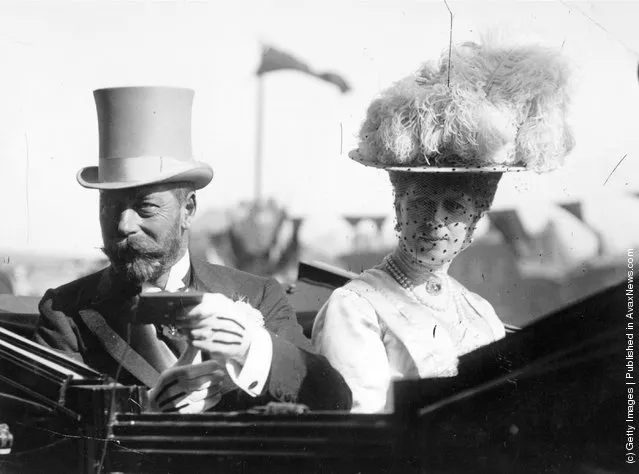
King George V (1865–1936), king of Great Britain since 1910, with his queen-consort Queen Mary (1867–1953), at Collier Hospital on a visit to Dublin. (Photo by Topical Press Agency/Getty Images)
Details
18 May 2011 08:43:00
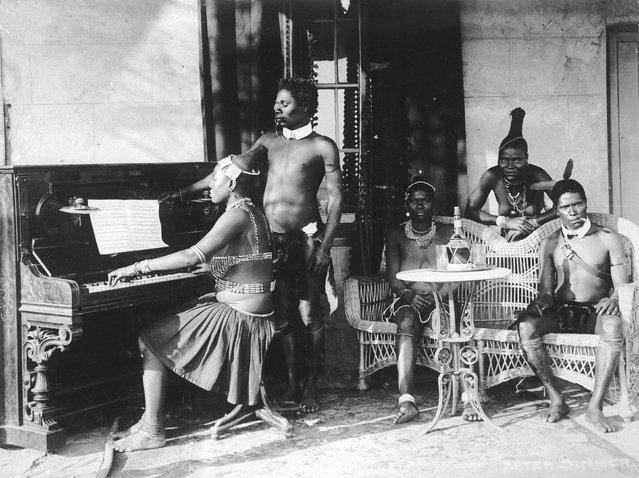
circa 1925:  A Zulu woman playing the piano while a group of others sit and listen.  (Photo by General Photographic Agency/Getty Images)

“The Zulu are the largest South African ethnic group, with an estimated 10–11 million people living mainly in the province of KwaZulu-Natal. Small numbers also live in Zimbabwe, Zambia, and Mozambique. Their language, Zulu, is a Bantu language; more specifically, part of the Nguni subgroup. The Zulu Kingdom played a major role in South African history during the 19th and 20th centuries. Under apartheid, Zulu people were classed as third-class citizens and suffered from state-sanctioned discrimination. They remain today the most numerous ethnic group in South Africa, and now have equal rights along with all other citizens”. – Wikipedia.

Photo: A Zulu woman playing the piano while a group of others sit and listen (to put it briefly, Englishmen scoff over Zulu). South Africa, circa 1925. (Photo by General Photographic Agency)

Details
03 Feb 2014 09:40:00
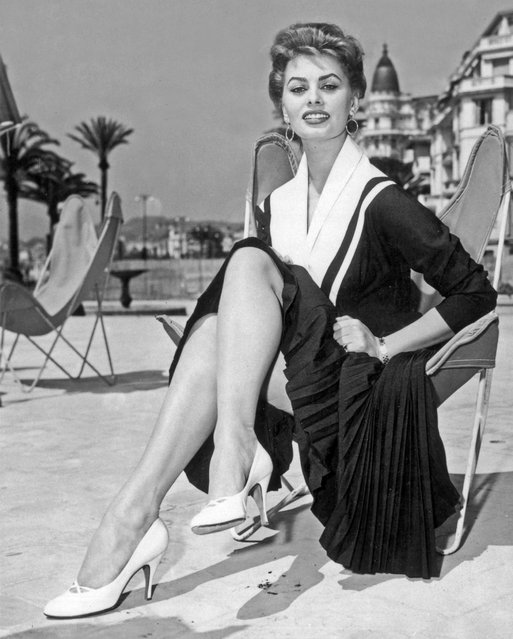
Italian actress Sophia Loren attends the Cannes Film Festival in Cannes, France, 1954. (Photo by AGIP/RDA/Getty Images)

Italian actress Sophia Loren attends the Cannes Film Festival in Cannes, France, 1954. (Photo by AGIP/RDA/Getty Images)
Details
16 May 2014 10:23:00
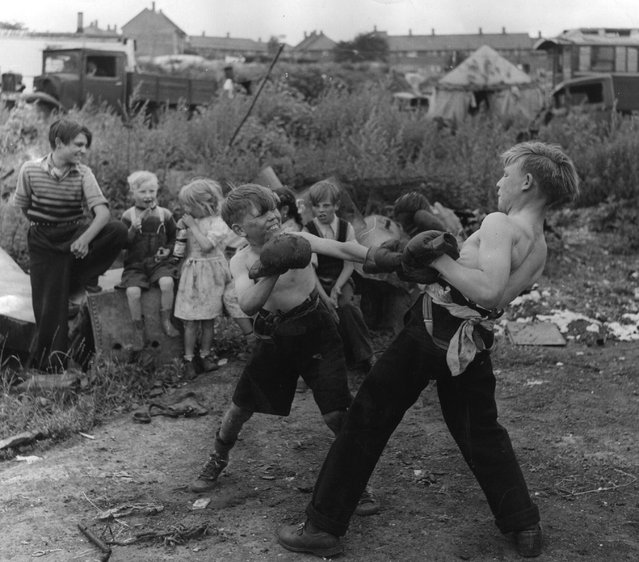
The unromantic gypsies. Children boxing in a gypsy camp in Kent, England on July 1, 1951. Like all boys these gypsy lads like to try their hand at boxing. Encouraged by their friends they fight it out on Corke's Meadow. Few Romanies now live a life of wandering romance. Most are like the three hundred squatters of Corke's Meadow, Kent, which is part of a “gypsy problem” that involves about 100,000 today. Of those about 25,000 can be rightly called gypsies, the rest are Mumpers and Posh-rats and Hobos. Corke's Meadow has both kinds. “Picture Post” cameraman Bert Hardy photographs the Corke's Meadow gypsies in their encampment. (Photo by Hulton-Deutsch Collection/Corbis via Getty Images)

The unromantic gypsies. Children boxing in a gypsy camp in Kent, England on July 1, 1951. Like all boys these gypsy lads like to try their hand at boxing. Encouraged by their friends they fight it out on Corke's Meadow. Few Romanies now live a life of wandering romance. Most are like the three hundred squatters of Corke's Meadow, Kent, which is part of a “gypsy problem” that involves about 100,000 today. Of those about 25,000 can be rightly called gypsies, the rest are Mumpers and Posh-rats and Hobos. Corke's Meadow has both kinds. “Picture Post” cameraman Bert Hardy photographs the Corke's Meadow gypsies in their encampment. (Photo by Hulton-Deutsch Collection/Corbis via Getty Images)
Details
12 Mar 2017 00:01:00
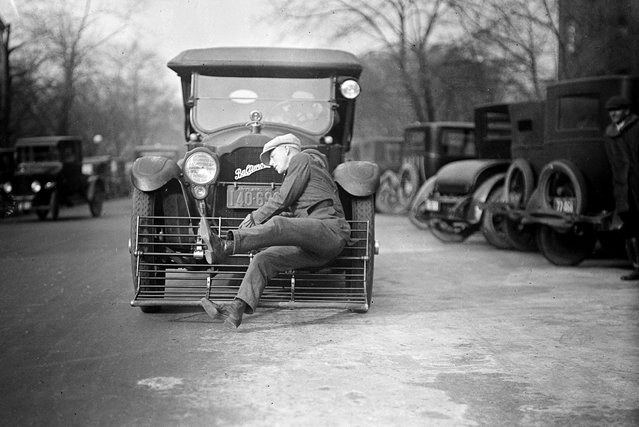
Picks him up at 25 miles an hour! If the modern auto or truck hits you don't worry. Equipped with this device you are simply given a free ride. This man even came from behind another car, was struck but not even scratched. The demonstration was given recently in Washington, D.C. (1924 December 17). (Photo by Library of Congress)

Picks him up at 25 miles an hour! If the modern auto or truck hits you don't worry. Equipped with this device you are simply given a free ride. This man even came from behind another car, was struck but not even scratched. The demonstration was given recently in Washington, D.C. (1924 December 17). (Photo by Library of Congress)
Details
14 Dec 2024 03:56:00
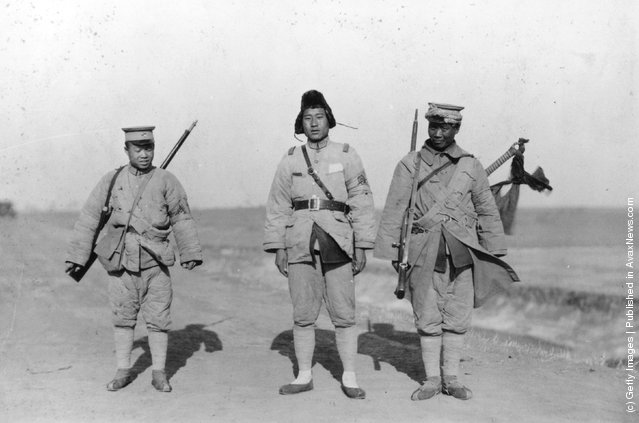
1922: Three Chinese soldiers at the time of a civil war in China

Three Chinese soldiers at the time of a civil war in China. (Photo by General Photographic Agency/Getty Images). 1922
Details
27 Sep 2011 13:47:00
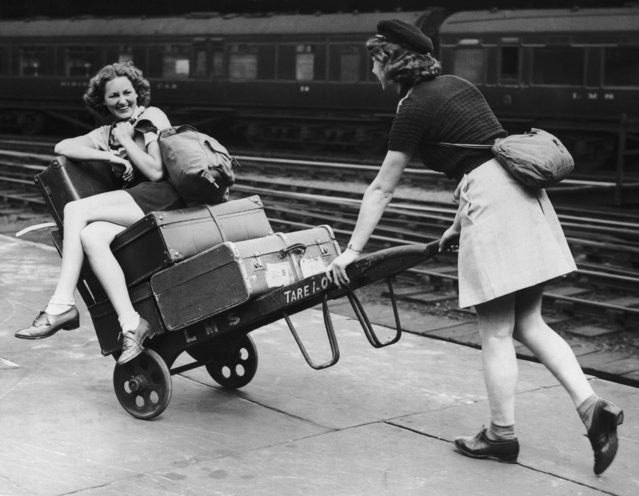
Two holidaymakers amuse themselves with a porter's trolley whilst waiting for their train at Euston Station, London, 5th August 1939. (Photo by A. J. O'Brien/Fox Photos/Getty Images)

Two holidaymakers amuse themselves with a porter's trolley whilst waiting for their train at Euston Station, London, 5th August 1939. (Photo by A. J. O'Brien/Fox Photos/Getty Images)
Details
17 Apr 2017 07:48:00
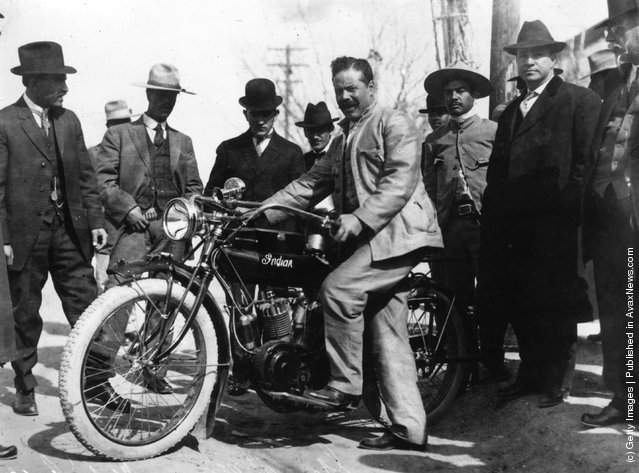
1914: Mexican rebel leader Francisco 'Pancho' Villa (1877-1923) with one of the motorcycles used in the Battle of Torrero

“José Doroteo Arango Arámbula (5 June 1878 – 20 July 1923) – better known by his pseudonym Francisco Villa or its hypocorism Pancho Villa – was one of the most prominent Mexican Revolutionary generals”. – Wikipedia

Photo: Mexican rebel leader Francisco “Pancho” Villa with one of the motorcycles used in the Battle of Torrero. (Photo by Topical Press Agency/Getty Images). August 1914
Details
11 Nov 2011 10:07:00