Loading...
Done
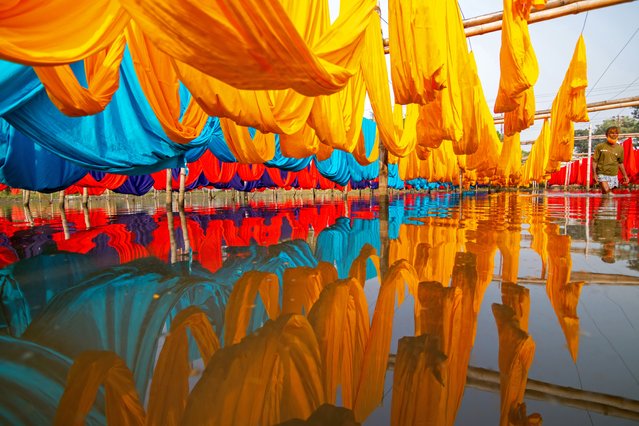
Workers hang thousands of different colorful fabrics on iron wires tied between a bamboo framework and constantly turn them so that they dry perfectly in a flooded field in Narayanganj, Bangladesh on March 16, 2022. Iron wires are used between a bamboo framework to create giant washing lines for the final part of the dying process as the fabrics are dried in the sun. Bright strands of blue, pink, orange and green-dyed cloths hang above the grassy field in a dazzling network of interlocking colors. This is the final part of the dying process after which the cloth is made into t-shirts and vests at the garment factory. (Photo by Joy Saha/ZUMA Press Wire/Rex Features/Shutterstock)

Workers hang thousands of different colorful fabrics on iron wires tied between a bamboo framework and constantly turn them so that they dry perfectly in a flooded field in Narayanganj, Bangladesh on March 16, 2022. (Photo by Joy Saha/ZUMA Press Wire/Rex Features/Shutterstock)
Details
25 Mar 2022 05:47:00
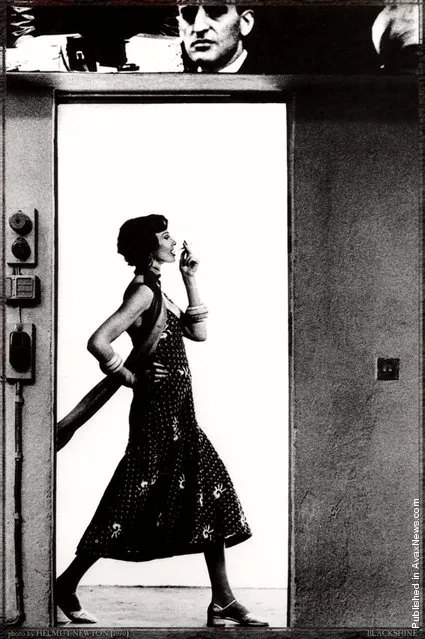
Photographers: Helmut Newton

“Newton was born in Berlin, the son of Klara “Claire” (Marquis) and Max Neustädter, a button factory owner. His family was Jewish. Newton attended the Heinrich-von-Treitschke-Realgymnasium and the American School in Berlin. Interested in photography from the age of 12 when he purchased his first camera, he worked for the German photographer Yva (Elsie Neulander Simon) from 1936. The increasingly oppressive restrictions placed on Jews by the Nuremberg laws meant that his father lost control of the factory in which he manufactured buttons and buckles; he was briefly interned in a concentration camp on “Kristallnacht”, November 9, 1938, which finally compelled the family to leave Germany. Newton's parents fled to South America. He was issued with a passport just after turning 18, and left Germany on December 5, 1938. At Trieste he boarded the “Conte Rosso” (along with about 200 others escaping the Nazis) intending to journey to China. After arriving in Singapore he found he was able to remain there, first and briefly as a photographer for the Straits Times and then as a portrait photographer”. – Wikipedia

Photo: Sigourney Weaver by Helmut Newton, 1995.
Details
08 Apr 2012 13:49:00
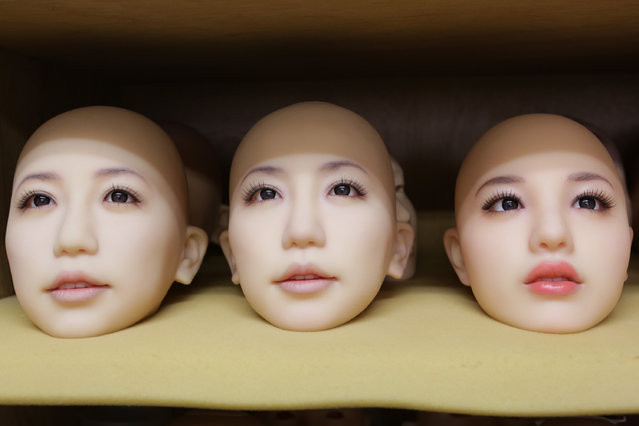
Heads of love dolls are seen on the shelf on March 9, 2017 in Tokyo, Japan. Japan's oldest and largest “love doll” maker Orient Industry, has been producing silicone love dolls since 1977, and has seen there is a trend for intimate relationships with silicone dolls in Japan. The Orient Industry's factory produces approximately 500 life size hand-made per year, and one doll, costs up to 600,000JPY (approx. 6,000 USD), takes four to five weeks to be finished. Originally, the company was marketing love dolls for disabled people, and the company continues to support the community by providing discounts and consulting their sexual urges. (Photo by Taro Karibe/Getty Images)

Heads of love dolls are seen on the shelf on March 9, 2017 in Tokyo, Japan. Japan's oldest and largest “love doll” maker Orient Industry, has been producing silicone love dolls since 1977, and has seen there is a trend for intimate relationships with silicone dolls in Japan. (Photo by Taro Karibe/Getty Images)
Details
18 Mar 2017 10:32:00
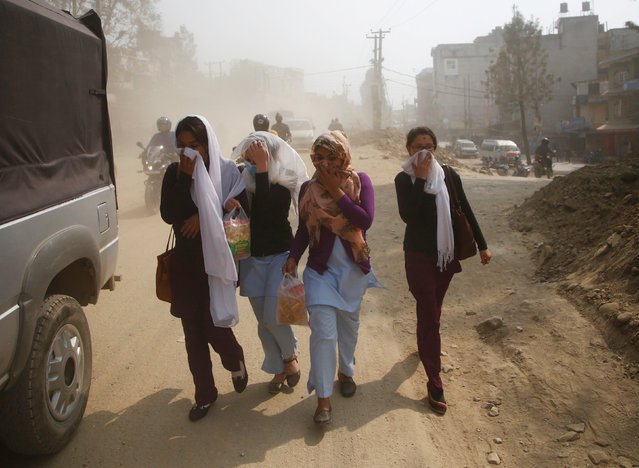
Pedestrians cover their face as they walk along the dusty road in Kathmandu, Nepal February 27, 2017. Nepal has forced 2,500 old vehicles off roads in its capital city of Kathmandu, part of a fight against alarming air pollution levels that have hit nine times World Health Organisation (WHO) limits. Air pollution has been a chronic problem in rapidly growing Kathmandu, which sits in a Himalayan valley and is home to more than 3mn people. Rising public anger with the smog is turning into a headache for a beleaguered government headed by former Maoist rebels. Dust from road works, exhaust from old, poorly maintained vehicles and smoke from coal-burning brick kilns blend in a murky haze that hangs over the ancient city, raising the risk of cancer, stroke, asthma and high blood pressure, experts say. Officials hope the ban on vehicles more than 20 years old will be a step towards a cleaner future. (Photo by Navesh Chitrakar/Reuters)

Pedestrians cover their face as they walk along the dusty road in Kathmandu, Nepal February 27, 2017. Nepal has forced 2,500 old vehicles off roads in its capital city of Kathmandu, part of a fight against alarming air pollution levels that have hit nine times World Health Organisation (WHO) limits. Air pollution has been a chronic problem in rapidly growing Kathmandu, which sits in a Himalayan valley and is home to more than 3mn people. (Photo by Navesh Chitrakar/Reuters)
Details
04 Mar 2017 00:04:00


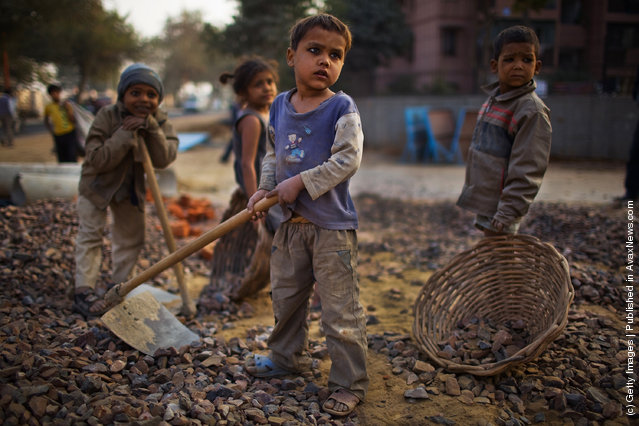
Indian children work nearby to their parents at a construction project in front of the Jawaharlal Nehru Stadium on January 30, 2010 in New Delhi, India. The children accompany their parents to the work site, where if they are prepared to work, they will receive money for bread an milk and be provided with dinner by the contractor. The sheer scale of the project has drawn an enormous population of migrant workers from all over India.
Details
20 May 2011 07:00:00
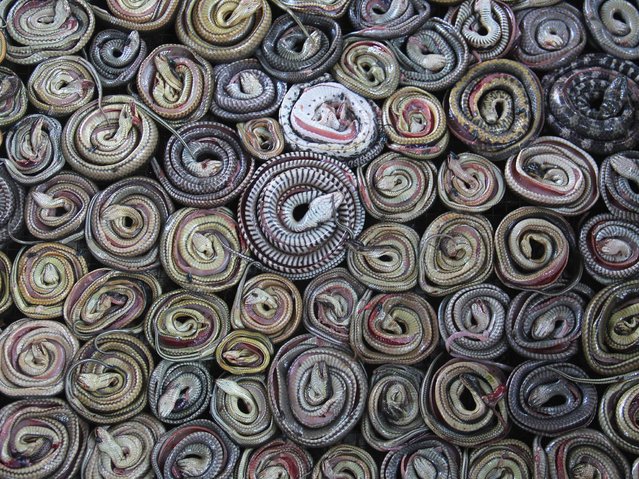
Snakes are collected and rolled before putting into the oven on March 2, 2014 in the village of Kertasura, Cirebon, Indonesia. (Photo by Nurcholis Anhari Lubis/Getty Images)

Snakes are collected and rolled before putting into the oven on March 2, 2014 in the village of Kertasura, Cirebon, Indonesia. At slaughter house snake skins measuring in the hundreds of metres, are sold to bag factories in the West and Central Java provinces on a monthly basis. From snake skin was manufactured into bags, shoes, wallets and belts. The price of a bag made from snake skin costs between 150,000 rupiah ($15 USD) and 300,000 rupiah ($30 USD), depending on its size. When snake skins reach Western fashion houses their price can increase dramatically and sell for up to $4,000 USD. (Photo by Nurcholis Anhari Lubis/Getty Images)
Details
05 Mar 2014 07:31:00
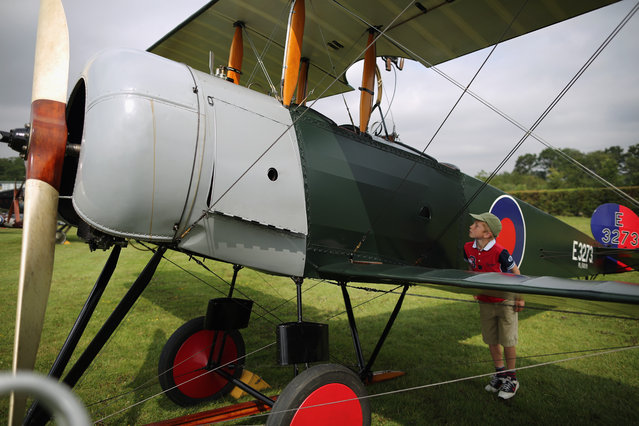
Aviation enthusiast Patrick Wilson 8, from Wetherby looks at  an Avro 504 k at “The Shuttlesworth Collection” at Old Warden on July 21, 2014 in Biggleswade, England. Of the 55,000 planes that were manufactured by the Royal Army Corps (RAC) during WWI, only around 20 remain in airworthy condition. (Photo by Dan Kitwood/Getty Images)

Aviation enthusiast Patrick Wilson 8, from Wetherby looks at an Avro 504 k at “The Shuttlesworth Collection” at Old Warden on July 21, 2014 in Biggleswade, England. Of the 55,000 planes that were manufactured by the Royal Army Corps (RAC) during WWI, only around 20 remain in airworthy condition. Six of these belong to The Shuttleworth Collection at Old Warden, Bedfordshire, making it the most complete collection of original airworthy WWI aircraft in the world. Amongst the collection is the SE5a. The SE5a is a single seater fighter aircraft. It is an original biplane designed by the Royal Aircraft Factory, with its engine built by Wolseley Motors Ltd, and it was issued to 84 Squadron in November 1918. The National Archive in Kew has recently verified that the plane saw action in France with 84 Squadron the day before Armistice, November 10, 1918. (Photo by Dan Kitwood/Getty Images)

Details
23 Jul 2014 10:00:00
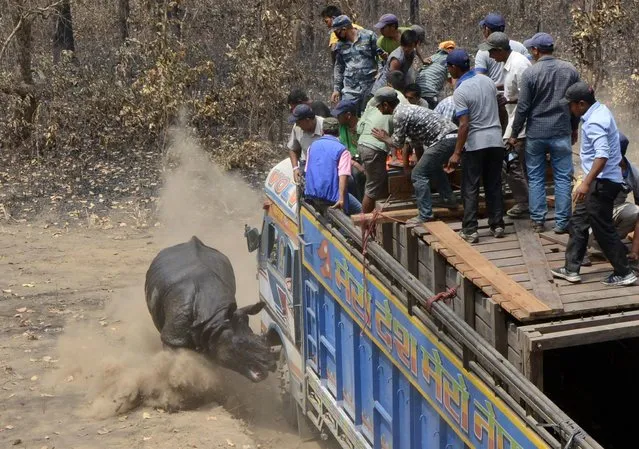
A Nepalese vetinary and technical team release a rhino after it is relocated in Chitwan National Park some of 250 Kilometer South of Kathmandu on April 4, 2017. Conservationists on April 3 captured a rare one-horned rhinoceros in Nepal as part of an attempt to increase the number of the vulnerable animals, which are prized by wildlife poachers. Five rhinos – one male and four female – will be released into a national park in Nepal's far west over the coming week in the hope of establishing a new breeding group. (Photo by Prakash Mathema/AFP Photo)

A Nepalese vetinary and technical team release a rhino after it is relocated in Chitwan National Park some of 250 Kilometer South of Kathmandu on April 4, 2017. Conservationists on April 3 captured a rare one-horned rhinoceros in Nepal as part of an attempt to increase the number of the vulnerable animals, which are prized by wildlife poachers. Five rhinos – one male and four female – will be released into a national park in Nepal's far west over the coming week in the hope of establishing a new breeding group. (Photo by Prakash Mathema/AFP Photo)
Details
05 Apr 2017 09:19:00