Loading...
Done
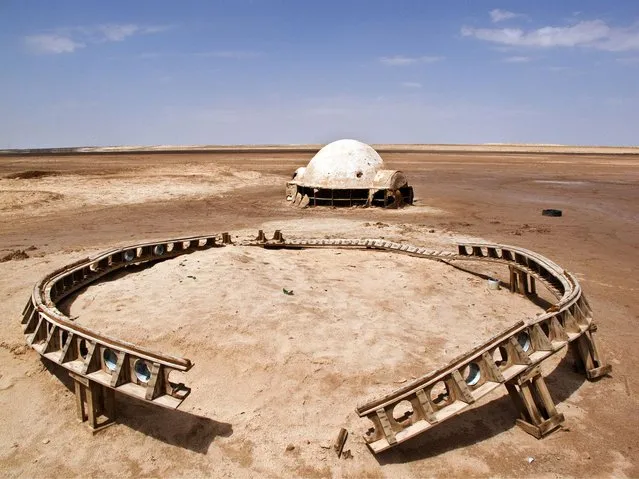
“No More Stars”: Abandoned Stars Wars Sets in the Desert by Rä di Martino

New York-based visual artist and filmmaker Rä di Martino has taken a series of eerie and beautiful photos that capture scenes of abandoned Hollywood film sets. Martino spent over a year traveling throughout the desert towns of Morocco and Tunisia hunting down the old Star Wars sets, exploring these massive structures that stand almost like ancient ruins. “No More Stars” showcases the backdrop of Luke Skywalker's home on the fictional desert planet Tatooine. (Photo by Rä di Martino)
Details
12 Mar 2015 13:38:00
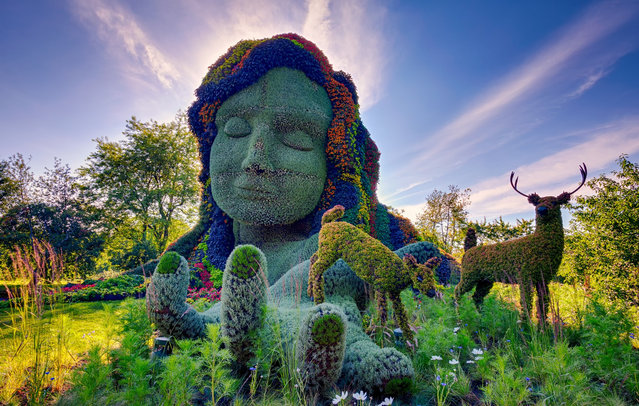
Monumental Plant Sculptures At The 2013 Mosaicultures Internationales De Montreal

Mosaïcultures Internationales de Montréal is an international mosaiculture competition held in Montréal, Canada. According to their website, mosaiculture “is a refined horticultural art that involves creating and mounting living artworks made primarily from plants with colourful foliage (generally annuals, and occasionally perennials).” The 2013 competition and exhibition opened June 22 and runs through September 29 at the Montréal Botanical Garden and features some 22,000 plant species and cultivars distributed throughout 10 exhibition greenhouses and 30 themed gardens.
Details
29 Jan 2014 11:38:00
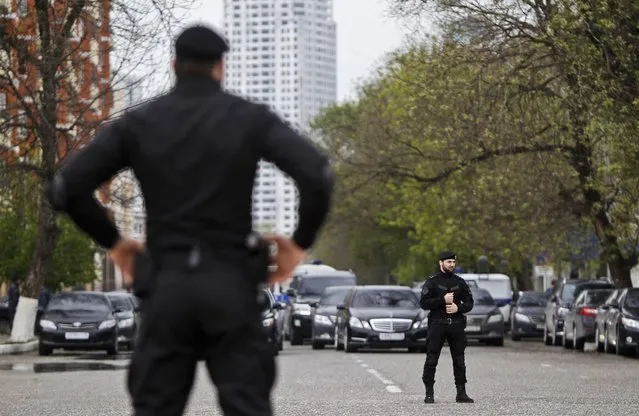
Special forces officers stand guard during a government-organised event marking Chechen language day in the centre of the Chechen capital Grozny April 25, 2013. (Photo by Maxim Shemetov/Reuters)

“What did I know about Chechnya before last week? For someone who grew up in the 1990s the very word Chechnya meant a string of grainy images on TV showing people in battered camouflage outfits, shooting at each other amid destruction and ruin. Fear, wahhabis, Shamil Basayev, terrorism, mountains: these were the words that used to spring to my mind when someone mentioned Chechnya”. – Maxim Shemetov. Photo: Special forces officers stand guard during a government-organised event marking Chechen language day in the centre of the Chechen capital Grozny April 25, 2013. (Photo by Maxim Shemetov/Reuters)
Details
14 May 2013 12:02:00
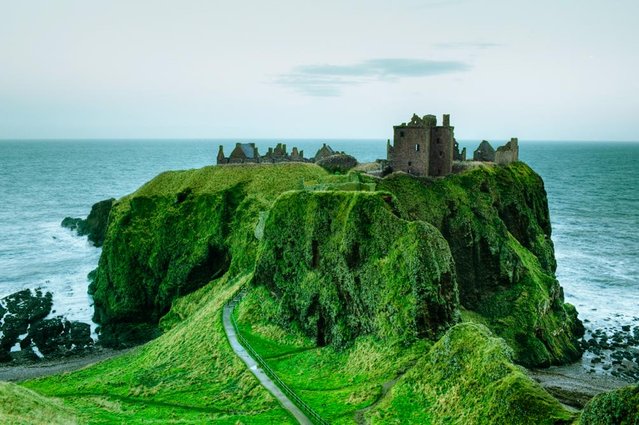
Dunnottar Castle In Scottish

Dunnottar Castleis a ruined medieval fortress located upon a rocky headland on the north-east coast of Scotland, about 3 kilometres (1.9 mi) south of Stonehaven. The surviving buildings are largely of the 15th and 16th centuries, but the site is believed to have been fortified in the Early Middle Ages. Dunnottar has played a prominent role in the history of Scotland through to the 18th-century Jacobite risings because of its strategic location and the strength of its situation. Dunnottar is best known as the place where the Honours of Scotland, the Scottish crown jewels, were hidden from Oliver Cromwell's invading army in the 17th century. The property of the Keiths from the 14th century, and the seat of the Earl Marischal, Dunnottar declined after the last Earl forfeited his titles by taking part in the Jacobite rebellion of 1715. The castle was restored in the 20th century and is now open to the public.
Details
13 Jan 2014 11:31:00
Acid attack survivors wait in the back stage prior to participate in a fashion show titled “Beauty Redefined” organized by ActionAid Bangladesh in Dhaka, Bangladesh, March 7, 2017. (Photo by Mohammad Ponir Hossain/Reuters)

Acid attack survivors wait in the back stage prior to participate in a fashion show titled “Beauty Redefined” organized by ActionAid Bangladesh in Dhaka, Bangladesh, March 7, 2017. Such horrific violence across South Asia is often prompted by insufficient dowries, rejection of advances or land disputes, disfiguring victims for life and ruining their prospects. (Photo by Mohammad Ponir Hossain/Reuters)
Details
10 Mar 2017 00:01:00
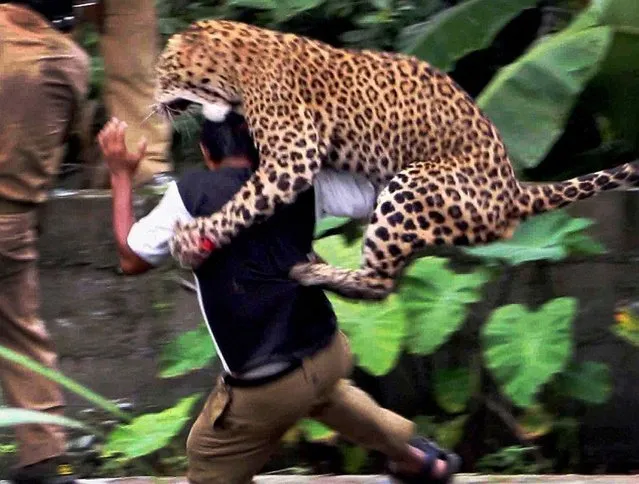
A leopard attacks a forest guard at Prakash Nagar village near Salugara on the outskirts of Siliguri on July 19, 2011. Six people were mauled by the leopard after the feline strayed into the village area before it was caught by forestry department officials. Forest officials made several attempt to tranquilised the full grown leopard that was wandering through a part of the densely populated city when curious crowds startled the animal, a wildlife official said. (Photo by Diptendu Dutta/AFP Photo)

A leopard attacks a forest guard at Prakash Nagar village near Salugara on the outskirts of Siliguri on July 19, 2011. Six people were mauled by the leopard after the feline strayed into the village area before it was caught by forestry department officials. Forest officials made several attempt to tranquilised the full grown leopard that was wandering through a part of the densely populated city when curious crowds startled the animal, a wildlife official said. (Photo by Diptendu Dutta/AFP Photo)
Details
29 Aug 2021 06:54:00
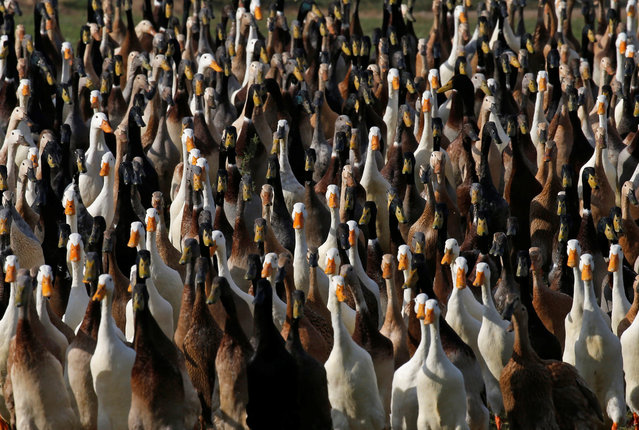
Indian Runner ducks march past farm buildings at the Vergenoegd wine estate near Cape Town, South Africa, May 16, 2016. (Photo by Mike Hutchings/Reuters)

Indian Runner ducks march past farm buildings at the Vergenoegd wine estate near Cape Town, South Africa, May 16, 2016. Each day, a quack squad of killer ducks are released for the first of two sorties at South Africa's Vergenoegd wine farm in Stellenbosch. Their mission – seek and destroy thousands of pests out to ruin the season's harvest. Fanning out across the vineyards, some 1,000 Indian Runner ducks hone in on their hidden targets with uncanny precision, locating the tiny white dune snails feasting on budding vines. (Photo by Mike Hutchings/Reuters)
Details
27 May 2016 13:06:00
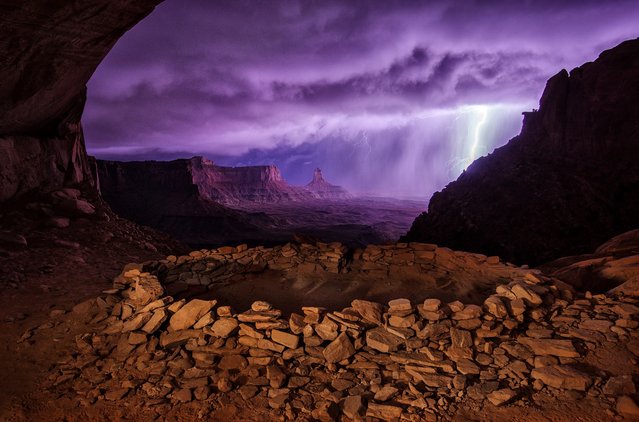
Second Place Winner: “Thunderstorm at False Kiva”. I hiked out to these ruins at night hoping to photograph them with the Milky Way, but instead a thunderstorm rolled through, creating this dramatic image. – Max Seigal. (Photo and caption by Max Seigal/National Geographic Traveler Photo Contest)

Second Place Winner: “Thunderstorm at False Kiva”. I hiked out to these ruins at night hoping to photograph them with the Milky Way, but instead a thunderstorm rolled through, creating this dramatic image. – Max Seigal. National Geographic Traveler Director of Photography Dan Westergren, one of this year's judges, shares his thoughts on the second place winner: “This photo combines two different scenes into one: the small kiva in a cliff dwelling and the grand vista of Canyonlands National Park across the valley. I really like the two different color palettes – warm inside and purple outside. This two-for-one scene was caused by the lightning storm outside the dwelling, which lit up the landscape like it was a huge electronic flash. Looking at this picture I can imagine what a wonderful sight it must have been for the ancient people who lived here. It doesn't seem too amazing now in our modern world, but might have been mind-blowing for the prehistoric residents”. Location: Utah. (Photo and caption by Max Seigal/National Geographic Traveler Photo Contest)
Details
02 Aug 2013 06:16:00