Loading...
Done
Warriors Of Brazil: Capoeira Spectacular

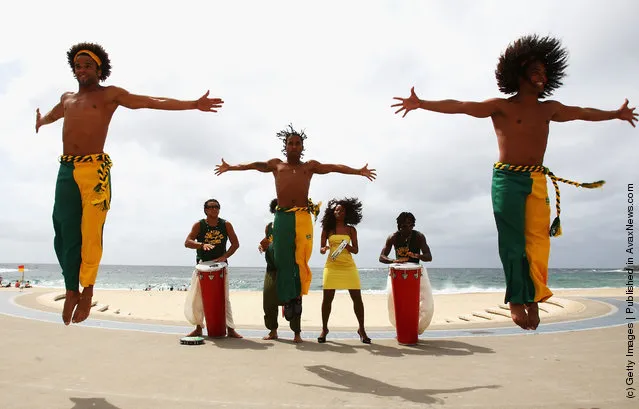
“Capoeira is a Brazilian art form that combines elements of martial arts, sports, and music. It was created in Brazil mainly by descendants of African slaves with Brazilian native influences, probably beginning in the 16th century. It is known by quick and complex moves, using mainly power kicks and quick leg sweeps, with some ground and aerial acrobatics, knee strikes, take-downs, elbow strikes, punches and headbutts. The word capoeira comes from Tupi, referring to the areas of low vegetation in the Brazilian interior”. – Wikipedia

Photo: The Warriors of Brazil perform on Coogee Beach on November 23, 2009 in Sydney, Australia. The Warriors of Brazil show is a spectacular stage show which combines the extraordinary martial art of Capoeira with the uplifting music and dance of Carnival. (Photo by Ryan Pierse/Getty Images)
Details
19 Sep 2011 14:13:00
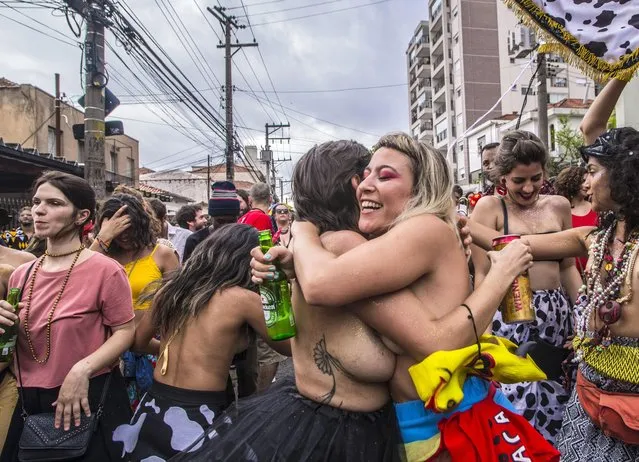
People enjoy carnival while shouting slogans of female empowerment and anti harrassment in Sao Paulo, Brazil on January 28, 2018. The carnival is marked by a lot of fun, but also has space to talk about more serious things – without losing the good mood. Parading for the first time in São Paulo, the Vaca Profana block proposed a reflection on sieges and machismo. With the breasts on display singing not only frevos but, mainly, shouting words of disorder, in order to stimulate female empowerment and against harassment. Our body is our struggle. The preservation of our physical integrity, our freedom of choice. Nude or clothed, we demand respect. (Photo by Cris Faga/Rex Features/Shutterstock)

People enjoy carnival while shouting slogans of female empowerment and anti harrassment in Sao Paulo, Brazil on January 28, 2018. The carnival is marked by a lot of fun, but also has space to talk about more serious things – without losing the good mood. Parading for the first time in São Paulo, the Vaca Profana block proposed a reflection on sieges and machismo. (Photo by Cris Faga/Rex Features/Shutterstock)
Details
29 Jan 2018 08:29:00
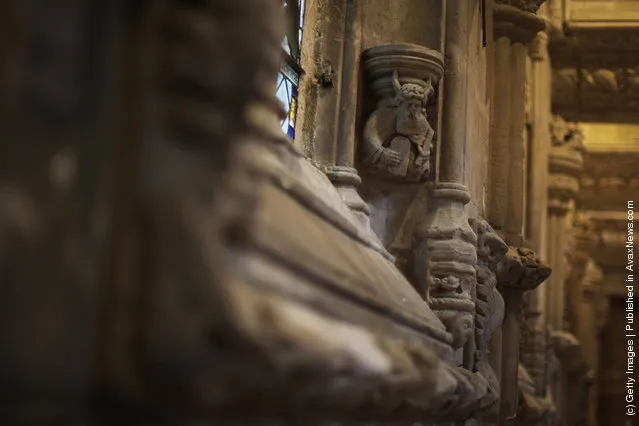
The interior of Rosslyn Chapel on February 9, 2012 in Roslin, Scotland

“Rosslyn Chapel, properly named the Collegiate Chapel of St. Matthew, was founded on a small hill above Roslin Glen as a Roman Catholic collegiate church (with between four and six ordained canons and two boy choristers) in the mid-15th century. Rosslyn Chapel and the nearby Roslin Castle are located at the village of Roslin, Midlothian, Scotland”. – Wikipedia

Photo: The interior of Rosslyn Chapel on February 9, 2012 in Roslin, Scotland. Built between 1446 and 1484 it is a category A listed building, covered in ornate stonework and carvings of individual figures and scenes. People travel from all over the world to visit the chapel which many have described as an architectural wonder and a library in stone. Many theories, myths and legends associated with the Chapel have given it a unique sense of mystery and wonder. (Photo by Jeff J. Mitchell/Getty Images)
Details
10 Feb 2012 10:13:00
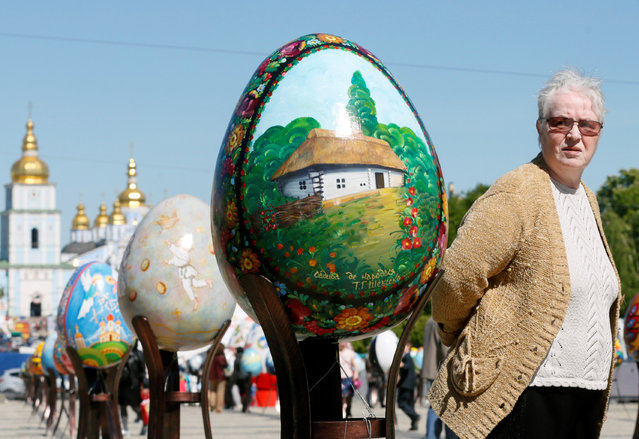
A woman looks at traditional Ukrainian Easter eggs “Pysanka”, installed as part of the upcoming celebrations of Easter, in central Kiev, Ukraine, April 29, 2016. A pysanka is a Ukrainian Easter egg, decorated with traditional Ukrainian folk designs using a wax-resist (batik) method. The word pysanka comes from the verb pysaty, “to write”, as the designs are not painted on, but written with beeswax. Many other eastern European ethnic groups decorate eggs using wax resist for Easter. These include the Belarusians, Bulgarians, Croats, Czechs, Hungarians, Lithuanians, Poles, Romanians, Serbs, Slovaks, Slovenes and Sorbs. (Photo by Valentyn Ogirenko/Reuters)

A woman looks at traditional Ukrainian Easter eggs “Pysanka”, installed as part of the upcoming celebrations of Easter, in central Kiev, Ukraine, April 29, 2016. A pysanka is a Ukrainian Easter egg, decorated with traditional Ukrainian folk designs using a wax-resist (batik) method. The word pysanka comes from the verb pysaty, “to write”, as the designs are not painted on, but written with beeswax. Many other eastern European ethnic groups decorate eggs using wax resist for Easter. These include the Belarusians, Bulgarians, Croats, Czechs, Hungarians, Lithuanians, Poles, Romanians, Serbs, Slovaks, Slovenes and Sorbs. (Photo by Valentyn Ogirenko/Reuters)
Details
30 Apr 2016 09:00:00
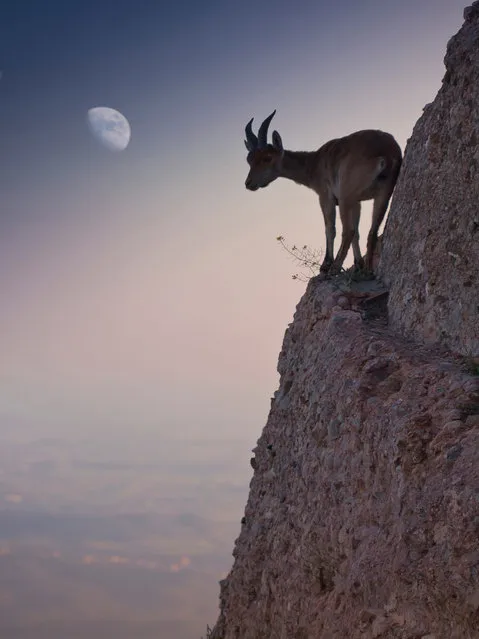
“For a bouquet of flowers”. Photographs made ​​in the last hours of the day. A goat is directed by a dangerous way to eat a small bouquet of flowers. Location: España, Barcelona, Montserrat. (Photo and caption by Renato Lopez Baldo/National Geographic Traveler Photo Contest)

“For a bouquet of flowers”. Photographs made ​​in the last hours of the day. A goat is directed by a dangerous way to eat a small bouquet of flowers. Location: España, Barcelona, Montserrat. (Photo and caption by Renato Lopez Baldo/National Geographic Traveler Photo Contest)

ATTENTION! All pictures are presented in high resolution. To see Hi-Res images – just TWICE click on any picture. In other words, click small picture – opens the BIG picture. Click BIG picture – opens VERY BIG picture.
Details
25 Jun 2013 12:51:00
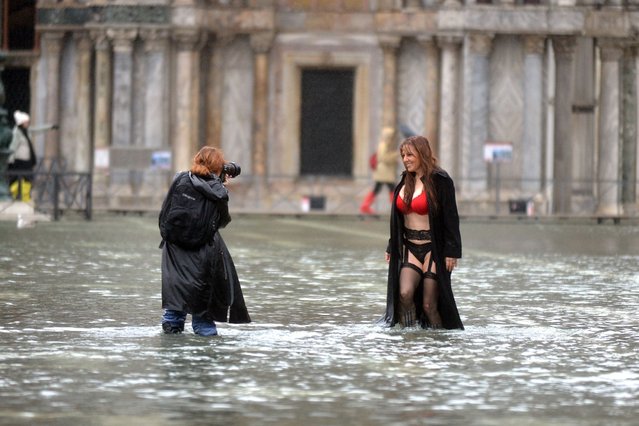
A woman poses on the flooded St. Mark's square during an acqua-alta (high-water) alert in Venice, on November 19, 2013. (Photo by Andrea Pattaro/AFP Photo)

A woman poses on the flooded St. Mark's square during an acqua-alta (high-water) alert in Venice, on November 19, 2013. (Photo by Andrea Pattaro/AFP Photo)

P.S. All pictures, as usual, are presented in high resolution. To see Hi-Res images – just TWICE click on any picture. In other words, click small picture – opens the BIG picture. Click BIG picture – opens VERY BIG picture (if available; this principle works anywhere on the site AvaxNews).
Details
23 Nov 2013 11:21:00
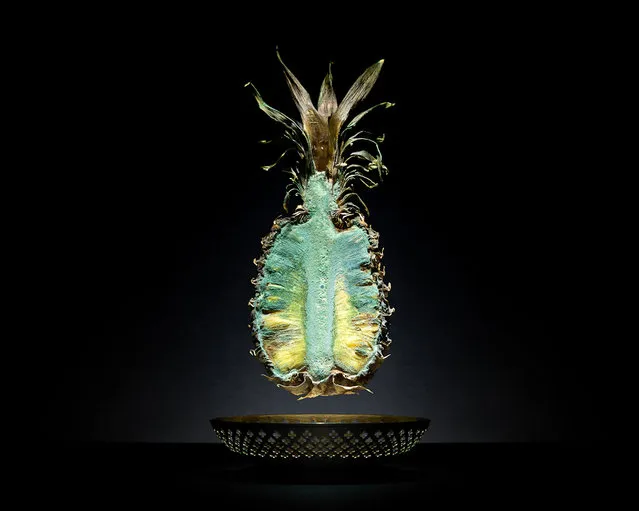
Pineapple

“One Third” – a project on food waste by an Austrian photography Klaus Pichler. According to a UN study one third of the world's food goes to waste – the largest part thereof in the industrialized nations of the global north. Equally, 925 million people around the world are threatened by starvation. The series “One Third” describes the connection between individual wastage of food and globalized food production.

Photo: Pineapple. Place of production: Guayaquil, Ecuador. Cultivation method: Outdoor plantation • Time of harvest: All- season. Transporting distance: 10.666 km (linear distance) • Means of transportation: Aircraft, truck. Carbon footprint (total) per kg: 11,94 kg • Water requirement (total) per kg: 360 l. Price: 2,10 € / kg. (Photo by Klaus Picher)
Details
02 May 2012 11:01:00


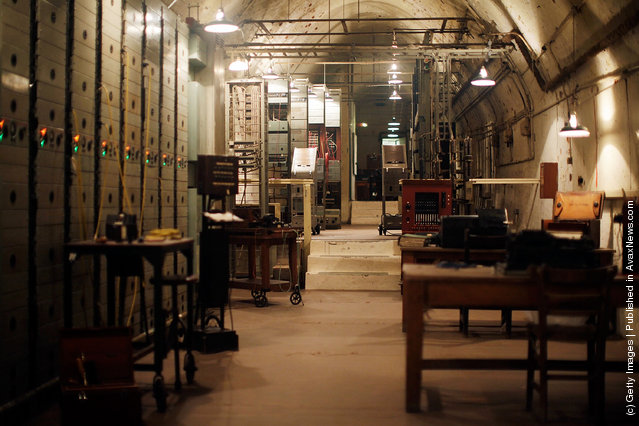
“Dover Castle is a medieval castle in the town of the same name in the English county of Kent. It was founded in the 12th century and has been described as the “Key to England” due to its defensive significance throughout history. It is the largest castle in England.

The outbreak of the Second World War in 1939 saw the tunnels converted first into an air-raid shelter and then later into a military command centre and underground hospital. In May 1940, Admiral Sir Bertram Ramsey directed the evacuation of French and British soldiers from Dunkirk, code-named Operation Dynamo, from his headquarters in the cliff tunnels”. – Wikipedia

Photo: The Repeater Station in the subterranean tunnels underneath Dover Castle, which has been restored by English Heritage for a public exhibition on June 3, 2011 in Dover, England. The evacuation of allied soldiers from Dunkirk was masterminded and co-ordinated from the secret command and control centre in the tunnels deep below the castle. (Photo by Matthew Lloyd/Getty Images)
Details
07 Jun 2011 09:26:00