Loading...
Done
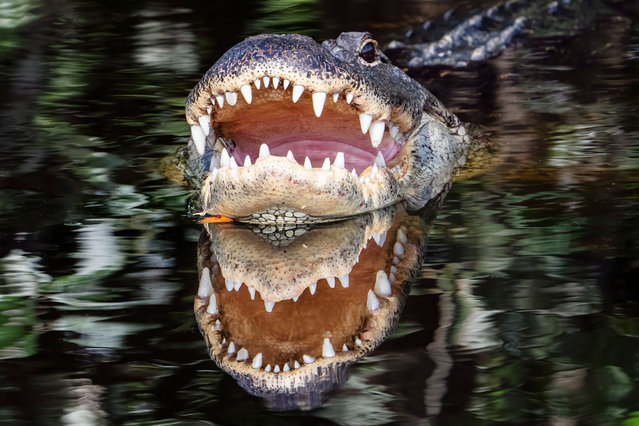
An alligator and his reflection seen in the Wakodahatchee Wetlands in Delray Beach, Florida on May 2, 2024. The wetlands attract nature lovers and wildlife photographers and are home to more than 140 bird species and a variety of other wildlife. (Photo by Ronen Tivony/ZUMA Press Wire/Rex Features/Shutterstock)

An alligator and his reflection seen in the Wakodahatchee Wetlands in Delray Beach, Florida on May 2, 2024. The wetlands attract nature lovers and wildlife photographers and are home to more than 140 bird species and a variety of other wildlife. (Photo by Ronen Tivony/ZUMA Press Wire/Rex Features/Shutterstock)
Details
19 May 2024 05:12:00
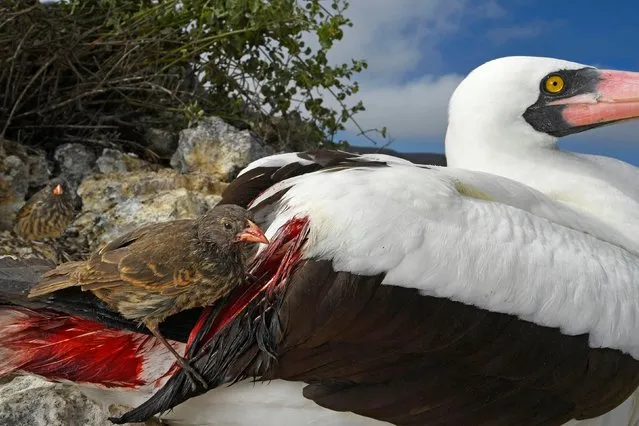
Bloodthirsty by Thomas P Peschak, Germany/South Africa — winner, Behaviour: birds. When rations run short on Wolf Island, in the remote northern Galápagos, the sharp-beaked ground finches become vampires. Their sitting targets are Nazca boobies and other large birds. The finches rely on a scant diet of seeds and insects, which regularly dries up, so they drink blood to survive. ‘I’ve seen more than half a dozen finches drinking from a single Nazca booby,’ says Tom. Rather than leave their nests the boobies tolerate the vampires, and the blood loss doesn’t seem to cause permanent harm. (Photo by Thomas P Peschak/2018 Wildlife Photographer of the Year)

Bloodthirsty by Thomas P. Peschak, Germany/South Africa — winner, Behaviour: birds. When rations run short on Wolf Island, in the remote northern Galápagos, the sharp-beaked ground finches become vampires. Their sitting targets are Nazca boobies and other large birds. The finches rely on a scant diet of seeds and insects, which regularly dries up, so they drink blood to survive. ‘I’ve seen more than half a dozen finches drinking from a single Nazca booby,’ says Tom. Rather than leave their nests the boobies tolerate the vampires, and the blood loss doesn’t seem to cause permanent harm. (Photo by Thomas P. Peschak/2018 Wildlife Photographer of the Year)
Details
19 Oct 2018 00:05:00
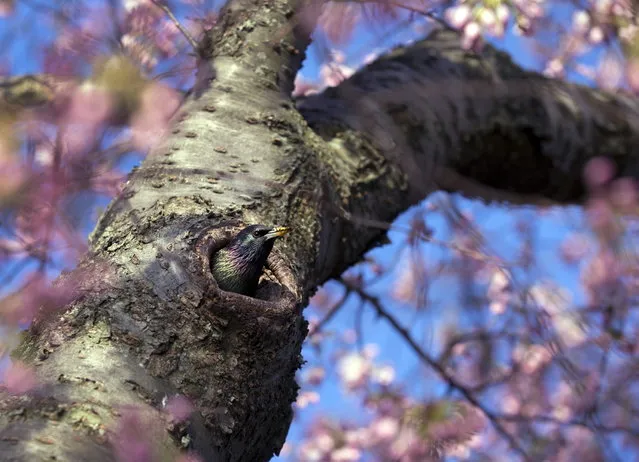
A nesting bird peeks out of the budding Japanese Yoshino cherry tree along the Tidal Basin in Washington, Sunday, April 7, 2013. Despite repeated predictions peak blossom time for the historic cherry trees is not yet here, but almost, almost. (Photo by Carolyn Kaster/AP Photo)

A nesting bird peeks out of the budding Japanese Yoshino cherry tree along the Tidal Basin in Washington, Sunday, April 7, 2013. Despite repeated predictions peak blossom time for the historic cherry trees is not yet here, but almost, almost. (Photo by Carolyn Kaster/AP Photo)
Details
08 Apr 2013 10:05:00
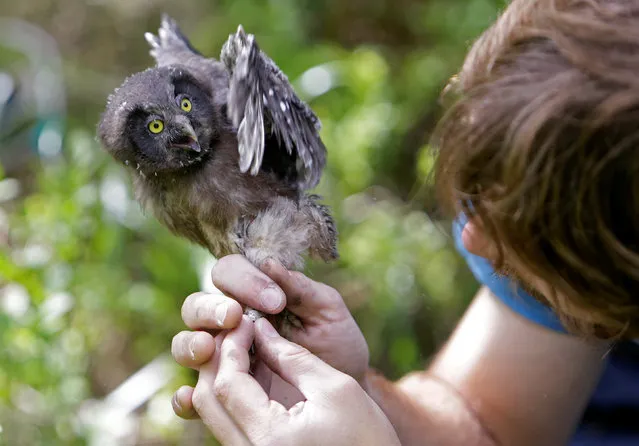
Scientist Jiri Sindelar checks a ring of a Boreal owl chick outside the “Smart Nest Box”, which allows the study of birds by using mounted cameras, in a forest near the village of Mikulov, Czech Republic, June 18, 2016. (Photo by David W. Cerny/Reuters)

Scientist Jiri Sindelar checks a ring of a Boreal owl chick outside the “Smart Nest Box”, which allows the study of birds by using mounted cameras, in a forest near the village of Mikulov, Czech Republic, June 18, 2016. (Photo by David W. Cerny/Reuters)
Details
20 Jun 2016 12:37:00
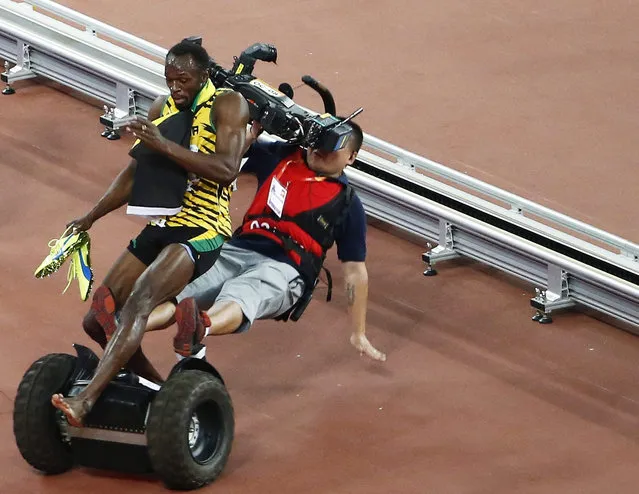
A TV cameraman drives into Usain Bolt of Jamaica after the men's 200m final during the Beijing 2015 IAAF World Championships at the National Stadium, also known as Bird's Nest, in Beijing, China, 27 August 2015. Bolt won the race. (Photo by Rolex Dela Pena/EPA)

A TV cameraman drives into Usain Bolt of Jamaica after the men's 200m final during the Beijing 2015 IAAF World Championships at the National Stadium, also known as “Bird's Nest”, in Beijing, China, 27 August 2015. Bolt won the race. (Photo by Rolex Dela Pena/EPA)
Details
28 Aug 2015 11:05:00
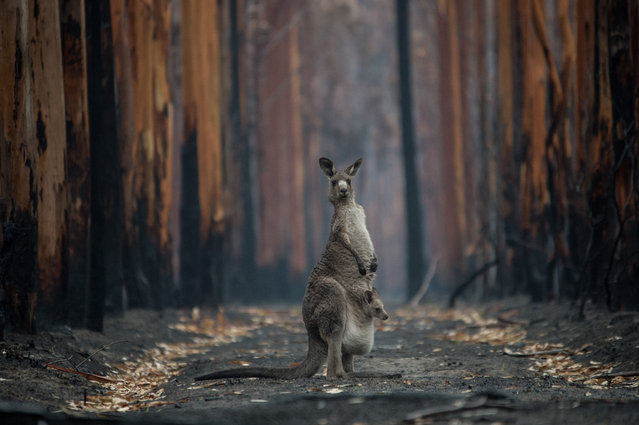
A kangaroo and joey are seen in a burnt forest on Kangaroo Island, south west of Adelaide on January 16, 2020. Australia’s continuing bushfire crisis has taken an enormous toll on wildlife, with huge numbers of mammals, birds, reptiles, insects and other species killed. (Photo by Jo-Anne McArthur/Weanimals)

A kangaroo and joey are seen in a burnt forest on Kangaroo Island, south west of Adelaide on January 16, 2020. Australia’s continuing bushfire crisis has taken an enormous toll on wildlife, with huge numbers of mammals, birds, reptiles, insects and other species killed. (Photo by Jo-Anne McArthur/Weanimals)
Details
26 Jan 2020 00:03:00
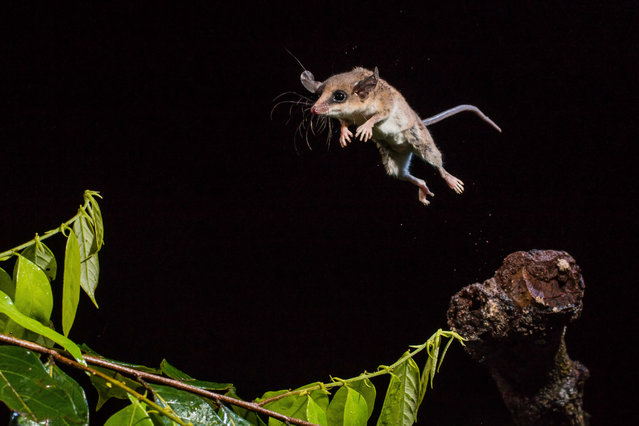
Tropical acrobatics by Adrià López Baucells in Manaus, Brazil. An unidentified South American marsupial, although the characteristic black markings on its face indicate it may be a mouse opossum. These small creatures are nocturnal and feed on bugs, fruit and bird eggs. (Photo by Adrià López Baucells/2019 Royal Society of Biology Photography Competition)

Tropical acrobatics by Adrià López Baucells in Manaus, Brazil. An unidentified South American marsupial, although the characteristic black markings on its face indicate it may be a mouse opossum. These small creatures are nocturnal and feed on bugs, fruit and bird eggs. (Photo by Adrià López Baucells/2019 Royal Society of Biology Photography Competition)
Details
10 Oct 2019 00:03:00
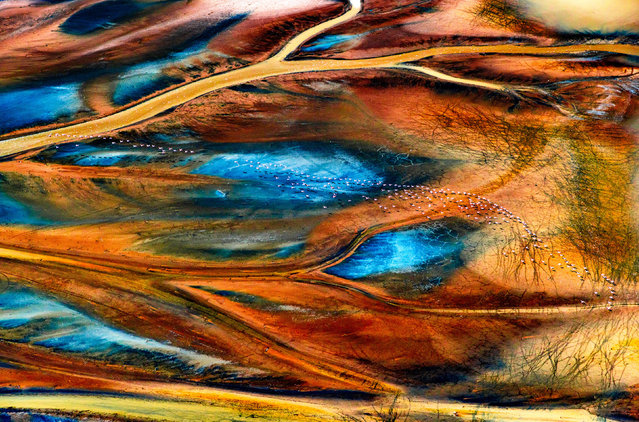
Hundreds of flamingos take flight in the Rift Valley in East Africa early September 2024. The birds gather in the region’s saline lakes to eat the blue-green algae that grows in abundance. The red-orange pigment in the algae is what gives them their distinctive pink plumage. They also use the site to breed. (Photo by Alexandre and Chloe Bes/Naturagency/Solent News)

Hundreds of flamingos take flight in the Rift Valley in East Africa early September 2024. The birds gather in the region’s saline lakes to eat the blue-green algae that grows in abundance. The red-orange pigment in the algae is what gives them their distinctive pink plumage. They also use the site to breed. (Photo by Alexandre and Chloe Bes/Naturagency/Solent News)
Details
23 Sep 2024 02:54:00