Loading...
Done
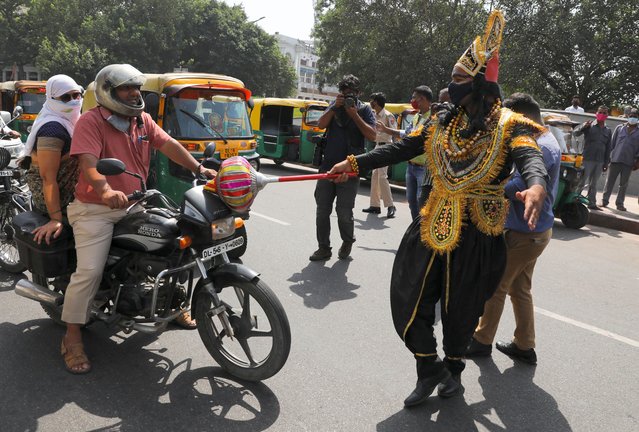
A volunteer of District Magistrate (DM) office dressed as Yamraj, or Hindu God of death, stops people for not wearing masks, amidst the spread of the coronavirus(COVID-19) disease, in New Delhi, India, September 28, 2020. (Photo by Anushree Fadnavis/Reuters)

A volunteer of District Magistrate (DM) office dressed as Yamraj, or Hindu God of death, stops people for not wearing masks, amidst the spread of the coronavirus(COVID-19) disease, in New Delhi, India, September 28, 2020. (Photo by Anushree Fadnavis/Reuters)
Details
06 Oct 2020 00:05:00
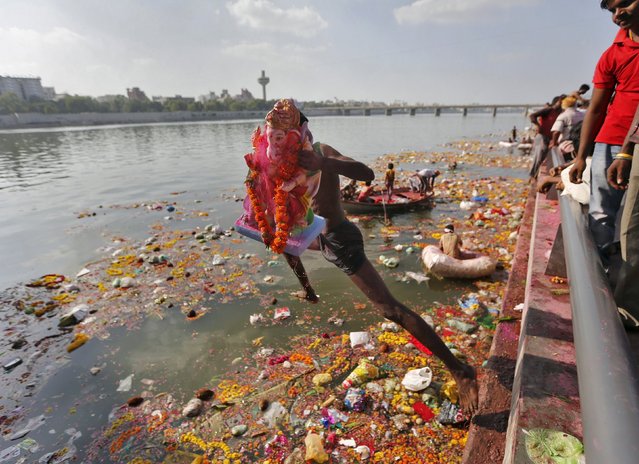
A devotee carrying an idol of the Hindu god Ganesh, the deity of prosperity, jumps into the Sabarmati river to immerse the idol on the last day of the 10-day-long Ganesh Chaturthi festival in Ahmedabad, India, September 27, 2015. (Photo by Amit Dave/Reuters)

A devotee carrying an idol of the Hindu god Ganesh, the deity of prosperity, jumps into the Sabarmati river to immerse the idol on the last day of the 10-day-long Ganesh Chaturthi festival in Ahmedabad, India, September 27, 2015. (Photo by Amit Dave/Reuters)
Details
30 Sep 2015 08:04:00
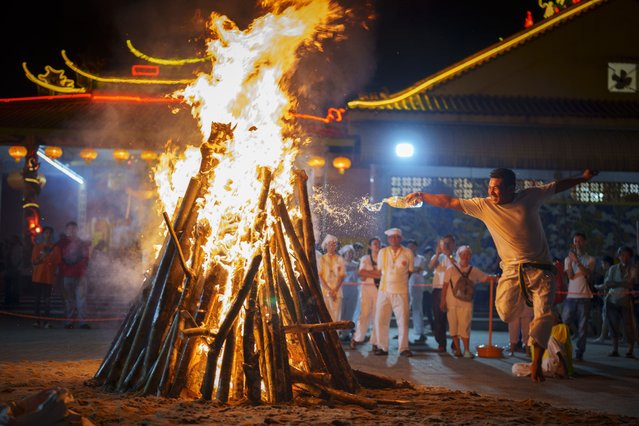
A man set wood on fire to prepare for worshippers to walk barefoot over burning coals during the Nine Emperor Gods festival at a temple in Kuala Lumpur, Malaysia, Monday, October 7, 2024. (Photo by Vincent Thian/AP Photo)

A man set wood on fire to prepare for worshippers to walk barefoot over burning coals during the Nine Emperor Gods festival at a temple in Kuala Lumpur, Malaysia, Monday, October 7, 2024. (Photo by Vincent Thian/AP Photo)
Details
23 Oct 2024 02:39:00
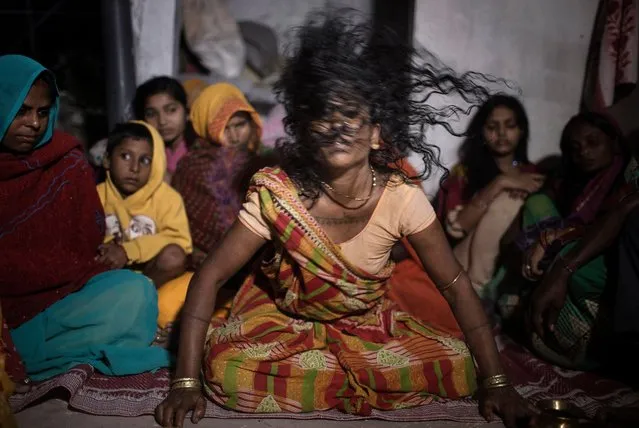
Marani Devi Chaudhary (C), aged 40, performs a ritual in front of shaman Paltan Yadav (unseen) at her home in Rajaur village in Dhanusha district, Nepal, 02 November 2017. The shaman identified Marani Devi to be possessed by their lineage god who was dissatisfied by their worship is thought by the family to have caused them misfortune and is even feared lead to their death. Therefore Marani Devi spent 1,500 USD to perform a healing ritual at the Ghost Festival held at the banks of Kamala River in Dhanusha district two days later. Every family or community has their own sacred god, called 'Kuldevta' in Nepali which means family deity or lineage god. Only family members or people within communities of the same caste can worship to the deity. They have their own rules and regulations of worship which varies from one family and community to another. Being unable to follow the rules and regulations or carry out worship is believed to cause misfortune. (Photo by Narendra Shrestha/EPA/EFE)

Marani Devi Chaudhary (C), aged 40, performs a ritual in front of shaman Paltan Yadav (unseen) at her home in Rajaur village in Dhanusha district, Nepal, 02 November 2017. The shaman identified Marani Devi to be possessed by their lineage god who was dissatisfied by their worship is thought by the family to have caused them misfortune and is even feared lead to their death. (Photo by Narendra Shrestha/EPA/EFE)
Details
17 Nov 2017 06:53:00
Strange Children by John Seven

«My God! My Shoulder!», “Re-Gruntled”, 2011. (Photo by John Seven)
Details
07 Jul 2012 10:57:00
Bicycle Cafe In Zurich, Switzerland

In the past, having a car was synonymous to success. Now, however, having a bicycle in the new trend. Riding a bicycle is all pros and no cons. It makes you slimmer and healthier, it allows you to enjoy the fresh air, traffic jams are no longer a problem, and of course you don’t waste money on gas. However, there was always a problem of leaving your bike unattended. With thieves lurking behind every corner, there is always a risk of someone stealing your bicycle. Thus, the authorities of Zurich have decided to do something for cyclists. They’ve created the first café for cyclists where the person can sit on his bike while enjoying a cup of coffee. This is a great idea since the visitors will not have to worry about their bikes being stolen. Though to visit such a café, you might want to bring a cushion with you, since sitting on small, hard plastic seat is not very relaxing.

Details
22 Dec 2014 11:49:00
What 200 Calories Looks Like In Different Foods Part 1

Some foods have significantly more Calories than others but what does the difference actually look like. Each of the photographs below represents 200 Calories of the particular type of food; the images are sorted from low to high calorie density. When you consider that an entire plate of broccoli contains the same number of Calories as a small spoonful of peanut butter, you might think twice the next time you decide what to eat. According to the U.S. Department of Agriculture, the average adult needs to consume about 2000 - 2500 Calories to maintain their weight. In other words, you have a fixed amount of Calories to "spend" each day; based on the following pictures, which would you eat?


See Also: Ppart 2 _ Part 3
Details
30 Jul 2014 10:18:00
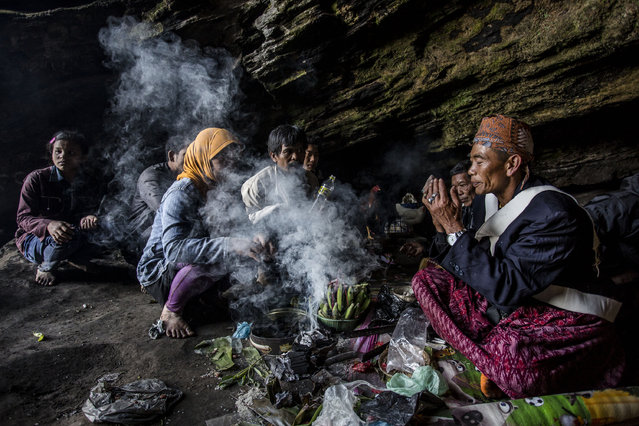
A Tenggerese shaman praying for worshippers at Widodaren cave during the Tenggerese Hindu Yadnya Kasada festival on July 31, 2015 in Probolinggo, East Java, Indonesia. The festival is the main festival of the Tenggerese people and lasts about a month. On the fourteenth day, the Tenggerese make the journey to Mount Bromo to make offerings of rice, fruits, vegetables, flowers and livestock to the mountain gods by throwing them into the volcano's caldera. (Photo by Ulet Ifansasti/Getty Images)

A Tenggerese shaman praying for worshippers at Widodaren cave during the Tenggerese Hindu Yadnya Kasada festival on July 31, 2015 in Probolinggo, East Java, Indonesia. The festival is the main festival of the Tenggerese people and lasts about a month. On the fourteenth day, the Tenggerese make the journey to Mount Bromo to make offerings of rice, fruits, vegetables, flowers and livestock to the mountain gods by throwing them into the volcano's caldera. The origin of the festival lies in the 15th century when a princess named Roro Anteng started the principality of Tengger with her husband Joko Seger, and the childless couple asked the mountain Gods for help in bearing children. The legend says the Gods granted them 24 children but on the provision that the 25th must be tossed into the volcano in sacrifice. The 25th child, Kesuma, was finally sacrificed in this way after initial refusal, and the tradition of throwing sacrifices into the caldera to appease the mountain Gods continues today. (Photo by Ulet Ifansasti/Getty Images)
Details
01 Aug 2015 12:07:00