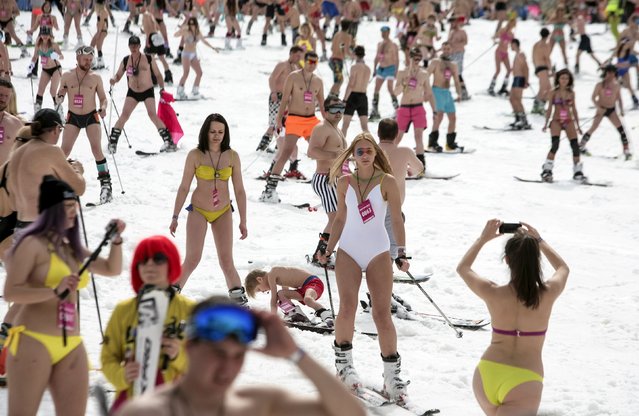
Skiers and snow boarders descend from a slope as they attempt to break the record for mass skiing in swimming suits at Rosa Khutor resort near Sochi, Russia, April 9, 2016. (Photo by Kazbek Basayev/Reuters)
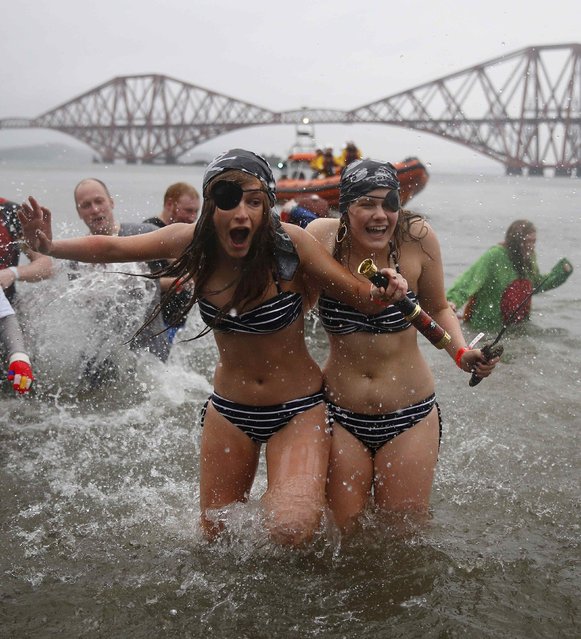
Swimmers in fancy dress splash as they participate in the New Year's Day Loony Dook swim at South Queensferry, Scotland January 1, 2015. (Photo by Russell Cheyne/Reuters)
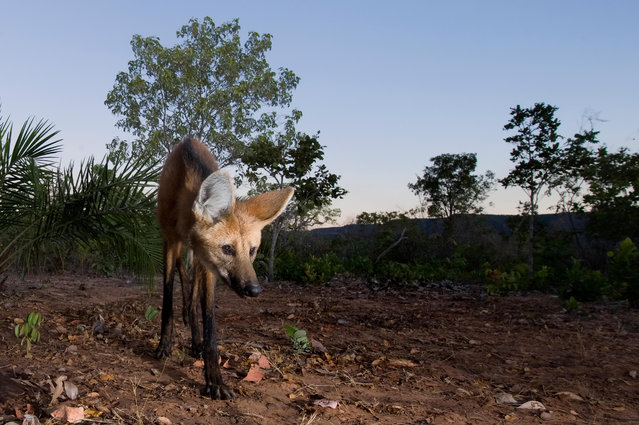
Global wildlife populations will decline by 67% by 2020 unless urgent action is taken to reduce human impact on species and ecosystems, warns the biennial Living Planet Index report from WWF (World Wide Fund for Nature) and ZSL (Zoological Society of London). From elephants to eels, here are some of the wildlife populations most affected by human activity. Here: The maned wolf is among the large mammals in the Brazilian Cerrado that are threatened by the increasing conversion of grasslands into farmland for grazing and growing crops. (Photo by Ben Cranke/Nature Picture Library/Alamy Stock Photo)
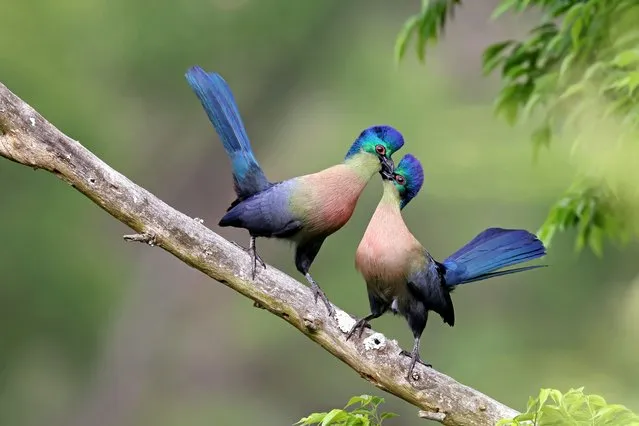
Portrait category, bronze award winner. Purple-crested Turaco Gallirex porphyreolophus. Lower Mpushini, near Pietermaritzburg, KwaZulu-Natal, South Africa. (Photo by Richard Flack/Bird Photographer of the Year 2022)
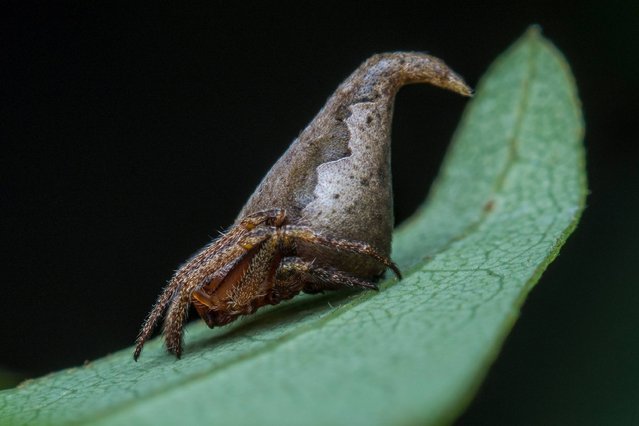
In this handout photograph received from Sumukha J.N on December 15, 2016, the newly-discovered spider Eriovixia Gryffindori sits on a leaf in the Kans in India's Western Ghats. (Photo by Sumukha J.N./AFP Photo)