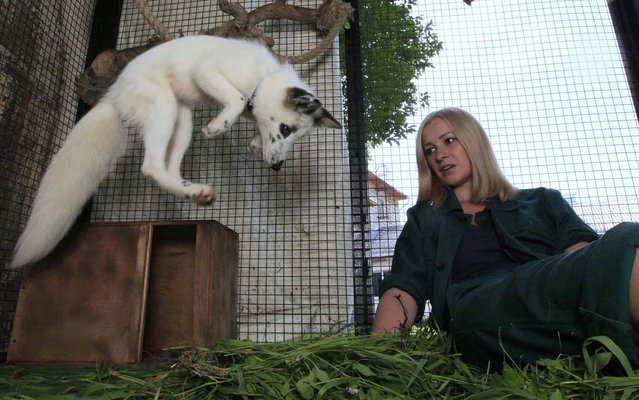
A four-month-old snow fox cub named “Vesna” (“Spring”) leaps next to a Zoo employee at the Royev Ruchey Zoo in Krasnoyarsk, Russia, on August 6, 2013. (Photo by Ilya Naymushin/Reuters)
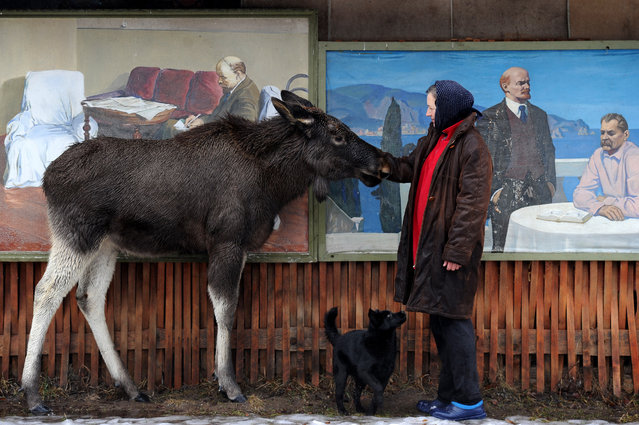
Svetlana Tseyko feeds a 10-month-old moose named Grisha in the courtyard in the village of Abramy, some 160 km northwest of Minsk, on February 21, 2017. (Photo by Sergei Gapon/AFP Photo)
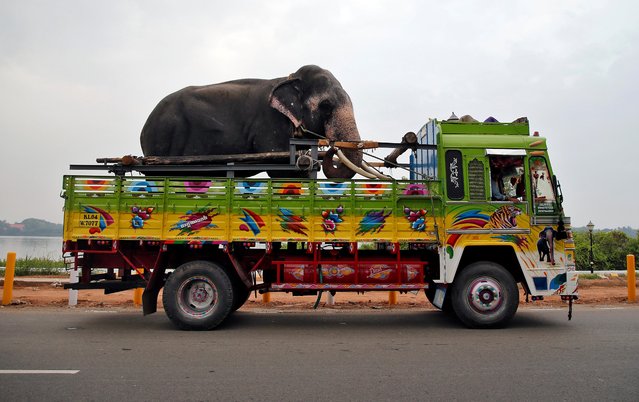
A male elephant named Mahadevan is tied in a truck as he is being transported for an annual temple festival in Kochi, India, March 10, 2020. (Photo by Sivaram V/Reuters)
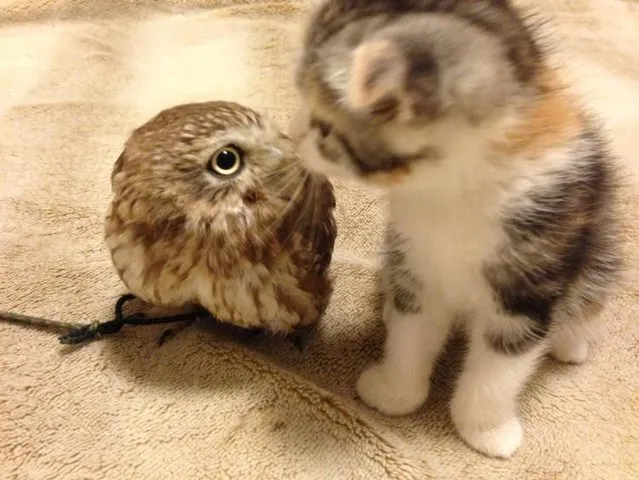
A tiny calico Scottish Fold kitten named Marimo snuggles and plays with an equally tiny baby owl named Fuku at the Hukulou Coffee House in Osaka, Japan. While the cafe is primarily focused on all things owl, the kitten is certainly getting a great deal of attention, particularly from Fuku.
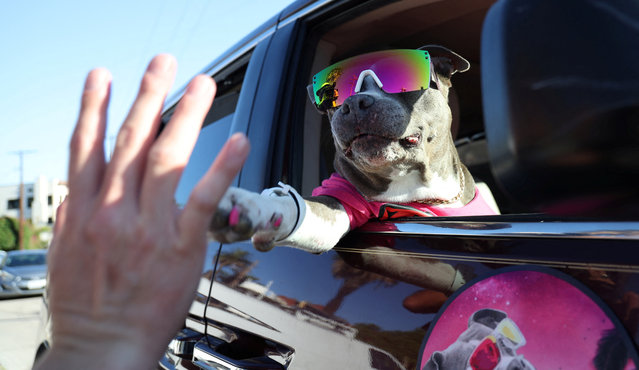
A dog named Luna high-fives a person in the Angelino Heights neighborhood of Los Angeles, California, U.S., August 26, 2022. (Photo by Mario Anzuoni/Reuters)
Women carry gas cylinders to fill them at a distribution point in Cairo January 19, 2015. Egypt is going through its worst energy crisis in decades and is seeking fresh sources of natural gas, which powers most of its homes and factories. (Photo by Mohamed Abd El Ghany/Reuters)
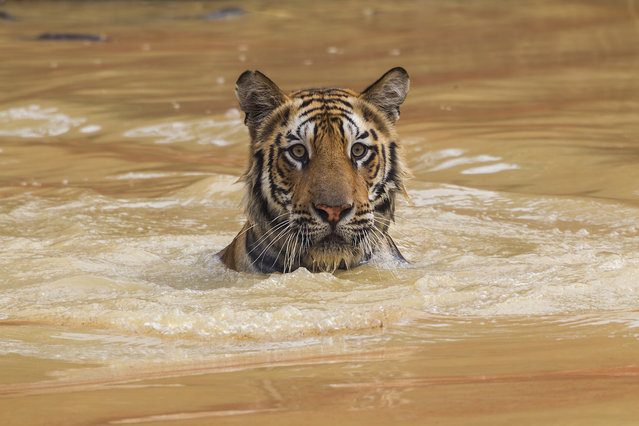
National Geographic photographer Steve Winter has spent most of his adult life shooting wild cats. Photo: A 14-month-old cub, cooling off in a pond, is riveted by a deer that appeared near the shore. Tigers are powerful swimmers; they can easily cross rivers four to five miles wide and have been known to swim distances of up to 18 miles. (Photo by Steve Winter/National Geographic)
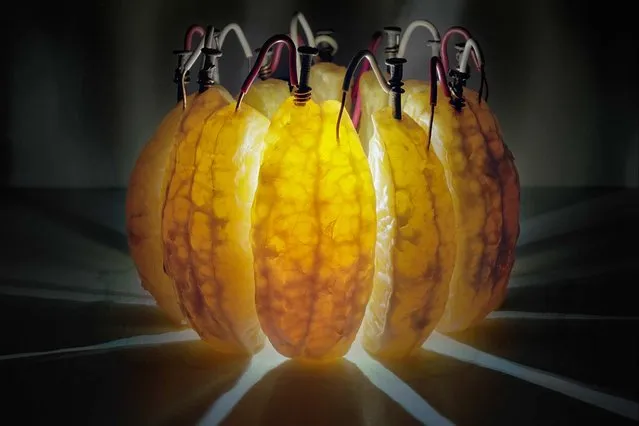
Wedges of an orange generate enough current and electrical juice – 3.5 volts – to power an LED. The fruit’s citric acid helps electrons flow from galvanized nails to copper wire in this 14-hour exposure. This image was published in September’s Visions of Earth, a trio of photos that appear in each issue of National Geographic. (Photo by Caleb Charland/National Geographic)