Loading...
Done
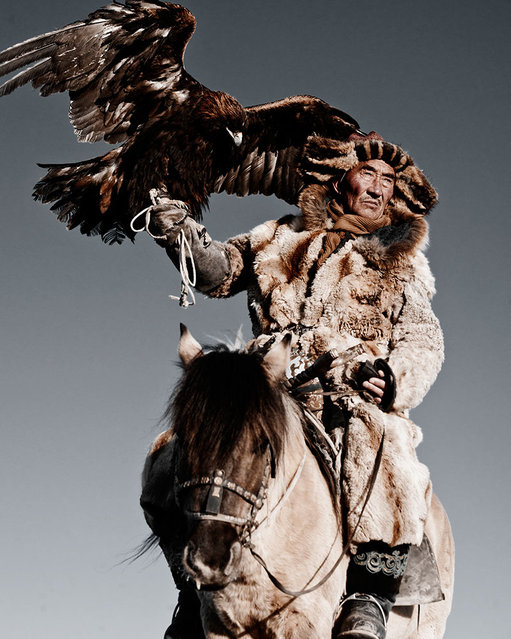
Fine Horses And Fierce Eagles Are The wings Of The Kazakh

The Kazakhs are the descendants of Turkic, Mongolic and Indo-Iranian tribes and Huns that populated the territory between Siberia and the Black Sea. They are a semi-nomadic people and have roamed the mountains and valleys of western Mongolia with their herds since the 19th century. The ancient art of eagle hunting is one of many traditions and skills that the Kazakhs have, in recent decades, been able to hold on to. They rely on their clan and herds, believing in pre-Islamic cults of the sky, the ancestors, fire and the supernatural forces of good and evil spirits.
Details
20 Feb 2014 12:12:00
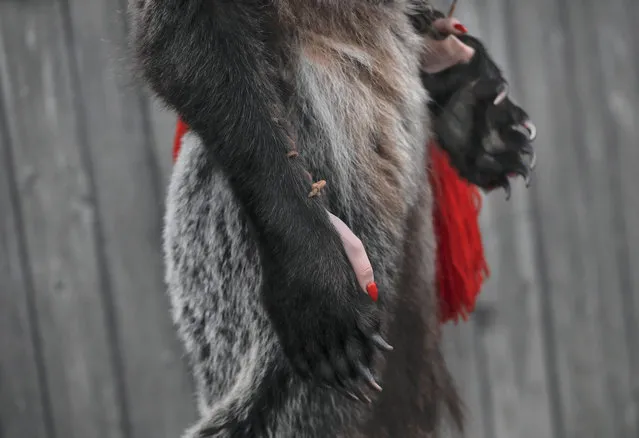
In this Saturday, December 30, 2017, picture a girl wearing a bear fur costume takes part in an annual bear parade in Comanesti, Romania. (Photo by Vadim Ghirda/AP Photo)

In this Saturday, December 30, 2017, picture a girl wearing a bear fur costume takes part in an annual bear parade in Comanesti, Romania. It's a tradition that originated in pre-Christian times, when dancers wearing colored costumes or animal furs went from house to house in villages, singing and dancing to ward off evil. (Photo by Vadim Ghirda/AP Photo)
Details
08 Jan 2018 07:05:00
Factory landlord Lawrence Taylor (L), portraying a Colour Sergeant from the King's Royal Rifle Corps, part of the Rifles Living History Society, performs a drill with Connor Young (R) of the Queen's Own Royal West Kent Regiment Living History Group as they recreate the life of a First World War soldier at the Eden Valley Museum in Edenbridge in southeast England May 10, 2014. (Photo by Luke MacGregor/Reuters)

Factory landlord Lawrence Taylor (L), portraying a Colour Sergeant from the King's Royal Rifle Corps, part of the Rifles Living History Society, performs a drill with Connor Young (R) of the Queen's Own Royal West Kent Regiment Living History Group as they recreate the life of a First World War soldier at the Eden Valley Museum in Edenbridge in southeast England May 10, 2014. Lawrence has always had an interest in military history and specifically “The Rifles” – his veteran father's WWII regiment. When he became a re-enactor he chose not to re-enact WWII as many of the veterans are still alive, and he felt uncomfortable as he remembers his father would have flashbacks and nightmares about the war. United by a fascination with military history and a fondness for dressing up, groups such as the Rifles Living History Society and the Queen's Own Royal West Kent Regiment Living History Group get together to recreate aspects of life during the First World War. Reuters photographer Luke MacGregor photographed members of the groups, both as they took part in living history events and at their day jobs. (Photo by Luke MacGregor/Reuters)
Details
26 Aug 2014 10:12:00
Komodo National Park

The Komodo National Park is a national park in Indonesia located within the Lesser Sunda Islands in the border region between the provinces of East Nusa Tenggara and West Nusa Tenggara. The park includes the three larger islands Komodo, Padar and Rinca, and 26 smaller ones, with a total area of 1,733 km² (603 km² of it land). The national park was founded in 1980 to protect the Komodo dragon, the world's largest lizard. Later it was dedicated to protecting other species, including marine species. In 1991 the national park was declared a UNESCO World Heritage Site and later as Man and Biosphere Reserve.
Details
12 Aug 2013 12:28:00
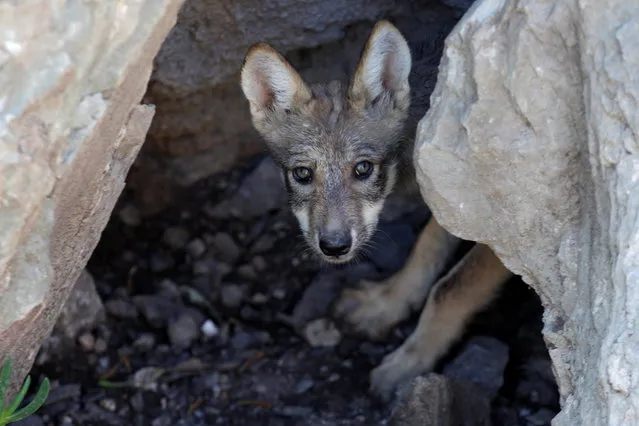
A newly born Mexican gray wolf cub, an endangered native species, is seen at its enclosure at the Museo del Desierto in Saltillo, Mexico, July 19, 2016. (Photo by Daniel Becerril/Reuters)

A newly born Mexican gray wolf cub, an endangered native species, is seen at its enclosure at the Museo del Desierto in Saltillo, Mexico, July 19, 2016. Though once held in high regard in Pre-Columbian Mexico, it is the most endangered gray wolf in North America, having been extirpated in the wild during the mid-1900s through a combination of hunting, trapping, poisoning and digging pups from dens. (Photo by Daniel Becerril/Reuters)
Details
21 Jul 2016 13:34:00


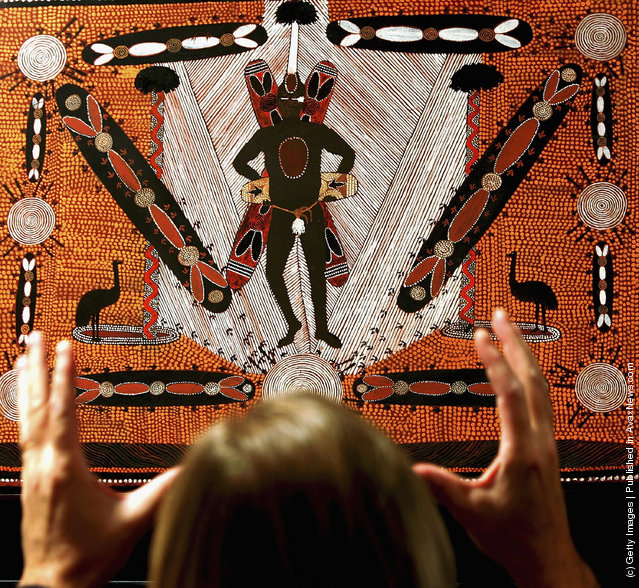
Tim Klingender, Director of Aboriginal Art at Sotheby's hangs the painting “Emu Corroboree Man” by Clifford Possum Tjapaltjarri before a record auction of Aboriginal Art July 14, 2005 in Sydney, Australia. The painting is expected to fetch AUD 150,000 – 250,000 (USD 120,000 – 200,000). Sotheby's unveiled a selection of Aboriginal art and artifacts after a tour of New York and London, which will go to auction in Melbourne July 25 2005. The total pre-sales estimate of the collection is AUD 6 million – 8.5 million (USD 5 million – 7 million). (Photo by Ian Waldie/Getty Images)
Details
01 Apr 2011 09:09:00
Paintings By Josephine Wall

Josephine Wall is an English fantasy artist and sculptor. Born in Farnham, Surrey, England in 1947, as a child she was always drawn to color, light, fantasy, and visual storytelling. Wall was influenced by Arthur Rackam illustrative ability, the surrealism of artists Magritte and Dali, along with the Pre-Raphaelites romanticism. She went to Farnham grammar school until her family Poole, Dorset when she was 14. There she studied at Parkstone (Dorset) grammar school, she then went on to study at Bournemouth College. Her first job as an artist was in 1967 at Poole Pottery as a designer and painter.
Details
07 Apr 2014 12:26:00
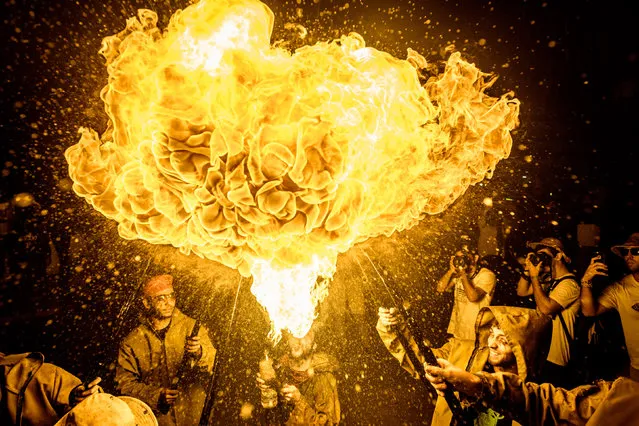
A fire-eater of the “Diables de Terrassa” performs during Sitges' little “Festa Major”, “Santa Tecla” in Sitges, Spain on September 19, 2016. This celebration brings together some of Catalonia’s most emblematic festive traditions. The central axis of the celebrations is the traditional parade, made up of “big-head” carnival figures and characters who dance to music played on different traditional instruments. One of the most popular events is the Correfoc or fire-running, which is also the closing event of the fiesta. The people run and jump over characters dressed up as devils and dragons, carrying fire. (Photo by Matthias Oesterle/ZUMA Press/Splash News)

A fire-eater of the “Diables de Terrassa” performs during Sitges' little “Festa Major”, “Santa Tecla” in Sitges, Spain on September 19, 2016. This celebration brings together some of Catalonia’s most emblematic festive traditions. The central axis of the celebrations is the traditional parade, made up of “big-head” carnival figures and characters who dance to music played on different traditional instruments. One of the most popular events is the Correfoc or fire-running, which is also the closing event of the fiesta. The people run and jump over characters dressed up as devils and dragons, carrying fire. (Photo by Matthias Oesterle/ZUMA Press/Splash News)
Details
20 Sep 2016 09:28:00