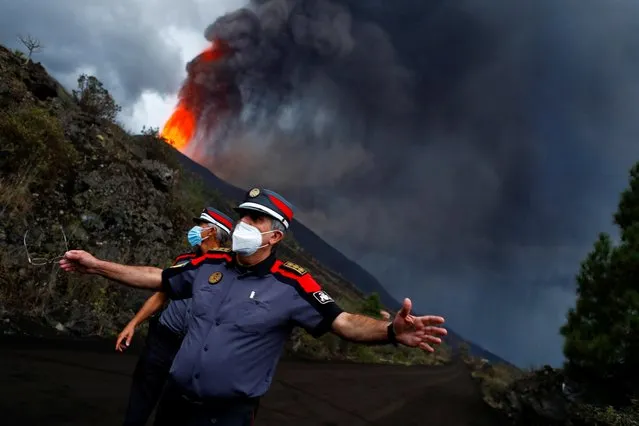
Police officers block a road as lava rises following the eruption of a volcano on the Island of La Palma, in Tacande, Spain on September 22, 2021. (Photo by Borja Suarez/Reuters)
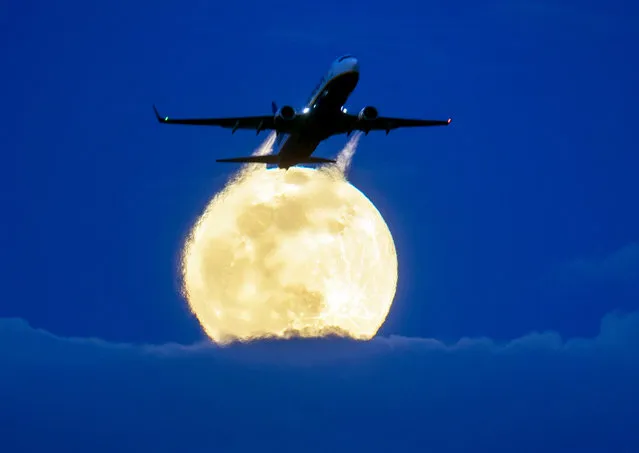
An aircraft passes the rising full moon that breaks through the clouds at the airport in Frankfurt, Germany, Monday, March 9, 2020. (Photo by Michael Probst/AP Photo)
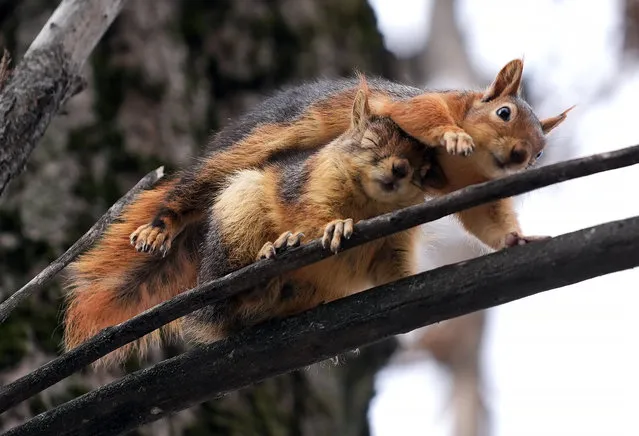
Squirrels are seen on a tree branch at a park as temperatures rise with the arrival of spring season in Ankara, Turkiye on March 27, 2024. (Photo by Evrim Aydin/Anadolu via Getty Images)
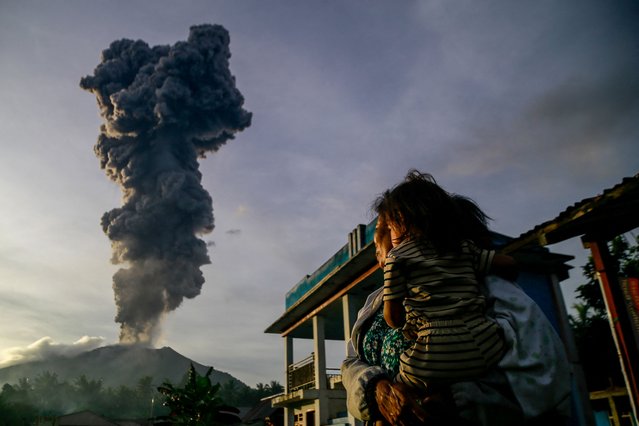
A woman and child look on at volcanic ash rising into the air during the eruption of Mount Ibu, as seen from Duono Village in West Halmahera, North Maluku province, on January 15, 2025. (Photo by AZZAM via AFP Photo)
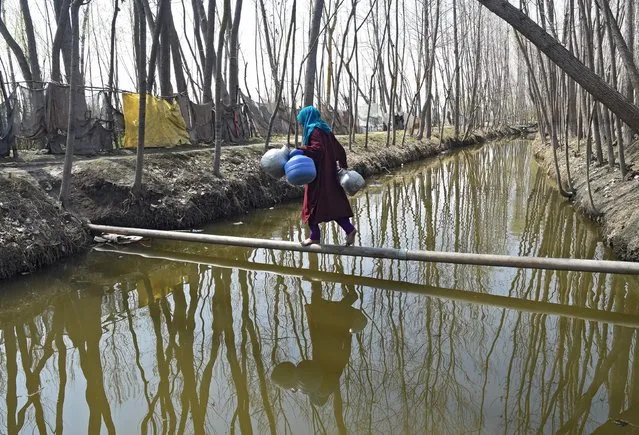
A Kashmiri Muslim woman balances on a water pipe before collecting water at Dasilpora village on March 22, 2018. World Water Day is held annually on 22 March as a means of focusing attention on the importance of freshwater and advocating for the sustainable management of freshwater resources. (Photo by Tauseef Mustafa/AFP Photo)
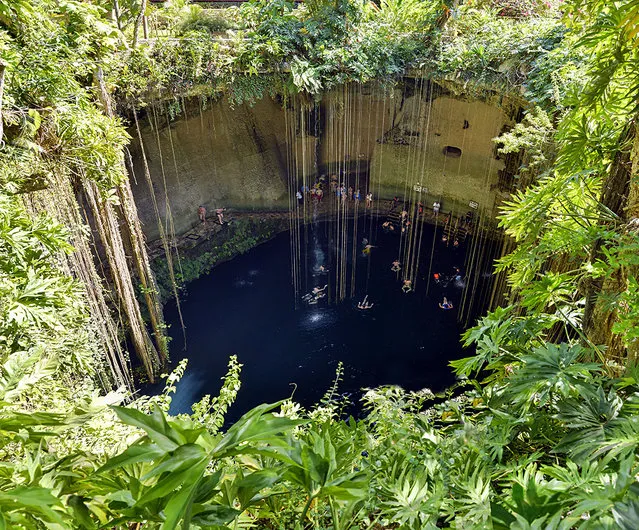
A cenote is a natural phenomenon, a sinkhole in the Earth’s surface. The Yucatan Peninsula in Mexico has an estimated 7,000 cenotes because it is primarily made up of porous limestone. For millions of years, rainfall slowly ate away at the limestone and a huge system of underground caves and caverns was formed. Many filled with water from rain or from the underground water table. When the roof of a water filled cave collapses, a cenote is born. The water found in a cenote may be fresh water, salt water, or both. Structurally it may be completely open, like a lake, almost completely closed with just a small opening at the top, or somewhere in between.