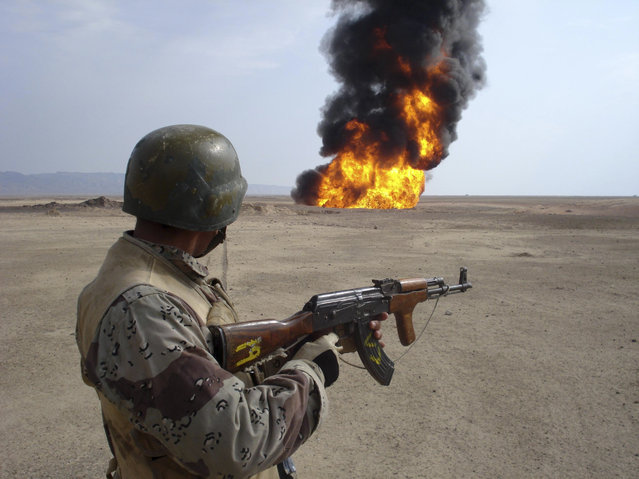
An Iraqi soldier stands guard as a pipeline burns in the background after an explosion 30 kilometers (20 miles) northeast of Tikrit, Iraq, Monday, February 11, 2008. (Photo by Bassem Daham/AP Photo)
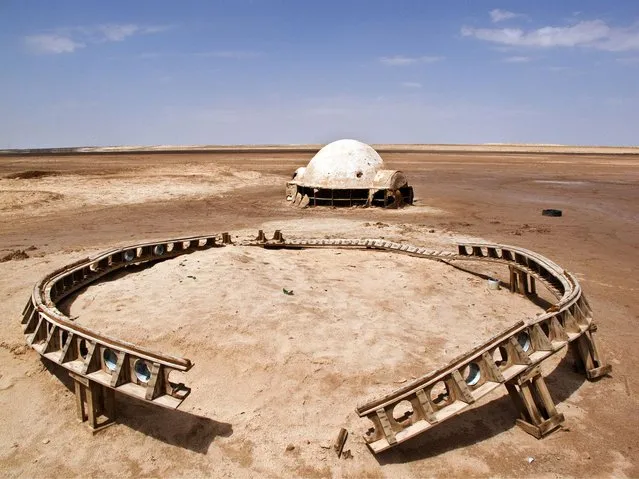
New York-based visual artist and filmmaker Rä di Martino has taken a series of eerie and beautiful photos that capture scenes of abandoned Hollywood film sets. Martino spent over a year traveling throughout the desert towns of Morocco and Tunisia hunting down the old Star Wars sets, exploring these massive structures that stand almost like ancient ruins. “No More Stars” showcases the backdrop of Luke Skywalker's home on the fictional desert planet Tatooine. (Photo by Rä di Martino)
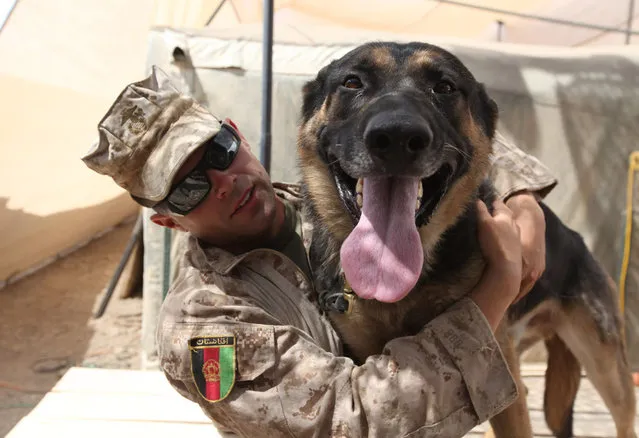
Throughout the course of the long war in Afghanistan, Coalition troops have relied on thousands of military working dogs to help keep them safe, and make their jobs easier. The dogs are trained to detect explosives, to find illegal drugs, to search for missing comrades, or target enemy combatants. Not only are they active on the front lines, but behind the lines they serve as therapy dogs, service dogs, and loyal companions. They also share the same risks as the ground troops, suffering injuries and sometimes death on the battlefields. Gathered here are images of these dogs and their handlers in Afghanistan and back home, from over the past several years, part of the ongoing series here on Afghanistan.
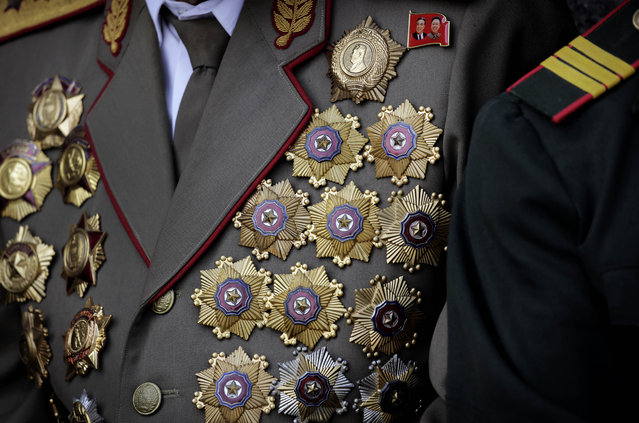
A North Korean war veteran is decorated with medals as he attends a parade to celebrate the anniversary of the Korean War armistice agreement, Sunday, July 27, 2014 in Pyongyang, North Korea. North Koreans gathered at Kim Il Sung Square as part of celebrations for the 61st anniversary of the armistice that ended the Korean War. (Photo by Wong Maye-E/AP Photo)
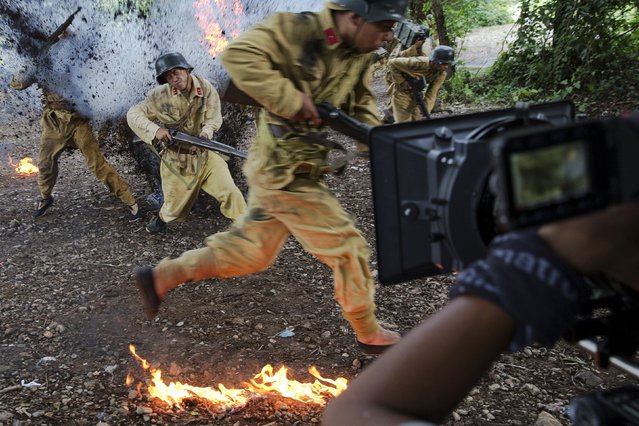
The camera rolls as actors dressed as historical Chinese soldiers act as though they have been hit by artillery, during filming of “The Last Prince” television series on location near Hengdian World Studios near Hengdian July 24, 2015. Hundreds of well-trained actors and other professionals are available at the Hengdian World Studios. The well-organised team coordinate complicated battle scenes to satisfy the huge appetite for productions about the war against Japan. (Photo by Damir Sagolj/Reuters)
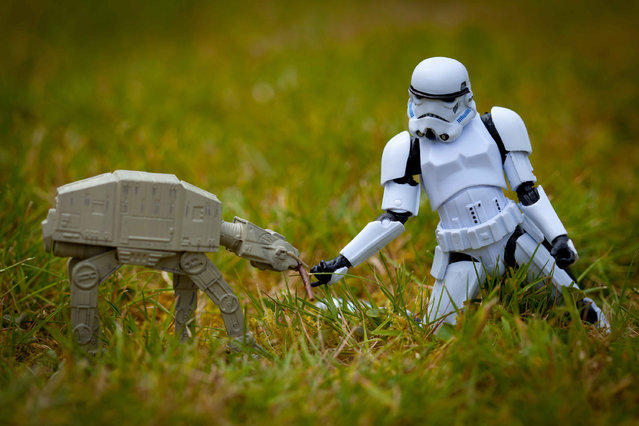
A storm trooper feeds a walker in the grass, taken in Glasgow, Scotland, December 2016. Tiny Storm Troopers and a mini Darth Vader are captured doing everyday activities – from taking a bath, to wrapping presents. Scottish Artist and Photographer, David Giliver created these scenes over a period of two years using toys and miniature props. (Photo by David Gilliver/Barcroft Images)
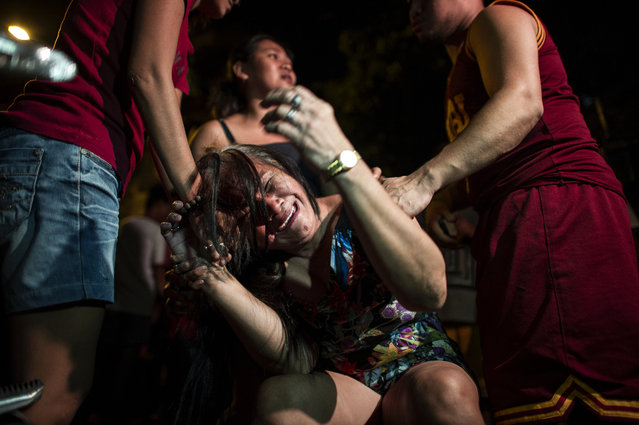
In this picture taken on September 24, 2016, relatives grieve their lost one, an alleged drug user/dealer gunned down by unidentified gunmen in Manila. Philippine President Rodrigo Duterte defended his threat to kill criminals as “perfect” and vowed no let-up in his war on crime, as the death toll surged past 3,700. (Photo by Noel Celis/AFP Photo)
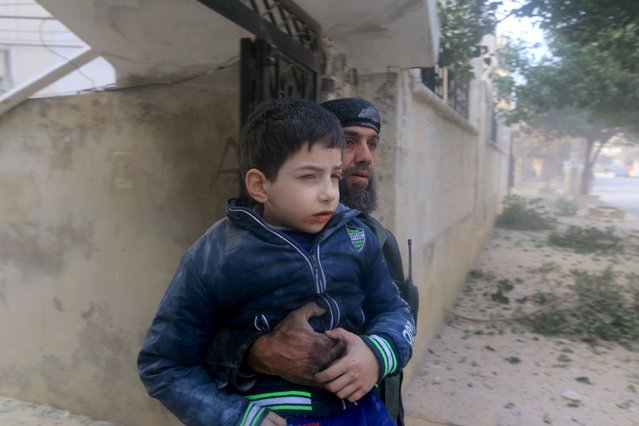
A rescue worker holds an injured boy after what activists said were airstrikes carried out by the Russian air force in Idlib city, Syria December 20, 2015. (Photo by Ammar Abdullah/Reuters)