Loading...
Done
Anamorphic Art By Jonty Hurwitz

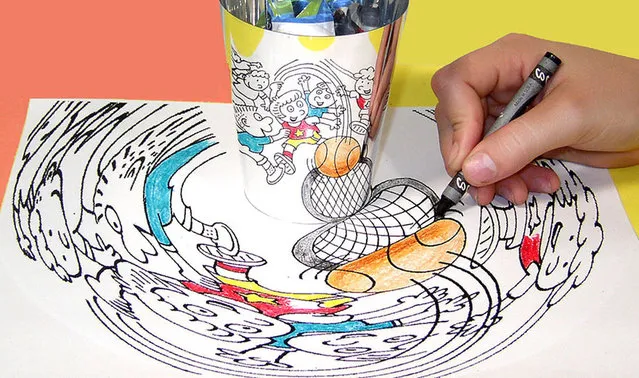
The truth can never be seen right away. Only by looking from a certain angle can we view the true nature of things. At other times, only with the help of some special object can we discern order in chaos. Anamorphosis is a form of art that allows us to see an object only by viewing it from a certain angle or by using cylindrical or conical mirror. Unsurprisingly, the first person in history to ever use this type of technique was the Leonardo Da Vinci. During late Renaissance period this technique was popularized as a children’s toy. Now, however, few people use this form of imagery due to its intricacy. Istvan Orosz, born in 1951, is one of the few people who specialize in anamorphosis. In our opinion, his most stunning piece of art is the one where a shipwreck scene turns into a portrait when viewed through a cylindrical mirror. (Photo by Jonty Hurwitz)
Details
05 Jan 2015 13:07:00
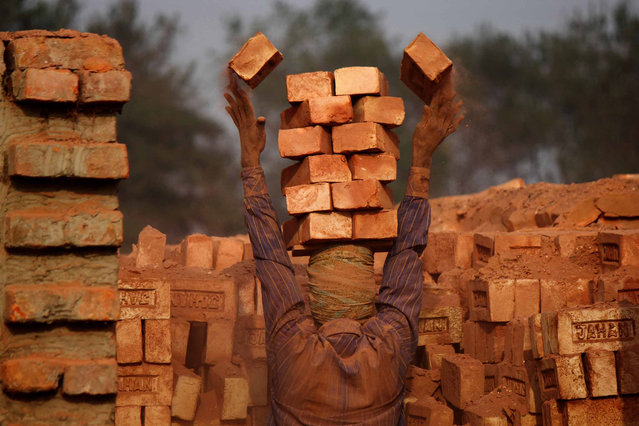
CGAP Photo Contest – South Asia Regional Winner: Bricks Worker, Bangladesh. A private enterprise worker is working at a brick field. These small businesses are creating new job opportunities for many poor people. (Photo by Moksumul Haque)

The shoemaker in Turkey, the potato seller in Vietnam, and the weaver in Bolivia are among the billions of low-income entrepreneurs who make the world go round. They are also the type of people who can benefit significantly from microfinance. Every year, the Consultative Group To Assist The Poor (or CGAP) hosts a photo contest asking entrants to submit photos based around the idea of microfinance.The purpose of the contest is to give amateur and professional photographers a chance to show the different ways that poor households manage their financial lives and make their lives better through financial inclusion. Photo: South Asia Regional Winner – “Bricks Worker”, Bangladesh. A private enterprise worker is working at a brick field. These small businesses are creating new job opportunities for many poor people. (Photo by Moksumul Haque)
Details
14 Aug 2014 10:58:00
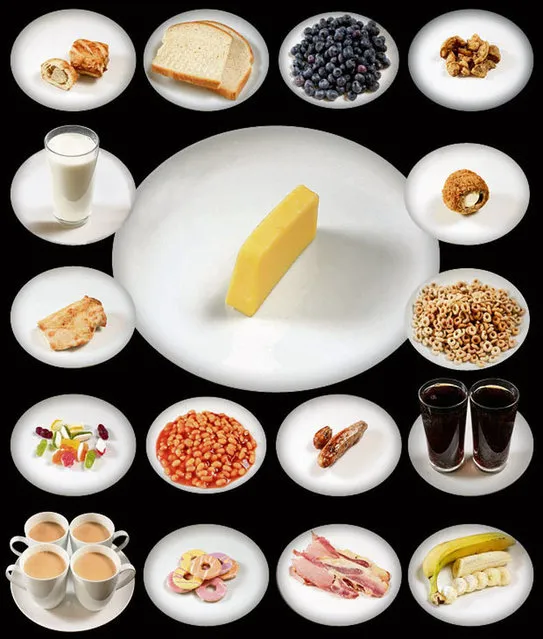
What 200 Calories Looks Like In Different Foods Part 3

Some foods have significantly more Calories than others but what does the difference actually look like. Each of the photographs below represents 200 Calories of the particular type of food; the images are sorted from low to high calorie density. When you consider that an entire plate of broccoli contains the same number of Calories as a small spoonful of peanut butter, you might think twice the next time you decide what to eat. According to the U.S. Department of Agriculture, the average adult needs to consume about 2000 – 2500 Calories to maintain their weight. In other words, you have a fixed amount of Calories to "spend" each day; based on the following pictures, which would you eat?


See Also: Ppart 1 _ Part 2
Details
02 Aug 2014 09:53:00
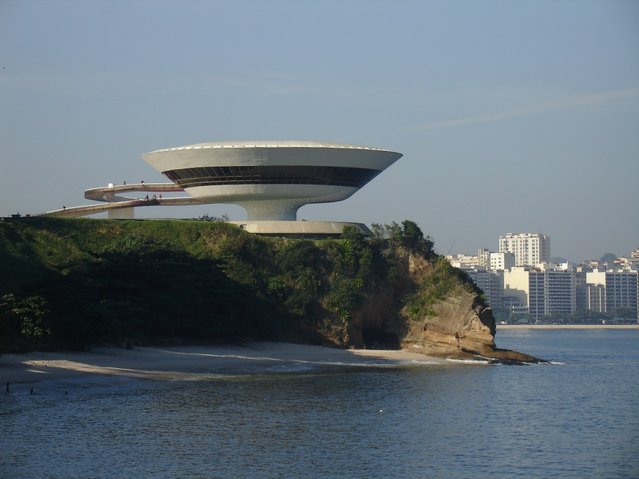
Niterói Contemporary Art Museum

The Niterói Contemporary Art Museum (Museu de Arte Contemporânea de Niterói — MAC) is situated in the city of Niterói, Rio de Janeiro, Brazil, and is one of the city’s main landmarks. It was completed in 1996.
Details
13 Aug 2013 10:18:00
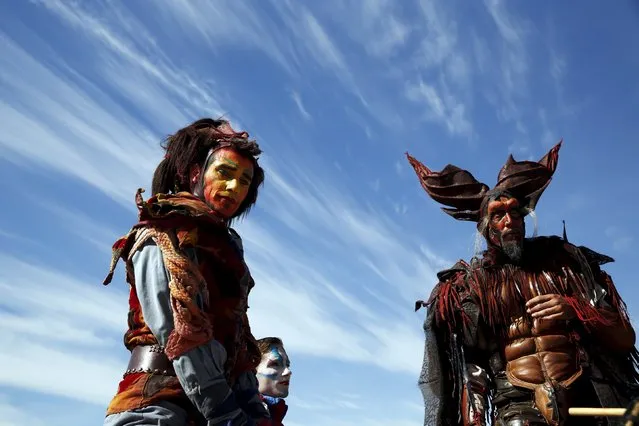
Performers take part in a parade during the annual Cervantes market (Mercado Cervantino) in the hometown of famous Spanish writer Miguel de Cervantes, Alcala de Henares, Spain, October 9, 2015. (Photo by Susana Vera/Reuters)

Performers take part in a parade during the annual Cervantes market (Mercado Cervantino) in the hometown of famous Spanish writer Miguel de Cervantes, Alcala de Henares, Spain, October 9, 2015. The Mercado Cervantino, which represents a market and fair from the 16th and 17th centuries, takes place in the city's historic centre and commemorates Miguel de Cervantes' baptism, which took place on October 9, 1547. (Photo by Susana Vera/Reuters)
Details
13 Oct 2015 08:06:00
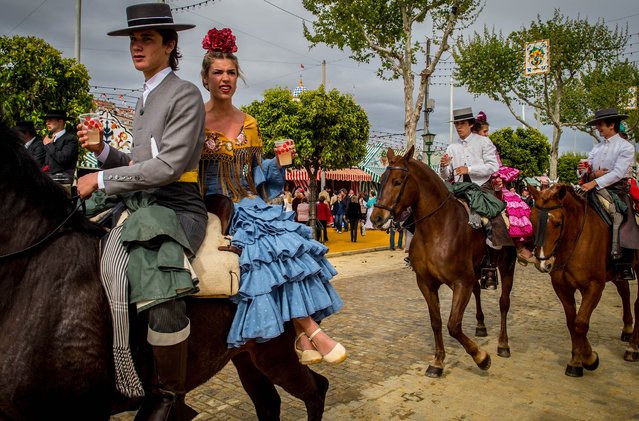
Participants in traditional dress ride on horseback as they enjoy the atmosphere at the Feria de Abril (April's Fair) on April 12, 2016 in Seville, Spain. The Feria de Abril has a history that dates back to 1857 and takes place a fortnight after Easter each year. The origin of the fair was a cattle market but the event quickly turned its goal from commerce to having fun. More than 1 million local and international participants are expected to attend the Feria de Abril. (Photo by David Ramos/Getty Images)

Participants in traditional dress ride on horseback as they enjoy the atmosphere at the Feria de Abril (April's Fair) on April 12, 2016 in Seville, Spain. The Feria de Abril has a history that dates back to 1857 and takes place a fortnight after Easter each year. The origin of the fair was a cattle market but the event quickly turned its goal from commerce to having fun. More than 1 million local and international participants are expected to attend the Feria de Abril. (Photo by David Ramos/Getty Images)
Details
14 Apr 2016 12:25:00
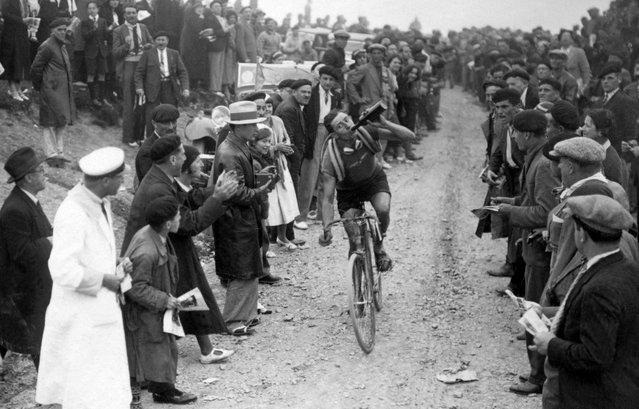
Frenchman Georges Speicher drinks as he starts riding down the Col de l'Aubisque during the 18th stage of the Tour de France between Tarbes and Pau. on July 17, 1933. Speicher finished second beaten by Spanish winner Learco Guerra to retain his overall leader's yellox jersey on his way to winning the Tour de France. (Photo by France Presse Voir/AFP Photo)

Frenchman Georges Speicher drinks as he starts riding down the Col de l'Aubisque during the 18th stage of the Tour de France between Tarbes and Pau. on July 17, 1933. Speicher finished second beaten by Spanish winner Learco Guerra to retain his overall leader's yellox jersey on his way to winning the Tour de France. (Photo by France Presse Voir/AFP Photo)
Details
18 Apr 2021 09:12:00
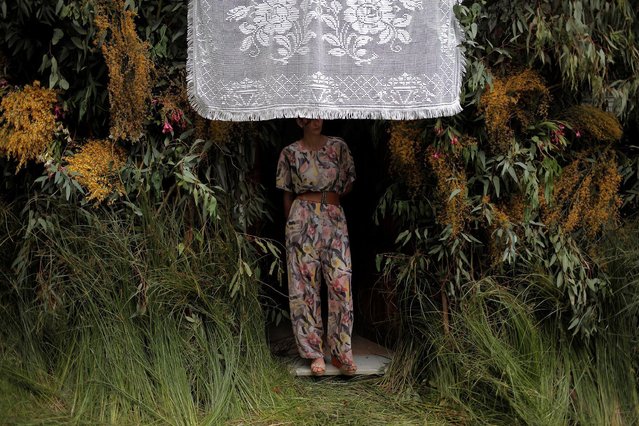
A woman looks out of her house with a decorated doorway during Corpus Christi day in Zahara de la Sierra, southern Spain, May 29, 2016. The village of Zahara de la Sierra celebrated the feast of Corpus Christi (or Body of Christ in Latin) by covering the streets and facades of houses with the branches of trees and grass. (Photo by Jon Nazca/Reuters)

A woman looks out of her house with a decorated doorway during Corpus Christi day in Zahara de la Sierra, southern Spain, May 29, 2016. The village of Zahara de la Sierra celebrated the feast of Corpus Christi (or Body of Christ in Latin) by covering the streets and facades of houses with the branches of trees and grass. (Photo by Jon Nazca/Reuters)
Details
30 May 2016 08:49:00