Loading...
Done
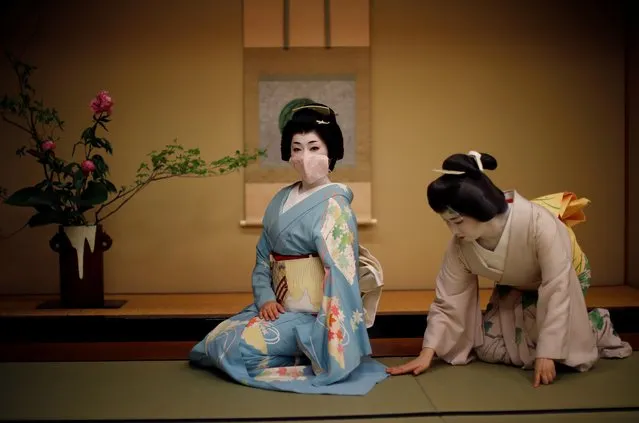
Mayu adjusts Koiku’s kimono, as Koiku wears a protective face mask while posing for a photograph, before they work at a party where they will entertain with other geisha at Japanese luxury restaurant Asada in Tokyo, Japan, June 23, 2020. The coronavirus pandemic has made Tokyo's geisha fear for their centuries-old profession as never before. Though the number of geisha - famed for their witty conversation, beauty and skill at traditional arts - has been falling for years, they were without work for months due to Japan's state of emergency and now operate under awkward social distancing rules. Engagements are down 95 percent, and come with new rules: no pouring drinks for customers or touching them even to shake hands, and sitting 2 meters apart. Masks are hard to wear with their elaborate wigs, so they mostly don't. “I was just full of anxiety”, said Mayu, 47. “I went through my photos, sorted my kimonos ... The thought of a second wave is terrifying”. (Photo by Kim Kyung-Hoon/Reuters)

Mayu adjusts Koiku’s kimono, as Koiku wears a protective face mask while posing for a photograph, before they work at a party where they will entertain with other geisha at Japanese luxury restaurant Asada in Tokyo, Japan, June 23, 2020. (Photo by Kim Kyung-Hoon/Reuters)
Details
23 Jul 2020 00:03:00
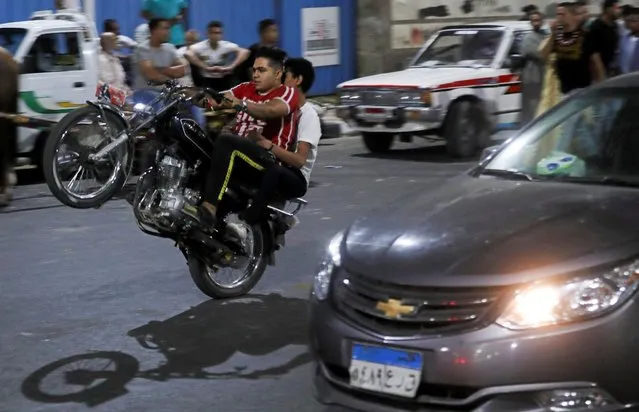
An Egyptian man shows off his motorcycle skills, following the outbreak of the coronavirus disease (COVID-19), in Cairo, Egypt on July 17, 2020. (Photo by Mohamed Abd El Ghany/Reuters)

An Egyptian man shows off his motorcycle skills, following the outbreak of the coronavirus disease (COVID-19), in Cairo, Egypt on July 17, 2020. (Photo by Mohamed Abd El Ghany/Reuters)
Details
26 Jul 2020 00:03:00
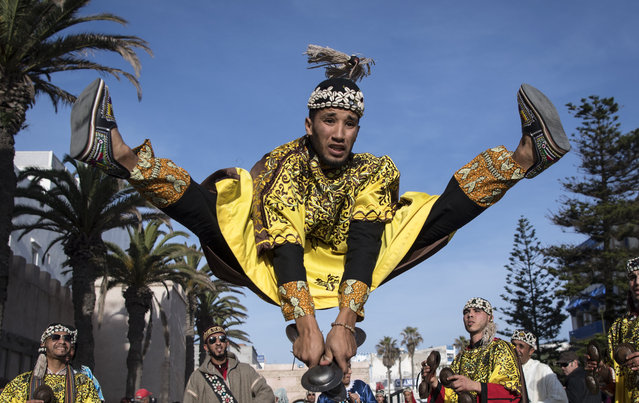
A Gnawa traditional group performs in the city of Essaouira on December 14, 2019, to celebrate the decision of adding the Gnawa culture to UNESCO's list of Intangible Cultural Heritage of Humanity. Gnawa culture, a centuries-old Moroccan practice rooted in music, African rituals and Sufi traditions, was added to UNESCO's list of Intangible Cultural Heritage of Humanity earlier in the week. Gnawa refers to a “set of musical productions, fraternal practices and therapeutic rituals where the secular mixes with the sacred”, according to the nomination submitted by Morocco. Often dressed in colourful outfits, Gnawa musicians play the guenbri, a type of lute with three strings, accompanied by steel castanets called krakebs. (Photo by Fadel Senna/AFP Photo)

A Gnawa traditional group performs in the city of Essaouira on December 14, 2019, to celebrate the decision of adding the Gnawa culture to UNESCO's list of Intangible Cultural Heritage of Humanity. Gnawa culture, a centuries-old Moroccan practice rooted in music, African rituals and Sufi traditions, was added to UNESCO's list of Intangible Cultural Heritage of Humanity earlier in the week. Gnawa refers to a “set of musical productions, fraternal practices and therapeutic rituals where the secular mixes with the sacred”, according to the nomination submitted by Morocco. Often dressed in colourful outfits, Gnawa musicians play the guenbri, a type of lute with three strings, accompanied by steel castanets called krakebs. (Photo by Fadel Senna/AFP Photo)
Details
18 Dec 2019 00:05:00
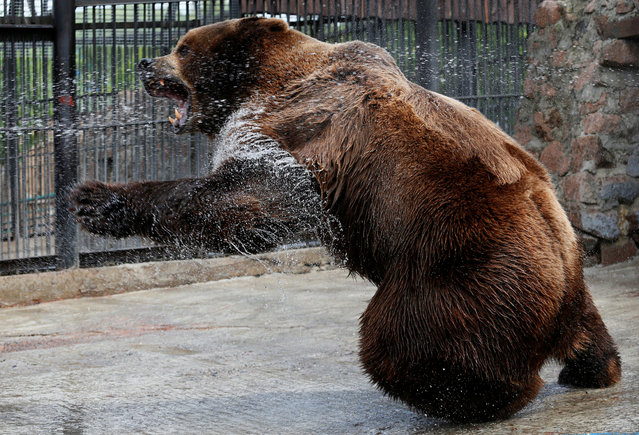
Buyan, a male Siberian brown bear, cools down under a stream of water sprayed by an employee in an enclosure on a hot summer day, at the Royev Ruchey zoo in Krasnoyarsk, Russia on June 14, 2019. (Photo by Ilya Naymushin/Reuters)

Buyan, a male Siberian brown bear, cools down under a stream of water sprayed by an employee in an enclosure on a hot summer day, at the Royev Ruchey zoo in Krasnoyarsk, Russia on June 14, 2019. (Photo by Ilya Naymushin/Reuters)
Details
09 Jan 2020 00:05:00
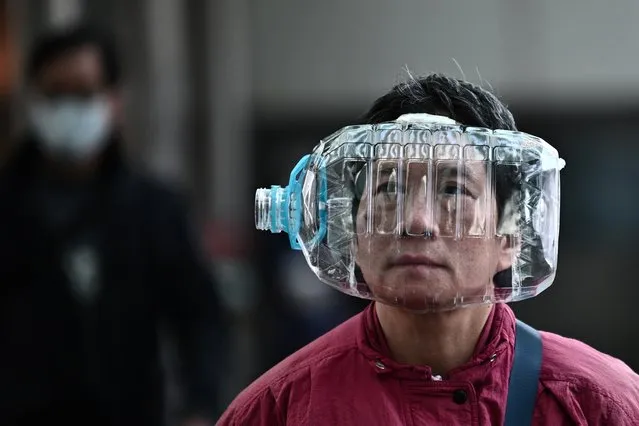
A woman wears a plastic water bottle with a cutout to cover her face, as she walks on a footbridge in Hong Kong on January 31, 2020, as a preventative measure following a virus outbreak which began in the Chinese city of Wuhan. The World Health Organization, which initially downplayed the severity of a disease that has now killed 170 nationwide, warned all governments to be “on alert” as it weighed whether to declare a global health emergency. (Photo by Anthony Wallace/AFP Photo)

A local wears a plastic water bottle with a cutout to cover her face, as she walks on a footbridge in Hong Kong on January 31, 2020, as a preventative measure following a virus outbreak which began in the Chinese city of Wuhan. The World Health Organization, which initially downplayed the severity of a disease that has now killed 170 nationwide, warned all governments to be “on alert” as it weighed whether to declare a global health emergency. (Photo by Anthony Wallace/AFP Photo)
Details
03 Feb 2020 00:03:00
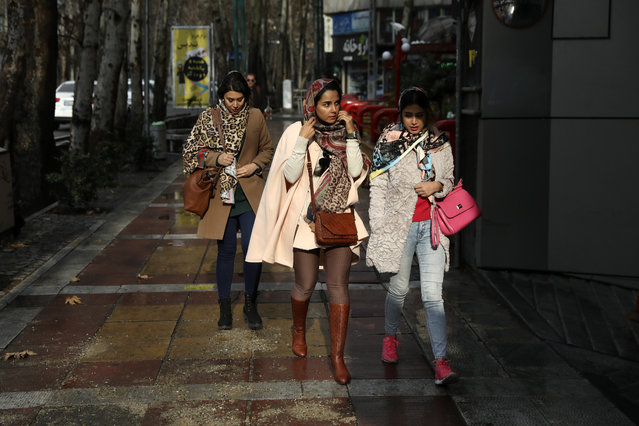
Women walk on a sidewalk in northern Tehran, Iran, Thursday, January 9, 2020. (Photo by Vahid Salemi/AP Photo)

Women walk on a sidewalk in northern Tehran, Iran, Thursday, January 9, 2020. (Photo by Vahid Salemi/AP Photo)
Details
25 Feb 2020 00:05:00
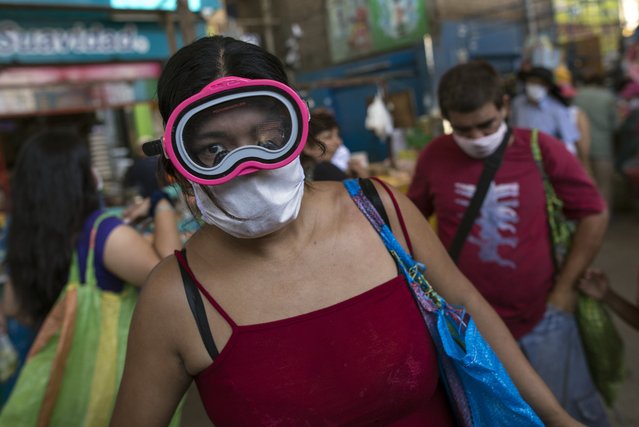
A woman wears a scuba mask and a surgical mask as a precaution against the spread of the new coronavirus, while buying food in a popular market in Lima, Peru, Monday, March 23, 2020. The vast majority of people recover from the COVID-19 disease. (Photo by Rodrigo Abd/AP Photo)

A woman wears a scuba mask and a surgical mask as a precaution against the spread of the new coronavirus, while buying food in a popular market in Lima, Peru, Monday, March 23, 2020. The vast majority of people recover from the COVID-19 disease. (Photo by Rodrigo Abd/AP Photo)
Details
25 Mar 2020 00:07:00
Journalists practice social distancing outside a meeting to wrap up work on coronavirus economic aid legislation to prevent the spread of coronavirus disease (COVID-19) in Washington, U.S., March 21, 2020. (Photo by Mary F. Calvert/Reuters)

Journalists practice social distancing outside a meeting to wrap up work on coronavirus economic aid legislation to prevent the spread of coronavirus disease (COVID-19) in Washington, U.S., March 21, 2020. (Photo by Mary F. Calvert/Reuters)
Details
27 Mar 2020 00:01:00