Loading...
Done
“At the height of the Korean war, I was moving across the front lines as a soldier experiencing this tragedy, witnessing countless scenes that enraged me”. Here: Seoul, Korea. (Photo by Han Youngsoo/The Guardian)

Photographer Han Youngsoo captured the ordinary people of Korea as the country emerged from war into an age of prosperity. Han Youngsoo: Photographs of Seoul 1956–63 is at the International Center of Photography (ICP), Jersey City, New Jersey, until June 9, 2017. Here: Seoul, Korea. (Photo by Han Youngsoo/The Guardian)
Details
01 Mar 2017 00:05:00
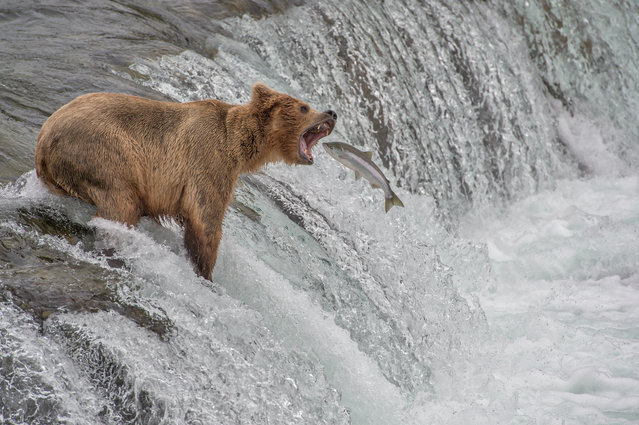
“Catch of the Decade”. Can you guess what happened next? Photo location: Katmai National Park, Alaska, USA. (Photo and caption by Aaron Baggenstos/National Geographic Photo Contest)

“Catch of the Decade”. Can you guess what happened next? Photo location: Katmai National Park, Alaska, USA. (Photo and caption by Aaron Baggenstos/National Geographic Photo Contest)
Details
30 Sep 2014 08:47:00
Panoramic Landscapes By Leo Caillard

The landscape series we’ve selected from Leo Caillard photography is a series of panoramic views of negative and information-filled spaces. The French photographer describes his remarkable work in the following terms: “a landscape series I chose to shoot in very high definition. A work about the action of humans in diverse types of environments; void of activity or full of information.


See Also: Street Stone By Alexis Persani And Leo Caillard
Details
14 Oct 2013 12:38:00
The Topography Of Tears By Rose-Lynn Fisher

Do tears of joy look the same as ones of woe—or ones from chopping onions? In “The Topography of Tears,” the Los Angeles-based photographer Rose-Lynn Fisher explores the physical terrain of one hundred tears emitted during a range of emotional states and physical reactions. Using a Zeiss microscope with an attached digital camera, she captures the composition of tears enclosed in glass slides, magnified between 10x and 40x. “There are many factors that determine the look of each tear image, including the viscosity of the tear, the chemistry of the weeper, the settings of the microscope, and the way I process the images afterwards,” she says.
Details
21 May 2014 17:46:00
“Little Apple” – a Viral Hit from China

When you think of the People's Liberation Army, you probably don't think of line dancing. But the Chinese military's latest online recruiting video makes a soldier's life look more fun than the macarena. The brief spot, posted last week on the website of the Ministry of National Defense and going viral, features tanks and fighter jets, as well as soldiers dancing in rows to a quirky hit tune by the Chopsticks Brothers called “Little Apple”. Its lyrics include, “You are my little dear little apple/I can never stop loving you”.
Details
09 Aug 2014 13:34:00
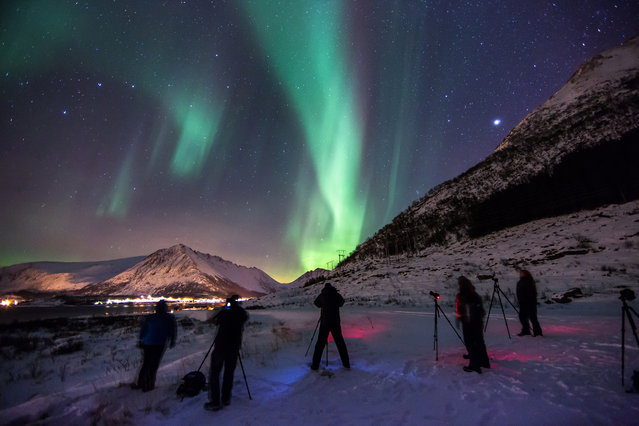
“Aurora Hunters”. Photographers taking part in a photography tour on the Lofoten Islands in Norway, pull over on the side of the road to take a photo of their first ever Aurora Borealis after spotting it from their tour bus. Photo location: Rystad, Lofoten Islands, Norway. (Photo and caption by Mark Gee/National Geographic Photo Contest)

“Aurora Hunters”. Photographers taking part in a photography tour on the Lofoten Islands in Norway, pull over on the side of the road to take a photo of their first ever Aurora Borealis after spotting it from their tour bus. Photo location: Rystad, Lofoten Islands, Norway. (Photo and caption by Mark Gee/National Geographic Photo Contest)
Details
17 Jun 2014 10:08:00
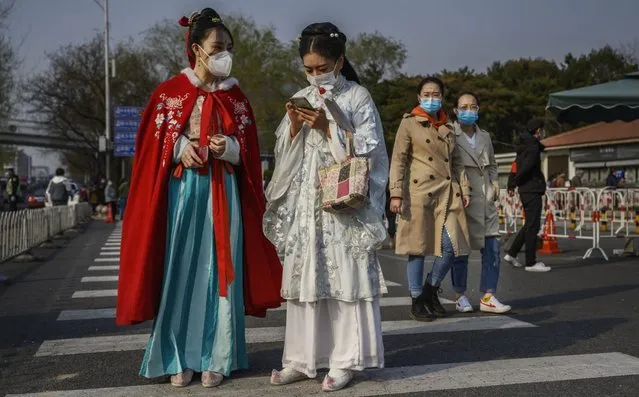
Chinese women wear protective masks as they are dressed in traditional clothing from the Qing Dynasty era outside a park on March 29, 2020 in Beijing, China. A limited section of the iconic tourist site was re-opened to the public this week allowing a smaller number of visitors to reserve tickets online in advance and to enter after passing health screening. With the pandemic hitting hard across the world, China recorded its first day with no new domestic cases of the coronavirus last week, since the government imposed sweeping measures to keep the disease from spreading. For two months, millions of people across China have been restricted in how they move from their homes, while other cities have been locked down in ways that appeared severe at the time but are now being replicated in other countries trying to contain the virus. Officials believe the worst appears to be over in China, though there are concerns of another wave of infections as the government attempts to reboot the worlds second largest economy. In Beijing, it is mandatory to wear masks outdoors, retail stores operate on reduced hours, restaurants employ social distancing among patrons, and tourist attractions at risk of drawing large crowds remain closed. Monitoring and enforcement of virus-related measures and the quarantine of anyone arriving to Beijing is carried out by neighborhood committees and a network of Communist Party volunteers who wear red arm bands. A primary concern for Chinese authorities remains the arrival of flights from Europe and elsewhere, given the exposure of passengers in regions now regarded as hotbeds for transmission. Since January, China has recorded more than 81,000 cases of COVID-19 and at least 3200 deaths, mostly in and around the city of Wuhan, in central Hubei province, where the outbreak first started. (Photo by Kevin Frayer/Getty Images)

Chinese women wear protective masks as they are dressed in traditional clothing from the Qing Dynasty era outside a park on March 29, 2020 in Beijing, China. A limited section of the iconic tourist site was re-opened to the public this week allowing a smaller number of visitors to reserve tickets online in advance and to enter after passing health screening. (Photo by Kevin Frayer/Getty Images)
Details
01 Apr 2020 00:05:00
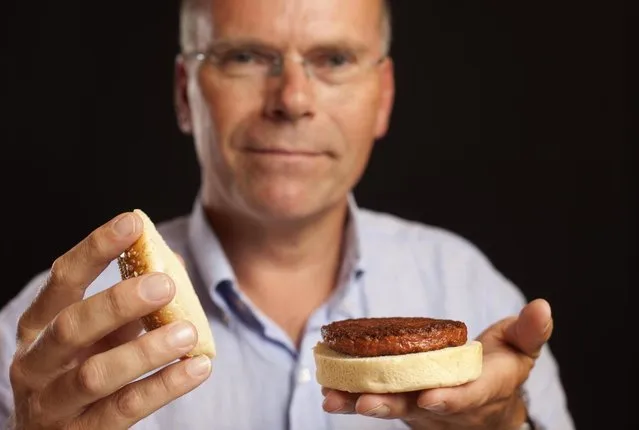
In this handout image provided by Ogilvy, a burger made from cultured beef, which has been developed by Professor Mark Post of Maastricht University in the Netherlands (pictured) is shown to the media during a press conference on August 5, 2013 in London, England. Cultured Beef could help solve the coming food crisis and combat climate change with commercial production of Cultured Beef beginning within ten to twenty years. (Photo by David Parry via Getty Images)

In this handout image provided by Ogilvy, a burger made from cultured beef, which has been developed by Professor Mark Post of Maastricht University in the Netherlands (pictured) is shown to the media during a press conference on August 5, 2013 in London, England. The in-vitro burger, cultured from cattle stem cells, the first example of what its creator says could provide an answer to global food shortages and help combat climate change, was fried in a pan and tasted by two volunteers. The burger is the result of years of research by Dutch scientist Mark Post, a vascular biologist at the University of Maastricht, who is working to show how meat grown in petri dishes might one day be a true alternative to meat from livestock.The meat in the burger has been made by knitting together around 20,000 strands of protein that has been cultured from cattle stem cells in Post's lab. (Photo by David Parry)

Details
06 Aug 2013 08:48:00