Loading...
Done
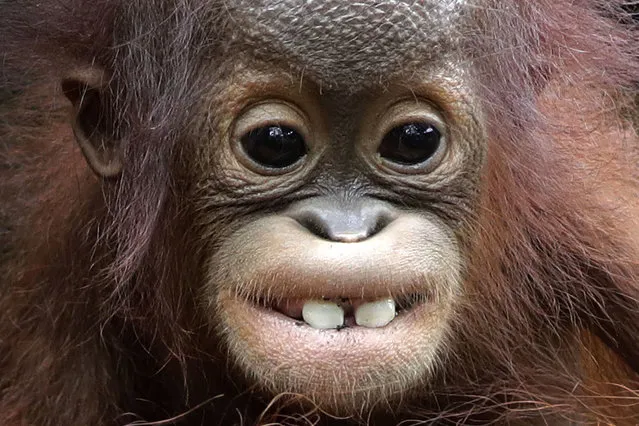
Khansa, an eight month old critically endangered Bornean orangutan shows off it's two front-teeth, at the Singapore Zoo on Thursday, January 11, 2018 in Singapore. The Singapore Zoo is active with its breeding programs as part of its wildlife preservation efforts. This is the Zoo's 46th successful orangutan birth. (Photo by Wong Maye-E/AP Photo)

Khansa, an eight month old critically endangered Bornean orangutan shows off it's two front-teeth, at the Singapore Zoo on Thursday, January 11, 2018 in Singapore. The Singapore Zoo is active with its breeding programs as part of its wildlife preservation efforts. This is the Zoo's 46th successful orangutan birth. (Photo by Wong Maye-E/AP Photo)
Details
14 Jan 2018 08:17:00
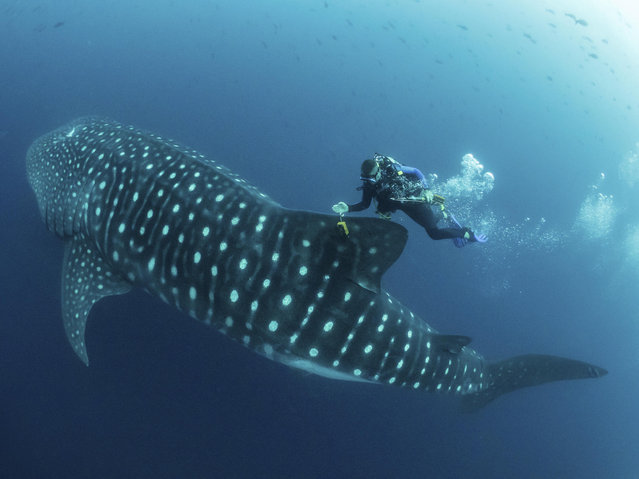
In this 2017 photo provided by Simon Pierce, Jonathan Green checks on a fin-mounted satellite tag on a whale shark in the Galapagos Islands area of Ecuador.  Despite typically being bigger than a double-decker bus, the elusive whale shark has only tiny, almost useless teeth. It's also one of the least understood animals in the ocean. (Photo by Simonjpierce.com via AP Photo)

In this 2017 photo provided by Simon Pierce, Jonathan Green checks on a fin-mounted satellite tag on a whale shark in the Galapagos Islands area of Ecuador. Despite typically being bigger than a double-decker bus, the elusive whale shark has only tiny, almost useless teeth. It's also one of the least understood animals in the ocean. (Photo by Simonjpierce.com via AP Photo)
Details
02 Mar 2018 00:03:00
Students wearing masks rest amid the coronavirus disease (COVID-19) pandemic in Seoul, South Korea, August 25, 2020. (Photo by Kim Hong-Ji/Reuters)

Students wearing masks rest amid the coronavirus disease (COVID-19) pandemic in Seoul, South Korea, August 25, 2020. (Photo by Kim Hong-Ji/Reuters)
Details
04 Sep 2020 00:01:00
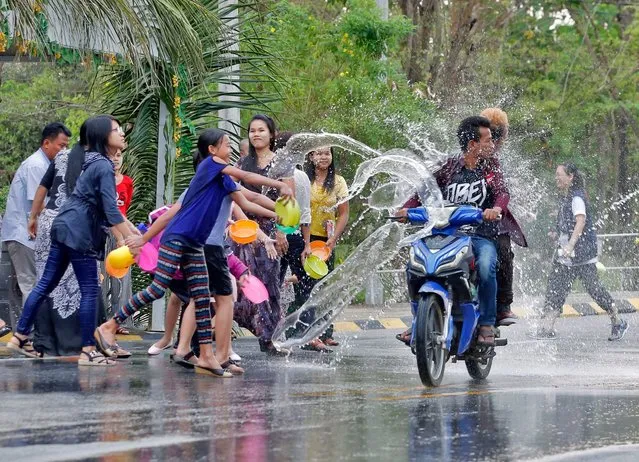
People participate in the first day of Thingyan Water Festival in Naypyitaw, Myanmar on April 13, 2018. The annual water festival, known as Thingyan, features large groups of people congregating to celebrate the by splashing water and throwing powder at each other's faces as a symbol of cleansing and washing away the sins from the old year. It marks the start of the traditional New Year and is similarly celebrated in countries such as Myanmar, Thailand, Laos and Cambodia. (Photo by Hein Htet/EPA/EFE/Rex Features/Shutterstock)

People participate in the first day of Thingyan Water Festival in Naypyitaw, Myanmar on April 13, 2018. The annual water festival, known as Thingyan, features large groups of people congregating to celebrate the by splashing water and throwing powder at each other's faces as a symbol of cleansing and washing away the sins from the old year. It marks the start of the traditional New Year and is similarly celebrated in countries such as Myanmar, Thailand, Laos and Cambodia. (Photo by Hein Htet/EPA/EFE/Rex Features/Shutterstock)
Details
27 Apr 2018 00:03:00
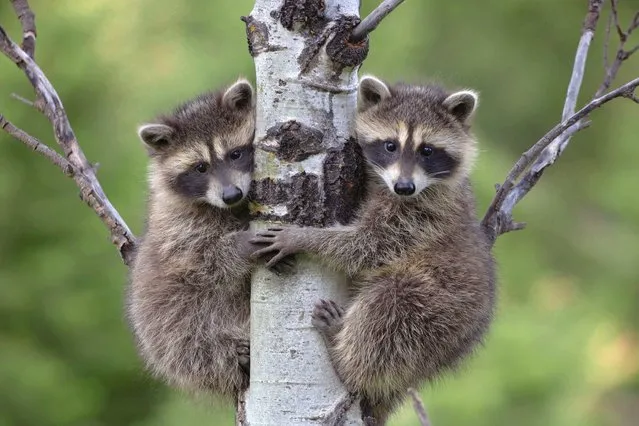
These two young siblings appear to cling on to a tree for dear life and even hold hands as they learn the ropes of climbing, on June 25, 2013. (Photo by Tim Fitzharris/Minden/Solent)

These two young siblings appear to cling on to a tree for dear life and even hold hands as they learn the ropes of climbing, on June 25, 2013. (Photo by Tim Fitzharris/Minden/Solent)
Details
29 Jun 2013 12:20:00


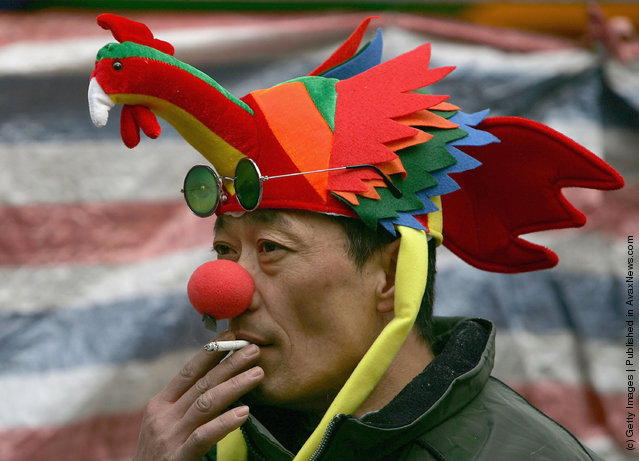
A Chinese vendor wears a rooster hat as he smokes a cigarette at his souvenir stall at a fair at Temple of Earth, on the eve of Chinese New Year February 8, 2005 in Beijing, China. Chinese started February 8, to celebrate the New Year of the Rooster. (Photo by Andrew Wong/Getty Images)
Details
14 May 2011 13:54:00
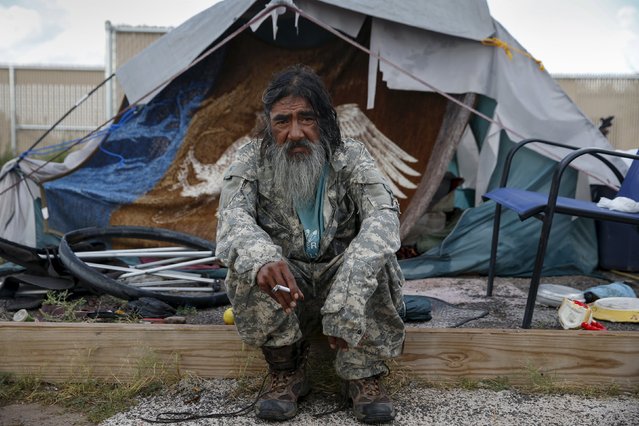
Daniel J. Wabsey, a 58-year-old war veteran, sits outside his tent at Camp Hope in Las Cruces, New Mexico October 6, 2015. “I've been traveling for 35 or 38 years. Getting inside would take a while to get used to. I just want to be able to eat, sleep and be safe. We all get along and understand in Camp Hope. We've all been there. With common sense you can survive out here”, Wabsey said. Camp Hope describe themselves as an “alternative transitional living project for the homeless”. Around 50 people live at the camp. (Photo by Shannon Stapleton/Reuters)

Daniel J. Wabsey, a 58-year-old war veteran, sits outside his tent at Camp Hope in Las Cruces, New Mexico October 6, 2015. “I've been traveling for 35 or 38 years. Getting inside would take a while to get used to. I just want to be able to eat, sleep and be safe. We all get along and understand in Camp Hope. We've all been there. With common sense you can survive out here”, Wabsey said. Camp Hope describe themselves as an “alternative transitional living project for the homeless”. Around 50 people live at the camp. (Photo by Shannon Stapleton/Reuters)
Details
19 Dec 2015 08:05:00
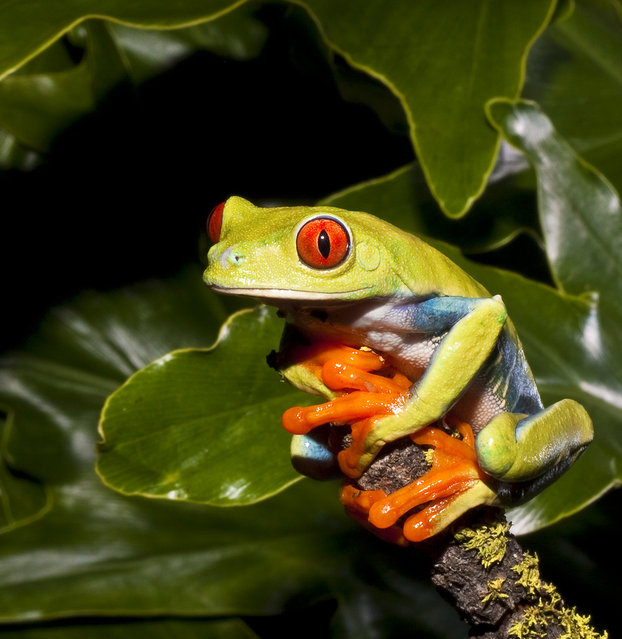
The Red-eyed Treefrog (Agalychnis callidryas)

“The Red-eyed Treefrog (Agalychnis callidryas) is an arboreal hylid native to Neotropical rainforests in Central America. Red-eyed tree frogs, as their name states, have red eyes with vertically narrowed noses, a vibrant green body with yellow and blue vertically striped sides, and orange or yellow webbed feet and toes”. – Wikipedia. (Photo by Donald Quintana)
Details
26 Jun 2012 10:13:00