A tow car for the children's “Grand Prix” races which take place in a parking lot in Livonia, Michigan a suburb of Detroit, circa 1955. (Photo by Three Lions/Getty Images)
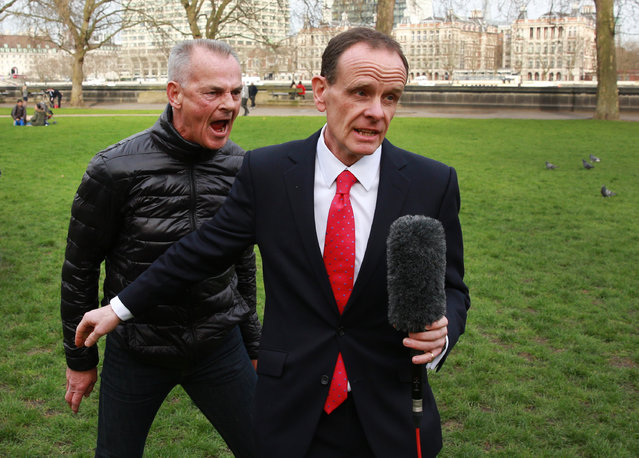
Protestor Bill Maloney (L) shouts during a live TV broadcast by BBC News Channel chief political correspondent Norman Smith after earlier forcing Deputy Prime Minister Nick Clegg to abandon a photocall near Parliament on March 19, 2014 in London, England. The Chancellor of the Exchequer, George Osborne has delivered his Budget statement to Members of Parliament in the House of Commons. (Photo by Peter Macdiarmid/Getty Images)
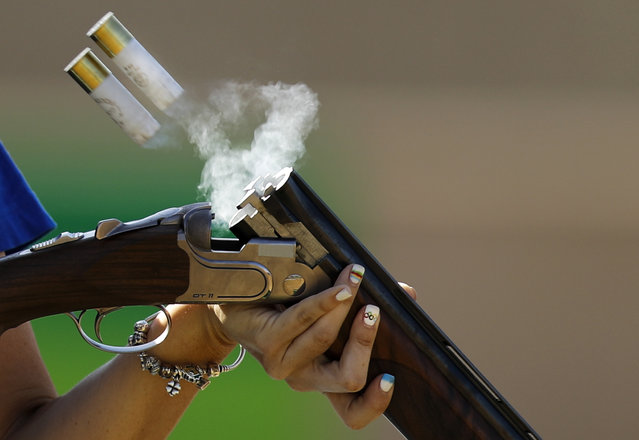
Alessandra Perilli, of San Marino, competes during the trap women's qualification at the 2016 Summer Olympics in Rio de Janeiro, Brazil, Sunday, August 7, 2016. (Photo by Hassan Ammar/AP Photo)
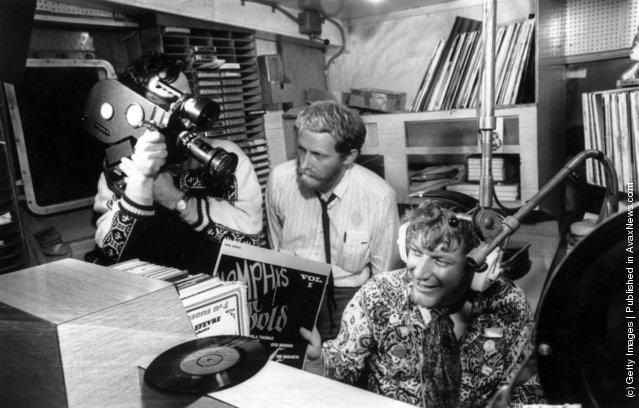
“«Pirate radio» in the UK first became widespread in the early 1960s when pop music stations such as Radio Caroline and Radio London started to broadcast on medium wave to the UK from offshore ships or disused sea forts. At the time these stations were not illegal because they were broadcasting from international waters. The stations were set up by entrepreneurs and music enthusiasts to meet the growing demand for pop and rock music, which was not catered for by the legal BBC Radio services”. – Wikipedia
Photo: The “World in Action” team making a program about the pirate radio ship Caroline, filmed by Paddy Searle, and produced by Mike Hodges. The DJ being filmed is Robbie Dale, and Hodges is standing behind him. (Photo by James Jackson/Evening Standard/Getty Images). 6th September 1967
In this photo provided by World Press Photo, the 1st Prize Daily Life Single of the 2011 World Press Photo Contest by Omar Feisal, Somalia, Reuters, shows a man carrying a shark through the streets of Mogadishu, Somalia, September 23, 2010. (AP Photo/Omar Feisal/Reuters)
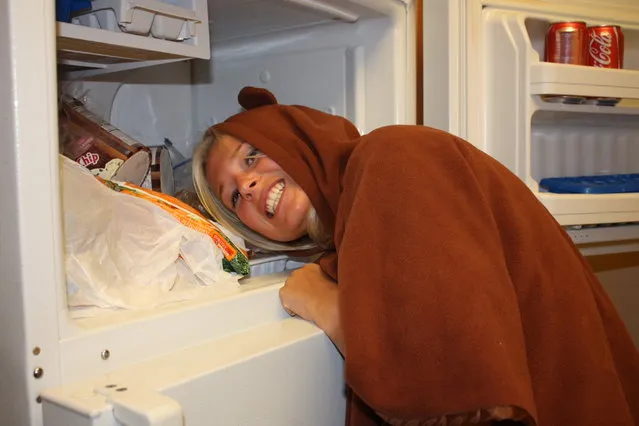
241543903 (a.k.a “Heads in Freezers”) is a numerical keyword associated with a photo meme that involves people taking pictures with their heads in the freezer & sharing them online. By tagging a series of image files with a cryptic number, a high level of search engine optimization can be easily achieved. As a result, typing “241543903” into image search engines like Google Images successfully yields pages after pages of pictures showing people’s heads in freezers.