Loading...
Done
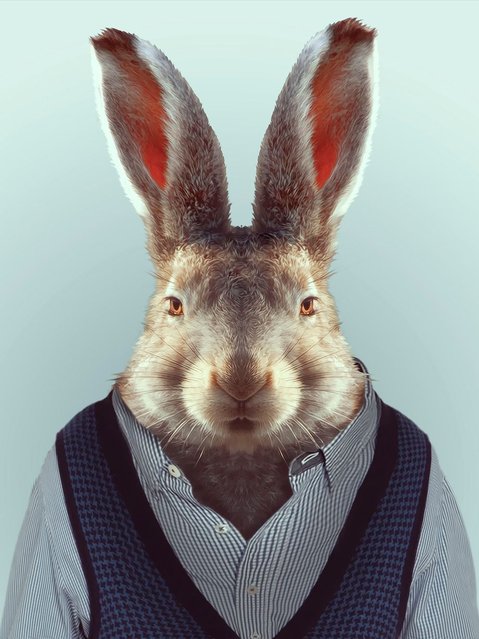
Hare wearing a v-neck jumper and shirt. (Photo by Yago Partal/Barcroft Media)

The dapper beasts are the creation of Barcelona-based artist and photographer Yago Partal, 31, whose work has achieved a cult following online. In his latest project he has merged photographs and illustrations to create a set of quirky animal portraits. Photo: “Hare wearing a v-neck jumper and shirt”. (Photo by Yago Partal/Barcroft Media)

See also: Zoo Portraits By Yago Partal. Part 1

Details
31 Oct 2013 08:10:00
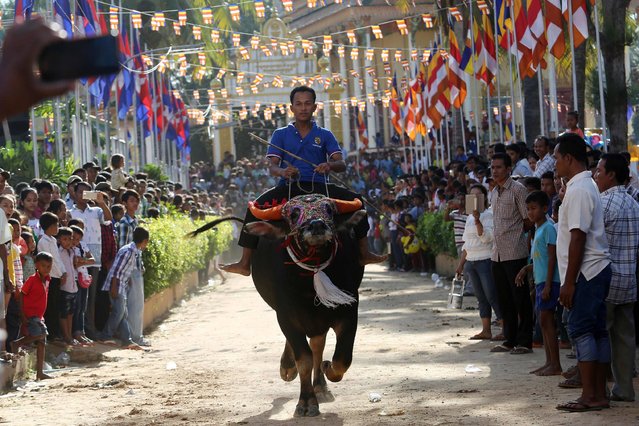
A Cambodian villager rides a buffalo during the Pchum Ben festival, the festival of death, at Vihear Suor village in Kandal province on October 1, 2016. Thousands of Cambodians descended on the small village northeast of the capital on October 1 to cheer on the annual water buffalo race that marks the end of the 15-day festival for the dead. (Photo by Chor Sokunthea/AFP Photo)

A Cambodian villager rides a buffalo during the Pchum Ben festival, the festival of death, at Vihear Suor village in Kandal province on October 1, 2016. Thousands of Cambodians descended on the small village northeast of the capital on October 1 to cheer on the annual water buffalo race that marks the end of the 15-day festival for the dead. (Photo by Chor Sokunthea/AFP Photo)
Details
03 Oct 2016 09:25:00
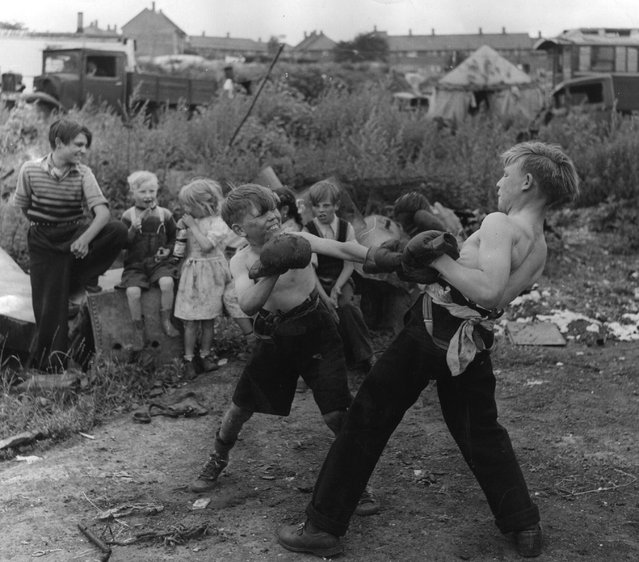
The unromantic gypsies. Children boxing in a gypsy camp in Kent, England on July 1, 1951. Like all boys these gypsy lads like to try their hand at boxing. Encouraged by their friends they fight it out on Corke's Meadow. Few Romanies now live a life of wandering romance. Most are like the three hundred squatters of Corke's Meadow, Kent, which is part of a “gypsy problem” that involves about 100,000 today. Of those about 25,000 can be rightly called gypsies, the rest are Mumpers and Posh-rats and Hobos. Corke's Meadow has both kinds. “Picture Post” cameraman Bert Hardy photographs the Corke's Meadow gypsies in their encampment. (Photo by Hulton-Deutsch Collection/Corbis via Getty Images)

The unromantic gypsies. Children boxing in a gypsy camp in Kent, England on July 1, 1951. Like all boys these gypsy lads like to try their hand at boxing. Encouraged by their friends they fight it out on Corke's Meadow. Few Romanies now live a life of wandering romance. Most are like the three hundred squatters of Corke's Meadow, Kent, which is part of a “gypsy problem” that involves about 100,000 today. Of those about 25,000 can be rightly called gypsies, the rest are Mumpers and Posh-rats and Hobos. Corke's Meadow has both kinds. “Picture Post” cameraman Bert Hardy photographs the Corke's Meadow gypsies in their encampment. (Photo by Hulton-Deutsch Collection/Corbis via Getty Images)
Details
12 Mar 2017 00:01:00
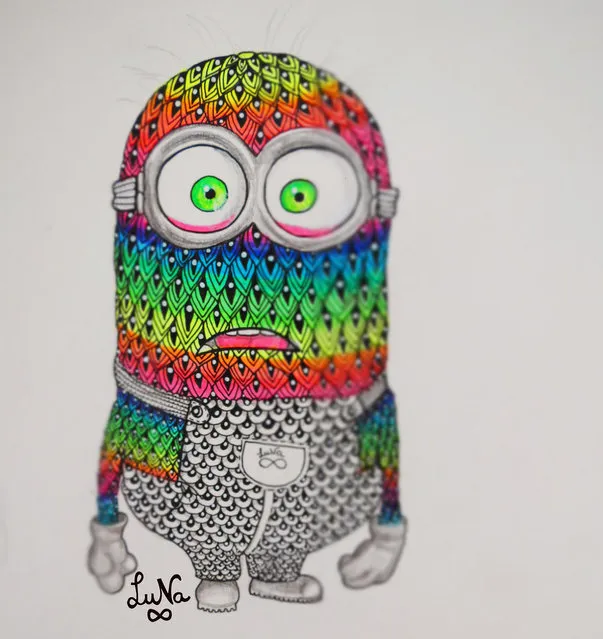
Illustration By Luna Portnoi Part 3

Luna Portnoi emerging Argentine Artist Luna Portnoi has been developing her practice in Buenos Aires for over five years. Her work is deeply connected to themes of color, nature, astronomy, childhood, magic, ancient civilizations, collaboration and the passions, openness and emotions we experience as children that are often left behind in adulthood. Already well known in Buenos Aires, the Artist has also received international press coverage.


See Also: Part 1 _ Part 2
Details
22 Sep 2014 08:59:00
Face Painting by Elsa Rhae Pageler

There isn’t exactly a college out there for face painting so Elsa Rhae Pageler‘s talent is as raw as it comes. Perhaps what’s even more amazing is that the video editor and producer from Kansas City graduated with a degree in Film and Media Studies and only does face painting and airbrushing as a side job. An application may take anywhere from 1 to 3 hours and apart from outside gigs, she features video tutorials on her YouTube channel showing how she paints herself to recreate video game and fictional characters. Photo: “Face Palm”. (Photo by Elsa Rhae Pageler)
Details
19 Jun 2014 12:40:00


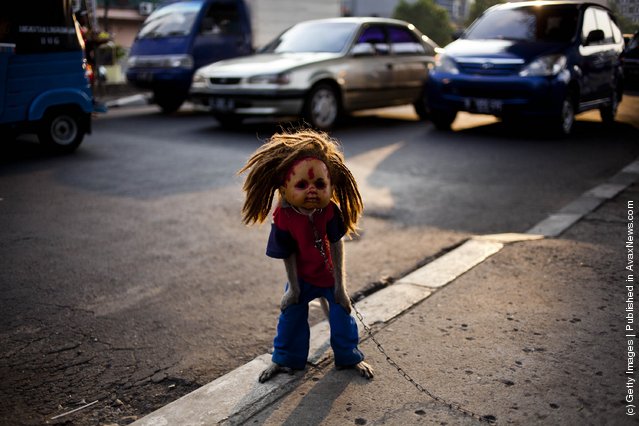
Ucil, a trained monkey, takes part in a street performance on June 1, 2011 in Jakarta, Indonesia. The street performances usually involve the monkeys wearing masks, such as dolls' heads or attire to mimic humans, with the monkeys trained to act out human activities such as shopping, riding bicycles or other simulations of human behaviour. Poverty drives the handlers to exploit the monkeys in the hope of earning small change, but the effect and cruelty to the monkeys is a cause that charities such as the Jakarta Animal Aid Network are increasingly taking up. (Photo by Ulet Ifansasti/Getty Images)
Details
02 Jun 2011 12:14:00
Details
13 May 2012 21:37:00
Details
03 Sep 2012 08:36:00