Loading...
Done
Wrestler Kairi Hojo jumps at her opponent Mieko satomura during their Stardom female professional wrestling show at Korakuen Hall in Tokyo, Japan, July 26, 2015. Professional women's wrestling in Japan means body slams, sweat, and garish costumes. But Japanese rules on hierarchy also come into play, with a culture of deference to veteran fighters. The brutal reality of the ring is masked by a strong fantasy element that feeds its popularity with fans, most of them men. (Photo by Thomas Peter/Reuters)

Wrestler Kairi Hojo jumps at her opponent Mieko satomura during their Stardom female professional wrestling show at Korakuen Hall in Tokyo, Japan, July 26, 2015. Professional women's wrestling in Japan means body slams, sweat, and garish costumes. But Japanese rules on hierarchy also come into play, with a culture of deference to veteran fighters. The brutal reality of the ring is masked by a strong fantasy element that feeds its popularity with fans, most of them men. (Photo by Thomas Peter/Reuters)
Details
14 Dec 2016 07:58:00
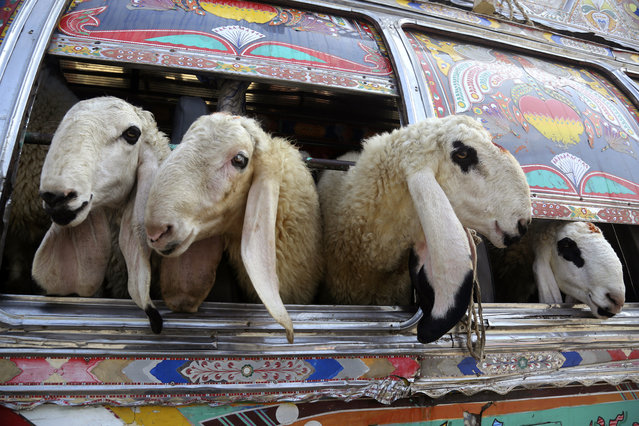
Pakistani vendors carry animals in a bus for the upcoming Muslim festival Eid al-Adha in Lahore, Pakistan, Monday, August 5, 2019. Eid al-Adha, or Feast of Sacrifice, is the most important Islamic holiday and marks the willingness of the Prophet Ibrahim (Abraham to Christians and Jews) to sacrifice his son. (Photo by K.M. Chaudhry/AP Photo)

Pakistani vendors carry animals in a bus for the upcoming Muslim festival Eid al-Adha in Lahore, Pakistan, Monday, August 5, 2019. Eid al-Adha, or Feast of Sacrifice, is the most important Islamic holiday and marks the willingness of the Prophet Ibrahim (Abraham to Christians and Jews) to sacrifice his son. (Photo by K.M. Chaudhry/AP Photo)
Details
05 Sep 2019 00:01:00
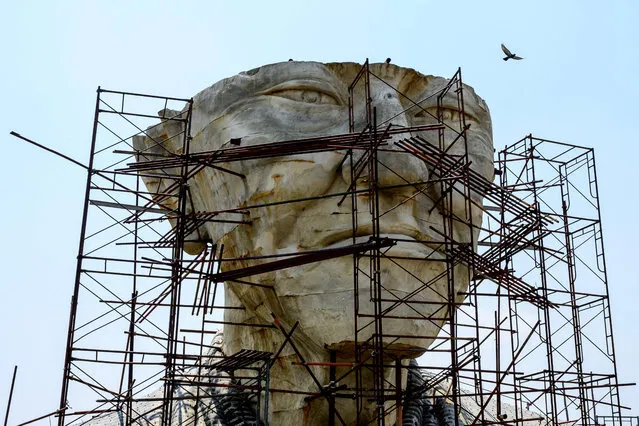
A bird flies over the abandoned giant sculpture of a Buddhist monk in Cha-am outside Hua Hin, 145km south of Bangkok, on February 25, 2021. (Photo by Mladen Antonov/AFP Photo)

A bird flies over the abandoned giant sculpture of a Buddhist monk in Cha-am outside Hua Hin, 145km south of Bangkok, on February 25, 2021. (Photo by Mladen Antonov/AFP Photo)
Details
09 Mar 2021 11:51:00
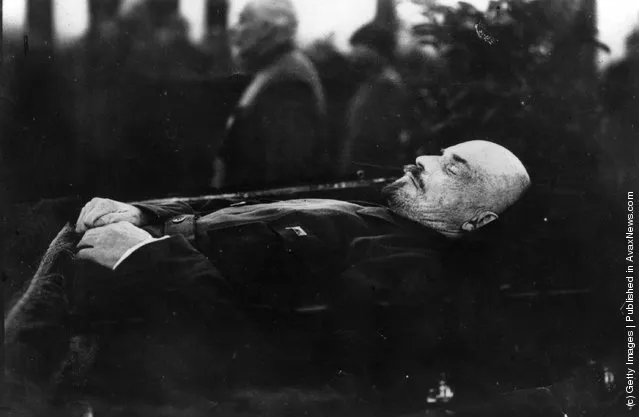
1924:  Vladimir Ilyich Lenin lying in state in the Kremlin

Photo: Vladimir Ilyich Lenin (1870 – 1924) lying in state in the Kremlin. (Photo by Hulton Archive/Getty Images). 1924

Important! For the same article in Russian language click here.

Something quite intriguing is happening within Russian-speaking internet during the last few – should you type a fully academic inquiry (at least, according to Russian academic requirements) in national search engines for "Lenin's mausoleum" – the first thing you get (even in top 10 searches) is website pages talking about black magic and occult. Website authors view this construction differently, but unconditionally agree on one thing: the mausoleum of the "leader of the world proletariat” – the essence of a magical artifact, a sort of “energy vampire”. It was built with a certain purpose: to drain the energy out of miserable Soviet citizens on one hand; and to poison the anthroposphere of one-sixth part of the earth with its vibes (the exact territory that was occupied by the former Soviet Union), depriving the Russian people of will to resist on the other hand. Complete nonsense? No doubt. Nevertheless, an intriguing one. Well, probably because some oddities do exist in mausoleum's history. These oddities are the thing we are going to discuss this time. First, let me refresh you memory on the subject.
Details
16 Oct 2011 11:27:00
In this photo provided by Skydive Chicago, escape artist Anthony Martin falls while handcuffed and locked inside a box after being dropped from an airplane over Ottawa, Ill., Tuesday, Aug. 6, 2013. (Photo by Joe Silva/AP Photo/Courtesy of Skydive Chicago)

In this photo provided by Skydive Chicago, escape artist Anthony Martin falls while handcuffed and locked inside a box after being dropped from an airplane over Ottawa, Ill., Tuesday, August 6, 2013. (Photo by Joe Silva/AP Photo/Courtesy of Skydive Chicago)
Details
08 Aug 2013 12:44:00
Under Exposed: Pekka Tuuri (Finland) – Great white shark, Isla Guadalupe, Mexico. Isla Guadalupe is the world capital when it comes to observing great white sharks, but cage diving seriously limits the possibilities to take ‘fresh’ pictures. When I took this, the water close to the surface was quite milky, making photography very challenging. From out of the ‘mist’, I saw this great white shark lurking behind a school of fusiliers. I quickly focused on the shark and set a wide aperture to get focus blur on the fish, along with a fast shutter to avoid excessive motion blur. (Photo by Pekka Tuuri/The Outdoor Photographer of the Year/The Guardian)

Under Exposed: Pekka Tuuri (Finland) – Great white shark, Isla Guadalupe, Mexico. “Isla Guadalupe is the world capital when it comes to observing great white sharks, but cage diving seriously limits the possibilities to take ‘fresh’ pictures. When I took this, the water close to the surface was quite milky, making photography very challenging. From out of the “mist”, I saw this great white shark lurking behind a school of fusiliers. I quickly focused on the shark and set a wide aperture to get focus blur on the fish, along with a fast shutter to avoid excessive motion blur”. (Photo by Pekka Tuuri/The Outdoor Photographer of the Year/The Guardian)
Details
25 Jan 2018 07:37:00
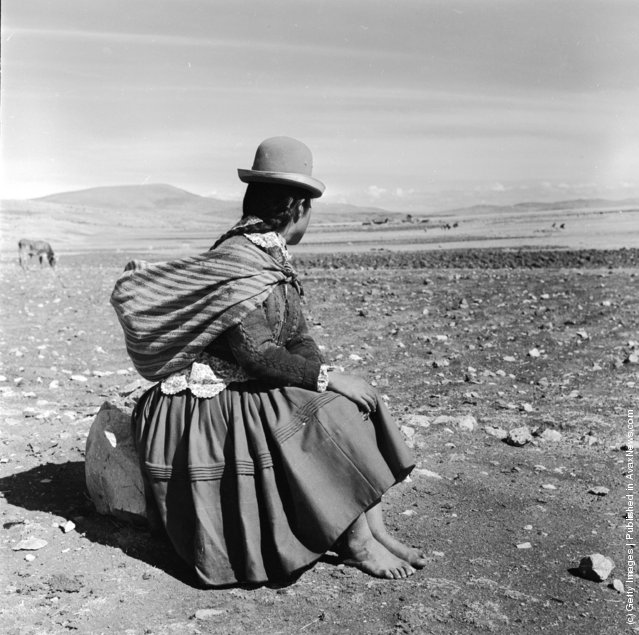
Burdened with a shawl full of her belongings, a woman stops for a rest on the road between Julaca and Puno in Peru, 1955

Burdened with a shawl full of her belongings, a woman stops for a rest on the road between Julaca and Puno in Peru. (Photo by Three Lions/Getty Images). Circa 1955
Details
09 Aug 2011 11:48:00
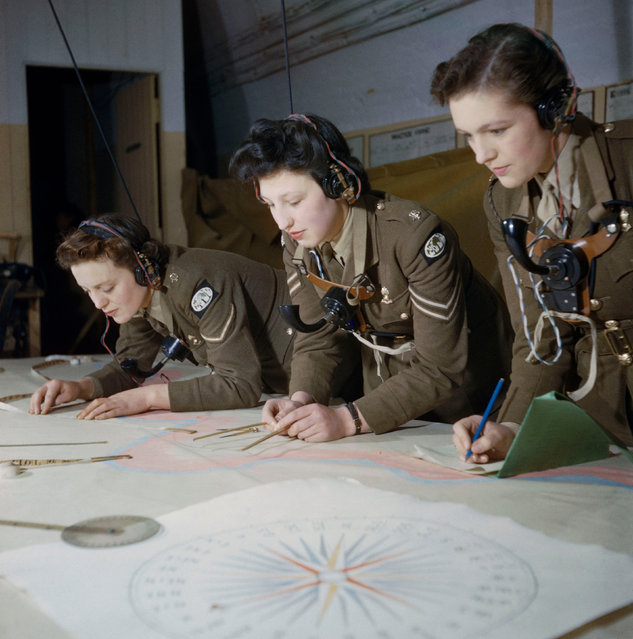
Auxiliary Territorial Service (ATS) plotters at work at Coastal Artillery Headquarters in Dover, December 1942. (Photo by Ted Dearberg/IWM/PA Wire)

Auxiliary Territorial Service (ATS) plotters at work at Coastal Artillery Headquarters in Dover, December 1942. The Auxiliary Territorial Service was the women's branch of the British Army during the Second World War. It was formed on 9 September 1938, initially as a women's voluntary service, and existed until 1 February 1949, when it was merged into the Women's Royal Army Corps. The ATS had its roots in the Women's Auxiliary Army Corps (WAAC), which was formed in 1917 as a voluntary service. During the First World War its members served in a number of jobs including clerks, cooks, telephonists and waitresses. The WAAC was disbanded after four years in 1921. (Photo by Ted Dearberg/IWM/PA Wire)
Details
13 Jul 2017 07:52:00