Loading...
Done
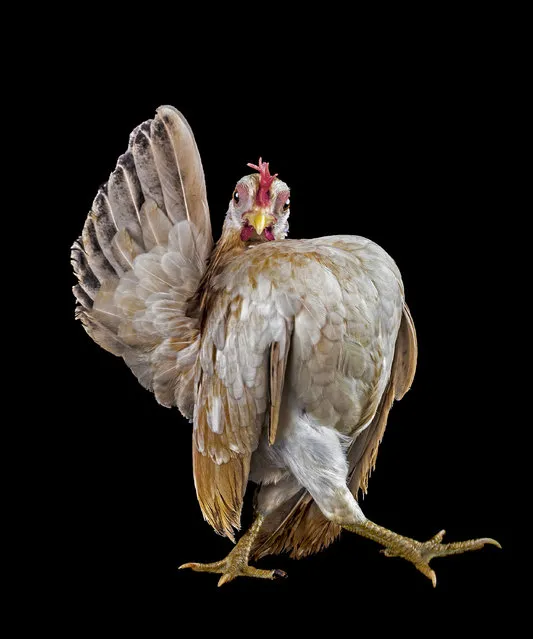
Ornamental chicken breeding clubs have emerged in Indonesia, Thailand, North America and even European countries such as the UK and France. Malaysia is however the epicenter of this cultural phenomenon. (Photo by Ernest Goh/2013 Sony World Photography Awards)

Ornamental chicken breeding clubs have emerged in Indonesia, Thailand, North America and even European countries such as the UK and France. Malaysia is however the epicenter of this cultural phenomenon. These chickens are prized for their build, size, behavior and showmanship by their owners and competitions or beauty contests as they are often described are held almost every week in at least one village in Malaysia. Judges sit around a square table inspecting each chicken for a few minutes trying to determine a champion specimen in its own weight class based on its stance, temperament and physical assets like wings, tails and comb. The walk or strut by an ornamental chicken in a beauty contest, much like a runway model, constitutes a large part of the scoring system. (Photo by Ernest Goh/2013 Sony World Photography Awards)
Details
28 Apr 2013 08:32:00
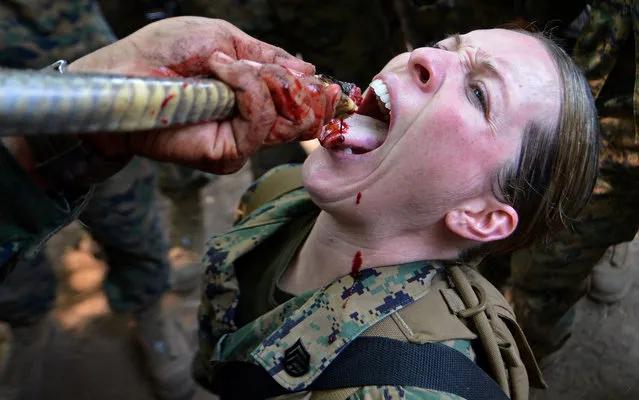
In a military base in the Thai province of Chon Buri February 20 U.S. Marines Navy with Thailand began their studies in jungle survival. The event is held in joint military exercises “Cobra Gold 2013”. During a jungle survival program February 20, 2013 taught by Royal Thai Special Forces in Sannapit, Thailand, U.S. Marines learned to catch cobras and drink their fresh blood, not to mention eat forest insects and pull the heads off of chicken. The training was part of Operation Cobra Gold 13, the 32nd edition of international military exercises hosted by the Thai. According to a U.S. Marines press release, Cobra Gold is the largest exercise of its kind in Asia and incorporates troops from five other nations in addition to the U.S. and Thailand. The Daily Mail reports that the Marines were invited to experience the local custom of drinking cobra blood after being taught to catch and kill cobras in the wild. As CNN notes, Cobra blood is believed to be a panacea and aphrodiasic in parts of Southeast Asia. In Jakarta, vendors can earn over $100 a night selling shots of cobra blood mixed with liquor. (Photo by Pornchai Kittiwongsakul/AFP Photo)

During a jungle survival program February 20, 2013 taught by Royal Thai Special Forces in Sannapit, Thailand, U.S. Marines learned to catch cobras and drink their fresh blood, not to mention eat forest insects and pull the heads off of chicken. The training was part of Operation Cobra Gold 13, the 32nd edition of international military exercises hosted by the Thai. According to a U.S. Marines press release, Cobra Gold is the largest exercise of its kind in Asia and incorporates troops from five other nations in addition to the U.S. and Thailand. The Daily Mail reports that the Marines were invited to experience the local custom of drinking cobra blood after being taught to catch and kill cobras in the wild. As CNN notes, Cobra blood is believed to be a panacea and aphrodiasic in parts of Southeast Asia. In Jakarta, vendors can earn over $100 a night selling shots of cobra blood mixed with liquor. (Photo by Pornchai Kittiwongsakul/AFP Photo)
Details
23 Feb 2013 11:52:00
Women perform a pole dancing routine during the national day celebration of “Urban Pole” dance along a street in Monterrey, Mexico, on June 9, 2013. (Photo by Daniel Becerril/Reuters)

Women perform a pole dancing routine during the national day celebration of “Urban Pole” dance along a street in Monterrey, Mexico, on June 9, 2013. (Photo by Daniel Becerril/Reuters)
Details
15 Jun 2013 11:21:00
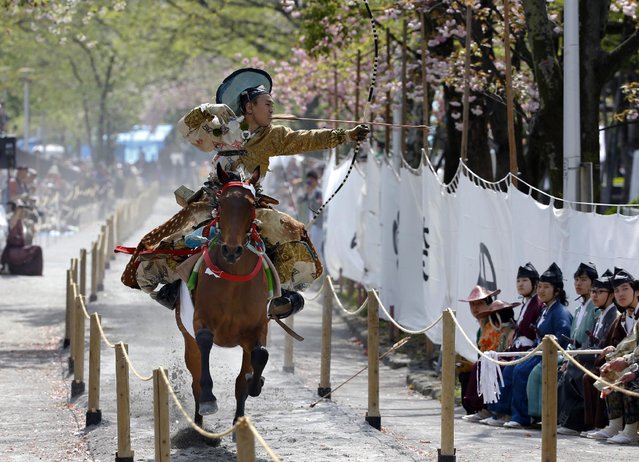
An archer in a samurai warrior costume aims at a target in the Asakusa Yabusame horseback archery event at Sumida Park in Tokyo, Saturday, April 18, 2015. (Photo by Shizuo Kambayashi/AP Photo)

An archer in a samurai warrior costume aims at a target in the Asakusa Yabusame horseback archery event at Sumida Park in Tokyo, Saturday, April 18, 2015. (Photo by Shizuo Kambayashi/AP Photo)
Details
25 Apr 2015 10:17:00
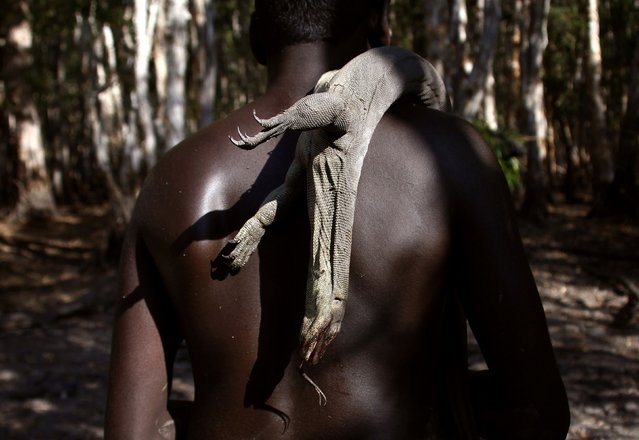
Australian Aboriginal hunter Marcus Gaykamangu of the Yolngu people, carries an Australian native lizard called a goanna over his shoulder as he walks away from a billabong near the “out station” of Yathalamarra, located on the outksirts of the community of Ramingining in East Arnhem Land November 22, 2014. (Photo by David Gray/Reuters)

Australian Aboriginal hunter Marcus Gaykamangu of the Yolngu people, carries an Australian native lizard called a goanna over his shoulder as he walks away from a billabong near the “out station” of Yathalamarra, located on the outksirts of the community of Ramingining in East Arnhem Land November 22, 2014. (Photo by David Gray/Reuters)
Details
11 Dec 2014 13:19:00
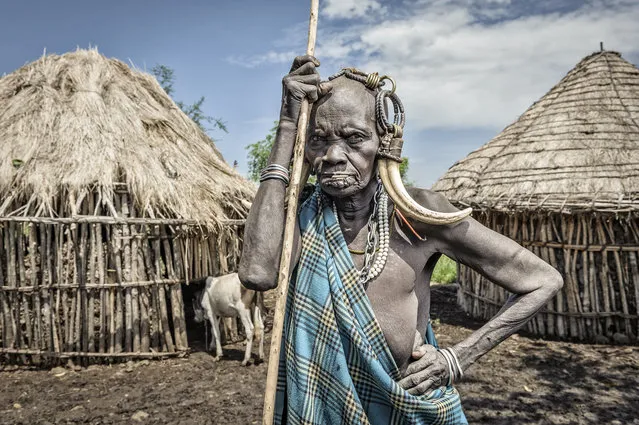
“Old Mursi woman”. Old woman by the huts of her village. Location: Marenke, Omo valley, Ethiopia. (Photo and caption by Jorge Fernandez/National Geographic Traveler Photo Contest)

“Old Mursi woman”. Old woman by the huts of her village. Location: Marenke, Omo valley, Ethiopia. (Photo and caption by Jorge Fernandez/National Geographic Traveler Photo Contest)

ATTENTION! All pictures are presented in high resolution. To see Hi-Res images – just TWICE click on any picture. In other words, click small picture – opens the BIG picture. Click BIG picture – opens VERY BIG picture.
Details
24 Jun 2013 09:55:00
Cyclists compete during the UCI BMX World Championships Elite Women's Moto Race on May 29, 2016 in Medellin, Antioquia department, Colombia. (Photo by Raul Arboleda/AFP Photo)

Cyclists compete during the UCI BMX World Championships Elite Women's Moto Race on May 29, 2016 in Medellin, Antioquia department, Colombia. (Photo by Raul Arboleda/AFP Photo)
Details
31 May 2016 11:59:00
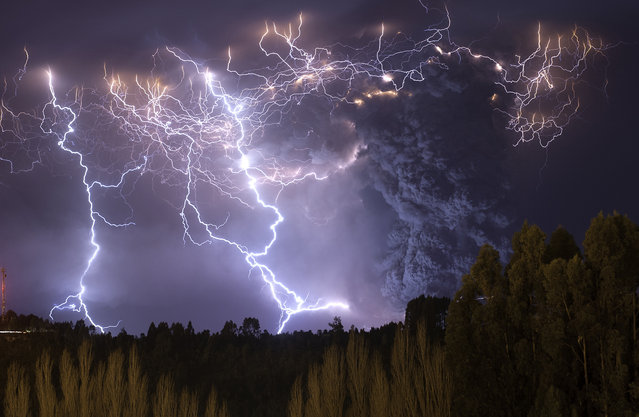
The eruption of Cordon Caulle began on June 4, 2011, located in the Region of Los Rios in Chile. For about 12 months, people and animals became accustomed to living with the daily fall of ash, which also caused problems in the air traffic in South America. The explosions and lightning during first days of the eruption could be seen from hundreds of miles around. This photograph was taken on the second night of eruption from the town of Lago Ranco. (Photo and caption by Francisco Negroni/National Geographic Traveler Photo Contest)

The eruption of Cordon Caulle began on June 4, 2011, located in the Region of Los Rios in Chile. For about 12 months, people and animals became accustomed to living with the daily fall of ash, which also caused problems in the air traffic in South America. The explosions and lightning during first days of the eruption could be seen from hundreds of miles around. This photograph was taken on the second night of eruption from the town of Lago Ranco. (Photo and caption by Francisco Negroni/National Geographic Traveler Photo Contest)

ATTENTION! All pictures are presented in high resolution. To see Hi-Res images – just TWICE click on any picture. In other words, click small picture – opens the BIG picture. Click BIG picture – opens VERY BIG picture.
Details
23 Jun 2013 11:24:00