Loading...
Done
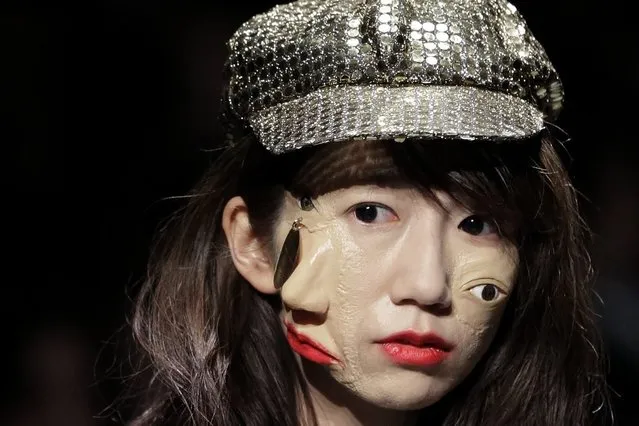
A model presents a creation by Japanese designer Yoshikazu Yamagata for his label writtenafterwards during the Mercedes-Benz Fashion Week in Tokyo, Japan, 16 March 2016. The presentation of the Autumn/Winter 2016 collections runs from 14 to 19 March. (Photo by Kiyoshi Ota/EPA)

A model presents a creation by Japanese designer Yoshikazu Yamagata for his label writtenafterwards during the Mercedes-Benz Fashion Week in Tokyo, Japan, 16 March 2016. The presentation of the Autumn/Winter 2016 collections runs from 14 to 19 March. (Photo by Kiyoshi Ota/EPA)
Details
17 Mar 2016 15:45:00
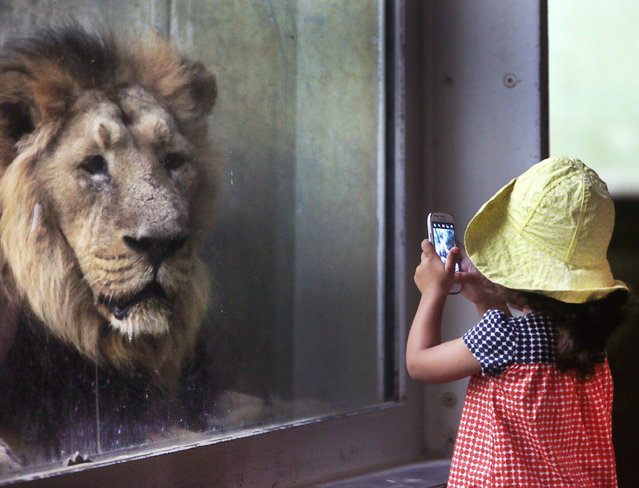
A little girl takes a picture of a lion in the zoo in Frankfurt, Germany, Tuesday, September 13, 2016. (Photo by Michael Probst/AP Photo)

A little girl takes a picture of a lion in the zoo in Frankfurt, Germany, Tuesday, September 13, 2016. (Photo by Michael Probst/AP Photo)
Details
14 Sep 2016 11:01:00
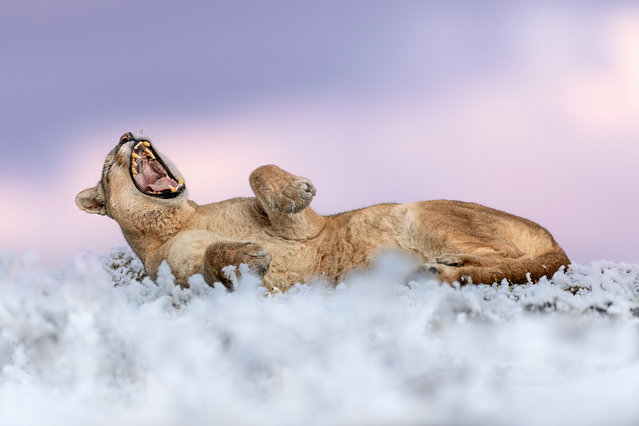
A puma rolls and yawns on frost-covered ground in Laguna Amarga, Torres del Paine, Chile in the first decade of December 2025, pausing briefly after several hours of rest before continuing on her way. (Photo by Sara Jenner/Solent News & Photo Agency)

A puma rolls and yawns on frost-covered ground in Laguna Amarga, Torres del Paine, Chile in the first decade of December 2025, pausing briefly after several hours of rest before continuing on her way. (Photo by Sara Jenner/Solent News & Photo Agency)
Details
21 Dec 2025 10:02:00
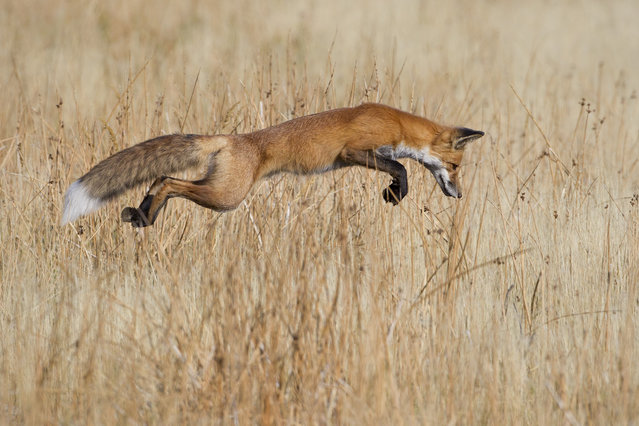
Canada: “Lucky pounce”. (Photo by Connor Stefanison/Wildlife Photographer of the Year 2013)

The winners of The London’s Natural History Museum's prestigious Wildlife Photographer of the Year for 2013 have finally been unveiled. Selected from almost 43,000 entries from 96 countries, the winners offer a glimpse of the stunning array of natural beauty on our planet. Photo: Canada: “Lucky pounce”. “Anticipating the pounce – that was the hardest part”, says Connor, who had come to Yellowstone National Park, Wyoming, USA, in search of wildlife as much as the spectacular landscape. He had found this fox, his first ever, on his last day in the park. It was so absorbed in hunting that Connor had plenty of time to get out of the car and settle behind a rock. It quartered the grassland, back and forth, and then started staring intently at a patch of ground, giving Connor just enough warning of the action to come. When it sprung up, Connor got his shot. And when it landed, the fox got his mouse. (Photo by Connor Stefanison/Wildlife Photographer of the Year 2013)

Details
17 Oct 2013 08:12:00
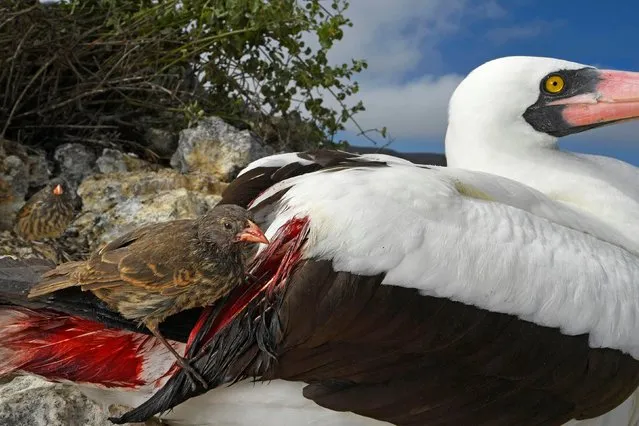
Bloodthirsty by Thomas P Peschak, Germany/South Africa — winner, Behaviour: birds. When rations run short on Wolf Island, in the remote northern Galápagos, the sharp-beaked ground finches become vampires. Their sitting targets are Nazca boobies and other large birds. The finches rely on a scant diet of seeds and insects, which regularly dries up, so they drink blood to survive. ‘I’ve seen more than half a dozen finches drinking from a single Nazca booby,’ says Tom. Rather than leave their nests the boobies tolerate the vampires, and the blood loss doesn’t seem to cause permanent harm. (Photo by Thomas P Peschak/2018 Wildlife Photographer of the Year)

Bloodthirsty by Thomas P. Peschak, Germany/South Africa — winner, Behaviour: birds. When rations run short on Wolf Island, in the remote northern Galápagos, the sharp-beaked ground finches become vampires. Their sitting targets are Nazca boobies and other large birds. The finches rely on a scant diet of seeds and insects, which regularly dries up, so they drink blood to survive. ‘I’ve seen more than half a dozen finches drinking from a single Nazca booby,’ says Tom. Rather than leave their nests the boobies tolerate the vampires, and the blood loss doesn’t seem to cause permanent harm. (Photo by Thomas P. Peschak/2018 Wildlife Photographer of the Year)
Details
19 Oct 2018 00:05:00
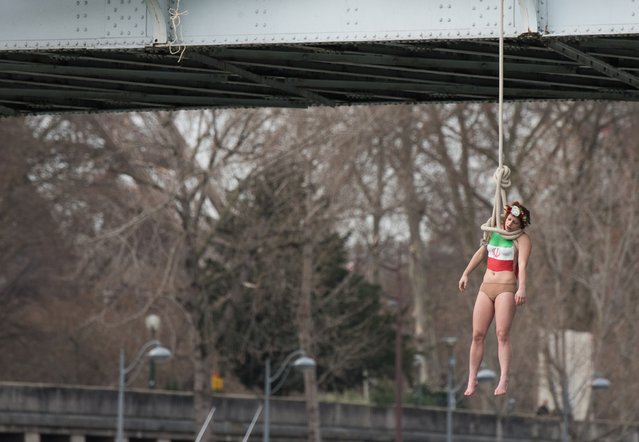
A Femen activist, Sarah Constantin, is hanged from a noose-like rope from a Paris bridge to call attention to the large number of executions in Iran as she stages a protest against visiting Iranian President Hassan Rouhani in Paris, Thursday, January 28, 2016. A near-naked woman hanging from a noose-like rope from a Paris bridge has sent a message to visiting Iranian President Hassan Rouhani. (Photo by Zacharie Scheurer/AP Photo)

A Femen activist, Sarah Constantin, is hanged from a noose-like rope from a Paris bridge to call attention to the large number of executions in Iran as she stages a protest against visiting Iranian President Hassan Rouhani in Paris, Thursday, January 28, 2016. A near-naked woman hanging from a noose-like rope from a Paris bridge has sent a message to visiting Iranian President Hassan Rouhani. (Photo by Zacharie Scheurer/AP Photo)
Details
29 Jan 2016 13:28:00
Indian folk dancers display ornaments during a break while participating in the first night of Navratri in Gandhinagar, some 30 km from Ahmedabad, on October 13, 2015. Navratri festivities, or Dance Festival of Nine Nights, takes place between October 13-21. (Photo by Sam Panthaky/AFP Photo)

Indian folk dancers display ornaments during a break while participating in the first night of Navratri in Gandhinagar, some 30 km from Ahmedabad, on October 13, 2015. Navratri festivities, or Dance Festival of Nine Nights, takes place between October 13-21. (Photo by Sam Panthaky/AFP Photo)
Details
23 Oct 2015 08:04:00
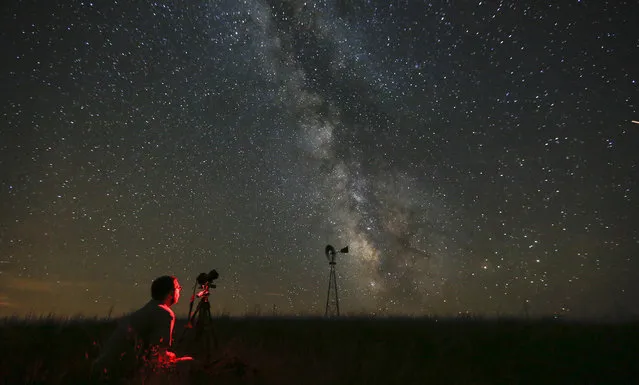
In this Wednesday, July 23, 2014 file photo, Omaha photographer Lane Hickenbottom photographs the night sky in a pasture near Callaway, Neb. With no moon in the sky, the Milky Way was visible to the naked eye. More than one-third of the world’s population can no longer see the Milky Way because of man-made lights, according to a scientific paper by Light Pollution Science and Technology Institute's Fabio Falchi and his team members, published on Friday, June 10, 2016. (Photo by Travis Heying/The Wichita Eagle via AP Photo)

In this Wednesday, July 23, 2014 file photo, Omaha photographer Lane Hickenbottom photographs the night sky in a pasture near Callaway, Neb. With no moon in the sky, the Milky Way was visible to the naked eye. More than one-third of the world’s population can no longer see the Milky Way because of man-made lights, according to a scientific paper by Light Pollution Science and Technology Institute's Fabio Falchi and his team members, published on Friday, June 10, 2016. (Photo by Travis Heying/The Wichita Eagle via AP Photo)
Details
11 Jun 2016 12:37:00