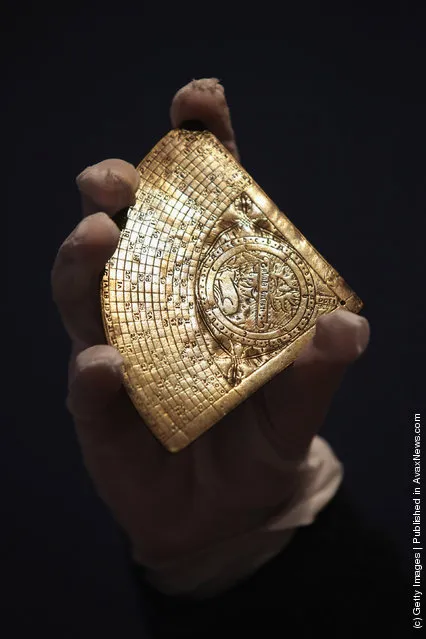
A gallery assistant holds a rare 14th century time-telling device device in Bonhams auction house on December 9, 2011 in London, England. The instrument, which dates from 1396 and was discovered in a shed in Queensland, Australia, is due to be auctioned on December 13, 2011 and is expected to fetch 200,000 GBP. (Photo by Oli Scarff/Getty Images)
Galapagos – Rocking the Cradle: Four major ocean currents converge along the Galapagos archipelago, creating the conditions for an extraordinary diversity of animal life, April 25, 2016. The islands are home to at least 7,000 flora and fauna species, of which 97 percent of the reptiles, 80 percent of the land birds, 50 percent of the insects and 30 percent of the plants are endemic. (Photo by Thomas P. Peschak for National Geographic/World Press Photo)
Two dogs sent into outer space by the Soviet Union after their safe return to earth. They spent 22 days in orbit. (Photo by Central Press/Getty Images). 22nd March 1966
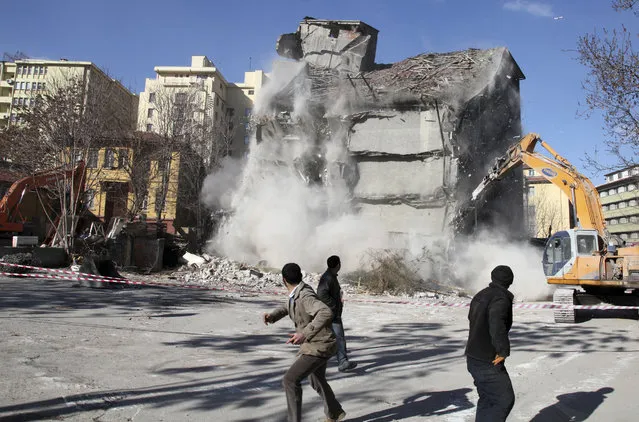
People run away as a building is toppled during a controlled demolition as part of an urban transformation in Ankara, Turkey, February 3, 2014. (Photo by Serap Doganyigit/Reuters)
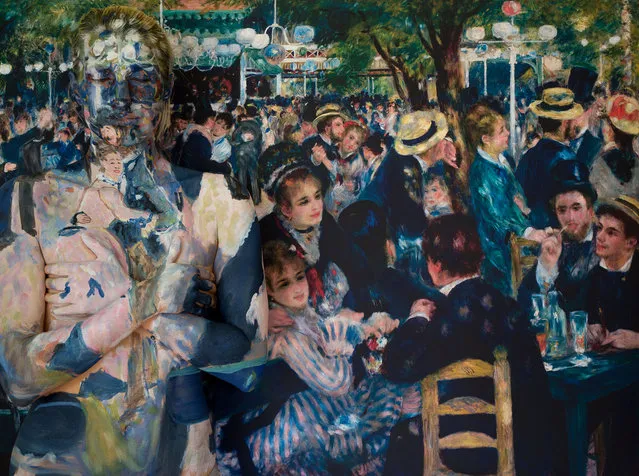
An innovative artist has camouflaged nude bodies by painting them into the worlds most expensive artworks. New York body artist, Trina Merry picked the 20 top dearest paintings, then photographed naked models disguised as part of the piece. Here: Titled 8,100,000 after the price paid for Bal du moulin de la Galette. (Photo by Trina Merry/Caters News)
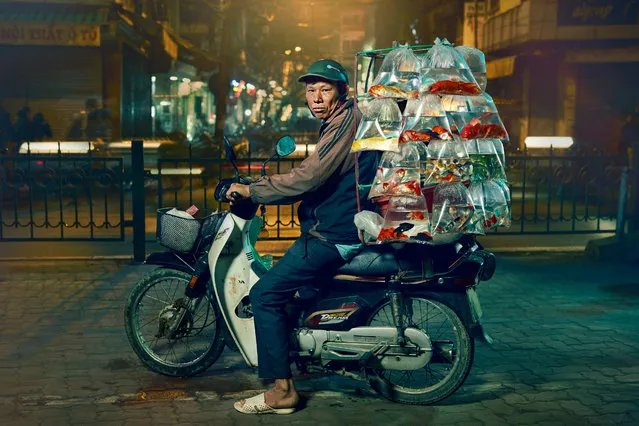
From footballs to live fish, delivery mopeds piled high with unwieldy, unlikely goods are one of the Vietnamese capital’s most distinctive sights. As the city plans to ban motorbikes altogether, photographer Jon Enoch captured the drivers at work. (Photo by Jon Enoch/The Guardian)
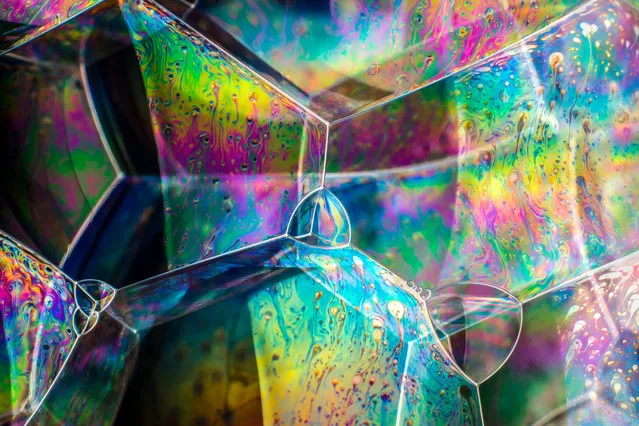
Soap Bubble Structures by Kym Cox. Bubbles optimise space and minimise their surface area for a given volume of air. This phenomenon makes them a useful tool in many areas of research, in particular, materials science and “packing” – how things fit together. Bubble walls drain under gravity, thin at the top, thick at the bottom, which interferes with travelling lightwaves to create bands of colour. Black spots show the wall is too thin for interference colours, indicating the bubble is about to burst. (Photo by Kym Cox/2019 Science Photographer of the Year/RPS)