Loading...
Done
Beryl Lipton, left, douses Matt Lee during the ice bucket challenge at Boston's Copley Square, Thursday, August 7, 2014 to raise funds and awareness for ALS. The idea is: pay up for charity or get doused. The fund-raising phenomenon is catching on fast, propelled by popular videos of the dunkers and the dunked – including famous athletes and entertainers – posted on social media sites. (Photo by Elise Amendola/AP Photo)

Beryl Lipton, left, douses Matt Lee during the ice bucket challenge at Boston's Copley Square, Thursday, August 7, 2014 to raise funds and awareness for ALS. The idea is: pay up for charity or get doused. The fund-raising phenomenon is catching on fast, propelled by popular videos of the dunkers and the dunked – including famous athletes and entertainers – posted on social media sites. And the challenges are raising tens of thousands of dollars and immeasurable awareness for causes from ALS to breast cancer to a camp for kids who've lost a father to war. (Photo by Elise Amendola/AP Photo)
Details
16 Aug 2014 11:08:00
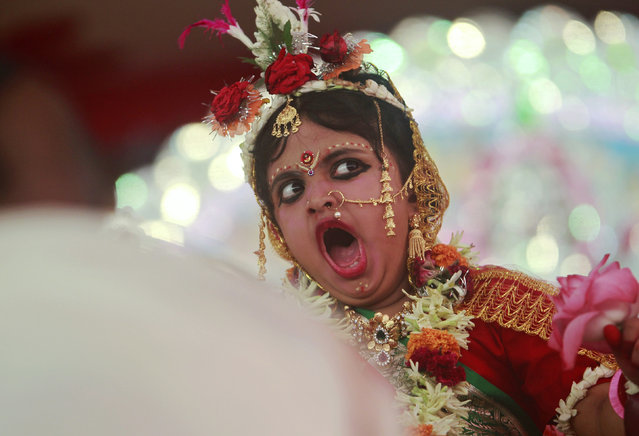
Satarupa Chakraborty, 5, dressed as a Kumari, yawns while she is worshipped by a Hindu priest during the religious festival of Durga Puja in Agartala October 2, 2014. (Photo by Jayanta Dey/Reuters)

Satarupa Chakraborty, 5, dressed as a Kumari, yawns while she is worshipped by a Hindu priest during the religious festival of Durga Puja in Agartala October 2, 2014. (Photo by Jayanta Dey/Reuters)
Details
19 Oct 2014 12:19:00
Arizona Cardinals cheerleader Claire Thorton, center, smiles as Air Force Capt. Eric Straub proposes to her during the first half of an NFL football game against the Washington Redskins, Sunday, October 12, 2014, in Glendale, Ariz. Thorton accepted the proposal. (Photo by Rick Scuteri/AP Photo)

Arizona Cardinals cheerleader Claire Thorton, center, smiles as Air Force Capt. Eric Straub proposes to her during the first half of an NFL football game against the Washington Redskins, Sunday, October 12, 2014, in Glendale, Ariz. Thorton accepted the proposal. (Photo by Rick Scuteri/AP Photo)
Details
18 Oct 2014 10:51:00
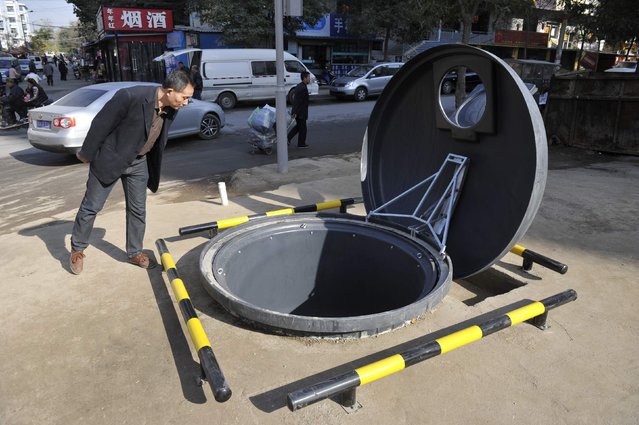
A resident looks into a newly-built giant trash can, partially buried underground, next to a street in Taiyuan, Shanxi province November 6, 2014. The trash can, which has a diameter of 1.9 meters and a depth of 2.8 meters, could contain approximately 10 cubic metres of garbage. It was built to replace an open-air garbage dump site, local media reported. (Photo by Reuters/Stringer)

A resident looks into a newly-built giant trash can, partially buried underground, next to a street in Taiyuan, Shanxi province November 6, 2014. The trash can, which has a diameter of 1.9 meters and a depth of 2.8 meters, could contain approximately 10 cubic metres of garbage. It was built to replace an open-air garbage dump site, local media reported. (Photo by Reuters/Stringer)
Details
08 Nov 2014 12:40:00
An aerial view shows a sinkhole 3.5 km (2 miles) to the east of Solikamsk-2 mine in Perm region, November 20, 2014. Shares in Russia's Uralkali, the world's top potash producer, fell sharply for a second day on Wednesday after a mine accident that could reduce global supplies and push up prices of the crop nutrient worldwide. (Photo by Reuters/Press service of Uralkali company)

An aerial view shows a sinkhole 3.5 km (2 miles) to the east of Solikamsk-2 mine in Perm region, November 20, 2014. Shares in Russia's Uralkali, the world's top potash producer, fell sharply for a second day on Wednesday after a mine accident that could reduce global supplies and push up prices of the crop nutrient worldwide. Uralkali shares have fallen 28 percent since Tuesday when it suspended work at its Solikamsk-2 mine, which accounts for a fifth of the company's output and 3.5 percent of global capacity, following an inflow of water. A sinkhole, stretching 30 by 40 metres (yards), found at an abandoned mine 3.5 km (2 miles) to the east, increased concern about the future of the mine because an inflow of water and the resulting sinkhole in 2006 forced another Uralkali operation to shut permanently. (Photo by Reuters/Press service of Uralkali company)
Details
22 Nov 2014 13:51:00
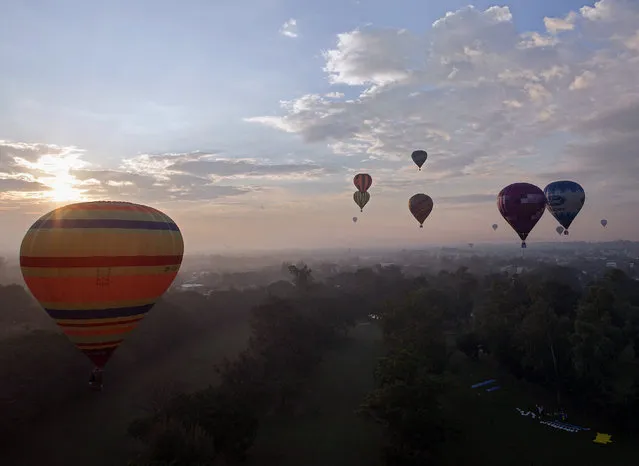
Hot air balloons fly over the sky in Chiang Mai province, northern Thailand, December 6, 2014. The two-day International Balloon festival 2014 featuring balloon pilots from Germany, Spain, Netherlands, Britain, and Czech Republic is held on December 06-07 2014 to celebrate Thai King Bhumibol Adulyadej's 87th birthday and also aimed to promote the tourism industry in Chiang Mai northern city. (Photo by Pongmanat Tasiri/EPA)

Hot air balloons fly over the sky in Chiang Mai province, northern Thailand, December 6, 2014. The two-day International Balloon festival 2014 featuring balloon pilots from Germany, Spain, Netherlands, Britain, and Czech Republic is held on December 06-07 2014 to celebrate Thai King Bhumibol Adulyadej's 87th birthday and also aimed to promote the tourism industry in Chiang Mai northern city. (Photo by Pongmanat Tasiri/EPA)
Details
13 Dec 2014 11:55:00
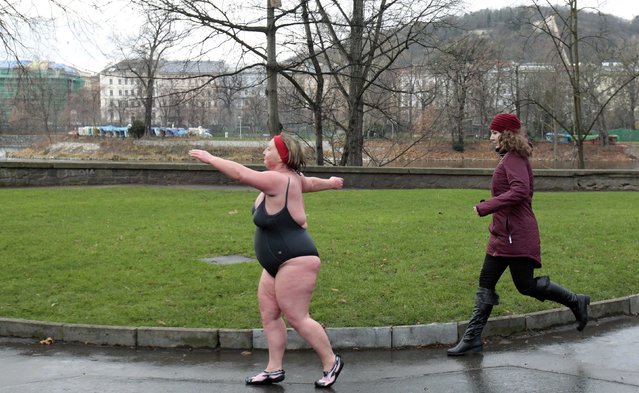
A woman looks at a swimmer getting herself warm after the annual Christmas winter swimming competition in the Vltava river in Prague December 26, 2014. (Photo by David W. Cerny/Reuters)

A woman looks at a swimmer getting herself warm after the annual Christmas winter swimming competition in the Vltava river in Prague December 26, 2014. (Photo by David W. Cerny/Reuters)
Details
27 Dec 2014 12:37:00
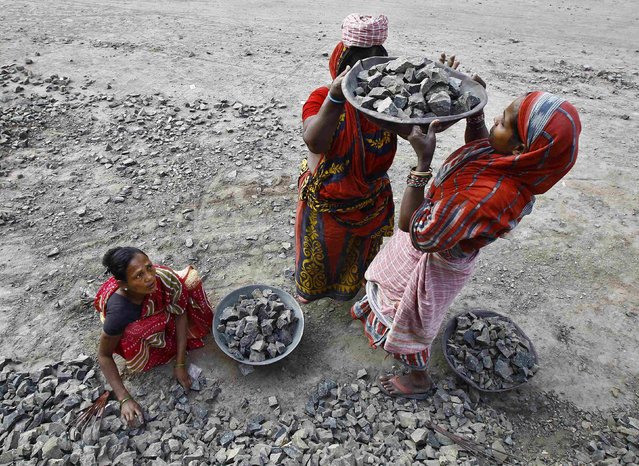
Women labourers work at the construction site of a road in Kolkata January 8, 2015. Across towns and cities in India, it is not uncommon to see women cleaning building sites, carrying bricks and or shoveling gravel - helping construct the infrastructure necessary for the country's economic and social development. (Photo by Rupak De Chowdhuri/Reuters)

Women labourers work at the construction site of a road in Kolkata January 8, 2015. Across towns and cities in India, it is not uncommon to see women cleaning building sites, carrying bricks and or shoveling gravel – helping construct the infrastructure necessary for the country's economic and social development. They help build roads, railway tracks, airports, and offices. They lay pipes for clean water supplies, cables for telecommunications, and dig the drains for sewage systems. But although women make up at least 20 percent of India's 40 million construction workers, they are less recognized than male workers with lower pay and often prone to safety hazards and sexual harassment. They are often unaware of their rights or scared to complain, say activists now trying to campaign for better treatment of women in the construction industry. (Photo by Rupak De Chowdhuri/Reuters)
Details
15 Jan 2015 13:47:00