Loading...
Done
A fireball erupts from a 16-inch gun on the battleship USS Wisconsin during a live fire exercise in the Persian Gulf, October 13, 1990. The ship is in the Gulf as part of Operation Desert Shield. (Photo by John Gaps III/AP Photo)

A fireball erupts from a 16-inch gun on the battleship USS Wisconsin during a live fire exercise in the Persian Gulf, October 13, 1990. The ship is in the Gulf as part of Operation Desert Shield. (Photo by John Gaps III/AP Photo)
Details
15 Oct 2015 08:04:00
Protestors from the Extinction Rebellion march on day six of protests stopping traffic in the city district of Melbourne, Australia on October 12, 2019. (Photo by ydney Low/ZUMA Wire/Rex Features/Shutterstock)

Protestors from the Extinction Rebellion march on day six of protests stopping traffic in the city district of Melbourne, Australia on October 12, 2019. (Photo by ydney Low/ZUMA Wire/Rex Features/Shutterstock)
Details
14 Oct 2019 00:07:00
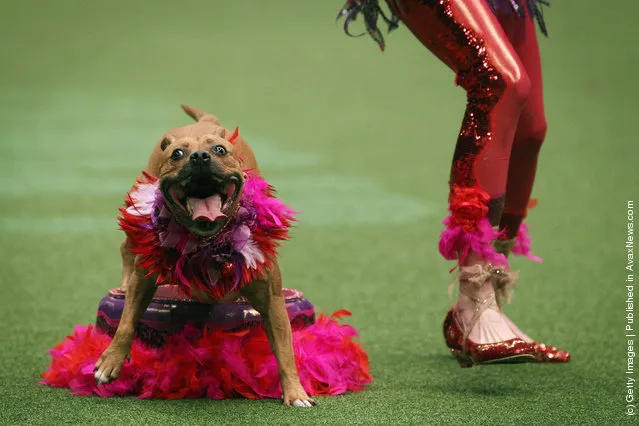
A dog and its owner perform a routine in the main arena on Day three of Crufts at the Birmingham NEC Arena

A dog and its owner perform a routine in the main arena on Day three of Crufts at the Birmingham NEC Arena on March 10, 2012 in Birmingham, England. (Photo by Dan Kitwood/Getty Images)
Details
11 Mar 2012 09:22:00
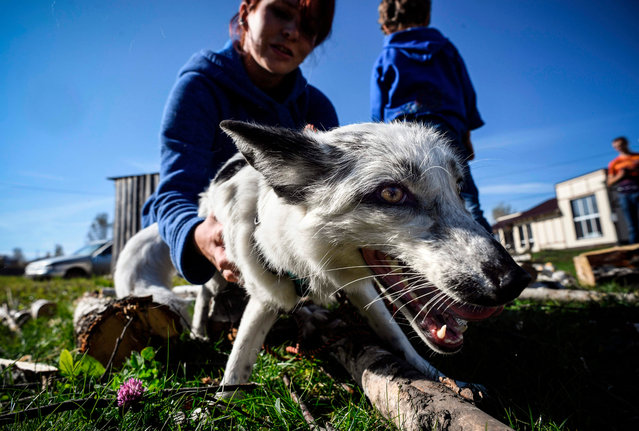
Tatyana Abramova, 33, plays with her home fox Plombir at her countryside house outside Siberian city of Novosibirsk on September 12, 2020. The official start of the Soviet experiment to better understand the domestication of animals by humans began in 1959, and was initiated by geneticists Dmitri Beliaiev and Lioudmila Trout on a farm in Akademgorodok, the scientific center of excellence in Siberia. Their primary objective was to domesticate foxes, to understand how the ancestor of wolves, another canine, evolved into a loyal and loving dog. And understand what this domestication tells us about the genetic evolution of species. (Photo by Alexander Nemenov/AFP Photo)


Tatyana Abramova, 33, plays with her home fox Plombir at her countryside house outside Siberian city of Novosibirsk on September 12, 2020. The official start of the Soviet experiment to better understand the domestication of animals by humans began in 1959, and was initiated by geneticists Dmitri Beliaiev and Lioudmila Trout on a farm in Akademgorodok, the scientific center of excellence in Siberia. Their primary objective was to domesticate foxes, to understand how the ancestor of wolves, another canine, evolved into a loyal and loving dog. And understand what this domestication tells us about the genetic evolution of species. (Photo by Alexander Nemenov/AFP Photo)

Details
25 Oct 2020 00:05:00
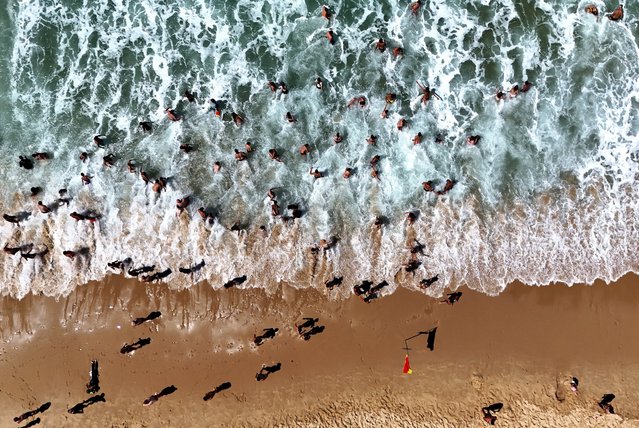
This aerial photograph shows beach-goers gathering on a beach alongside the Atlantic Ocean in Carcans, south-western France on July 22, 2025. (Photo by Christophe Archambault/AFP Photo)

This aerial photograph shows beach-goers gathering on a beach alongside the Atlantic Ocean in Carcans, south-western France on July 22, 2025. (Photo by Christophe Archambault/AFP Photo)
Details
13 Aug 2025 03:40:00
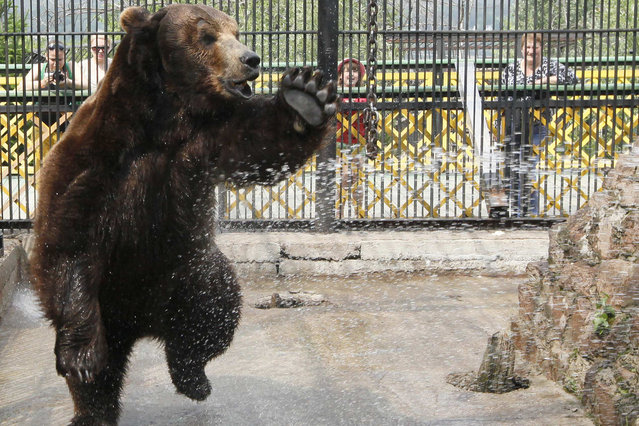
Buyan, a male Siberian brown bear, is given a shower by a zoo employee in his enclosure at the Royev Ruchey zoo in Russia's Siberian city of Krasnoyarsk June 24, 2014. The Siberian city has been experiencing temperatures of around 30 degrees Celsius over the last week. (Photo by Ilya Naymushin/Reuters)

Buyan, a male Siberian brown bear, is given a shower by a zoo employee in his enclosure at the Royev Ruchey zoo in Russia's Siberian city of Krasnoyarsk June 24, 2014. The Siberian city has been experiencing temperatures of around 30 degrees Celsius over the last week. (Photo by Ilya Naymushin/Reuters)
Details
28 Jun 2014 14:01:00
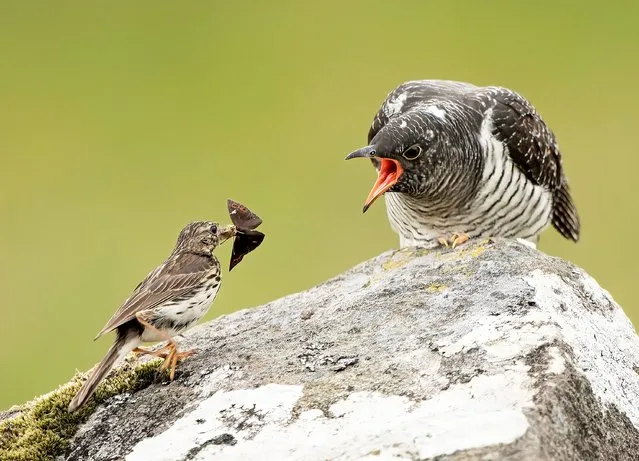
A small meadow pipit (left) is run off her feet as she tries to keep up with the demanding feeding schedule of an imposter - a larger cuckoo (right) on the Isle of Mull, Scotland in August 2022. (Photo by Graeme Cuerden/Solent News & Photo Agency)

A small meadow pipit (left) is run off her feet as she tries to keep up with the demanding feeding schedule of an imposter - a larger cuckoo (right) on the Isle of Mull, Scotland in August 2022. (Photo by Graeme Cuerden/Solent News & Photo Agency)
Details
28 Aug 2022 04:31:00
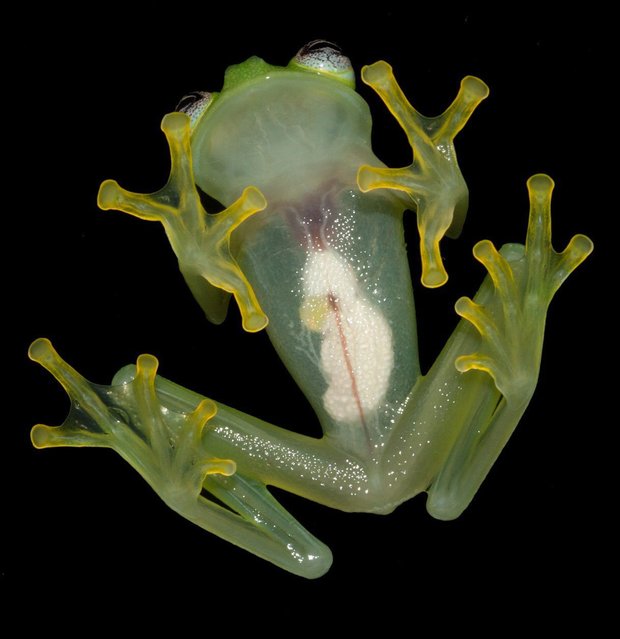
A handout photograph provided by Brian Kubicki of Costa Rican Amphibian Research Center on 26 April 2016 shows a “Crystal frog”, Hyalinobatrachium dianae (H. diane). This frog was discovered by US biologist Brian Kubicki and Costa Ricans Stanley Salazar and Robert Puschendorf in a rainy forest of Costa Rican caribbean after 40 years without notice of any new example of this kind. (Photo by Brian Kubicki/EPA/Costa Rican Amphibian Research Center)

A handout photograph provided by Brian Kubicki of Costa Rican Amphibian Research Center on 26 April 2016 shows a “Crystal frog”, Hyalinobatrachium dianae (H. diane). This frog was discovered by US biologist Brian Kubicki and Costa Ricans Stanley Salazar and Robert Puschendorf in a rainy forest of Costa Rican caribbean after 40 years without notice of any new example of this kind. (Photo by Brian Kubicki/EPA/Costa Rican Amphibian Research Center)
Details
02 May 2015 15:23:00