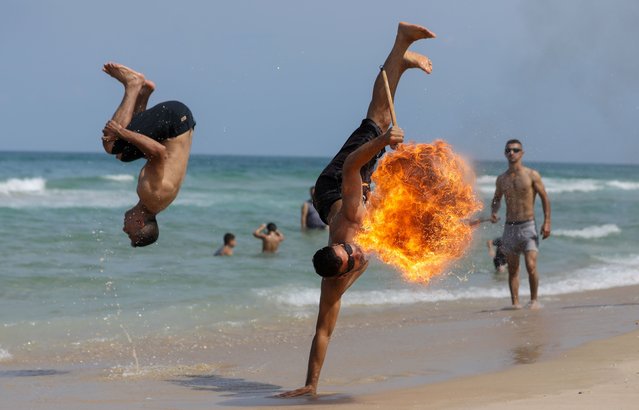
Pakistani Rangers take part in the beating retreat ceremony at the India-Pakistan Wagah border post, about 35 km from Amritsar on March 9, 2022. (Photo by Narinder Nanu/AFP Photo)
A woman in the Sabean Mandaean community takes part in a ritual during the Prosperity Day celebration in the Tigris River in central Baghdad, Iraq, Tuesday, November 1, 2022. (Photo by Hadi Mizban/AP Photo)
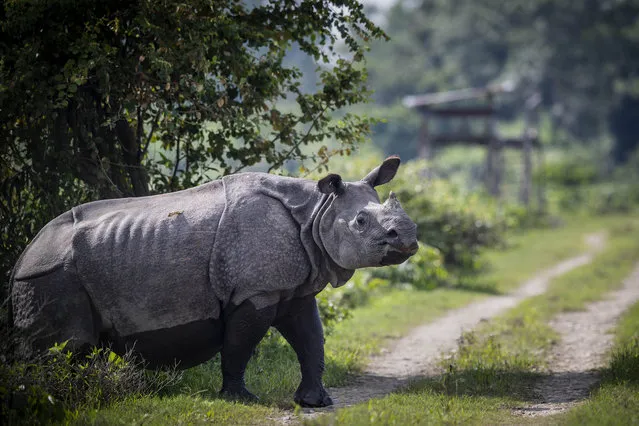
A one-horned rhinoceros crosses a road inside Kaziranga national park on the eve of the World Rhino Day in Gauhati, India, Tuesday, September 21, 2021. Kaziranga is home to nearly 2,500 one-horned rhinos and is the world’s largest habitat for the rare animal. (Photo by Anupam Nath/AP Photo)
English actress Michelle Keegan at “The Jonathan Ross Show” TV show, Series 18, Episode 7 in London, United Kingdom on December 4, 2021. (Photo by Brian J. Ritchie/Hotsauce/Rex Features/Shutterstock)
Alexo Carmona, 2, looks at Coco, a two-year-old pony, in downtown Havana, in this March 6, 2015 file photo. Nearly a quarter of a million people follow the Reuters Instagram account – and it's still growing fast. To mark the mid-point of 2015, Reuters has compiled the twenty most-liked pictures so far. This picture was 20th most popular. (Photo by Alexandre Meneghini/Reuters)
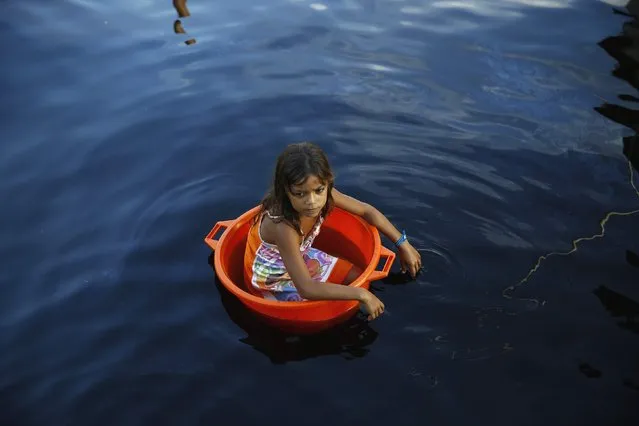
A girl floats in a bucket in the village of Ologa in the western state of Zulia October 23, 2014. This year the Catatumbo Lightning was approved for inclusion in the 2015 edition of Guinness World Records, dethroning the Congolese town of Kifuka as the place with the world's most lightning bolts per square kilometer each year at 250. Scientists think the Catatumbo, named for a river that runs into the lake, is normal lightning that just happens to occur far more than anywhere else, due to local topography and wind patterns. (Photo by Jorge Silva/Reuters)
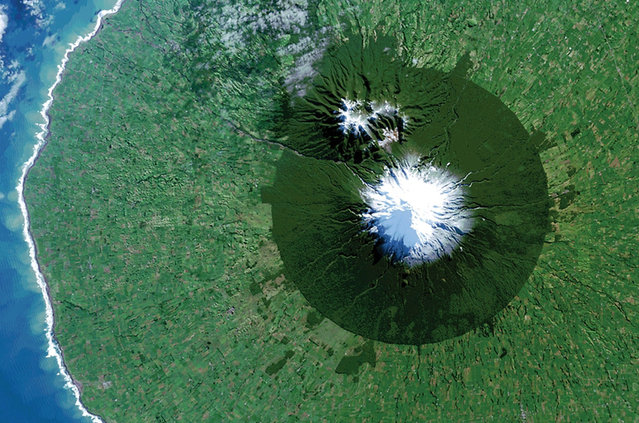
Egmont National Park in New Zealand with Mt. Taranaki at its center is seen in a Landsat 8 satellite image taken July 3, 2014 and released by NASA November 14, 2014. The image is from the book “Sanctuary: Exploring the World's Protected Areas from Space”, published by the Institute for Global Environmental Strategies with support from NASA, which was released this week. (Photo by Reuters/NASA/USGS)