Loading...
Done
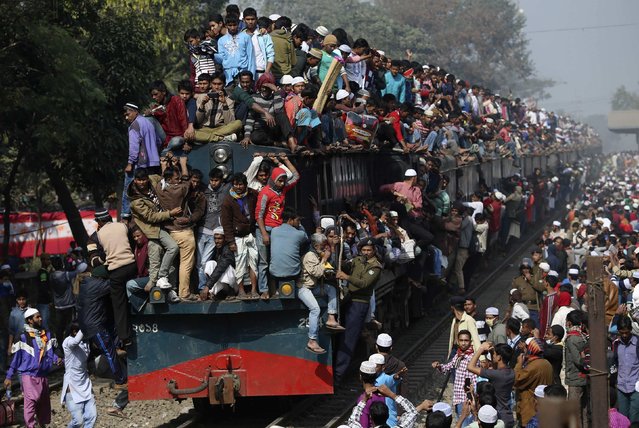
Devotees ride on the roof of a train as they return to the city after attending the final prayers on the first phase of Bishwa Ijtema in Dhaka January 11, 2015. Hundreds of thousands of pilgrims congregated in the Bangladeshi capital Dhaka as the first phase of this year's Bishwa Ijtema, one of the biggest Islamic gatherings in the world after the Haj in Saudi Arabia, came to an end. (Photo by Reuters/Stringer)

Devotees ride on the roof of a train as they return to the city after attending the final prayers on the first phase of Bishwa Ijtema in Dhaka January 11, 2015. Hundreds of thousands of pilgrims congregated in the Bangladeshi capital Dhaka as the first phase of this year's Bishwa Ijtema, one of the biggest Islamic gatherings in the world after the Haj in Saudi Arabia, came to an end. (Photo by Reuters/Stringer)
Details
17 Jan 2015 12:10:00
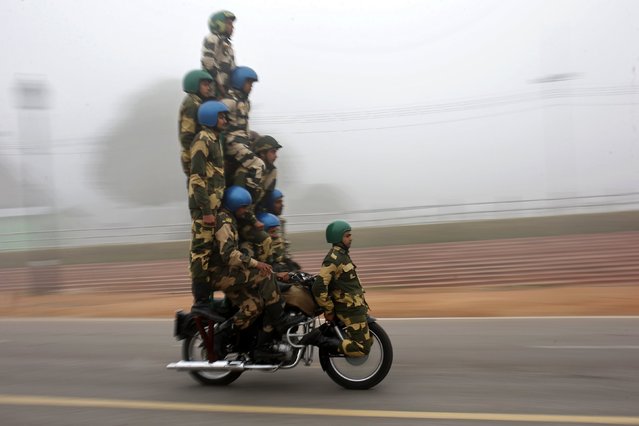
India's Border Security Force (BSF) “Daredevils” motorcycle riders perform during a rehearsal for the Republic Day parade on a foggy winter morning in New Delhi January 8, 2015. (Photo by Ahmad Masood/Reuters)

India's Border Security Force (BSF) “Daredevils” motorcycle riders perform during a rehearsal for the Republic Day parade on a foggy winter morning in New Delhi January 8, 2015. India will celebrate its annual Republic Day on January 26. (Photo by Ahmad Masood/Reuters)
Details
10 Jan 2015 13:33:00
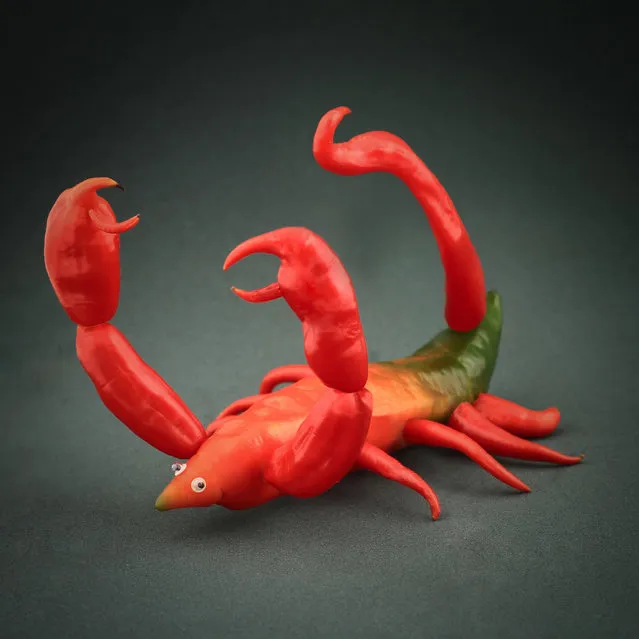
“Red Pepperpion. (Photo by Vanessa Dualib)

“Red Pepperpion. Red Pepperpions are secretive, nocturnal arachilli which can be spotted in kitchens of arid climates all around the world.

Red Pepperpions are equipped with a delicious (and depending on the quantity...deadly!) stinger at the end of its tail. If you happen to get bitten (or if you bite him!) it will produce a burning sensation on your taste nerves.

However, there is no need to worry, since the fact is that his potent stinger is usually only used when hunting or whenever the Pepperpion feels like he might become part of someones meal...

At daylight or when encountering a larger foe, such as a Saucier Chef, they retreat into burrows inside the fridge or hide beneath the oven”. (Photo and comment by Vanessa Dualib)


Details
08 Feb 2013 09:24:00
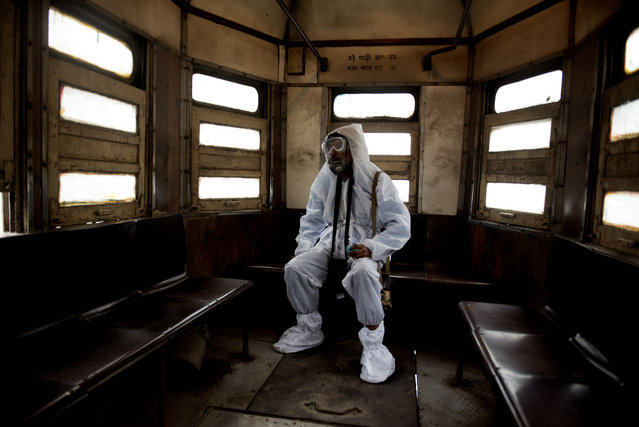
Fighting Infections (single image) | Fighting Pandemic by Sudipto Das. “It’s exhausting. A tram conductor in Kolkata, India, wears protective clothing from head to toe even in the heat of a summer afternoon. This was when restrictions were easing after India’s first Covid-19 lockdown – public transport was running, but staff were advised to suit up like this. We’ve all grown used to saluting the efforts of healthcare workers, but plenty of other people in public-facing jobs have performed gruelling duties too to keep people safe”. (Photo by Sudipto Das/Wellcome Photography Prize 2021)

Fighting Infections (single image) | Fighting Pandemic by Sudipto Das. “It’s exhausting. A tram conductor in Kolkata, India, wears protective clothing from head to toe even in the heat of a summer afternoon. This was when restrictions were easing after India’s first Covid-19 lockdown – public transport was running, but staff were advised to suit up like this. We’ve all grown used to saluting the efforts of healthcare workers, but plenty of other people in public-facing jobs have performed gruelling duties too to keep people safe”. (Photo by Sudipto Das/Wellcome Photography Prize 2021)
Details
29 Jun 2021 09:49:00
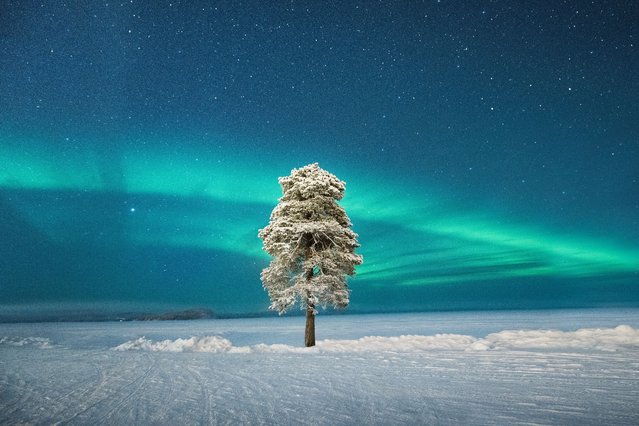
Aurorae category runner-up: Lone Tree under a Scandinavian Aurora by Tom Archer (UK). The photographer decided to explore the area around the hotel on a very crisp -35C evening in Finnish Lapland. When he found this tree, he decided to wait for the misty conditions to change and could not believe his luck when the sky cleared and the aurora came out in the perfect spot. Archer spent about an hour photographing it before his camera started to lock up because of the harsh conditions, but by then he was happy to call it a night. (Photo by Tom Archer/2020 Astronomy Photographer of the Year)

Aurorae category runner-up: Lone Tree under a Scandinavian Aurora by Tom Archer (UK). The photographer decided to explore the area around the hotel on a very crisp -35C evening in Finnish Lapland. When he found this tree, he decided to wait for the misty conditions to change and could not believe his luck when the sky cleared and the aurora came out in the perfect spot. Archer spent about an hour photographing it before his camera started to lock up because of the harsh conditions, but by then he was happy to call it a night. (Photo by Tom Archer/2020 Astronomy Photographer of the Year)
Details
17 Sep 2020 00:03:00
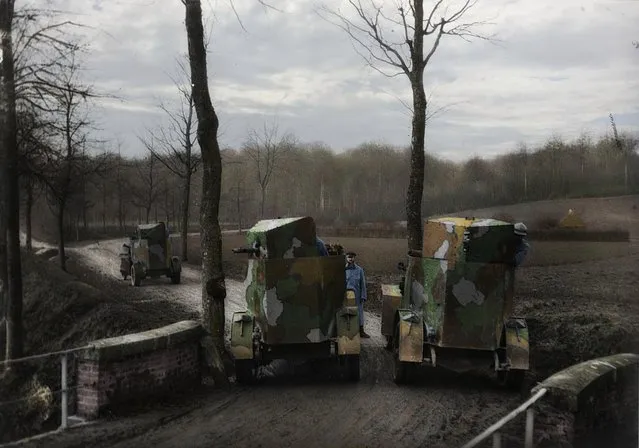
The expertly colourised shots were brought to life by French bank technician, Frédéric Duriez (51). The images were provided by the Valois collection which belongs to the BDIC. “By colourising these photos, I reduce the time that separates us today from this conflict”, said Frédéric. “A black and white photo does not attract the attention of young people, if you colour it, then people will look at it with curiosity. After this, we see the greater the misery and distress of these French fighters”. The total number of casualties in WW1 was more that 38 million. By the end of the war, over eight-million men had been called up to fight in the French army. France suffered 4.2 million casualties during the war with 1.3 million people dead. Here: Car cannon sections in firing position, Auxi-le-Château. (Photo by Frédéric Duriez/BDIC/Mediadrumworld.com)

The expertly colourised shots were brought to life by French bank technician, Frédéric Duriez (51). The images were provided by the Valois collection which belongs to the BDIC. “By colourising these photos, I reduce the time that separates us today from this conflict”, said Frédéric. Here: Car cannon sections in firing position, Auxi-le-Château. (Photo by Frédéric Duriez/BDIC/Mediadrumworld.com)
Details
03 May 2017 08:41:00
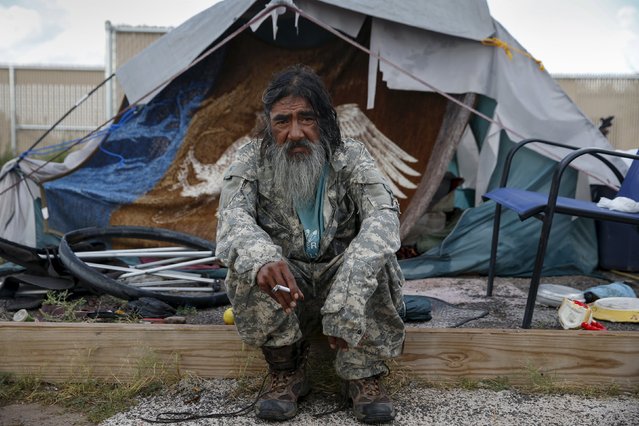
Daniel J. Wabsey, a 58-year-old war veteran, sits outside his tent at Camp Hope in Las Cruces, New Mexico October 6, 2015. “I've been traveling for 35 or 38 years. Getting inside would take a while to get used to. I just want to be able to eat, sleep and be safe. We all get along and understand in Camp Hope. We've all been there. With common sense you can survive out here”, Wabsey said. Camp Hope describe themselves as an “alternative transitional living project for the homeless”. Around 50 people live at the camp. (Photo by Shannon Stapleton/Reuters)

Daniel J. Wabsey, a 58-year-old war veteran, sits outside his tent at Camp Hope in Las Cruces, New Mexico October 6, 2015. “I've been traveling for 35 or 38 years. Getting inside would take a while to get used to. I just want to be able to eat, sleep and be safe. We all get along and understand in Camp Hope. We've all been there. With common sense you can survive out here”, Wabsey said. Camp Hope describe themselves as an “alternative transitional living project for the homeless”. Around 50 people live at the camp. (Photo by Shannon Stapleton/Reuters)
Details
19 Dec 2015 08:05:00
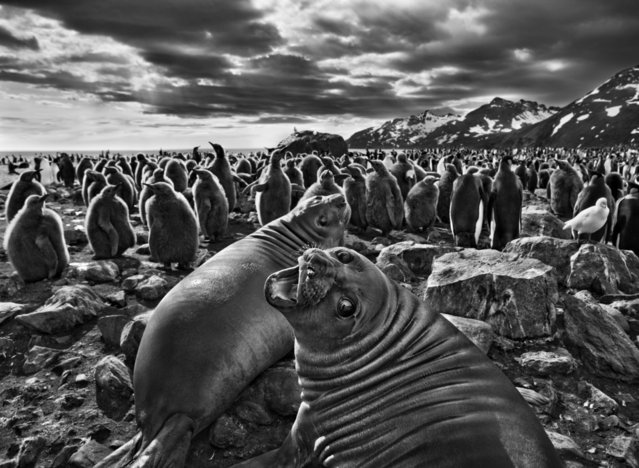
On South Georgia, a barren island in the far South Atlantic, a pair of southern elephant seal calves beckon before a colony of king penguins. “The male seals can grow to almost five tons,” says Salgado, “but these are just babies. This one looked at me with beautiful eyes”. (Photo by Sebastião Salgado/Amazonas/Contact Press Images)

Sebastião Salgado is a Brazilian documentary photographer living in Paris. He has produced several books, and his work has been exhibited extensively around the world. His latest work, «Genesis», premieres at The Natural History Museum in London on April 11, on view through September 8, 2013. Photo: On South Georgia, a barren island in the far South Atlantic, a pair of southern elephant seal calves beckon before a colony of king penguins. “The male seals can grow to almost five tons,” says Salgado, “but these are just babies. This one looked at me with beautiful eyes”. (Photo by Sebastião Salgado/Amazonas/Contact Press Images)
Details
30 Apr 2013 12:17:00