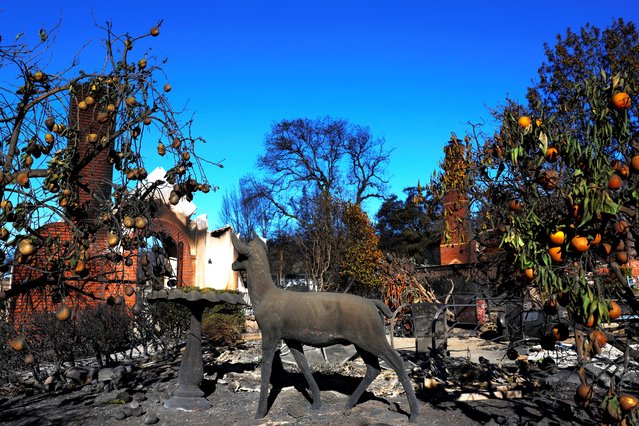
A charred deer figure stands in the ruins of a devastated home, as the Eaton Fire continues, in Altadena, California, on January 14, 2025. (Photo by Shannon Stapleton/Reuters)
Kate O'Connor, of Ireland, makes an attempt in the pentathlon long jump at the World Athletics Indoor Championships in Nanjing, China, Friday, March 21, 2025. (Photo by Vincent Thian/AP Photo)
Emma Navarro of the U.S. celebrates with supporters after beating Veronika Kudermetova of Russia in their second round women's singles match at the Wimbledon Tennis Championships in London, Thursday, July 3, 2025. (Photo by Joanna Chan/AP Photo)
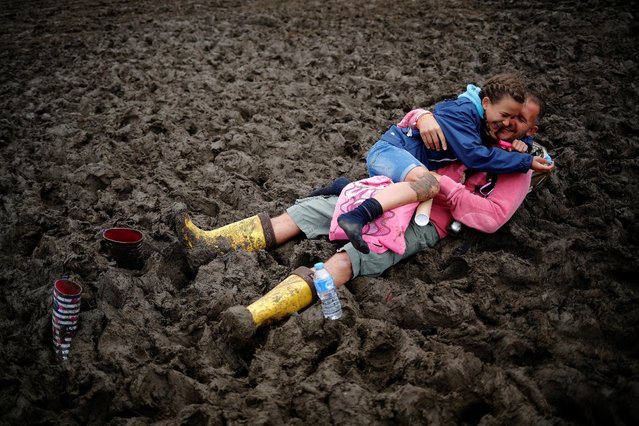
Revellers react after falling in the mud at Worthy Farm in Somerset during the Glastonbury Festival, Britain, June 26, 2016. (Photo by Stoyan Nenov/Reuters)
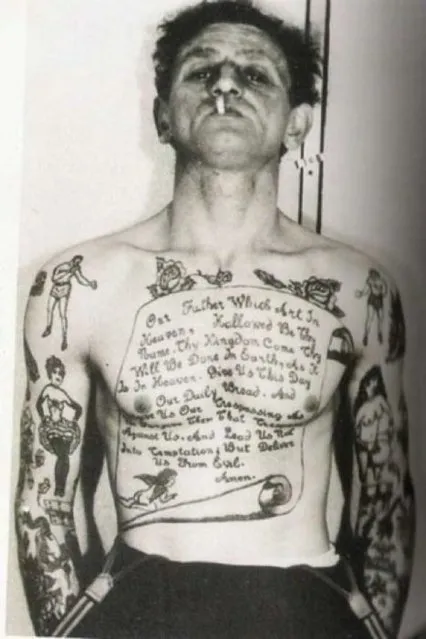
Tattoos are commonly used among criminals to show gang membership and record the wearer's personal history—such as his or her skills, specialties, accomplishments and convictions. They are also used as a means of personal expression. Certain designs have developed recognized coded meanings. The code systems can be quite complex and because of the nature of what they encode, the tattoo designs are not widely recognized.
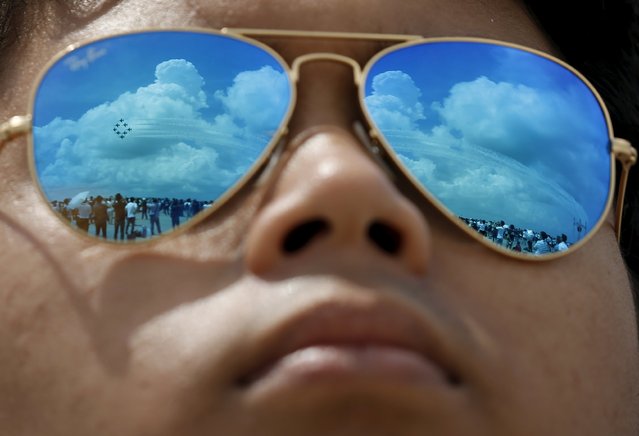
Pilot Akmal Bin Abdul Kahar watches South Korea's Black Eagles aerobatics team perform a manoeuvre during an aerial display at the Singapore Airshow at Changi Exhibition Center February 18, 2016. (Photo by Edgar Su/Reuters)
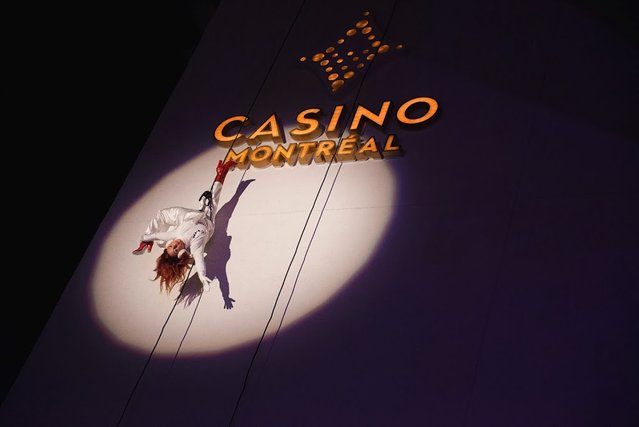
For a long time the laws of Canada have explicitly banned gambling in any form. This may be the reason why the country does not have so many gambling establishments as the USA - but their quality surely makes up for the quantity. The first Canadian casino was opened in Dawson City, Yukon, in 1972 - it was the first one after gambling has been banned in the country in 1892. The Diamond Tooth Gertie's Gambling Casino did not operate for long, though. The first permanent commercial casino was opened in 1989, and it was the first of many - there are currently 75 casinos operating on Canadian soil.