Loading...
Done
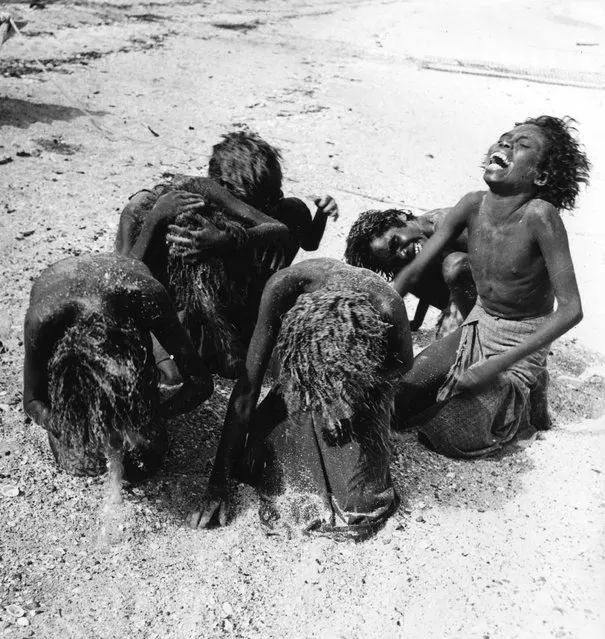
1st January 1950:  Aboriginal women washing their hair with sand at Arnhem land in the Northern Territory of Australia.  (Photo by Three Lions/Getty Images)

“Australian Aborigines are those people regarded as indigenous to the Australian continent. In the High Court of Australia, Australian Aborigines have been specifically identified as a group of people who share, in common, biological ancestry back to the original occupants of the continent”. – Wikipedia

Photo: Aboriginal women washing their hair with sand at Arnhem land in the Northern Territory of Australia. 1st January 1950. (Photo by Three Lions)
Details
02 Feb 2014 07:29:00
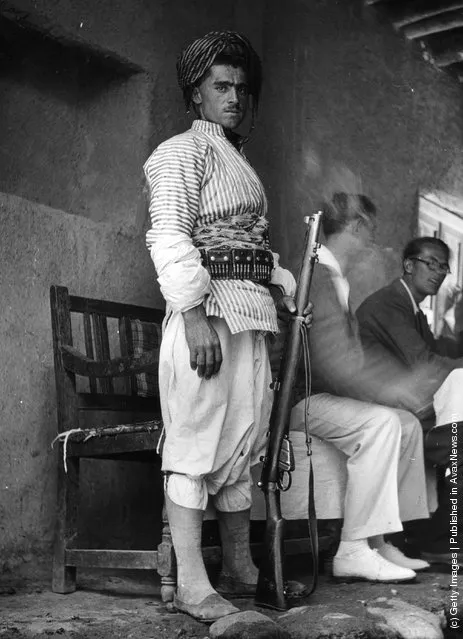
1941: An Iranian soldier guards two German tourists near the Iranian-Turkish border during World War II. Since the British occupation of Iran, all Axis nationals are being expelled from the country

An Iranian soldier guards two German tourists near the Iranian-Turkish border during World War II. Since the British occupation of Iran, all Axis nationals are being expelled from the country. (Photo by Three Lions/Getty Images). Circa 1941
Details
01 Dec 2011 12:18:00
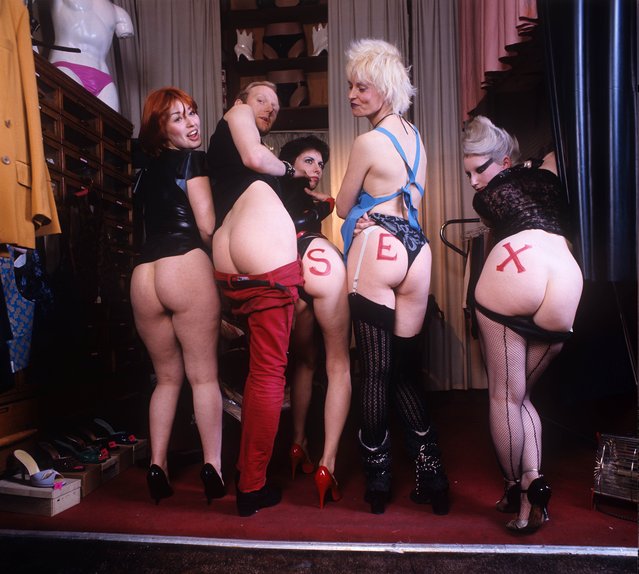
(L–R) Unknown, Alan Jones, Chrissie Hynde, Vivienne Westwood and punk fashion icon Jordan at Kings Road fashion shop «Sеx» run by Westwood and Malcolm McLaren in London, United Kingdom, 1976. (Photo by David Dagley/Rex Features/Shutterstock)

(L–R) Unknown, Alan Jones, Chrissie Hynde, Vivienne Westwood and punk fashion icon Jordan at Kings Road fashion shop «Sеx» run by Westwood and Malcolm McLaren in London, United Kingdom, 1976. (Photo by David Dagley/Rex Features/Shutterstock)
Details
04 Apr 2021 08:37:00
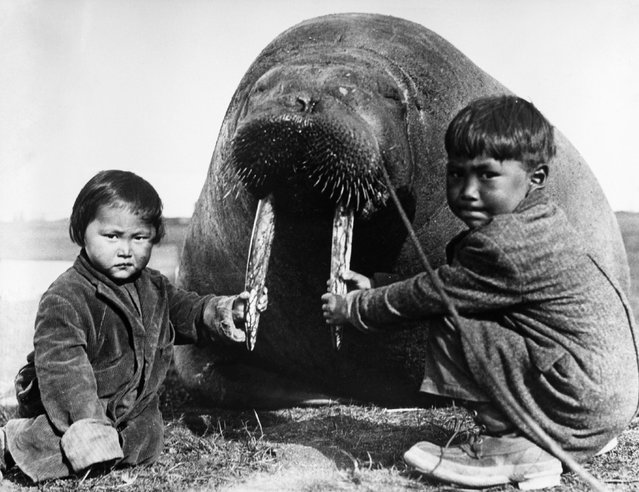
Two Inuit children at Point Barrow, Alaska, holding the tusks of a large walrus, probably killed for food, circa 1930. (Photo by General Photographic Agency/Getty Images)

Two Inuit children at Point Barrow, Alaska, holding the tusks of a large walrus, probably killed for food, circa 1930. (Photo by General Photographic Agency/Getty Images)
Details
04 Feb 2017 01:02:00
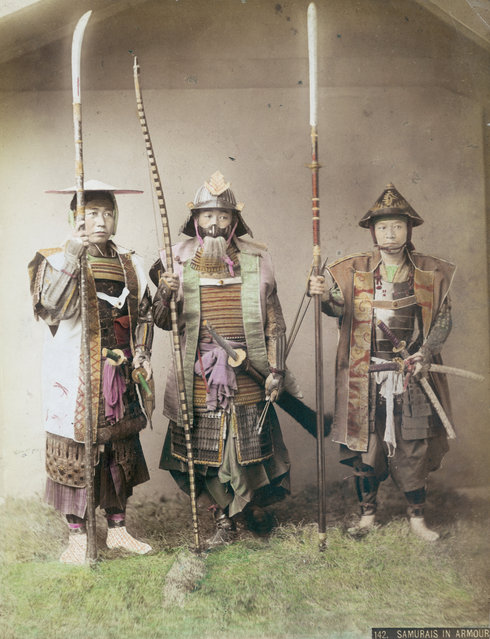
Three samurai warriors in armour, circa 1880. (Photo by Kusakabe Kimbei)

Three samurai warriors in armour, circa 1880. (Photo by Kusakabe Kimbei). P.S. All pictures are presented in high resolution.
Details
29 Aug 2012 10:55:00
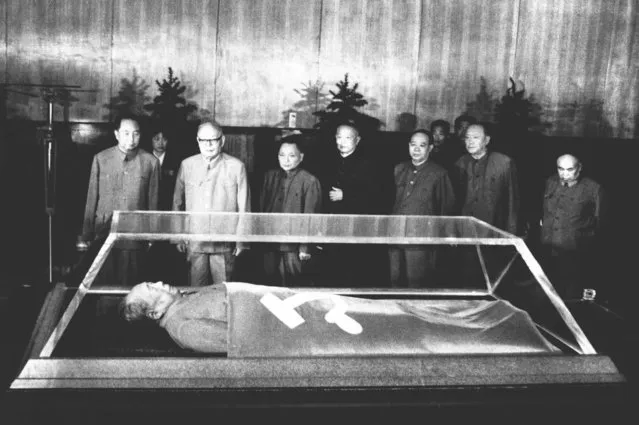
In this September 10, 1977, file photo, from left, Hua Guofeng, Chinese Communist Party (CCP) chairman and Mao Zedong's immediate successor; Ye Jianying, CCP vice chairman and future ceremonial head of state; Deng Xiaoping, no formal titles at the time but soon to emerge as paramount leader during the reform era; Li Xiannian, CCP vice chairman and future president; Wang Dongxing, head of the leadership bodyguard unit who helped topple the Gang of Four, view the body of later Chinese leader Mao Zedong in Beijing. (Photo via AP Photo)

In this September 10, 1977, file photo, from left, Hua Guofeng, Chinese Communist Party (CCP) chairman and Mao Zedong's immediate successor; Ye Jianying, CCP vice chairman and future ceremonial head of state; Deng Xiaoping, no formal titles at the time but soon to emerge as paramount leader during the reform era; Li Xiannian, CCP vice chairman and future president; Wang Dongxing, head of the leadership bodyguard unit who helped topple the Gang of Four, view the body of later Chinese leader Mao Zedong in Beijing. (Photo via AP Photo)
Details
13 Jun 2016 10:34:00
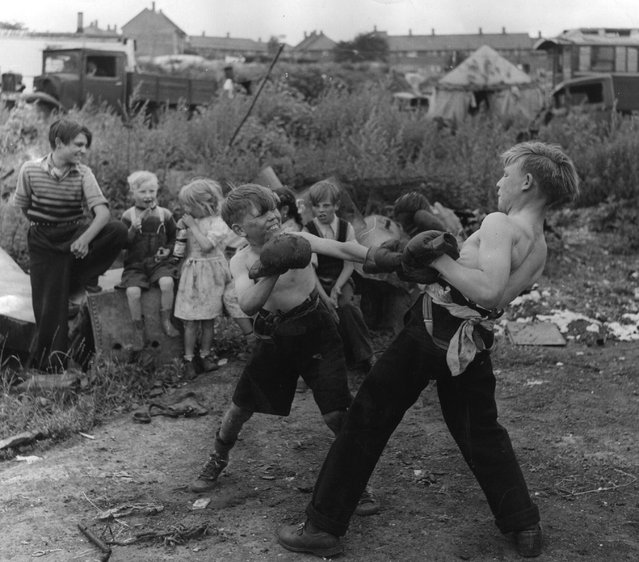
The unromantic gypsies. Children boxing in a gypsy camp in Kent, England on July 1, 1951. Like all boys these gypsy lads like to try their hand at boxing. Encouraged by their friends they fight it out on Corke's Meadow. Few Romanies now live a life of wandering romance. Most are like the three hundred squatters of Corke's Meadow, Kent, which is part of a “gypsy problem” that involves about 100,000 today. Of those about 25,000 can be rightly called gypsies, the rest are Mumpers and Posh-rats and Hobos. Corke's Meadow has both kinds. “Picture Post” cameraman Bert Hardy photographs the Corke's Meadow gypsies in their encampment. (Photo by Hulton-Deutsch Collection/Corbis via Getty Images)

The unromantic gypsies. Children boxing in a gypsy camp in Kent, England on July 1, 1951. Like all boys these gypsy lads like to try their hand at boxing. Encouraged by their friends they fight it out on Corke's Meadow. Few Romanies now live a life of wandering romance. Most are like the three hundred squatters of Corke's Meadow, Kent, which is part of a “gypsy problem” that involves about 100,000 today. Of those about 25,000 can be rightly called gypsies, the rest are Mumpers and Posh-rats and Hobos. Corke's Meadow has both kinds. “Picture Post” cameraman Bert Hardy photographs the Corke's Meadow gypsies in their encampment. (Photo by Hulton-Deutsch Collection/Corbis via Getty Images)
Details
12 Mar 2017 00:01:00
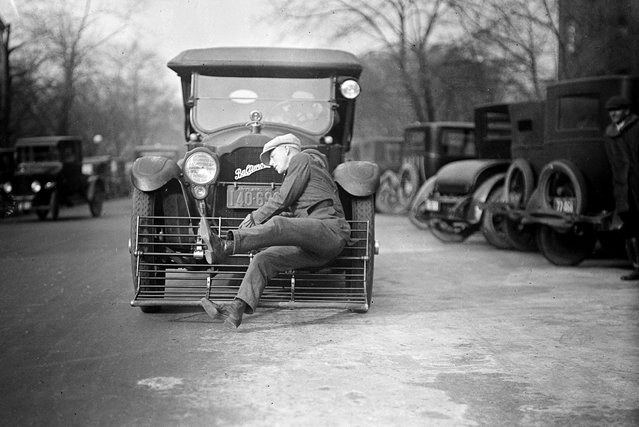
Picks him up at 25 miles an hour! If the modern auto or truck hits you don't worry. Equipped with this device you are simply given a free ride. This man even came from behind another car, was struck but not even scratched. The demonstration was given recently in Washington, D.C. (1924 December 17). (Photo by Library of Congress)

Picks him up at 25 miles an hour! If the modern auto or truck hits you don't worry. Equipped with this device you are simply given a free ride. This man even came from behind another car, was struck but not even scratched. The demonstration was given recently in Washington, D.C. (1924 December 17). (Photo by Library of Congress)
Details
14 Dec 2024 03:56:00