Loading...
Done
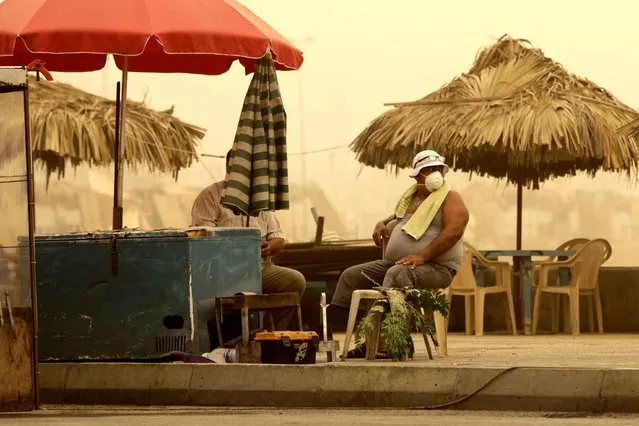
A Lebanese man wears a mask to protect himself from the dust as a sandstorm blows over the northern Lebanese city of Tripoli on September 8, 2015. (Photo by Ibrahim Chalhoub/AFP Photo)

A Lebanese man wears a mask to protect himself from the dust as a sandstorm blows over the northern Lebanese city of Tripoli on September 8, 2015. An unseasonal sandstorm has hit the Middle East, reducing visibility and sending dozens to hospitals with breathing difficulties. (Photo by Ibrahim Chalhoub/AFP Photo)
Details
09 Sep 2015 12:12:00
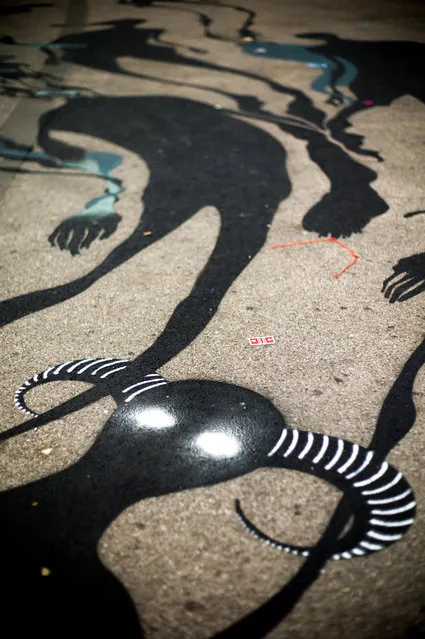
1000 Shadows Project By Herbert Bbaglione

The project “1000 Shadows” by the street artist Herbert Baglione, who populates abandoned places around the world with strange and misty shadows and creatures… His latest creations are set in the empty rooms of an old abandoned psychiatric hospital in the city of Parma in Italy, which further increases the fascinating and frightening ambiance of his creations.
Details
20 Oct 2013 19:03:00
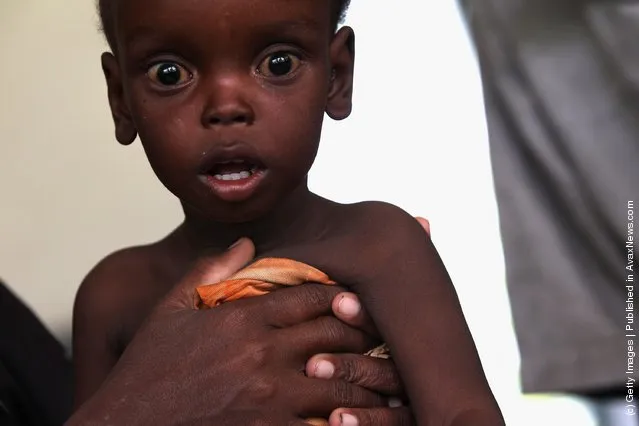
Somali Famine Refugees Seek Aid In Mogadishu

Weakened by sickness and malnutrition, Arbty Mohammad, 2, lies in the Banadir Hospital on August 12, 2011 in Mogadishu, Somalia. Some 100,000 Somalis have flooded into Mogadishu from drought and famine stricken areas of the country. The UN warned Friday that a cholera epidemic could spread through Mogadishu, as Somalis fill unsanitary makeshift camps throughout the capital. (Photo by John Moore/Getty Images)
Details
14 Aug 2011 14:13:00
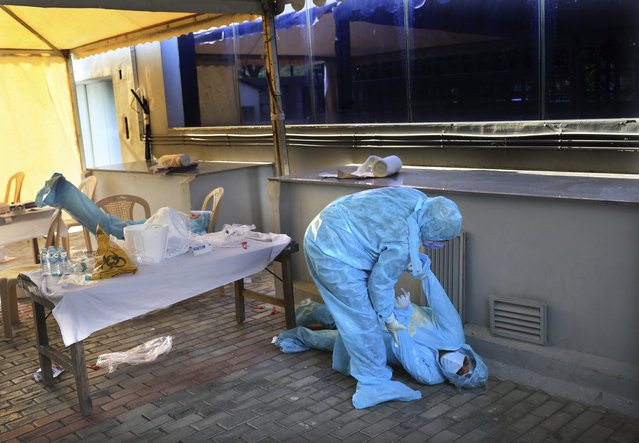
In this April 27, 2020 photo, a health worker helps another as she fainted because of exhaustion and long working hours during a swab test drive for COVID 19, in New Delhi, India. Two and a half months of nationwide lockdown kept numbers of infections relatively low in India. But with restrictions easing in recent weeks, cases have shot up, raising questions about whether authorities have done enough to avert catastrophe. Half of Delhi’s 8,200 hospital beds dedicated to COVID-19 patients are already full and officials are projecting more than half a million cases in the city alone by July 31. (Photo by Manish Swarup/AP Photo)

In this April 27, 2020 photo, a health worker helps another as she fainted because of exhaustion and long working hours during a swab test drive for COVID 19, in New Delhi, India. Two and a half months of nationwide lockdown kept numbers of infections relatively low in India. But with restrictions easing in recent weeks, cases have shot up, raising questions about whether authorities have done enough to avert catastrophe. Half of Delhi’s 8,200 hospital beds dedicated to COVID-19 patients are already full and officials are projecting more than half a million cases in the city alone by July 31. (Photo by Manish Swarup/AP Photo)
Details
08 Jan 2021 00:01:00
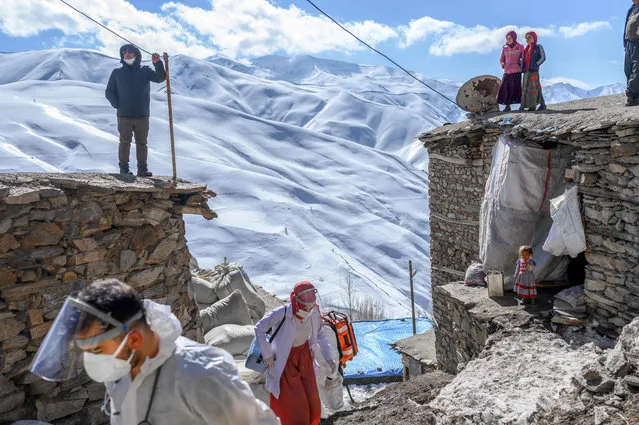
In this photograph taken on February 15, 2021, doctor Sergen Saracoglu (L) and nurse Yilzdiz Ayten (C) from the Bahcesaray public hospital vaccination team, arrive at the village of Guneyyamac in eastern Turkey, as part of an expedition to vaccinate residents of 65 years old or above with Sinovac's CoronaVac Covid-19 vaccine. Turkey's population of more than 83 million is spread out across Europe and Asia and covers some seemingly impregnable terrain. The vaccination effort with China's CoronaVac jab kicked off with a bang in mid-January when Turkey inoculated more than half a million people in the first few days. But it slowed down considerably when doctors left the big cities and tried to reach remote places such as Imamli and Ozbeyli – two ethnically Kurdish hamlets of a few hundred herders and farmers each. (Photo by Bulent Kilic/AFP Photo)

In this photograph taken on February 15, 2021, doctor Sergen Saracoglu (L) and nurse Yilzdiz Ayten (C) from the Bahcesaray public hospital vaccination team, arrive at the village of Guneyyamac in eastern Turkey, as part of an expedition to vaccinate residents of 65 years old or above with Sinovac's CoronaVac Covid-19 vaccine. (Photo by Bulent Kilic/AFP Photo)
Details
18 Mar 2021 09:32:00
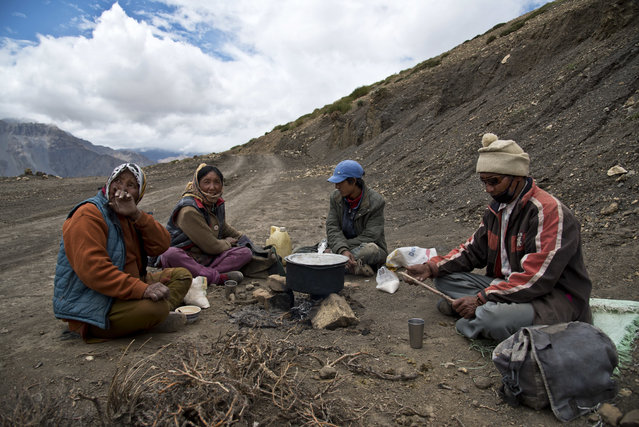
In this August 17, 2016, photo, from left to right, Chhering Chodom, 60, Tashi Yangzom, 50, Lobsang Chhering, 27, and Dorje Tandup, 58, drink milk tea on the side of the road. For centuries, the sleepy valley nestled in the Indian Himalayas remained a hidden Buddhist enclave forbidden to outsiders. Enduring the harsh year-round conditions of the high mountain desert, the people of Spiti Valley lived by a simple communal code – share the Earth's bounty, be hospitable to neighbors, and eschew greed and temptation at all turns. That's all starting to change, for better or worse. Since India began allowing its own citizens as well as outsiders to visit the valley in the early 1990s, tourism and trade have boomed. And the marks of modernization, such as solar panels, asphalt roads and concrete buildings, have begun to appear around some of the villages that dot the remote landscape at altitudes above 4,000 meters (13,000 feet). (Photo by Thomas Cytrynowicz/AP Photo)

In this August 17, 2016, photo, from left to right, Chhering Chodom, 60, Tashi Yangzom, 50, Lobsang Chhering, 27, and Dorje Tandup, 58, drink milk tea on the side of the road. For centuries, the sleepy valley nestled in the Indian Himalayas remained a hidden Buddhist enclave forbidden to outsiders. Enduring the harsh year-round conditions of the high mountain desert, the people of Spiti Valley lived by a simple communal code – share the Earth's bounty, be hospitable to neighbors, and eschew greed and temptation at all turns. That's all starting to change, for better or worse. (Photo by Thomas Cytrynowicz/AP Photo)
Details
15 Sep 2016 09:22:00
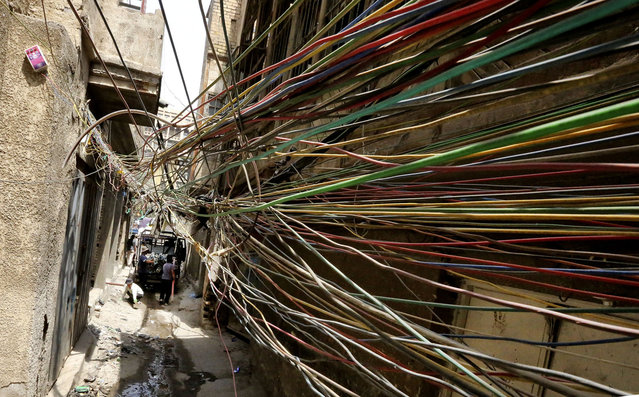
A picture taken on April 27, 2021, shows the electrical wires running between homes in the capital Baghdad's Murabaa neighbourhood. Between January and March alone, the interior ministry recorded 7,000 fires, the deadliest of which erupted on Sunday in a Covid-19 hospital in Baghdad. Eighty-two people died and 100 others were injured in the inferno, which sparked shock and outrage in the country. Baghdad, a sprawling metropolis of 10 million people, has the tragic distinction of being the Iraqi city hit by the most fires every year. (Photo by Sabah Arar/AFP Photo)

A picture taken on April 27, 2021, shows the electrical wires running between homes in the capital Baghdad's Murabaa neighbourhood. Between January and March alone, the interior ministry recorded 7,000 fires, the deadliest of which erupted on Sunday in a Covid-19 hospital in Baghdad. Eighty-two people died and 100 others were injured in the inferno, which sparked shock and outrage in the country. Baghdad, a sprawling metropolis of 10 million people, has the tragic distinction of being the Iraqi city hit by the most fires every year. (Photo by Sabah Arar/AFP Photo)
Details
06 May 2021 08:26:00
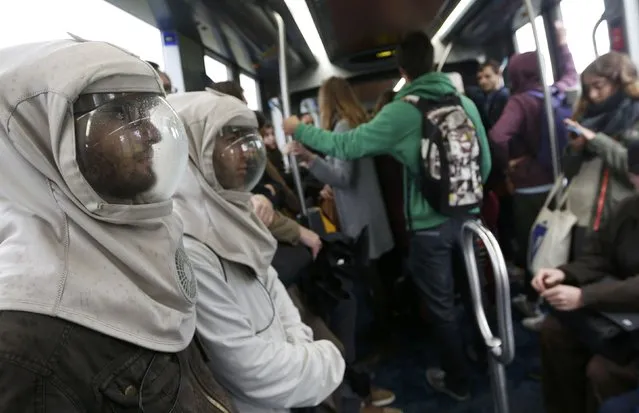
French twins Thomas and Vincent (L) Seris take the tram in Bordeaux, November 12, 2014. Born with Xeroderma Pigmentosum (XP), the twins cannot be exposed to the sun and its ultraviolet (UV) light, which could provoke precocious cancers due to an autosomal recessive genetic disorder of DNA repair. (Photo by Regis Duvignau/Reuters)

French twins Thomas and Vincent (L) Seris take the tram in Bordeaux, November 12, 2014. Born with Xeroderma Pigmentosum (XP), the twins cannot be exposed to the sun and its ultraviolet (UV) light, which could provoke precocious cancers due to an autosomal recessive genetic disorder of DNA repair. Colloquially referred to as Children of the Night (Les Enfants de la Lune) the Seris twins are among 70 to 80 people in France who suffer from the genetic defect. The French association “Les Enfants de la Lune” reports that there are between five and ten thousand such cases in the world. Thomas and Vincent have been testing a new protective mask for the last year which is transparent and ventilated and developed by several hospitals in France. (Photo by Regis Duvignau/Reuters)
Details
01 Feb 2015 10:27:00