Loading...
Done
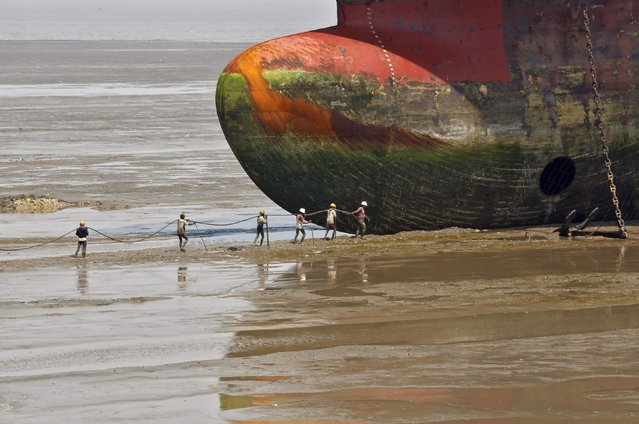
Workers carry a rope line to fasten a decommissioned ship at the Alang shipyard in the western Indian state of Gujarat, March 27, 2015. The European Union plans to impose strict new rules on how companies scrap old tankers and cruise liners, run aground and dismantled on beaches in South Asia. (Photo by Amit Dave/Reuters)

Workers carry a rope line to fasten a decommissioned ship at the Alang shipyard in the western Indian state of Gujarat, March 27, 2015. The European Union plans to impose strict new rules on how companies scrap old tankers and cruise liners, run aground and dismantled on beaches in South Asia. However the practice in India, Bangladesh and Pakistan, hazardous for humans and the environment, will still be hard to stop. European, Turkish and Chinese recyclers are set to benefit from the revamped standards. Depending on raw material prices, ship owners can make up to $500 per tonne of steel from an Indian yard, compared with $300 in China and just $150 in Europe. (Photo by Amit Dave/Reuters)
Details
01 Apr 2015 11:40:00
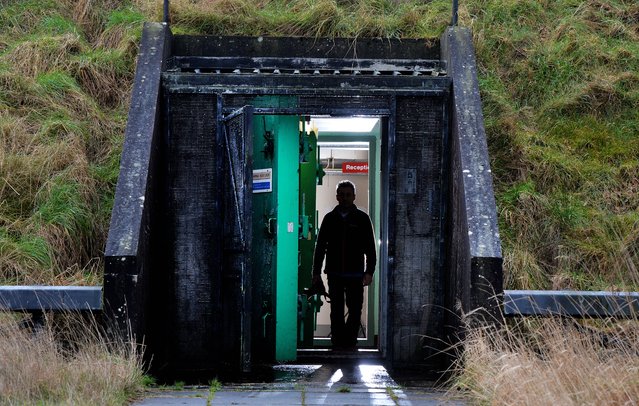
The main entrance and blast door at the nuclear bunker site on the Woodside Road industrial estate on February 4, 2016 in Ballymena, Northern Ireland. The underground shelter has been put up for sale by the offices of the Northern Ireland First and Deputy First Minister. The bunker which was completed in 1990 was built to hold up to 235 people in the event of a nuclear bomb and is complete with kitchen facilities, dormitories and decontamination chambers. (Photo by Charles McQuillan/Getty Images)

The main entrance and blast door at the nuclear bunker site on the Woodside Road industrial estate on February 4, 2016 in Ballymena, Northern Ireland. The underground shelter has been put up for sale by the offices of the Northern Ireland First and Deputy First Minister. The bunker which was completed in 1990 was built to hold up to 235 people in the event of a nuclear bomb and is complete with kitchen facilities, dormitories and decontamination chambers. The site, one of approximately 1,600 nuclear monitoring posts built in the UK since 1955, is on the housing market with an asking price of £575,000. (Photo by Charles McQuillan/Getty Images)
Details
05 Feb 2016 10:55:00


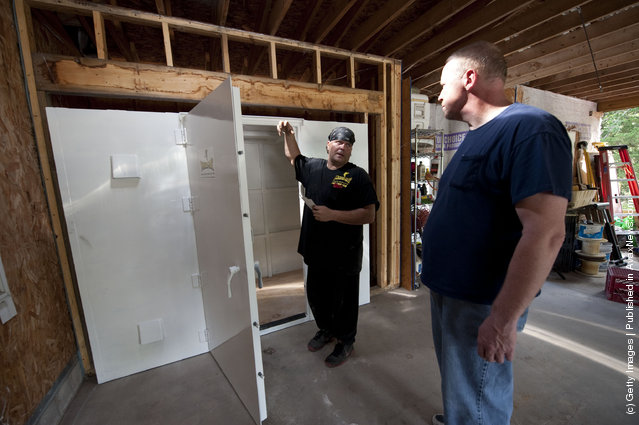
Jeremy Davis (L) demonstrates the operation of the safe room shelter door lock to homeowner Rob Hamlin on June 18, 2011 in Neosho, Missouri. Once thought of as a luxury item there has been a surge of interest from homeowners in purchasing shelters to ride out damaging storms ever since a F5 tornado tore through the town of Joplin, Missouri. Ranging in price from $3,000 to $5,000 homeowners can supplement the cost with a mortgage insurance program offered by the U.S. Department of Housing and Urban Development for installing a safe room built to FEMA specifications. Lawmakers in Alabama have even considered requiring construction of storm shelters in mobile home parks after forty people died in April. (Photo by Julie Denesha/Getty Images)
Details
19 Jun 2011 09:26:00
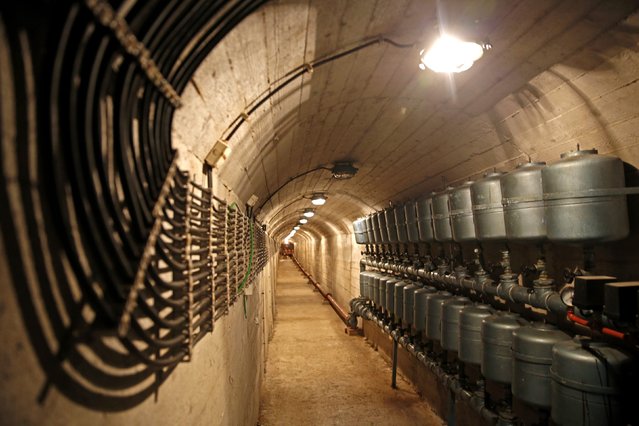
A tunnel with electric switches are seen in Josip Broz Tito's underground secret bunker (ARK) in Konjic, October 16, 2014. (Photo by Dado Ruvic/Reuters)

A tunnel with electric switches are seen in Josip Broz Tito's underground secret bunker (ARK) in Konjic, October 16, 2014. In the early 1950s, Josip Broz Tito, the late leader of the former Yugoslavia, ordered the building of the secret bunker, located 900 feet (270 m) underground and near the Bosnian town of Konjic, to safeguard the country's ruling class in case of a nuclear attack. Construction at the complex, which had a cost equivalent price tag of $4.6 billion, continued until 1979, the year before Tito died. (Photo by Dado Ruvic/Reuters)
Details
28 Nov 2014 12:14:00
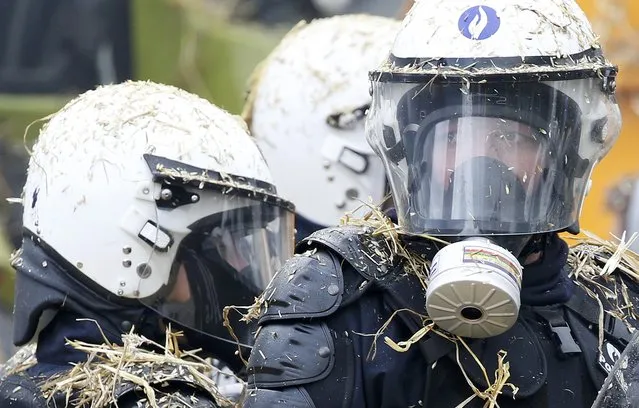
Belgian riot police officers are covered by hay and eggs thrown by demonstrators as farmers and dairy farmers from all over Europe take part in a demonstration outside an European Union farm ministers emergency meeting at the EU Council headquarters in Brussels, Belgium, September 7, 2015. (Photo by Jacky Naegelen/Reuters)

Belgian riot police officers are covered by hay and eggs thrown by demonstrators as farmers and dairy farmers from all over Europe take part in a demonstration outside an European Union farm ministers emergency meeting at the EU Council headquarters in Brussels, Belgium, September 7, 2015. Thousands of farmers gathered in the European capital calling for more help with low prices and high costs. (Photo by Jacky Naegelen/Reuters)
Details
08 Sep 2015 11:17:00
Abdulahi Yaroow, 13, smokes a cigarette while chewing khat at the same time in Mogadishu August 10, 2014. (Photo by Thomas Mukoya/Reuters)

Abdulahi Yaroow, 13, smokes a cigarette while chewing khat at the same time in Mogadishu August 10, 2014. Grown on plantations in the highlands of Kenya and Ethiopia, tonnes of khat, or qat, dubbed “the flower of paradise” by its users, are flown daily into Mogadishu airport, to be distributed from there in convoys of lorries to markets across Somalia. Britain, whose large ethnic Somali community sustained a lucrative demand for the leaves, banned khat from July as an illegal drug. This prohibition jolted the khat market, creating a supply glut in Somalia and pushing down prices, to the delight of the many connoisseurs of its amphetamine-like high. (Photo by Thomas Mukoya/Reuters)
Details
28 Aug 2014 10:35:00
A replica model of a Lamborghini Aventador LP 700-4 in Dubai, UAE. This is the world's most expensive model car, made from carbon fibre and covered in a thin layer of pure gold. (Photo by Robert Gulpen/Barcroft Media)

A replica model of a Lamborghini Aventador LP 700-4 in Dubai, UAE. This is the world's most expensive model car, made from carbon fibre and covered in a thin layer of pure gold. The 1:8 scale replica Lamborghini Aventador LP 700-4, designed by German engineer Robert Gülpen, is available to buy for £200,000. But amazingly this model – currently on display at the Lamborghini showroom in Dubai – is just a prototype for a solid gold model, which will go up for auction in 2014 with a price tag of £4.6 million. (Photo by Robert Gulpen/Barcroft Media)
Details
19 May 2014 11:23:00
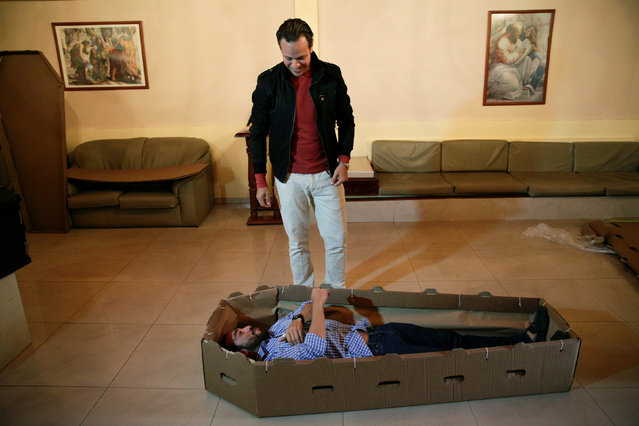
Elio Angulo (bottom C) lies inside a cardboard coffin next to Alejandro Blanchard as they introduce their product to potential customers at a mortuary in Valencia, in the state of Carabobo, Venezuela August 25, 2016. (Photo by Marco Bello/Reuters)

Elio Angulo (bottom C) lies inside a cardboard coffin next to Alejandro Blanchard as they introduce their product to potential customers at a mortuary in Valencia, in the state of Carabobo, Venezuela August 25, 2016. When Venezuelan entrepreneurs Alejandro Blanchard and Elio Angulo decided to create cardboard coffins, they were looking for an ecological selling point to compete against classic wood and brass caskets. Three years on, with the oil-rich country mired in deep economic crisis, their “bio-coffins” are becoming a viable option because of high prices for wooden coffins and shortages of brass ones. (Photo by Marco Bello/Reuters)
Details
27 Aug 2016 11:18:00