Loading...
Done
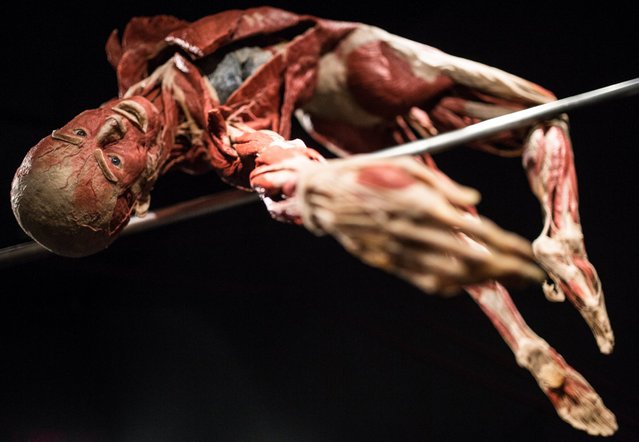
A plastinated body presented as a pole vaulter is exhibited at the Menschen Museum, Museum of Humans, in Berlin, August 29, 2016. The museum was caught up in a legal dispute with the district office of Berlin-Mitte for years before it was able to meet the requirements made by the court. (Photo by Sophia Kembowski/DPA Photo via Newscom)

A plastinated body presented as a pole vaulter is exhibited at the Menschen Museum, Museum of Humans, in Berlin, August 29, 2016. The museum was caught up in a legal dispute with the district office of Berlin-Mitte for years before it was able to meet the requirements made by the court. (Photo by Sophia Kembowski/DPA Photo via Newscom)
Details
30 Aug 2016 12:15:00
A participant of the “Mrs Universe 2015” contest from Caribbean Coast, Mayra Joli poses for a photo with a woman during their visit in central botanical garden in Minsk, Belarus, August 25, 2015. (Photo by Vasily Fedosenko/Reuters)

A participant of the “Mrs Universe 2015” contest from Caribbean Coast, Mayra Joli poses for a photo with a woman during their visit in central botanical garden in Minsk, Belarus, August 25, 2015. (Photo by Vasily Fedosenko/Reuters)
Details
26 Aug 2015 10:35:00
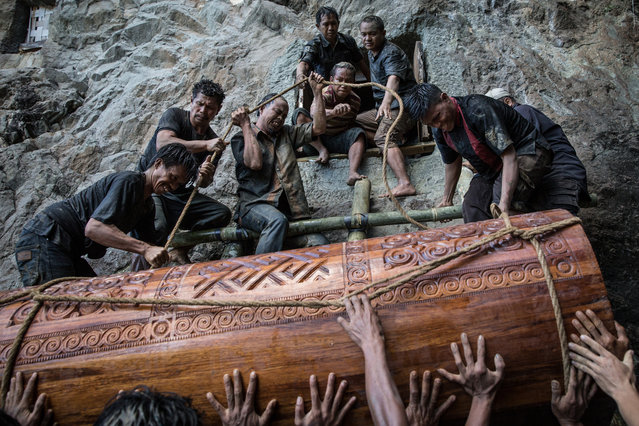
It is said that Torajans are people who “live to die”. For this Indonesian ethnic group, funerals are such extravagant events that they sometimes attract tourists. Families can postpone burials years (and the deceased are considered sick and hosted at home until the funeral) until the family can raise enough money and gather as many relatives as possible. And then it’s a jubilant multiday social event with a parade, dances and animal sacrifices. Agung Parameswara photographed these funerary practices when he traveled to South Sulawesi province, where the Torajans live. But often, their funeral isn’t the last time the dead are seen. In August, crypts are opened, coffins are slid back out and bodies delicately unsheathed. This tender ritual is known as Ma’Nene, which is customarily performed every few years. (Photo by Agung Parameswara/The Washington Post)

It is said that Torajans are people who “live to die”. For this Indonesian ethnic group, funerals are such extravagant events that they sometimes attract tourists. Families can postpone burials years (and the deceased are considered sick and hosted at home until the funeral) until the family can raise enough money and gather as many relatives as possible. And then it’s a jubilant multiday social event with a parade, dances and animal sacrifices. Agung Parameswara photographed these funerary practices when he traveled to South Sulawesi province, where the Torajans live. (Photo by Agung Parameswara/The Washington Post)
Details
06 Oct 2016 09:15:00
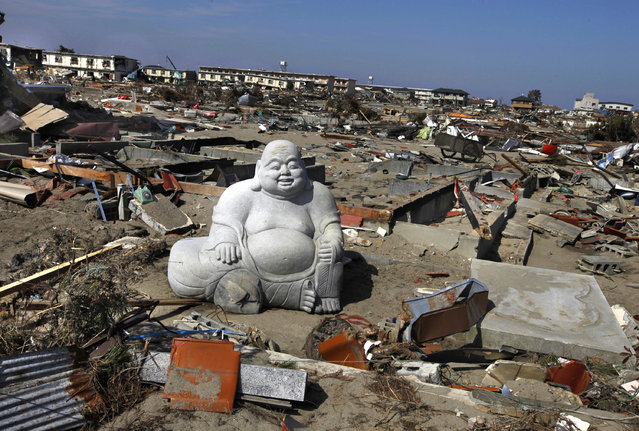
A statue of Hotei Buddha sits in the debris in the  tsunami-destroyed town of Sendai, Miyagi Prefecture, northern Japan Friday, April 1, 2011. (Photo by Vincent Yu/AP Photo)

Vincent Yu is a multiple award winner who won Honorable Mention in the 2013 Photographer of the Year category for Pictures of the Year International. Photo: A statue of Hotei Buddha sits in the debris in the tsunami-destroyed town of Sendai, Miyagi Prefecture, northern Japan Friday, April 1, 2011. (Photo by Vincent Yu/AP Photo)
Details
30 Mar 2014 11:26:00
A sunflower “smiles” in a field in Tokyo on August 7, 2014. Some 20,000 sunflowers were enjoyed by visitors to the area this week. (Photo by Yoshikazu Tsuno/AFP Photo)

A sunflower “smiles” in a field in Tokyo on August 7, 2014. Some 20,000 sunflowers were enjoyed by visitors to the area this week. (Photo by Yoshikazu Tsuno/AFP Photo)
Details
09 Aug 2014 11:07:00
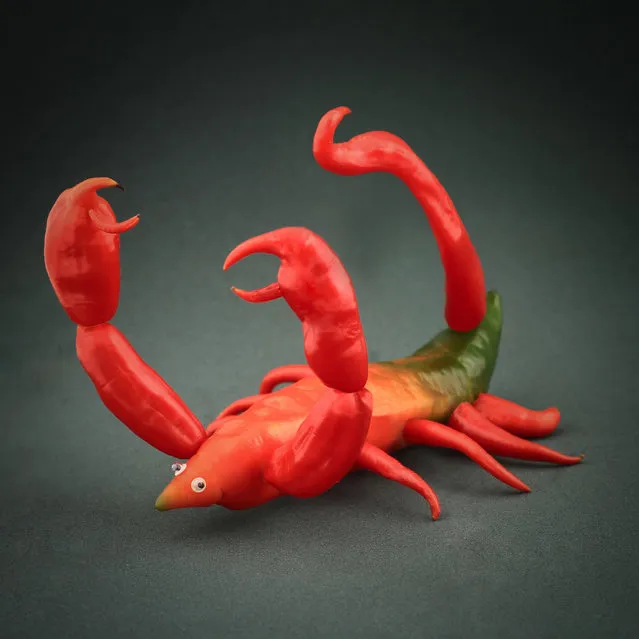
“Red Pepperpion. (Photo by Vanessa Dualib)

“Red Pepperpion. Red Pepperpions are secretive, nocturnal arachilli which can be spotted in kitchens of arid climates all around the world.

Red Pepperpions are equipped with a delicious (and depending on the quantity...deadly!) stinger at the end of its tail. If you happen to get bitten (or if you bite him!) it will produce a burning sensation on your taste nerves.

However, there is no need to worry, since the fact is that his potent stinger is usually only used when hunting or whenever the Pepperpion feels like he might become part of someones meal...

At daylight or when encountering a larger foe, such as a Saucier Chef, they retreat into burrows inside the fridge or hide beneath the oven”. (Photo and comment by Vanessa Dualib)


Details
08 Feb 2013 09:24:00
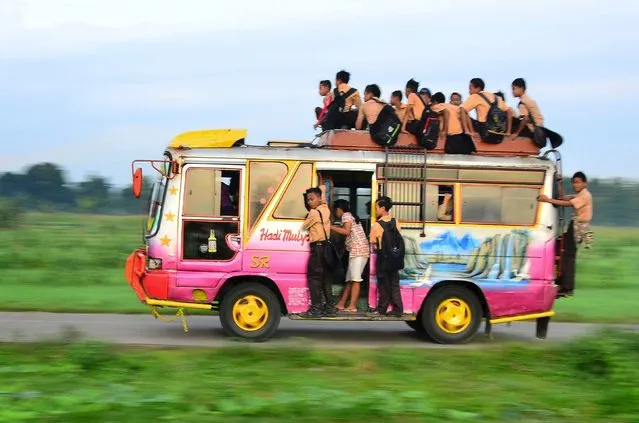
A group of students sit on top of a bus at Kemusu street in Boyolali, Central Java of Indonesia, March 20, 2015 in this picture taken by Antara Foto. (Photo by Yusuf Nugroho/Reuters/Antara Foto)

A group of students sit on top of a bus at Kemusu street in Boyolali, Central Java of Indonesia, March 20, 2015 in this picture taken by Antara Foto. (Photo by Yusuf Nugroho/Reuters/Antara Foto)
Details
21 Mar 2015 12:49:00
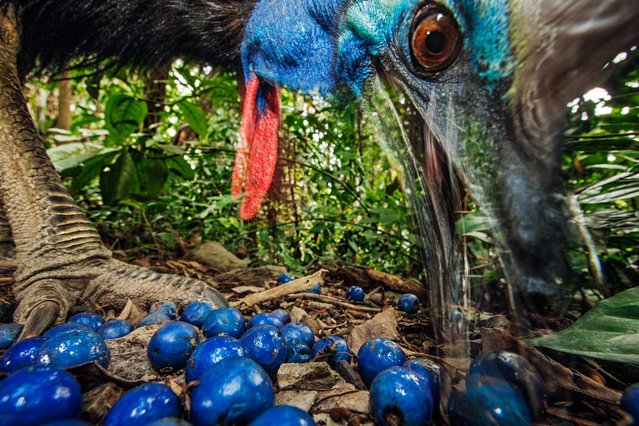
“Cassowaries are large, flightless birds related to emus and (more distantly) to ostriches, rheas, and kiwis”, writes Olivia Judson in the September issue of National Geographic magazine. (Photo by Christian Ziegler/National Geographic)

“Cassowaries are large, flightless birds related to emus and (more distantly) to ostriches, rheas, and kiwis”, writes Olivia Judson in the September issue of National Geographic magazine. How large? People-size: Adult males stand well over five foot five and top 110 pounds. Females are even taller, and can weigh more than 160 pounds. Dangerous when roused, they’re shy and peaceable when left alone. But even birds this big and tough are prey to habitat loss. The dense New Guinea and Australia rain forests where they live have dwindled. Today cassowaries might number 1,500 to 2,000. And because they help shape those same forests – by moving seeds from one place to another – “if they vanish”, Judson writes, “the structure of the forest would gradually change” too. (Photo by Christian Ziegler/National Geographic)

Details
06 Jan 2014 12:21:00