Loading...
Done
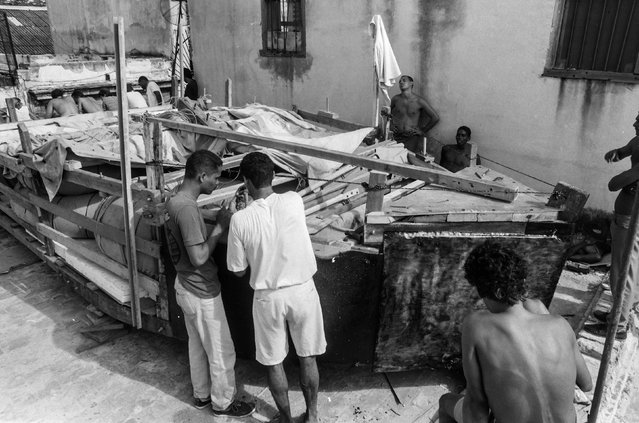
Rolando Pujol Rodriguez photographed the Cuban raft exodus in 1994, and twenty years later Enrique de la Osa took portraits of some of the people who made it to the United States, in this story which combines archive and present day images. Here: People put the finishing touches to a makeshift boat on a rooftop before lowering it onto a truck and launching it into the Straits of Florida towards the U.S., on the last day of the 1994 Cuban raft exodus in Havana, in this September 13, 1994 file photo. (Photo by Rolando Pujol Rodriguez/Reuters)

Rolando Pujol Rodriguez photographed the Cuban raft exodus in 1994, and twenty years later Enrique de la Osa took portraits of some of the people who made it to the United States, in this story which combines archive and present day images. Here: People put the finishing touches to a makeshift boat on a rooftop before lowering it onto a truck and launching it into the Straits of Florida towards the U.S., on the last day of the 1994 Cuban raft exodus in Havana, in this September 13, 1994 file photo. (Photo by Rolando Pujol Rodriguez/Reuters)
Details
13 Nov 2014 14:07:00
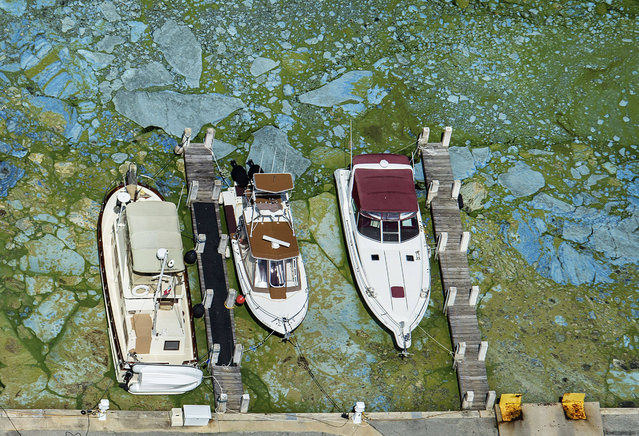
In this June 29, 2016 file photo, boats docked at Central Marine in Stuart, Fla., are surrounded by blue green algae. The 153-mile-long Indian River Lagoon has been plagued by harmful algae blooms. Water quality testing data analyzed by the AP showed the average phosphorous level – a byproduct of fertilizers and human waste that algae thrive on, rose nearly 75 percent between 2000 and 2016. (Photo by Greg Lovett/The Palm Beach Post via AP Photo)

In this June 29, 2016 file photo, boats docked at Central Marine in Stuart, Fla., are surrounded by blue green algae. The 153-mile-long Indian River Lagoon has been plagued by harmful algae blooms. Water quality testing data analyzed by the AP showed the average phosphorous level – a byproduct of fertilizers and human waste that algae thrive on, rose nearly 75 percent between 2000 and 2016. (Photo by Greg Lovett/The Palm Beach Post via AP Photo)
Details
11 May 2017 07:26:00
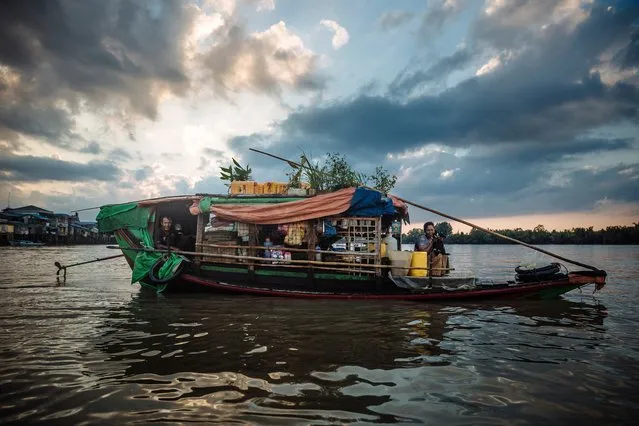
Tin and Naing win live on a small boat which they sail throughout the Delta region in Myanmar. The former gardeners once had a home on land but it was destroyed when a powerful cyclone ravaged the area in 2008. Since then, the couple have not been able to afford to rebuild their home, so they live on the boat from which they sell fish paste to make a living. (Photo by Muse Mohammed/IOM)

The ferocity of crises worldwide is forcing a record number of people to flee their homes, seeking some form of safety within their own country or across international borders. There are 65.3 million displaced people worldwide, including 21.3 million refugees. Most have lost their homes to armed conflict or natural disasters but other factors, such as extreme poverty and climate change, also drive displacement. The International Organisation for Migration commissioned photojournalist Muse Mohammed to document the plight of the displaced. (Photo by Muse Mohammed/IOM)
Details
02 Jan 2017 12:04:00
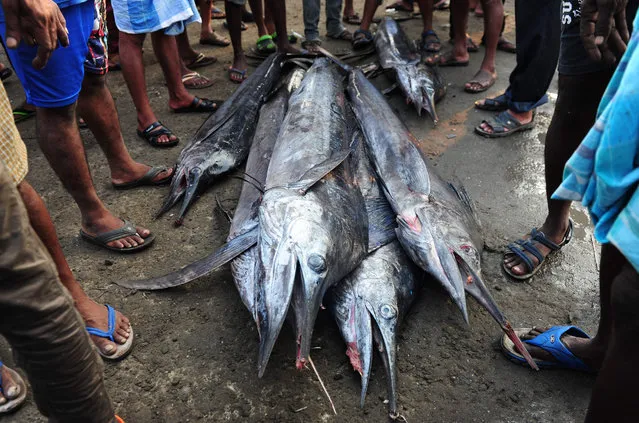
Indian men stand around sword fish for sale at a harbour a harbour in Chennai on June 5, 2016, as fishermen return with their catch after a 45-day fishing ban on the east coast of India. Authorities in the southern Indian state of Tamil Nadu had imposed a 45-day ban on fishing by mechanised vessels to protect marine life, with only “country boats” operating within five nautical miles off the coast. (Photo by Arun Sankar/AFP Photo)

Indian men stand around sword fish for sale at a harbour a harbour in Chennai on June 5, 2016, as fishermen return with their catch after a 45-day fishing ban on the east coast of India. Authorities in the southern Indian state of Tamil Nadu had imposed a 45-day ban on fishing by mechanised vessels to protect marine life, with only “country boats” operating within five nautical miles off the coast. (Photo by Arun Sankar/AFP Photo)
Details
06 Jun 2016 11:24:00
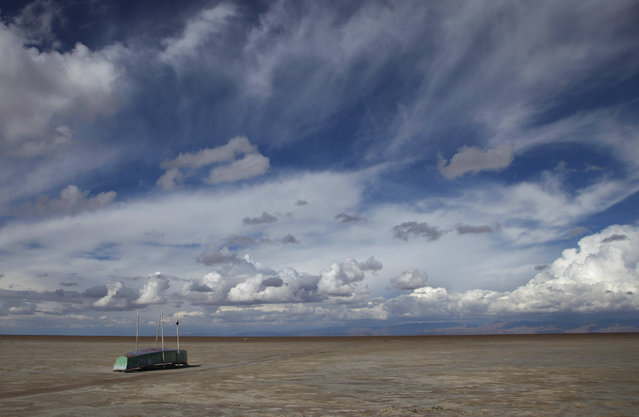
In this January 12, 2016 photo, an abandoned boat lies on the dried up lake bed of Lake Poopo, on the outskirts of Untavi, Bolivia. Drought caused by the recurrent El Nino meteorological phenomenon is considered the main driver of the lake's demise. Along with glacial melting, authorities say another factor is the diversion of water from Poopo's tributaries, mostly for mining but also for agriculture. (Photo by Juan Karita/AP Photo)

In this January 12, 2016 photo, an abandoned boat lies on the dried up lake bed of Lake Poopo, on the outskirts of Untavi, Bolivia. Drought caused by the recurrent El Nino meteorological phenomenon is considered the main driver of the lake's demise. Along with glacial melting, authorities say another factor is the diversion of water from Poopo's tributaries, mostly for mining but also for agriculture. (Photo by Juan Karita/AP Photo)
Details
21 Jan 2016 12:33:00
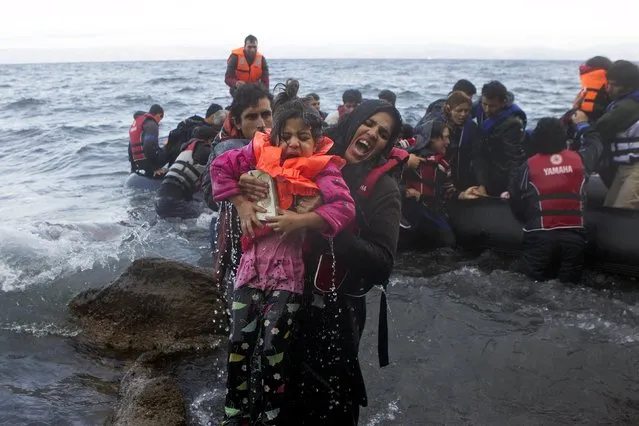
A migrant woman pulls a girl out of the water as refugees and migrants arrive on an overcrowded dinghy in rough sea on the Greek island of Lesbos, after crossing a part of the Aegean Sea from the Turkish coast, October 2, 2015. A record number of at least 430,000 refugees and migrants have taken rickety boats across the Mediterranean to Europe this year, 309,000 via Greece, according to International Organization for Migration figures. (Photo by Dimitris Michalakis/Reuters)

A migrant woman pulls a girl out of the water as refugees and migrants arrive on an overcrowded dinghy in rough sea on the Greek island of Lesbos, after crossing a part of the Aegean Sea from the Turkish coast, October 2, 2015. A record number of at least 430,000 refugees and migrants have taken rickety boats across the Mediterranean to Europe this year, 309,000 via Greece, according to International Organization for Migration figures. (Photo by Dimitris Michalakis/Reuters)
Details
05 Oct 2015 08:05:00
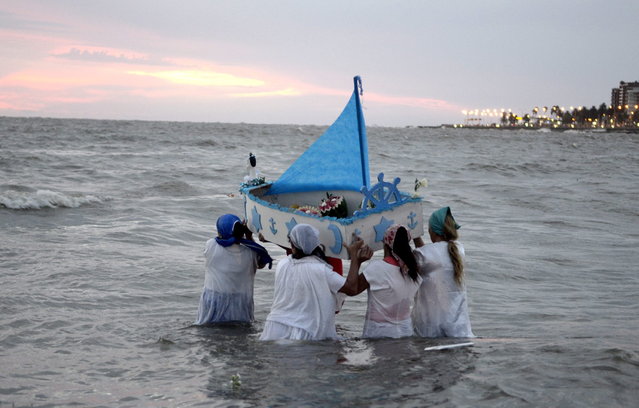
Faithful carry a boat out to sea, filled with offerings to Yemanja, the African sea goddess, during a ceremony honoring the deity in Montevideo, Uruguay, Saturday, February 2, 2013. Thousands of worshippers come to the beach in Montevideo on her feast day, February 2, bearing candles, flowers, perfumes and fruit to show their gratitude for her blessings bestowed upon them. The belief in the goddess sprouts from Umbanda, a blend of religions that include African, Catholicism and Spiritism. (Photo by Matilde Campodonico/AP Photo)

Faithful carry a boat out to sea, filled with offerings to Yemanja, the African sea goddess, during a ceremony honoring the deity in Montevideo, Uruguay, Saturday, February 2, 2013. Thousands of worshippers come to the beach in Montevideo on her feast day, February 2, bearing candles, flowers, perfumes and fruit to show their gratitude for her blessings bestowed upon them. The belief in the goddess sprouts from Umbanda, a blend of religions that include African, Catholicism and Spiritism. (Photo by Matilde Campodonico/AP Photo)
Details
03 Feb 2013 13:14:00
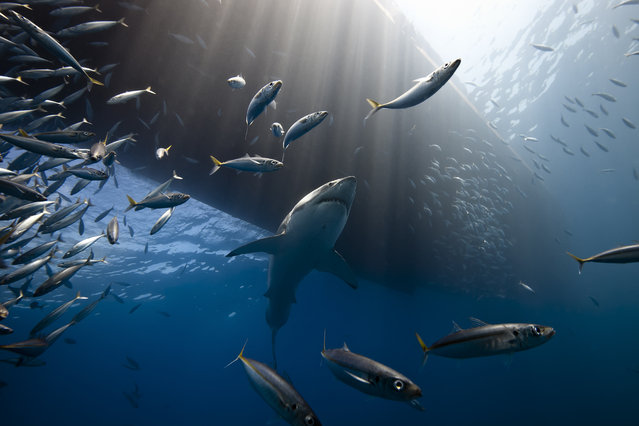
“Great White Shark of Guadalupe Island”. A great white shark very quiet under the boat and a lot of fish. The sun ray lighting the head of the shark. Location: Guadalupe Island, Mexico. (Photo and caption by Marc Henauer/National Geographic Traveler Photo Contest)

“Great White Shark of Guadalupe Island”. A great white shark very quiet under the boat and a lot of fish. The sun ray lighting the head of the shark. Location: Guadalupe Island, Mexico. (Photo and caption by Marc Henauer/National Geographic Traveler Photo Contest)

ATTENTION! All pictures are presented in high resolution. To see Hi-Res images – just TWICE click on any picture. In other words, click small picture – opens the BIG picture. Click BIG picture – opens VERY BIG picture.
Details
04 Jul 2013 09:49:00