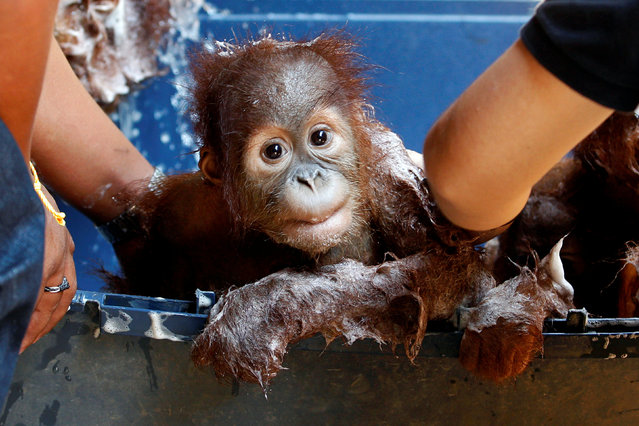
A baby Sumatran orangutan is bathed after arriving at a wildlife center at Ratchaburi province in Thailand September 13, 2017. (Photo by Kerek Wongsa/Reuters)
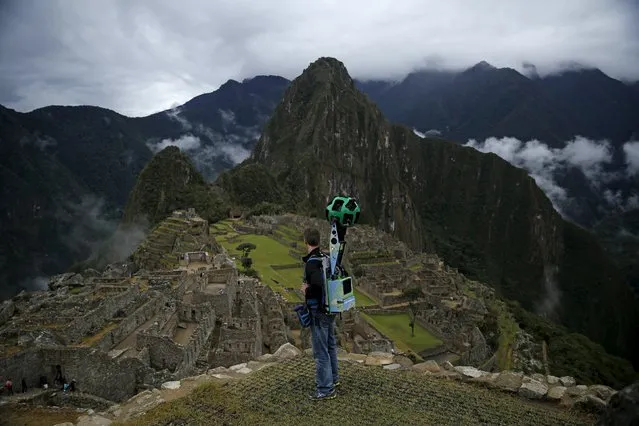
Daniel Filip, Tech Lead Manager for Google Maps, carries the Trekker, a 15-camera device, while mapping the Inca citadel of Machu Picchu for Google Street View in Cuzco, Peru, August 11, 2015. (Photo by Pilar Olivares/Reuters)
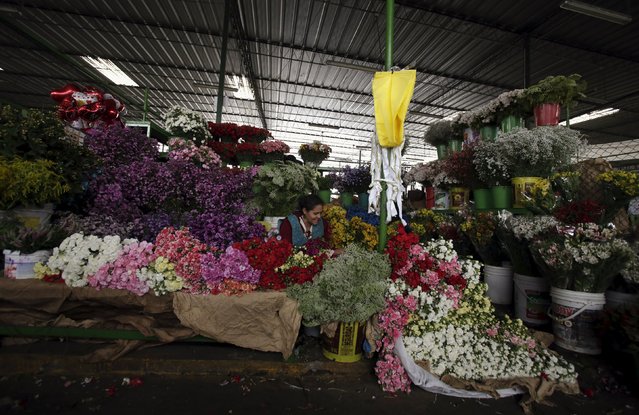
A florist waits for customers at the Piedra Liza flower market in Lima April 29, 2015. The market sells flowers that come from all over Peru. Peru is home to more than 25,000 varieties of flowering plants like geraniums, carnations, roses, hydrangeas and jasmine, according to local media. (Photo by Mariana Bazo/Reuters)
A Peru fan cheers of her team during a Quarterfinal match between Colombia and Peru at MetLife Stadium as part of Copa America Centenario US 2016 on June 17, 2016 in East Rutherford, New Jersey, US. (Photo by Chris Szagola/LatinContent/Getty Images)
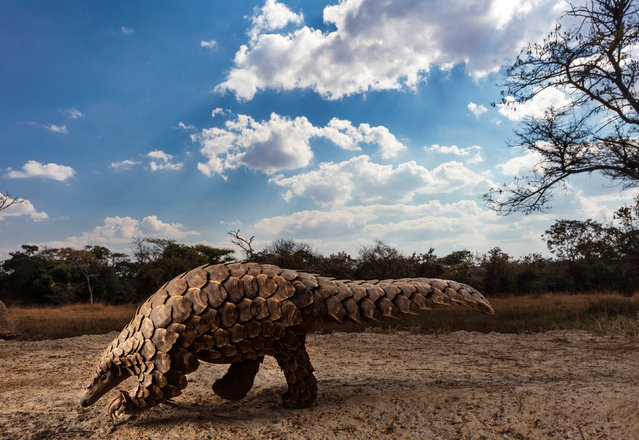
Pangolins in Crisis: Brent Stirton, South Africa; 1st place, Natural world and wildlife. “Pangolins are the world’s most illegally trafficked mammals, with an estimated one million trafficked to Asia in the last 10 years. Their scales are used in traditional Chinese and Vietnamese medicine, and their meat is sold as a high-priced delicacy. As a result, pangolins are listed as critically endangered and anyone who trades or consumes them is breaking the law. This body of work exposes the trade, while exploring aspects of illegality and celebrating the people who are trying to save these animals”. (Photo by Brent Stirton/Sony World Photography Awards 2020)