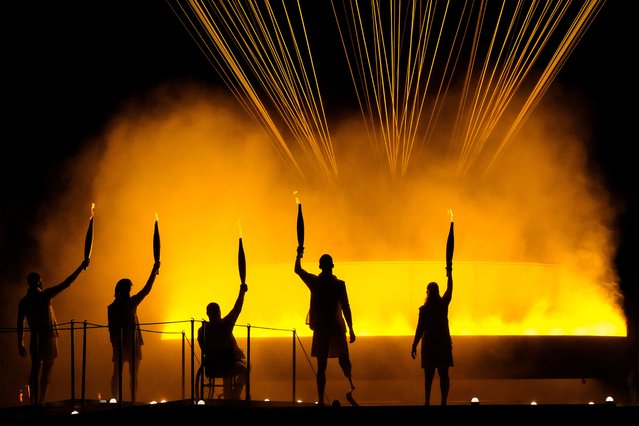
Torchbearers Charles Antoine Kouakou, Fabien Lamirault, Elodie Lorandi, Nantenin Keita and Alexis Hanquinquant gesture after lighting the Cauldron to conclude the opening ceremony of the Paris 2024 Summer Paralympic Games at Place de la Concorde on August 28, 2024 in Paris, France. (Photo by David Ramos/Getty Images)
Blanka Vlasic of Croatia and Team Europe celebrates a clearance in the women's high jump during the IAAF/VTB Continental Cup at the Stadion Poljud on September 5, 2010 in Split, Croatia. (Photo by Michael Steele/Getty Images)
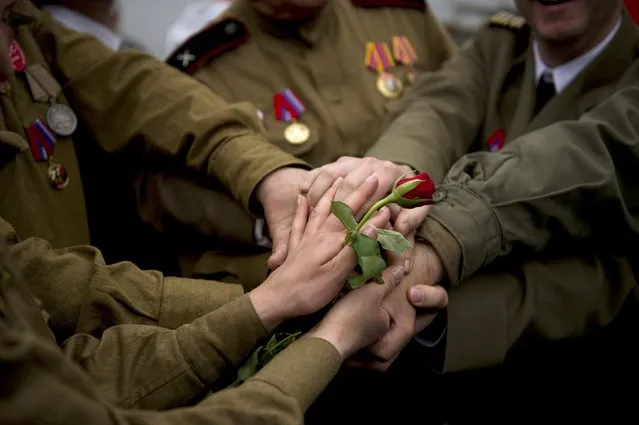
Members of a historical re-enactment group dressed as U.S. and Soviet Army soldiers take part in Elbe Day celebrations, in eastern German city of Torgau at the river Elbe, April 25, 2015. Elbe Day commemorates the encounter of the Allies 70 years ago, on the 25th of April 1945 when American and Soviet army units joined together on the destroyed bridge over the river Elbe. The photograph of the meaningful handshake made its way around the world and became a symbol of the near end of World War II in Europe. (Photo by Stefanie Loos/Reuters)
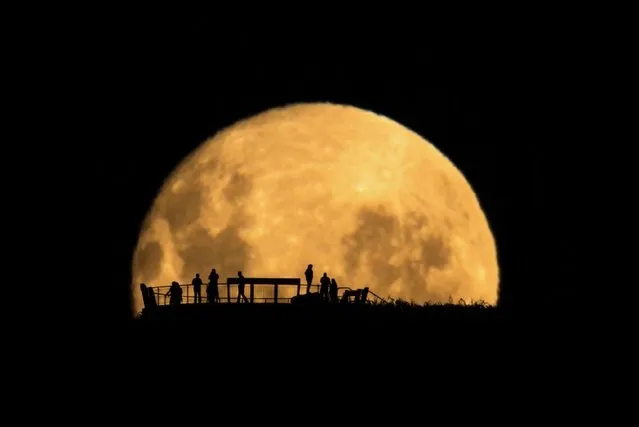
The Royal Observatory just announced its Astronomy Photographer Of The Year 2013 winners. Australian photographer Mark Gee was chosen among a thousand amateur and professional photographers around the globe to win the top title. His work is part of an exhibition of the winning photographers, which opened on Sept. 19 at the Royal Observatory Greenwich. The Royal Observatory shared with us the winners and notable mentions of the competition. Their descriptions of the prizewinners can be found below the images.
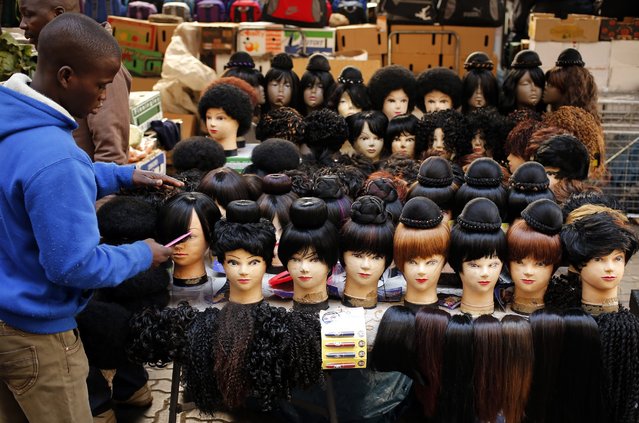
Man prepares wigs as he waits for customers in downtown Johannesburg, on August 5, 2014. Some estimates put Africa's dry hair industry at as much as $6 billion a year; Nigerian singer Muma Gee recently boasted that she spends 500,000 naira ($3,100) on a single hair piece made of 11 sets of human hair. (Photo by Siphiwe Sibeko/Reuters)
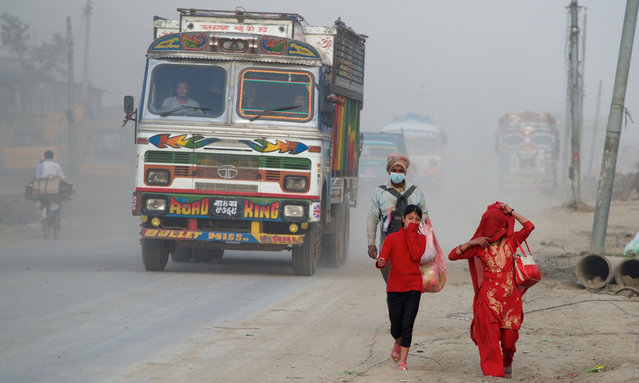
People in Kathmandu joke that the face mask has now become part of the national dress – an indispensable accessory in an effort to protect themselves from the dust. Nepal has the worst air quality in the world, according to the Environmental Performance Index. (Photo by Pete Pattisson/The Guardian)