Loading...
Done
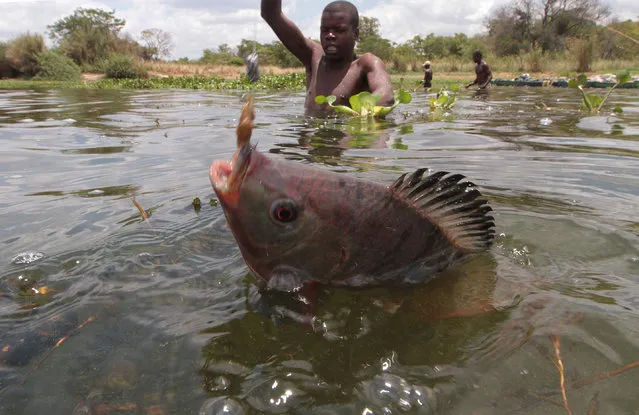
In this photo taken Wednesday, October 29, 2014, a fisherman catches a fish near the shores of Lake Chivero, west of Harare. (Photo by Tsvangirayi Mukwazhi/AP Photo)

In this photo taken Wednesday, October 29, 2014, a fisherman catches a fish near the shores of Lake Chivero, west of Harare. Illegal fishing can be hazardous in Zimbabwe, where poachers scan the banks for armed rangers and the water for crocodiles while they cast their rods. The country is in such a dire economic state that thousands of people, unable to find regular work, flock to Lake Chivero in hopes of catching fish, mostly bream, that they can sell for desperately needed income. (Photo by Tsvangirayi Mukwazhi/AP Photo)
Details
13 Nov 2014 13:55:00
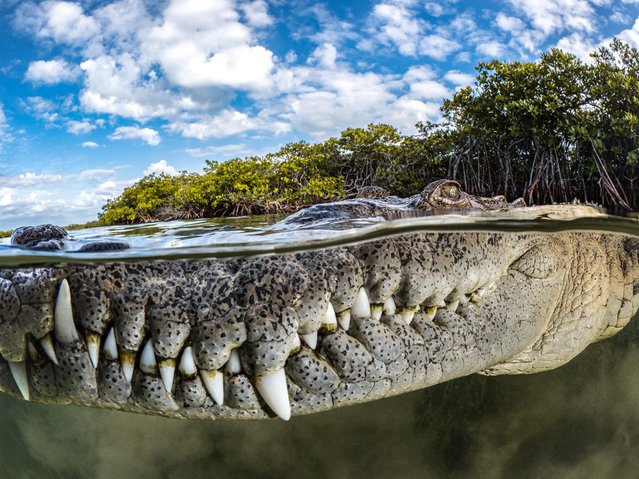
Guardian of the Mangroves – Overall Winner. Tanya Houppermans, Cuba. A curious American crocodile (Crocodylus acutus) swims right up to Tanya, at Gardens of the Queen (Jardines De La Reina), an archipelago off the coast of Cuba. It has been strictly protected since 1996, and is one of the most untouched marine ecosystems in the world. ‍ “The healthy population of American crocodiles is down to the pristine condition of the mangroves and I wanted to capture close ups of this gentle giant in its natural habitat. I hope this image can illustrate that protecting areas like this is so critical”. (Photo by Tanya Griffin Houppermans/Mangrove Photographer of the Year)

Guardian of the Mangroves – Overall Winner. Tanya Houppermans, Cuba. A curious American crocodile (Crocodylus acutus) swims right up to Tanya, at Gardens of the Queen (Jardines De La Reina), an archipelago off the coast of Cuba. It has been strictly protected since 1996, and is one of the most untouched marine ecosystems in the world. ‍ “The healthy population of American crocodiles is down to the pristine condition of the mangroves and I wanted to capture close ups of this gentle giant in its natural habitat. I hope this image can illustrate that protecting areas like this is so critical”. (Photo by Tanya Griffin Houppermans/Mangrove Photographer of the Year)
Details
05 Nov 2022 04:24:00
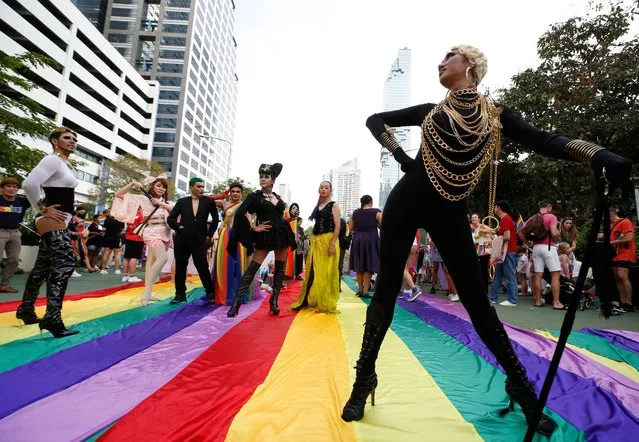
People of the LGBTQI community pose for a photo on a large rainbow colored flag as they take part in the parade to mark Thailand Pride Festival 2022 in Bangkok, Thailand, 27 November 2022. Thailand's LGBTQI groups and foreigners attended the Pride festival to raise awareness and promote sexual diversity and equal rights for the Lesbian, Gay, Bisexual, Transgender and Queer (LGBTQ) community. The festival also aims to promote tourism in Thailand as Covid-19 restrictions are being lifted, with hopes to becomes an annual and sustainable event in November. (Photo by Narong Sangnak/EPA/EFE/Rex Features/Shutterstock)

People of the LGBTQI community pose for a photo on a large rainbow colored flag as they take part in the parade to mark Thailand Pride Festival 2022 in Bangkok, Thailand, 27 November 2022. Thailand's LGBTQI groups and foreigners attended the Pride festival to raise awareness and promote sexual diversity and equal rights for the Lesbian, Gay, Bisexual, Transgender and Queer (LGBTQ) community. The festival also aims to promote tourism in Thailand as Covid-19 restrictions are being lifted, with hopes to becomes an annual and sustainable event in November. (Photo by Narong Sangnak/EPA/EFE/Rex Features/Shutterstock)
Details
28 Nov 2022 04:31:00
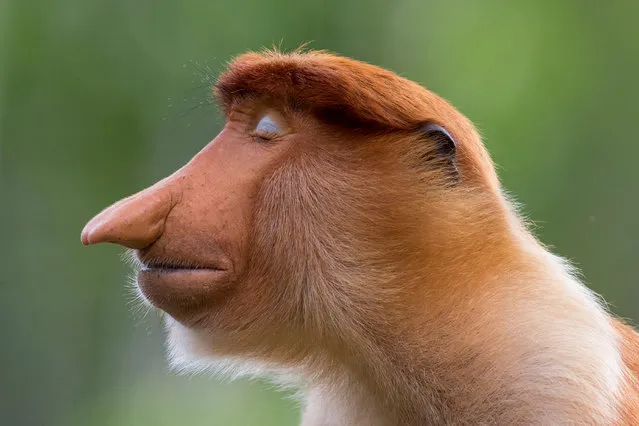
Winner – Animal Portraits: The pose by Mogens Trolle, Denmark. A young male proboscis monkey cocks his head slightly and closes his eyes. Unexpected pale blue eyelids now complement his immaculately groomed auburn hair. He poses for a few seconds as if in meditation. He is a wild visitor to the feeding station at Labuk Bay Proboscis Monkey Sanctuary in Sabah, Borneo – “the most laid-back character”, says Trolle, “quite unlike anything I’ve ever seen on another monkey” – connects us, he hopes, with a fellow primate. (Photo by Mogens Trolle/Wildlife Photographer of the Year 2020)

Winner – Animal Portraits: The pose by Mogens Trolle, Denmark. A young male proboscis monkey cocks his head slightly and closes his eyes. Unexpected pale blue eyelids now complement his immaculately groomed auburn hair. He poses for a few seconds as if in meditation. He is a wild visitor to the feeding station at Labuk Bay Proboscis Monkey Sanctuary in Sabah, Borneo – “the most laid-back character”, says Trolle, “quite unlike anything I’ve ever seen on another monkey” – connects us, he hopes, with a fellow primate. (Photo by Mogens Trolle/Wildlife Photographer of the Year 2020)
Details
16 Oct 2020 00:03:00
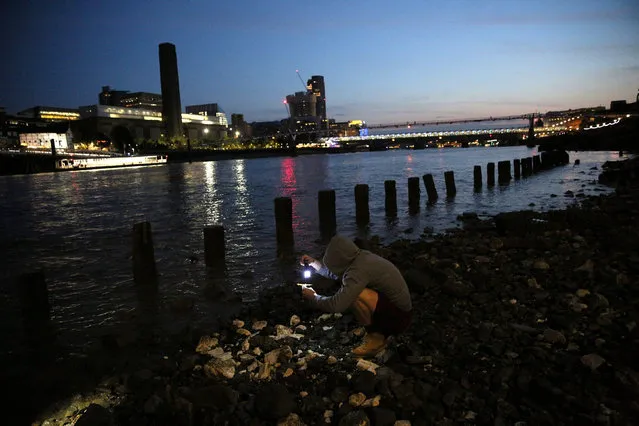
A mudlark uses a torch to look for items on the bank of the River Thames in London, Britain June 06, 2016. Mudlarking is believed to trace its origins to the 18th and 19th century, when scavengers searched the Thames' shores for items to sell. These days, history and archaeology fans are the ones hoping to find old relics such as coins, ceramics, artifacts or everyday items from across centuries. They wait for the low tide and then scour specific areas of exposed shores. "If you're in a field you could be out all day long, with the river you're restricted to about two or three hours," mudlark Nick Stevens said. While many just use the naked eye for their searches, others rely on metal detectors for which a permit from the Port of London Authority is needed. Digging also requires consent. (Photo by Neil Hall/Reuters)

A mudlark uses a torch to look for items on the bank of the River Thames in London, Britain June 06, 2016. Mudlarking is believed to trace its origins to the 18th and 19th century, when scavengers searched the Thames' shores for items to sell. These days, history and archaeology fans are the ones hoping to find old relics such as coins, ceramics, artifacts or everyday items from across centuries. their finds with the Portable Antiquities Scheme. Any item over 300 years old must be recorded. (Photo by Neil Hall/Reuters)
Details
27 Aug 2016 10:43:00
Real Men Don't Buy Girls

The DNA Foundation launched a campaign targeting men with the message that Real Men Don't Buy Girls. The goal of the campaign was to create a cultural shift around the implicit societal acceptance of child prostitution, and thus, child s*x slavery. We hoped to reach millions of people with information about the issue. More than 2 million people have participated in the campaign so far. Here are some of the people who took a stand with us!
Details
28 Dec 2012 11:46:00
Photographers: Joel Robison Part3

“Hi! I'm Joel, I live in a valley in British Columbia's Rocky Mountains, as close to the forest as I could possibly be! I love to run, bike, jump, eat and create and I hope that you enjoy my work as much as I enjoy creating it!” – Joel Robison. (Photo by: Joel Robison; Source: Flickr)


See Also:Photographers: Joel Robison Part1
Details
02 Nov 2013 09:03:00
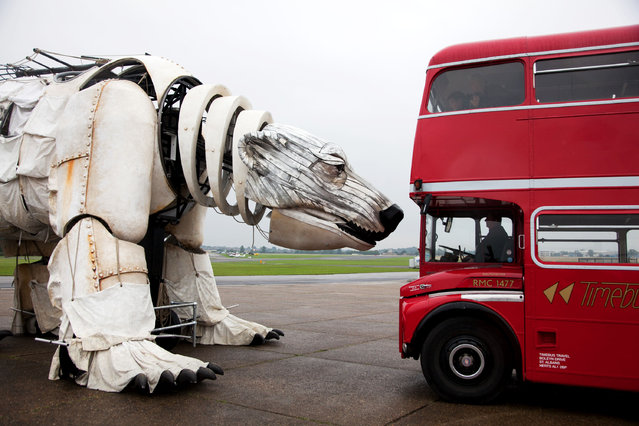
Giant Polar Bear Of London

Her name is Aurora, and she is the star of “Aurora's Parade”, the London chapter of ceride – Greenpeace’s global day of action to protest against Arctic destruction. According to DesignBoom, this giant people-powered super-puppet weighs about 3 tons and needs 15 puppeteers and 30 volunteers to operate. Aurora, described as “part protest, part performance”, has fur that includes the names of each supporter in the movement. Greenpeace hopes she will bring the voice and spirit of the Arctic to the public.
Details
13 Mar 2014 13:41:00