Loading...
Done
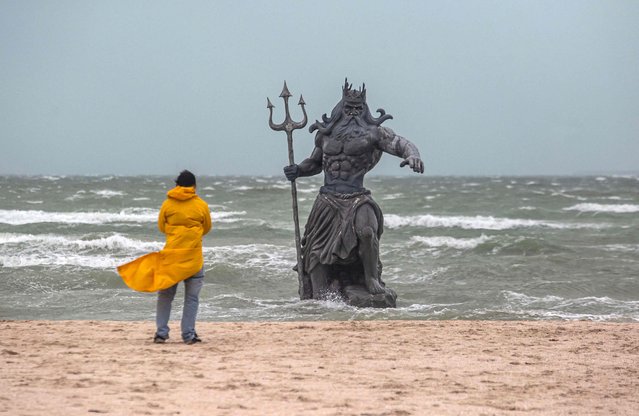
A man looks at a statue of the Greek god Poseidon on a beach during the passage of tropical storm Beryl in Progreso, on the Yucatan Peninsula, Mexico, on July 5, 2024. Beryl weakened to a tropical storm Friday after hitting Mexico as a Category 2 hurricane, with fierce winds causing material damage but no injuries along the tourist-rich Yucatan Peninsula. (Photo by Hugo Borges/AFP Photo)

A man looks at a statue of the Greek god Poseidon on a beach during the passage of tropical storm Beryl in Progreso, on the Yucatan Peninsula, Mexico, on July 5, 2024. Beryl weakened to a tropical storm Friday after hitting Mexico as a Category 2 hurricane, with fierce winds causing material damage but no injuries along the tourist-rich Yucatan Peninsula. (Photo by Hugo Borges/AFP Photo)
Details
14 Nov 2025 03:34:00
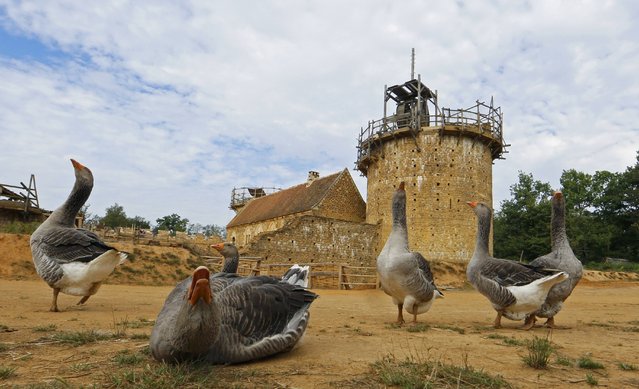
A view of the construction site of the Chateau de Guedelon near Treigny in the Burgundy region of France, September 13, 2016. Blacksmiths, stonemasons and quarry men are hard at work in a Burgundy forest building a 13th-century-style castle using the most basic tools and materials, replicating the methods used hundreds of years ago to better understand them. Forgoing all modern technology, workers use hammers to break stones and forge iron, operate wooden wheels to hoist their materials up to where they are needed, and rely on a quarry for stone, clay and sand as they build up a castle from scratch. Construction on Guedelon Castle in central France began in 1997 after an archaeological survey revealed a medieval fortress hidden inside the walls of nearby Chateau de Saint-Fargeau. Those behind the project hope to answer questions about medieval construction and provide lessons on sustainable building. (Photo by Jacky Naegelen/Reuters)

A view of the construction site of the Chateau de Guedelon near Treigny in the Burgundy region of France, September 13, 2016. Blacksmiths, stonemasons and quarry men are hard at work in a Burgundy forest building a 13th-century-style castle using the most basic tools and materials, replicating the methods used hundreds of years ago to better understand them. (Photo by Jacky Naegelen/Reuters)
Details
15 Sep 2016 09:43:00
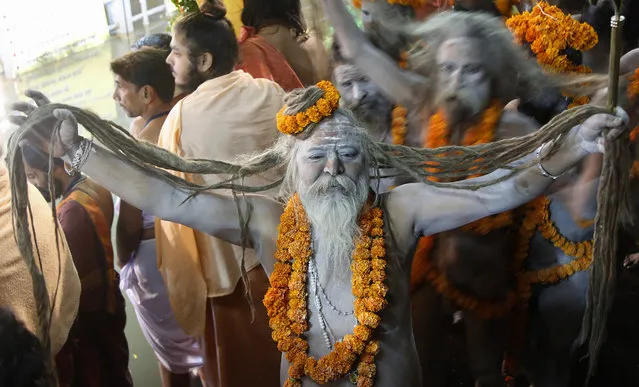
A naked Hindu holy man arrives to bath in the Godavari River during Kumbh Mela, or Pitcher Festival, at Trimbakeshwar in Nasik, India, Saturday, August 29, 2015. (Photo by Rajanish Kakade/AP Photo)

A naked Hindu holy man arrives to bath in the Godavari River during Kumbh Mela, or Pitcher Festival, at Trimbakeshwar in Nasik, India, Saturday, August 29, 2015. Hindus believe taking a dip in the waters of a holy river during the festival, will cleanse them of their sins. According to Hindu mythology, the Kumbh Mela celebrates the victory of gods over demons in a furious battle over a nectar that would give them immortality. (Photo by Rajanish Kakade/AP Photo)
Details
30 Aug 2015 11:34:00
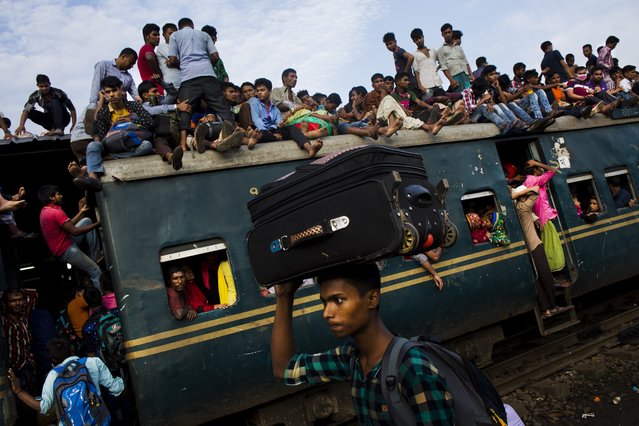
Bangladeshi Muslims travel on the roof of an overcrowded train as they head to their hometowns ahead of Eid al-Adha in Dhaka, Bangladesh, Friday, September 1, 2017. (Photo by Bernat Armangue/AP Photo)

Bangladeshi Muslims travel on the roof of an overcrowded train as they head to their hometowns ahead of Eid al-Adha in Dhaka, Bangladesh, Friday, September 1, 2017. The festival commemorates the story of Abraham and his readiness to sacrifice his son as an act of obedience to God, who provided a lamb to be used instead. (Photo by Bernat Armangue/AP Photo)
Details
02 Sep 2017 06:27:00
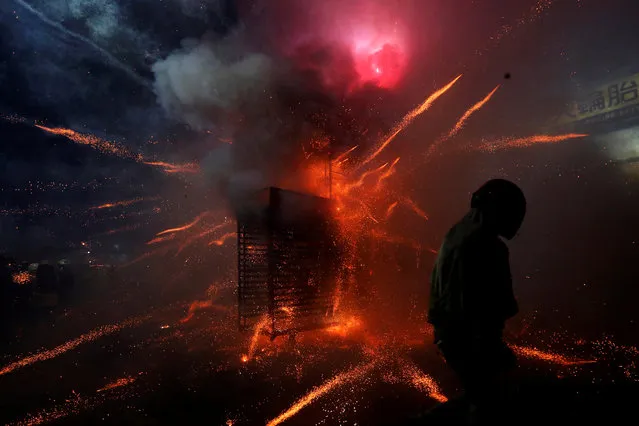
A participant wearing a motorcycle helmet gets sprayed with firecrackers, during the “Beehive Firecrackers” festival at the Yanshui district in Tainan, Taiwan on March 1, 2018. (Photo by Tyrone Siu/Reuters)

A participant wearing a motorcycle helmet gets sprayed with firecrackers, during the “Beehive Firecrackers” festival at the Yanshui district in Tainan, Taiwan on March 1, 2018. According to Taiwan's Tourism Bureau, the “beehive” festival started in the late 1885 as a request to the gods to spare Yanshui from a cholera outbreak which was making its way through the villages. (Photo by Tyrone Siu/Reuters)
Details
05 Mar 2018 00:03:00
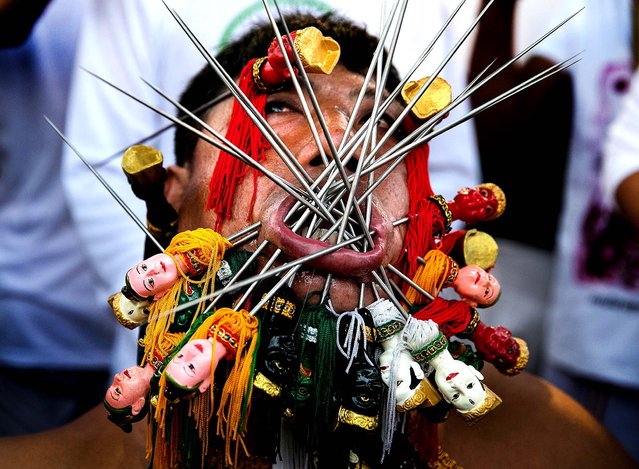
A devotee gest pierced at the Bang Neow shrine in Phuket. (Photo by Paula Bronstein/Getty Images)

“The Nine Emperor Gods Festival is a nine-day Taoist celebration beginning on the eve of 9th lunar month of the Chinese calendar, which is observed primarily in Southeast Asian countries like Myanmar, Singapore, Malaysia, Thailand and also the Riau Islands. In Thailand, this festival is called Tesagan Gin Je, the Vegetarian Festival. It is celebrated throughout the entire country, but the festivities are at their height in Phuket, where about 35% of the population is Chinese. It attracts crowds of spectators because of many of the unusual religious rituals that are performed”. – Wikipedia. Photo: A devotee gest pierced at the Bang Neow shrine in Phuket. (Photo by Paula Bronstein)
Details
11 Oct 2013 07:49:00
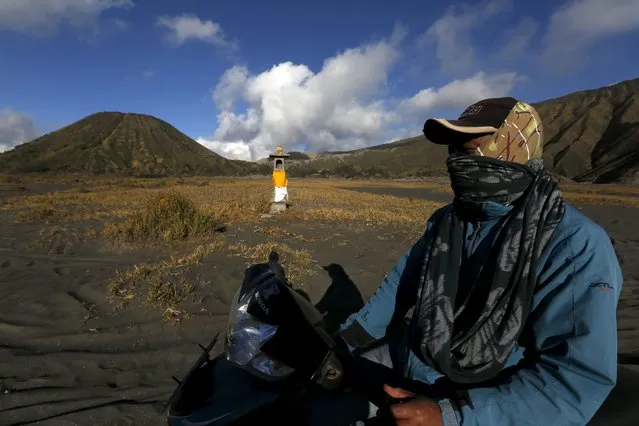
A Hindu villager rides a motorcycle past an altar ahead of the annual Kasada festival at the Mount Bromo in Indonesia's East Java province, July 30, 2015. (Photo by Reuters/Beawiharta)

A Hindu villager rides a motorcycle past an altar ahead of the annual Kasada festival at the Mount Bromo in Indonesia's East Java province, July 30, 2015. The Kasada festival will be held on August 1, when the worshippers throw offerings such as livestock and other crops into the volcanic crater of Mount Bromo to give thanks to the Hindu gods for ensuring their safety and prosperity. (Photo by Reuters/Beawiharta)
Details
31 Jul 2015 11:25:00
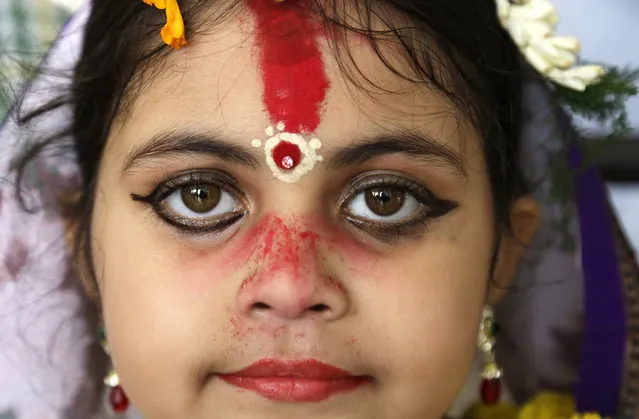
A young Hindu girl sits for a ceremony where she and other girls are worshipped as “Kumari”, or living goddess, during Ram Navami festival, at a temple in Kolkata, India, Saturday, March 28, 2015. (Photo by Bikas Das/AP Photo)

A young Hindu girl sits for a ceremony where she and other girls are worshipped as “Kumari”, or living goddess, during Ram Navami festival, at a temple in Kolkata, India, Saturday, March 28, 2015. Ram Navami marks the birth of Hindu God Rama. (Photo by Bikas Das/AP Photo)
Details
29 Mar 2015 12:23:00