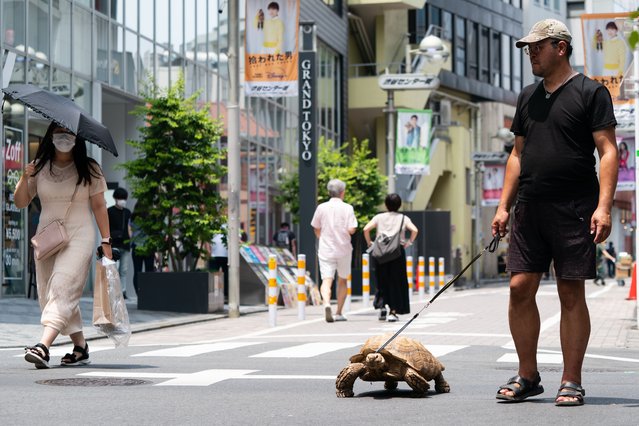
A man takes his pet African spurred tortoise called Lupin for a walk during a heatwave in Tokyo, Japan on July 3, 2022. (Photo by Masatoshi Okauchi/Rex Features/Shutterstock)
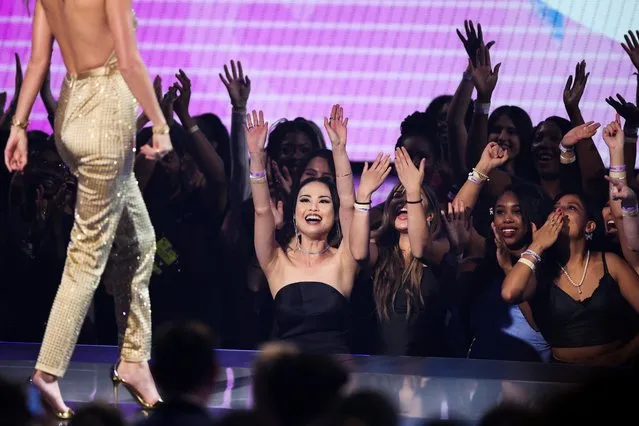
Audience members react as American singer-songwriter Taylor Swift gets onstage to receive the Artist of the Year award during 2022 American Music Awards, at the Microsoft Theater in Los Angeles, California, U.S., November 20, 2022. (Photo by Mario Anzuoni/Reuters)
Police officers detain a FEMEN naked activist during an action at the Poland embassy in Kiev on October 26, 2020 in support of Polish women in their right to abortion. (Photo by Sergei Supinsky/AFP Photo)
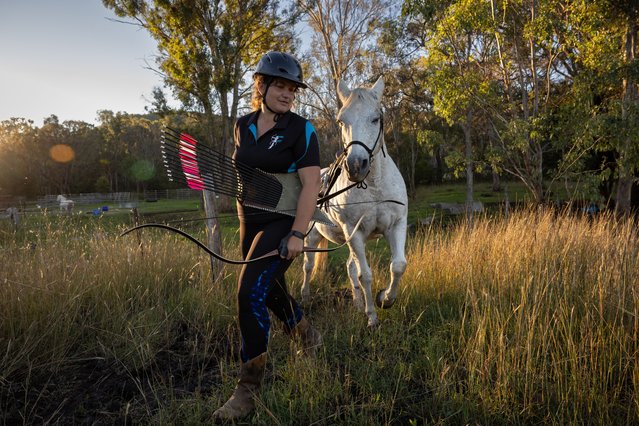
Horse archery competitor Kimberley Robertson with her horse Chiko at her home in Hirstglen, Queensland, Australia on April 9, 2024. (Photo by Aston Brown/The Guardian)
Co-Host Kristin Chenoweth speaks onstage at the American Country Awards 2011 at the MGM Grand Garden Arena on December 5, 2011 in Las Vegas, Nevada. (Photo by Ethan Miller/Getty Images)
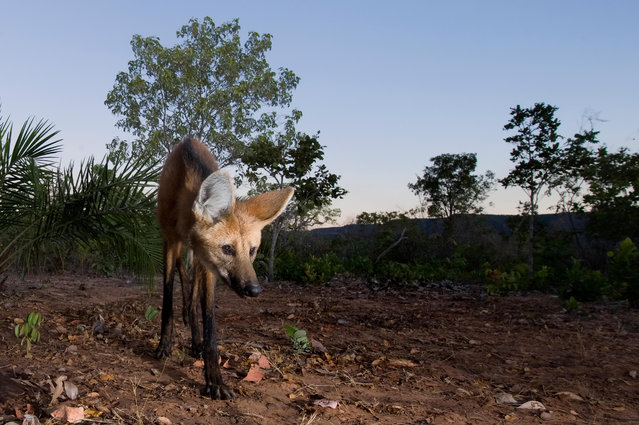
Global wildlife populations will decline by 67% by 2020 unless urgent action is taken to reduce human impact on species and ecosystems, warns the biennial Living Planet Index report from WWF (World Wide Fund for Nature) and ZSL (Zoological Society of London). From elephants to eels, here are some of the wildlife populations most affected by human activity. Here: The maned wolf is among the large mammals in the Brazilian Cerrado that are threatened by the increasing conversion of grasslands into farmland for grazing and growing crops. (Photo by Ben Cranke/Nature Picture Library/Alamy Stock Photo)
Ukrainian service members walk to an armoured personnel carrier outside of the frontline town of Bakhmut, amid Russia's attack on Ukraine, in Donetsk region, Ukraine on May 23, 2023. (Photo by Yevhenii Zavhorodnii/Reuters)