Loading...
Done
Mummies

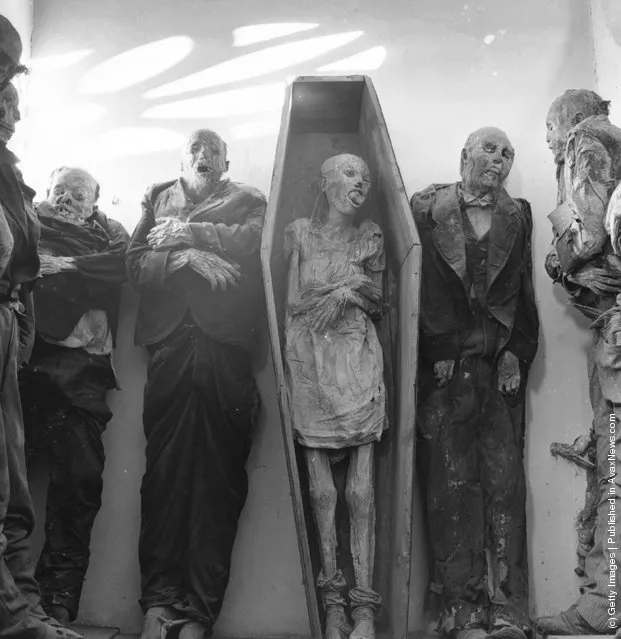
Dried and shrivelled corpses, some fully clothed and some in coffins, line the wall of a vault of the Pantheon Cemetery on the summit of Cerro del Trozado in Mexico. They were removed from the crypts because of non-payment of cemetery fees. The hot dry air stopped the bodies from rotting. Most of them were placed here between the turn of the century and WW I. (Photo by Three Lions/Getty Images). Circa 1955
Details
29 Aug 2011 13:46:00
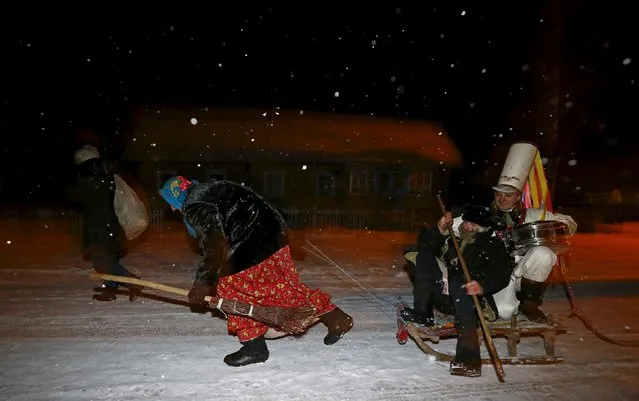
Belarussian villagers perform during a celebration of the "Tsary" rite in the village of Semezhevo, Belarus January 13, 2016. (Photo by Vasily Fedosenko/Reuters)

Belarussian villagers perform during a celebration of the “Tsary” rite in the village of Semezhevo, Belarus January 13, 2016. This unique rite originated from the 18th century, and now takes place only in this village marking the New Year, according to the Julian calendar, on January 13. (Photo by Vasily Fedosenko/Reuters)
Details
15 Jan 2016 08:06:00


Fishermen slaughter a 9.61m Baird's Beaked whale at Wada Port on June 28, 2008 in Minami Boso, Chiba, Japan. Only five ports are allowed whaling under the coastal whaling program which tries to keep whaling tradition that dates back to the seventeenth century. Japan is only allowed to hunt a limited number of whales every year. (Photo by Koichi Kamoshida/Getty Images)
Details
26 Apr 2011 08:07:00
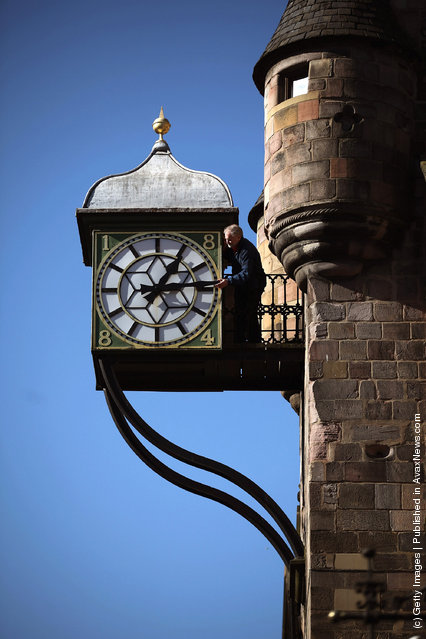
Alan Wilson, Director of James Ritchie & Son clockmakers, founded in 1809, adjusts a clock face at the Cannongate Tobooth to British Summer Time in Edinburgh

Alan Wilson, Director of James Ritchie & Son clockmakers, founded in 1809, adjusts a clock face at the Cannongate Tobooth to British Summer Time on March 21, 2012 in Edinburgh, Scotland. The Tolbooth, built in 1591, was where tolls and public dues were collected. The clock face dates back to 1820 and replaced an earlier clock from the 17th Century. Clocks will be put forward by one hour on Sunday March 25, 2012 at 1.00am and British Summer Time (BST) will officially start. (Photo by Jeff J. Mitchell/Getty Images)
Details
24 Mar 2012 09:25:00
Chernobyl

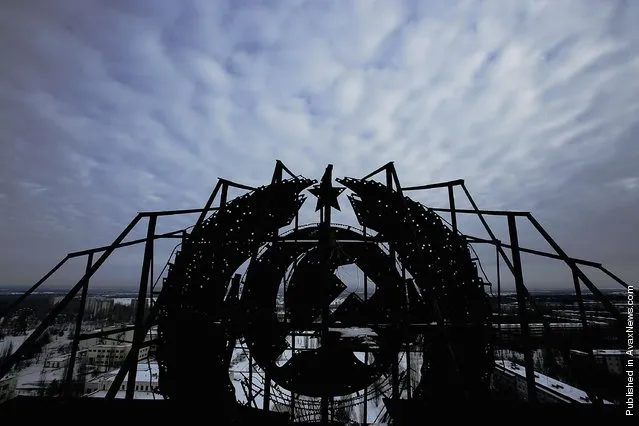
Scaffolding holding a remnant of the Soviet Union, the hammer and sickle, is seen on a rooftop of an abandoned building in the town of Pripyat on January 25, 2006 near Chernobyl, Ukraine. The town of Pripyat, deserted since the 1986 catastrophe, once housed 30,000 people, the majority of being workers from the Chernobyl Nuclear Power Plant. Days after the catastrophe the inhabitants were relocated to other locations in the Soviet Union. The town of Pripyat has remained uninhabited since. Prypyat and the surrounding area will not be safe for human habitation for several centuries. Scientists estimate that the most dangerous radioactive elements will take up to 900 years to decay sufficiently to render the area safe.
Details
14 Mar 2011 10:20:00
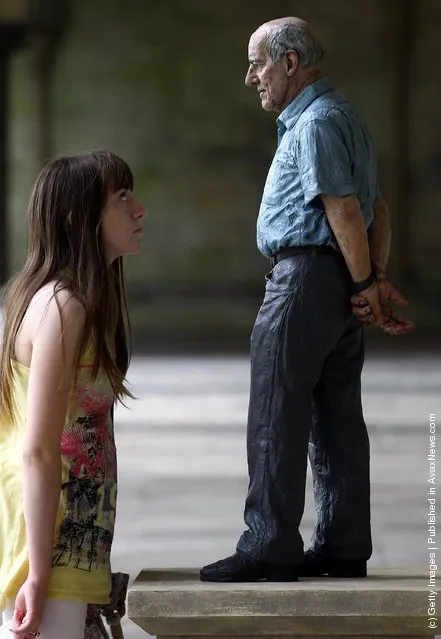
Visitors to Salisbury Cathedral stop to look at Sean Henry's sculpture Standing Man

Visitors to Salisbury Cathedral stop to look at Sean Henry's sculpture Standing Man (2007) currently being exhibited in the Cloisters on August 2, 2011 in Salisbury, United Kingdom. The exhibition, “Conflux: A Union of the Sacred and the Anonymous”, features over 20 contemporary sculptures of dramatically different scales occupying vacant plinths and open spaces on both the inside and exterior of the iconic 13th century building. This exhibition brings to the Cathedral the biggest single group of polychrome sculpture since the Reformation and runs until the end of October. (Photo by Matt Cardy/Getty Images)
Details
03 Aug 2011 11:28:00
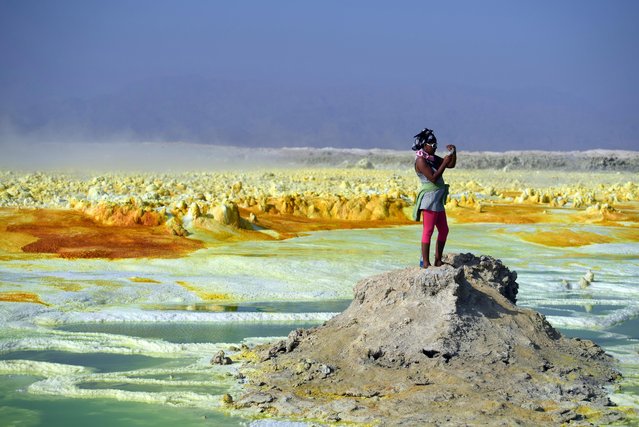
A tourist take a photograph of a sulphur lake in the Danakil Depression on January 23, 2017 near Dallol, Ethiopia. (Photo by Carl Court/Getty Images)

A tourist take a photograph of a sulphur lake in the Danakil Depression on January 23, 2017 near Dallol, Ethiopia. The depression lies 100 metres below sea level and is one of the hottest and most inhospitable places on Earth. Despite the gruelling conditions, Ethiopians continue a centuries old industry of mining salt from the ground by hand in temperatures that average 34.5 degrees centigrade but have risen to over 50 degrees. (Photo by Carl Court/Getty Images)
Details
25 Jan 2017 11:36:00
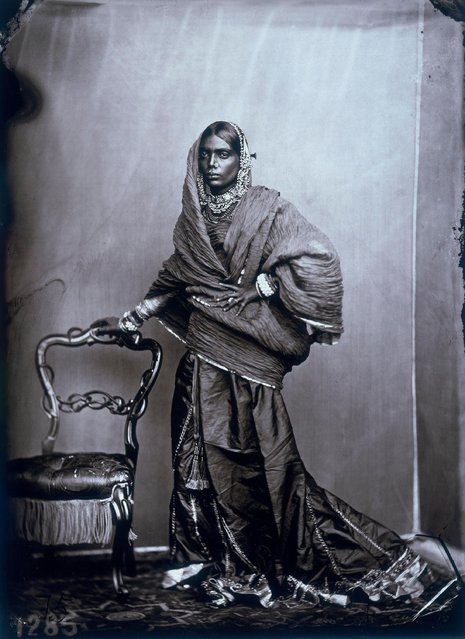
Full portrait of a woman in the harem in the royal palace of Jaipur, India, 1857 – 1865. (Photo by Maharaja Ram Singh III/Alinari via Getty Images)

These images give a rare insight into the life of a 19th Century Indian Maharajah. Maharajah Ram Singh ruled in the famous pink city of Jaipur between 1835 and 1880, and was also a keen photographer. Here: Full portrait of a woman in the harem in the royal palace of Jaipur, India, 1857 – 1865. (Photo by Maharaja Ram Singh III/Alinari via Getty Images)
Details
06 Feb 2017 01:03:00